
As the core equipment of the label printing industry, the ribbon slitting machine has much more than a simple "cutting". The following is a comprehensive analysis of its "magic" from the core technology to the application scenario, and take you to understand how this equipment has become the invisible hero of modern industry:
First, "surgical scalpel" in the field of precision manufacturing
1. Nano-scale guiding system
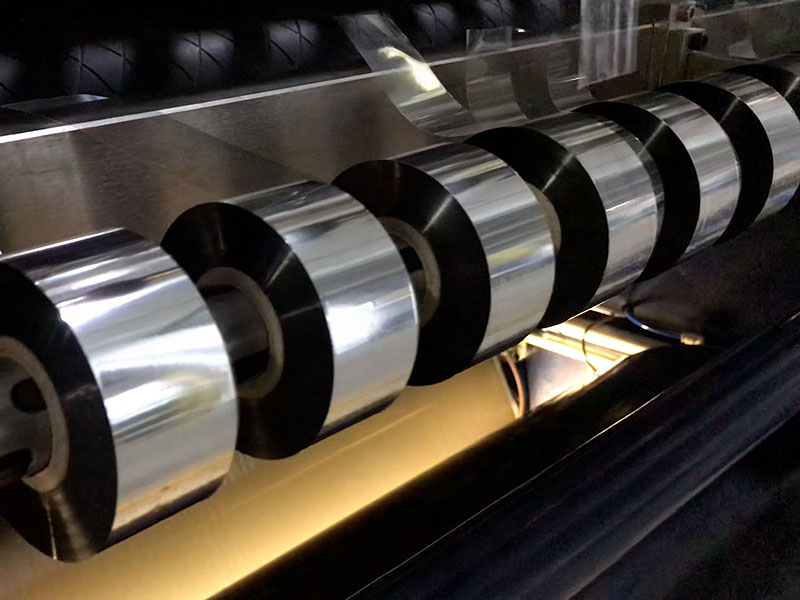
Using a high-sensitivity photoelectric sensor + AI algorithm, the edge position of the ribbon is monitored in real time, and even the offset of 0.1mm can be automatically corrected (far exceeding the ±0.5mm standard of manual operation) to ensure that the slitting line is as accurate as a surgical incision.
2. Dynamic tension control
Equipped with magnetic particle brake and PID closed-loop control system, it keeps the tension constant (error <2%) in the start-stop and acceleration phases, avoiding the "serpentine roll" phenomenon common to traditional equipment, especially suitable for ultra-thin ribbons (such as 1.5μm thickness).
Second, intelligent "industrial brain"
1. Visual quality inspection integration
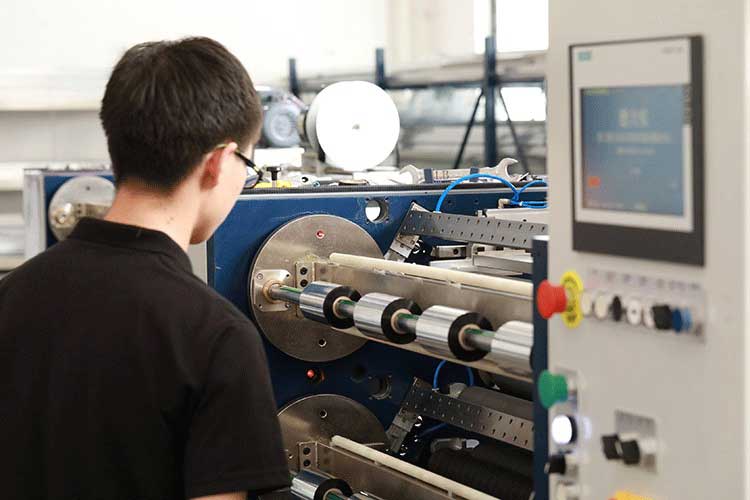
The built-in industrial camera can automatically identify pinholes, bubbles, impurities and other defects on the surface of the ribbon (with an identification accuracy of 10μm), and automatically mark the defect position by the laser marking machine to achieve quality traceability.
2. Digital twin pre-tuner
By inputting the ribbon material (polyester/polyimide), width and other parameters, the system automatically simulates the slitting process and recommends the best knife pressure, speed and other parameters, reducing the test loss by 30%.
Third, the "Transformers" ability for special scenes
1. Ultra-narrow web slitting technology
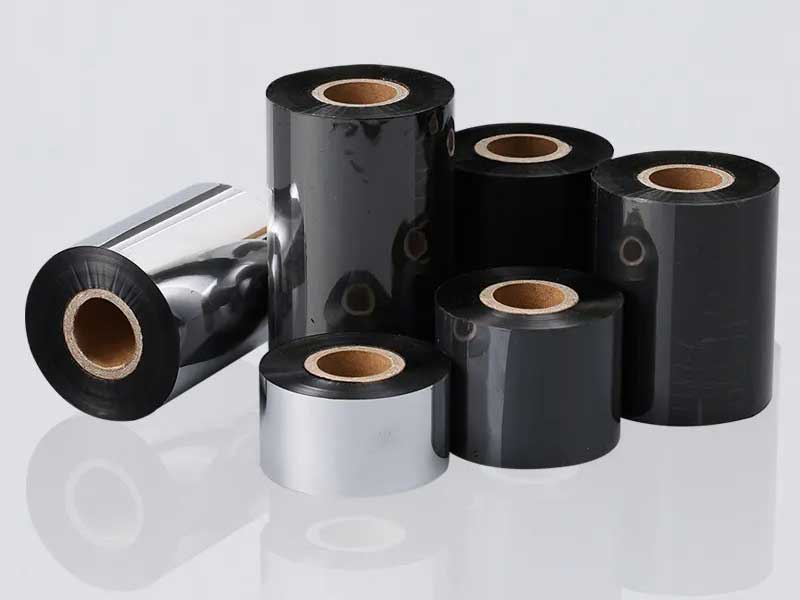
The vacuum adsorption winding device can realize the slitting of 2mm width ribbon (equivalent to the thickness of a toothpick) to meet the needs of micro electronic component labels.
2. Anti-static treatment module
Integrated ionic air bar and grounding system, the surface resistance is controlled in the range of 10^6-10^8Ω to prevent electrostatic adsorption of dust during slitting and affect the life of the print head.
Fourth, the "energy-saving expert" of green production
• Waste edge recycling system: automatically separates waste scrap materials and collects them through negative pressure pipelines, with a recovery rate of > 99%, reducing material waste by 15% compared with traditional methods.
• Inverter energy-saving mode: standby power consumption < 0.5kW, 40% less energy than older equipment.
Industry application breakthrough cases
• Medical label field: When cutting medical-grade ribbons, aseptic packaging is completed in a 10,000-level clean environment, which meets the requirements of GMP certification.
• Aerospace field: slitting high-temperature resistant ribbon (-70°C~300°C) is used for aircraft cable identification, and the slitting accuracy is ±0.01mm.
After understanding these functions, have you noticed that the ribbon slitting machine in the workshop is actually a precision work of art that combines mechanical engineering, materials science and automatic control technology?
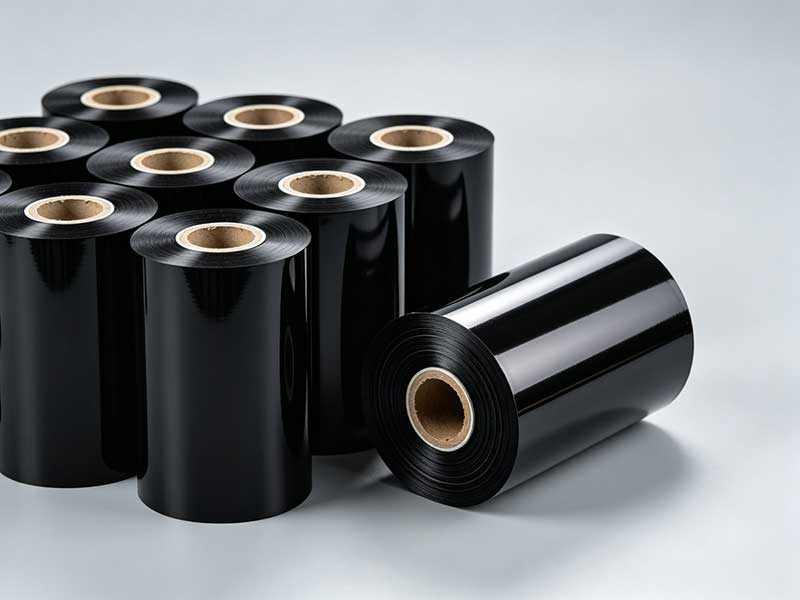
The first watershed in choosing a model isn't speed or brand, but rather — which type of ribbon do you mainly cut?
23. September, 2026
When asking suppliers the following seven questions, the quality of the answers is far more valuable than the numbers on the parameter table.
21. September, 2026
This guide explains what buyers need to know about each parameter—not just the numbers, but the practical implications for production quality, material compatibility, and total cost of ownership.
18. September, 2026This guide distills the technical specifications and practical considerations that separate production-ready machines from costly mistakes.
18. September, 2026Only a slitting machine that can withstand real-world testing can truly save you peace and improve efficiency.
07. September, 2026


 English
 Deutsch
 Français
 Español
 Português
 日本語
日本語 русский
 한국어
한국어 عربي
عربي ภาษาไทย
 Tiếng Việt
 Italiano