
The design principle of the high-end film slitting machine to achieve a slitting accuracy of ±0.1mm involves the collaborative optimization of multidisciplinary technologies such as machinery, control and materials, and the following is its core technology analysis:
1. High rigidity mechanical structure design
• Precision guide rails and bearings: Linear guide rails and crossed roller bearings are used to ensure that the straightness error of the turret movement is <0.02mm/m.
• Double servo-driven turret: Each blade is independently driven by a servo motor , with high-precision ball screws, the positioning repeatability is ±0.005mm.
• Air suspension spindle: radial runout ≤ 0.003mm at 3000-6000rpm to avoid the thermal deformation problem of traditional bearings.
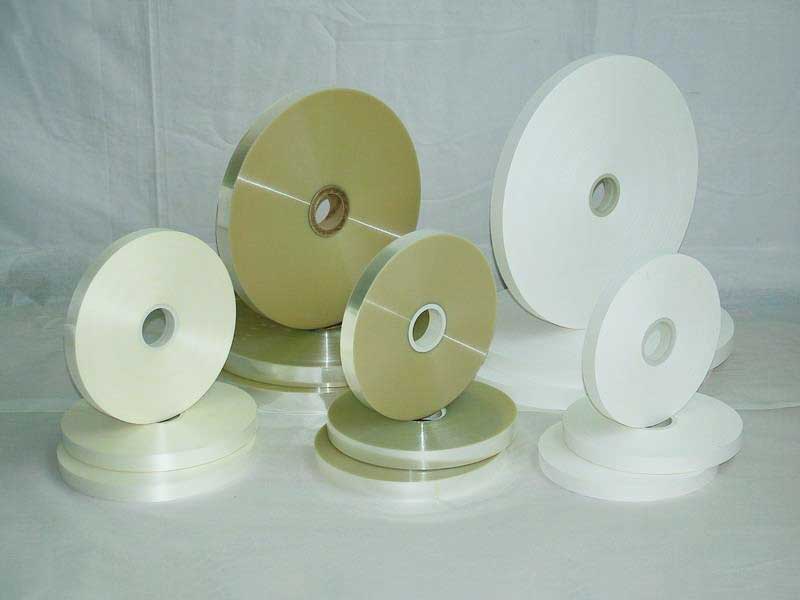
2. Dynamic tension control system
• Multi-stage closed-loop control: Feedforward + feedback composite control is adopted to achieve a <1% film tension fluctuation through a pendulum tension sensor (accuracy ± 0.1N) and a magnetic particle brake (response time 10ms).
• Roll diameter adaptive algorithm: real-time calculation of roll diameter change and adjustment of torque to ensure the consistency of tension from full roll (Φ1000mm) to empty coil (Φ76mm).
3. Intelligent Web Guiding System (EPC)
• CCD edge detection: 2000fps high-speed line scan camera with infrared light source, edge recognition resolution up to 0.01mm.
• PID+ fuzzy control: the correction actuator adopts a linear motor, the response speed is 50ms, and the correction accuracy is ±0.05mm.
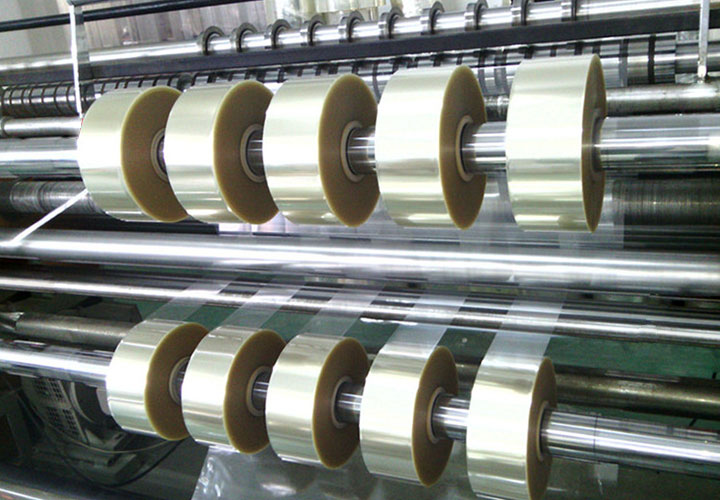
4. Thermal management technology
• Liquid-cooled toolholder: Controls the blade temperature at 25±0.5°C to avoid precision drift due to thermal expansion.
• Constant temperature control in slitting area: the ambient temperature fluctuation ≤± 1°C, and the thermal deformation of the material < 0.03mm/m.
5. Digital Twin vs. Predictive Maintenance
• Virtual Commissioning System: Simulate mechanical-control coupling effects with NX Mechatronics to optimize parameters in advance.
• Vibration monitoring network: 8-channel accelerometer analyzes spectral characteristics in real time to warn bearing failures 3-7 days in advance.
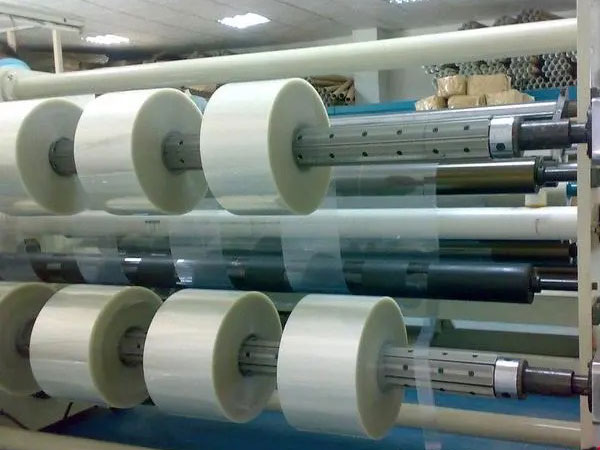
6. Special process adaptability design
• Nano coated tools: diamond coated inserts with a life of up to 2000 km (300 km for ordinary tools) and a passivation radius of < 5 μm.
• Static elimination system: the combination of ionization rod + anti-static brush makes the surface resistance of the film controlled within 10^8Ω.
Industry comparison data
| index | Ordinary equipment | High-end equipment (±0.1mm) |
| Slitting speed | 300m/min | 800m/min |
| Scrap | 1.2% | 0.15% |
| Tool change cycles | 4 hours | 72 hours |
This level of accuracy can control the slitting burr of 6μm ultra-thin copper foil below 15μm, which meets the needs of high-end scenarios such as lithium battery separators and optical films. In the future, with the popularization of linear motor direct drive and AI vision guidance technology, the slitting accuracy is expected to exceed the limit of ±0.05mm.
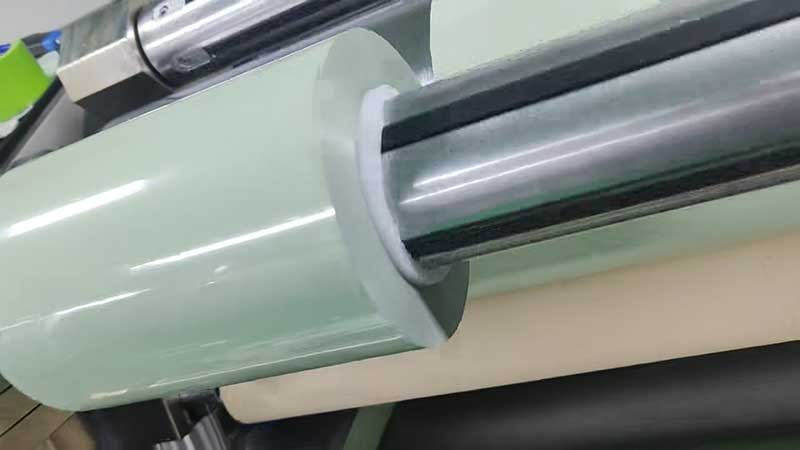
This article outlines a clear selection approach from four dimensions: material adaptation, core technical parameters, efficiency and cost, and supplier selection.
09. September, 2026Balancing speed and precision in film slitting machines is essentially a test of "control capability."
02. September, 2026This article will delve into the current application status, core technologies, and development trends of this equipment in the new energy sector.
28. August, 2026the film slitting machine is the core equipment for slicing wide, large rolls into narrow rolls of specific specifications.
26. August, 2026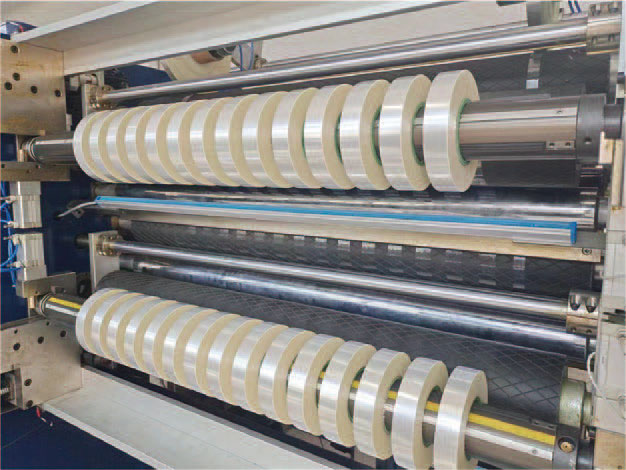
Tension control technology for thin film slitting machines involves interdisciplinary integration of control theory, mechanical design, and material mechanics.
26. August, 2026


 English
 Deutsch
 Français
 Español
 Português
 日本語
日本語 русский
 한국어
한국어 عربي
عربي ภาษาไทย
 Tiếng Việt
 Italiano