
In the fields of luxury packaging, high-end tobacco and alcohol labels, hardcover book covers, etc., the foil stamping process is not only a decoration, but also a reflection of brand value. The core of determining the effect of hot stamping is not only the quality of the gold leaf, but also the accuracy of the slitting link.
As a key equipment for post-press processing, the professional hot stamping foil slitting machine is no longer a simple "dividing tool", but a production tool that integrates precision control, efficiency optimization and intelligent operation. This article will provide an in-depth analysis of how the professional-grade slitting machine born for "high-end hot stamping" has redefined industry standards through technological innovation.
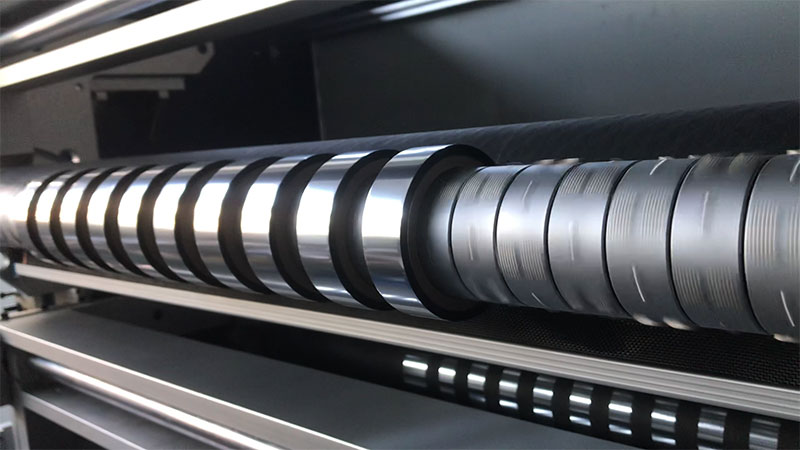
1. Extreme precision: micron-level servo tension control
High-end hot stamping foils (e.g., laser foils, holographic security foils, color pigment foils) are usually extremely thin and have a fragile coating. When the traditional slitting machine runs at high speed, the tension fluctuation can easily lead to stretching, wrinkles and even broken bands on the foil surface.
• Feature Highlights: Professional-grade equipment is equipped with a fully closed-loop servo tension control system. Through real-time feedback from high-precision sensors, the system can dynamically adjust the tension at every moment of starting, accelerating, and decelerating to ensure that the foil belt is always in a "constant stretch" state during the slitting process.
• Value embodiment: It effectively avoids problems such as hot stamping "flying gold" and edge burrs caused by uneven tension, especially suitable for high-end thin foil slitting below 12 microns.
2. Traceless slitting: innovative tool groove and indentation avoidance technology
During the hot stamping process, tiny burrs or knife marks on the slitting edge may be magnified as hot stamping missing blocks. The professional slitting machine has been revolutionized in the design of the tool die.
• Functional highlights: Upper and lower disc knives + precision carbide slot design. The surface of the knife groove is mirror polished, with a hardness of more than HRC60, and with a fine-tuning ruler, it ensures that the cutting depth of the blade is accurate to 0.01mm.
• Value embodiment: truly realize "cut without hurting", the knife edge section is neat and smooth, no adhesion and no indentation. At the same time, the unique indentation avoidance roller design smooths out the small stress before winding, ensuring that the end surface after rewinding is as smooth as a knife cut, which directly improves the smoothness of the subsequent hot stamping machine.
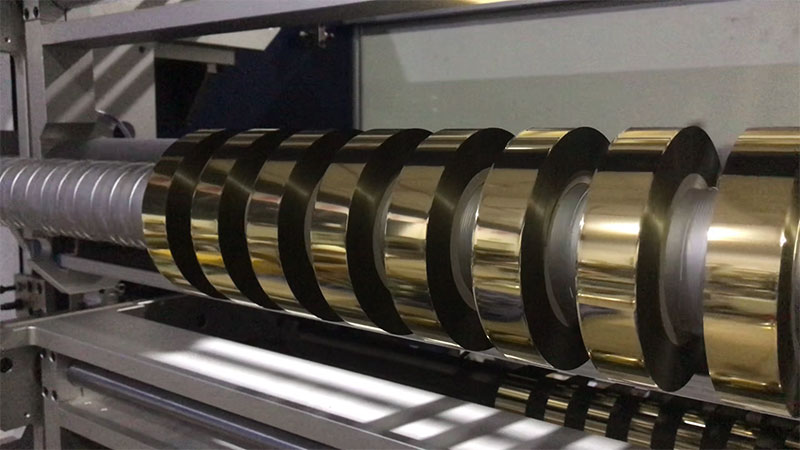
3. Intelligent deviation correction: visual recognition and automatic alignment system
High-end orders often involve "positioning perms" or jump foils of specific widths. If the slitting position is offset, it will result in the scrapping of the entire batch.
• Functional highlights: integrated CCD image sensor and servo guidance system. The equipment can automatically identify printed edge marks or gold foil edges in high-speed operation, calculate the offset in real time and drive the correction frame for fine adjustment.
• Value embodiment: The slitting accuracy error is controlled within ±0.1mm. This means that even thin strips as narrow as 3 mm can be accurately slitted to meet the demanding needs of high-precision products such as electronic labels.
4. Anti-static and dust removal: escort high-gloss surfaces
Static electricity is the enemy of hot stamping foil - not only does it absorb dust and cause hot stamping pinholes, but it also causes winding and slippage.
• Functional highlights: Built-in non-contact ionic air static removal device, which continuously purges at key nodes of the slitting path to neutralize static electricity and remove fine dust generated by slitting.
• Value embodiment: Maintain the cleanliness of the foil surface to the 10,000-level dust-free standard, providing a perfect base surface for subsequent high-gloss and matte hot stamping.
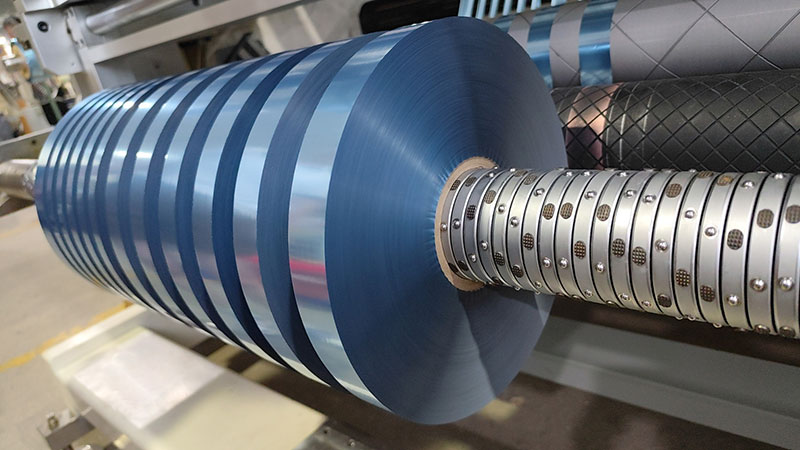
5. Humanized interaction: touch screen recipe and remote operation and maintenance
High-end manufacturing is inseparable from intelligent management.
• Functional highlights: Equipped with 15-inch touch screen and PLC control system. The operator only needs to enter the material width, roll diameter, and tension parameters, and the system will automatically match the optimal operating curve. It supports the recipe storage function, which can be recalled with one click the next time the same material is produced.
• Value reflection: 70% shorter order change time, even novices can get started quickly. Some models also support IoT modules, allowing manufacturers to remotely diagnose faults and provide preventive maintenance recommendations.
Epilogue
Hot stamping foil cutting is not only a change in width, but also a reshaping of quality.
A professional-grade slitting machine "born for high-end hot stamping" is essentially a precision bridge connecting "foil manufacturing" and "perfect post-printing". It protects the original properties of materials with extreme mechanical precision and unleashes the potential of production efficiency with intelligent electrical control.
For printing companies pursuing zero-defect foil stamping effects, choosing such equipment is not only an upgrade in productivity, but also a ticket to the high-end foil stamping market.
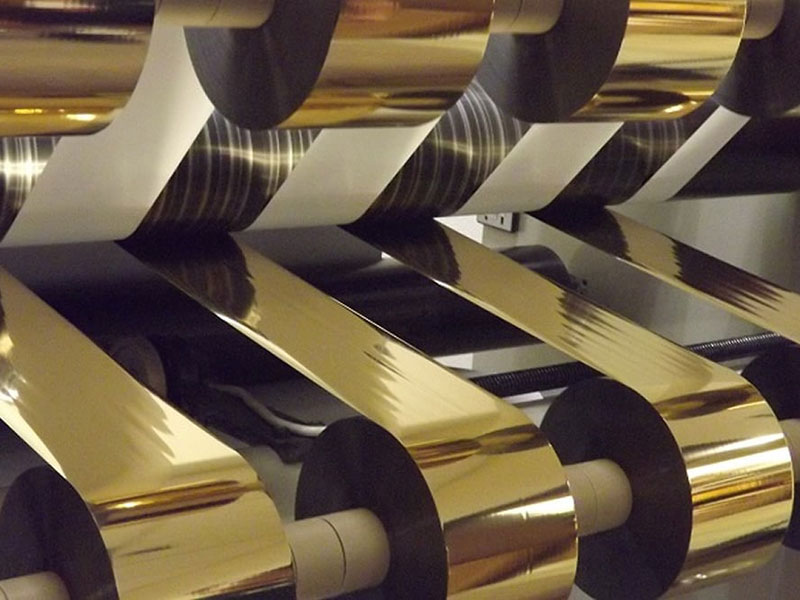
A mature automated system needs to form a closed loop simultaneously across four dimensions: correction, tension, cutting, and data management.
21. October, 2026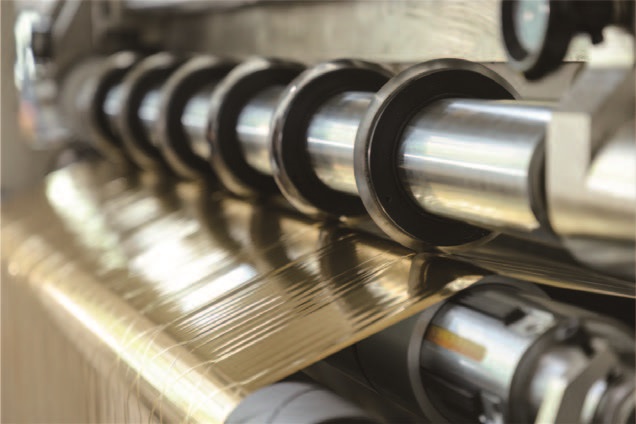
The value of customized slitting solutions lies in turning "cutting accurately, changing quickly, and no waste" from a slogan into a quantifiable production indicator.
21. October, 2026This article focuses on the two subsystems of unwinding and rewinding, explaining their functional composition, control logic, and key points of common adjustments.
21. October, 2026It is specifically designed to cut the wide master roll hot stamping foil into different narrow finished rolls according to process requirements, and is used in conjunction with hot stamping machines.
16. October, 2026A device with stable slitting accuracy and precise tension control is the fundamental link for ensuring hot stamping yield and material utilization.
16. October, 2026


 English
 Deutsch
 Français
 Español
 Português
 日本語
日本語 русский
 한국어
한국어 عربي
عربي ภาษาไทย
 Tiếng Việt
 Italiano