
In the production and post-processing of hot stamping foil, slitting is a crucial process. However, many businesses face a long-term headache – wrinkled, arched, or uneven edges of the material after rewinding. These seemingly subtle defects can directly lead to subsequent hot stamping failures, increased scrap rates, and even affect the entire production cycle.
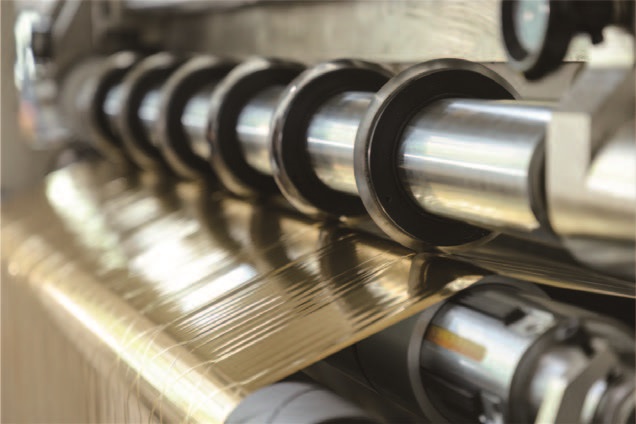
Where do folds come from?
To solve the problem, we must first find the root cause. Wrinkles occur during the slitting process of hot stamping foil, which is usually caused by the following reasons:
• Uneven tension control: The tension fluctuates between unwinding, unwinding, and rolling, resulting in uneven tightness of the material on the rewinding shaft and creases formed by slipping between layers.
• Improper winding roller: The pressure of the roller is unreasonably set or the parallelism of the roller surface is deviated, so that the air cannot be discharged evenly, and bubble-like bulges occur on the surface of the material.
• Slitting knife edge burrs: Blade wear or poor edge angle, resulting in tiny burrs or curling edges on the cutting edges, which are concentrated on these parts when rewinding, causing wrinkles.
• Static electricity accumulation: The hot stamping foil material itself is prone to static electricity, which absorbs dust and makes the layers repel or stick to each other, destroying the neatness of winding.
• Poor match between the core and the material: If the roundness of the core is insufficient or the surface smoothness is not suitable, there will be deviations at the initial winding stage, and it will evolve into serious folds after enlarging layer by layer.
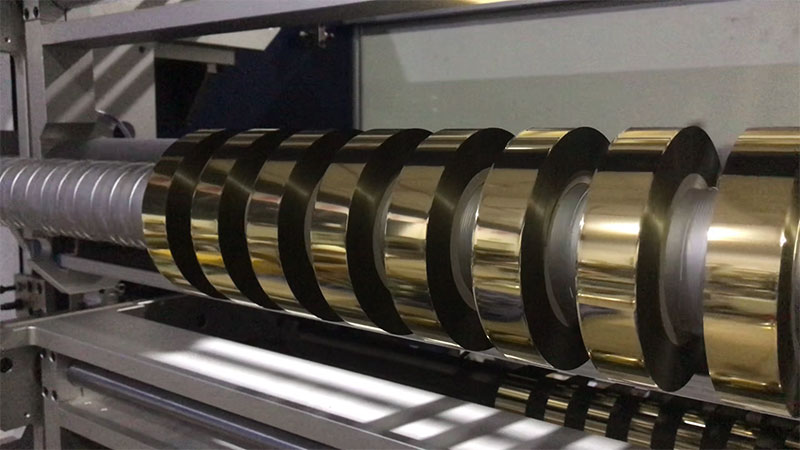
Start from the root: key techniques to improve the flatness of winding
In response to the above crux, modern hot stamping foil slitting machines are effectively solving the problem of wrinkles through a series of technological upgrades.
1. Closed-loop tension control system
Servo motors are used with floating rollers or tension sensors to monitor and automatically adjust the unwinding, traction and rewinding tension in real time. The system can preset the tension curve for different thicknesses and widths of hot stamping foil to ensure constant tension throughout the whole process from the core to the full roll, eliminating the situation of different tightness.
2. Precision winding and roller mechanism
Equipped with adjustable pressure, actively driven winding rollers, the surface of the rollers is wrapped in highly elastic and anti-static materials. The roller is kept in precise parallel to the winding shaft and provides a pressure curve that decreases with the increase of the roll diameter - the pressure decreases when the coil is large to avoid "crushing" the air between the material layers; The pressure increases slightly during small rolls to ensure a tight start.
3. High-quality slitting knife set
Imported alloy circular knife or razor type slitting system is adopted, with automatic sharpening or quick-change tool holder, always keep the cutting edge sharp. The cut edges are flat and burr-free, avoiding crimping and wrinkling caused by poor incisions at the source.
4. Static elimination and cleaning device
AC or pulsed DC static elimination rods are installed at the key passing rollers, and with dust removal brushes or suction devices, they can effectively remove static electricity and dust on the surface of the material. The elimination of static electricity keeps the foil layers in a natural separation state, allowing air to be discharged smoothly during winding.
5. Quick positioning and automatic correction of the core
It adopts a cone top or airbag type coil fixture to ensure that the coil core is centered and there is no deviation in roundness. With ultrasonic or photoelectric correction system, the edge position of the material is tracked in real time, and the lateral deviation is automatically corrected to ensure that the winding end face is as neat as a knife.
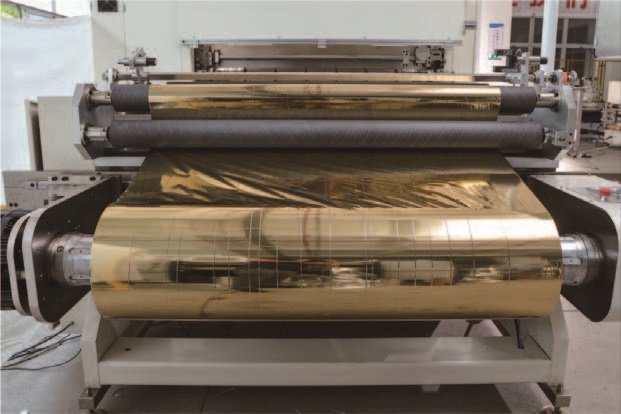
Practical Results: The data proves everything
After a hot stamping foil manufacturer introduced a new high-precision slitting machine, the indicators before and after the improvement were compared:
• The rate of wrinkle defects has been reduced from 3.8% to less than 0.3%
• The maximum winding diameter has been increased from 400mm to 600mm, while still remaining flat
• The deviation of the neatness of the winding end face is controlled within ±0.5mm
• 85% reduction in downtime due to material folding in subsequent hot stamping processes
The person in charge of the production line said: "In the past, I was worried every time I went to the slitting link, but now I can basically achieve continuous production without frequently checking the quality of the winding. ”
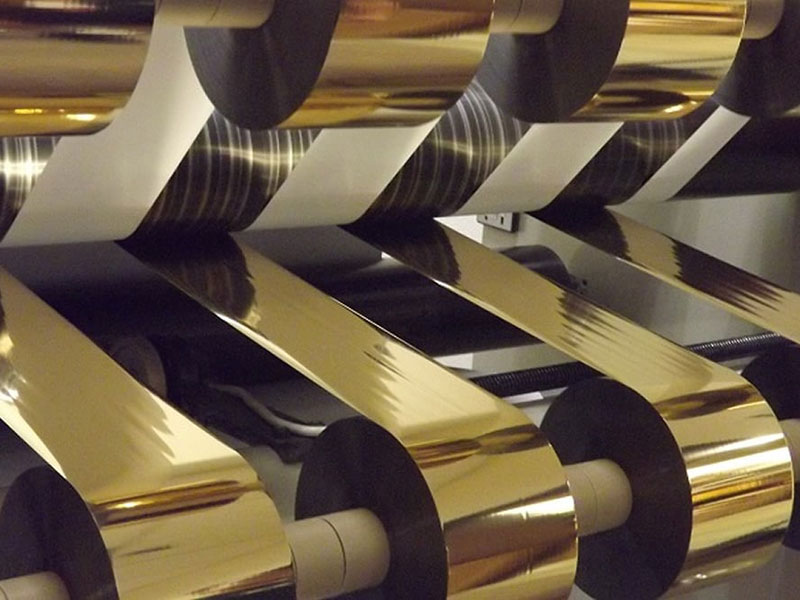
Future trend: smarter and more refined
With the development of industrial Internet and sensor technology, hot stamping foil slitting equipment is evolving in the direction of intelligence. For example:
• AI Tension Self-Learning: The device automatically generates optimal tension parameters based on historical data and current material properties.
• Online wrinkle detection: Through industrial cameras and image algorithms, real-time identification of micro-folds on the winding surface and alarm adjustment.
• Predictive maintenance: Monitor blade wear status, pressure distribution of rollers, etc., and warn of maintenance needs in advance.
Epilogue
Saying goodbye to material folds is not only to improve the yield rate of a process, but also to ensure the overall competitiveness of hot stamping foil products. From tension closed-loop control to precision roller design, from static elimination to automatic deviation correction, the optimization of each technology is working towards the same goal - so that each roll of hot stamping foil is rolled up smoothly and out of the warehouse without worry, and finally blooms with a perfect metallic luster in the hot stamping process.
For hot stamping foil manufacturers, choosing a slitting machine with good winding flatness control is actually building a solid quality defense line for the entire production chain. After all, when the material enters the next process in a flat state, everything is possible to proceed smoothly.
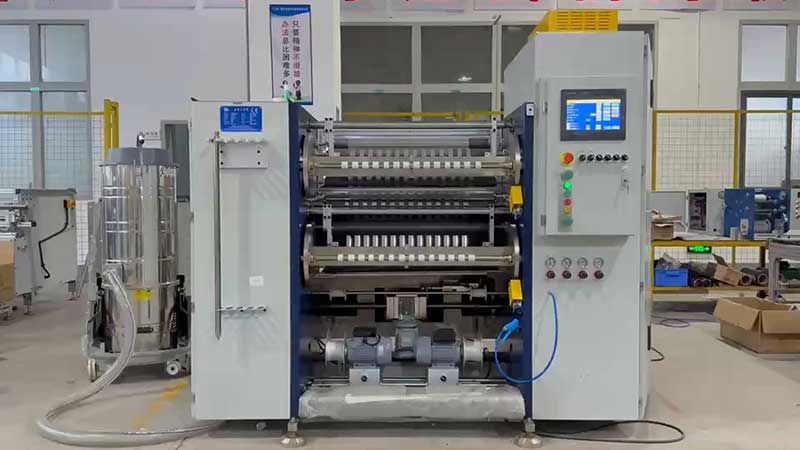
Whether you operate a slitting line or source slit rolls from a supplier, understanding these failure modes helps you protect quality and reduce downtime.
08. October, 2026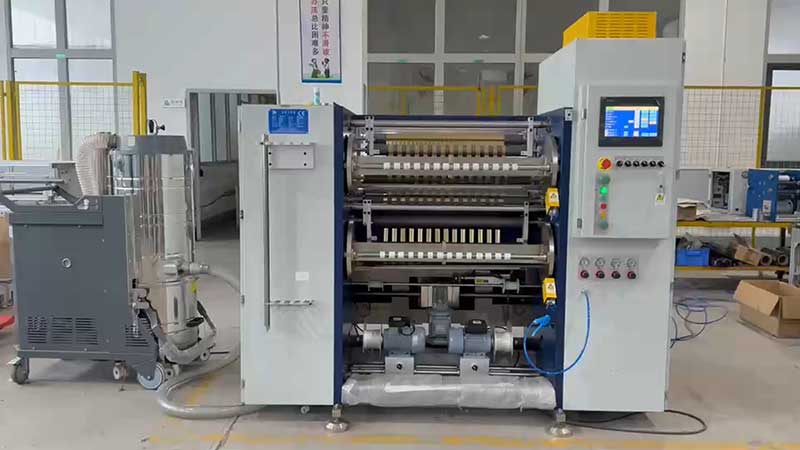
This guide breaks down the specifications that actually matter, organized by the parameters that directly affect your yield, efficiency, and bottom line.
08. October, 2026The tension control in the slitting stage directly determines the yield rate of subsequent hot stamping processes.
28. September, 2026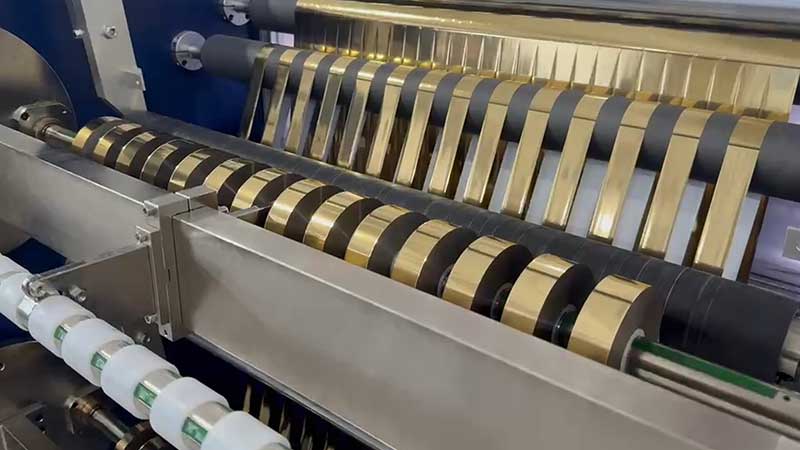
The key to selection is to grasp three parameters that truly determine slitting quality: slitting accuracy, tension control, and tool system.
28. September, 2026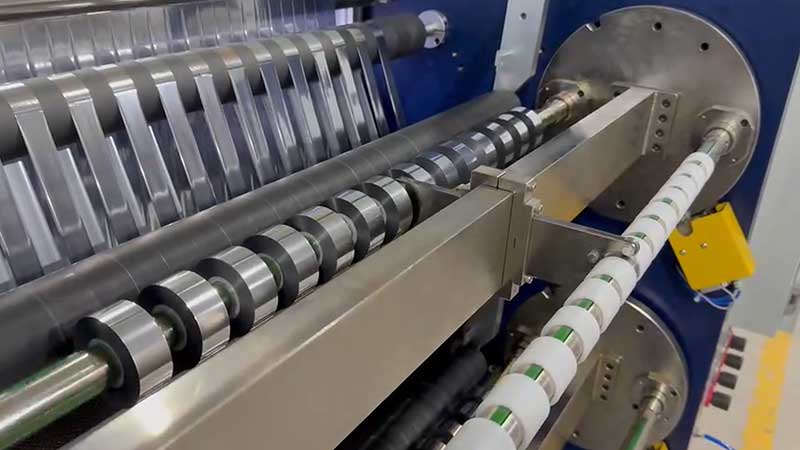
But what truly determines whether a slitting machine is "in sync" is not the absolute value of a single parameter, but the matching logic between width and speed.
28. September, 2026


 English
 Deutsch
 Français
 Español
 Português
 日本語
日本語 русский
 한국어
한국어 عربي
عربي ภาษาไทย
 Tiếng Việt
 Italiano