
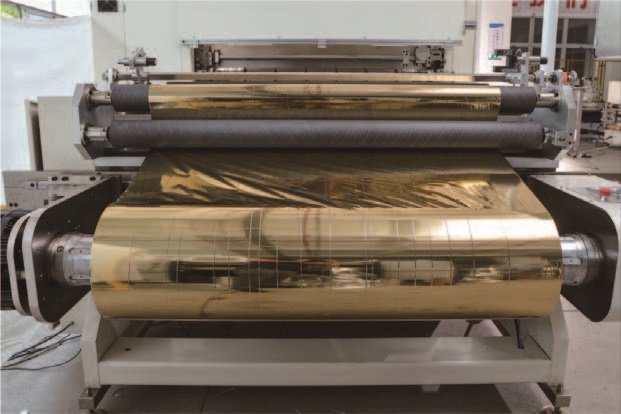
In hot stamping processing, the cleanliness of the foil surface directly affects the quality of stamping—any tiny dust, foil shavings, or electrostatic adsorption particles can cause missing stamps, pitting, or reduced adhesion in the stamping process. As a key step in hot stamping foil production, the slitting stage generates particularly prominent dust issues. This article will focus on the dust removal challenges of hot stamping foil slitting machines, providing systematic solutions to help enterprises improve the cleanliness of stamping surfaces.
1. Analysis of dust sources and impacts
During the operation of the slitting machine, dust mainly comes from three sources:
1. Foil Material Fragments: The high-speed rotating circular blade rubs against the foil, producing ultra-fine metal or PET foil powder, often smaller than 10 microns.
2. Electrostatic adsorption: Hot stamping foil is mostly an insulating material; high-voltage static electricity is generated during high-speed winding and unwinding, actively adsorbing suspended dust in the environment.
3. Mechanical transmission wear: Dust generated from wear of guide rollers, bearings, and other components, mixed with oil stains, easily adheres to the foil surface.
If this dust is not removed promptly, it can be pressed into the hot stamping layer or transferred to the hot stamping plate, causing continuous waste. Statistics show that about 35% of defective hot stamping products are related to uncontrolled cleanliness in the slitting process.
2. Core principles of dust removal design
Based on the characteristics of hot stamping foil, an effective dust removal solution must meet the following requirements:
• Non-contact dust removal: Avoid scratching and damaging functional coatings on the foil surface (such as hot melt adhesive layer and release layer).
• Anti-static penetration: suppresses static electricity generation at the source to prevent secondary adsorption.
• Closed-loop microenvironment: Confining dust generation, collection, and treatment within controlled spaces.
• Compatible with high-speed production lines: slitting speed can reach 150-300m/min, and dust removal system response must be synchronized.
3. Comprehensive plan for dust removal of slitting machine
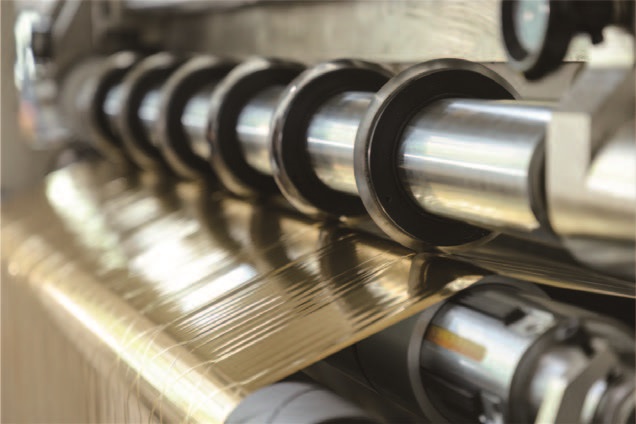
1. Contact and non-contact combination dust collection head
A set of dust removal units are set up on the back of the tool shaft and before winding:
• First stage (non-contact): ultra-thin laminar flow ion air knife is used. 0.3-0.5MPa clean compressed air is used to form a 30° inclination air curtain, which is used with high-frequency AC ion rods (such as Simco-Ion) to blow away dust and neutralize static electricity. The air knife and the foil surface are spaced 8-12mm apart, and do not touch the coating.
• Stage 2 (micro-contact): anti-static sticky dust roller. The surface is low-viscosity silicone (adhesion < 50g/25mm), and the lower part is equipped with servo lifting stainless steel cleaning rollers. During operation, the sticking dust roller rotates at a speed slightly lower than the foil speed, gently sticks the residual dust, and rotates to the cleaning roller to transfer the dust particles.
2. Negative pressure dust collection and filtration system
• Near-source suction: Install a profiled vacuum cover on both sides of the blade (the opening width is 20mm wider than the foil), and the wind speed of the hood is ≥ 8m/s, directly sucking up the blown dust.
• Three-stage filtration: main circuit → cyclone separator (separates large particles > 30 μm), →anti-static filter cartridge (0.3 μm efficiency 99.5%)→ HEPA post-filter (0.1 μm, discharge back to the workshop air up to ISO level 9). The filter cartridge is braided with polyester + carbon fiber, which is anti-static and flame retardant.
• Anti-clogging design: The filter cartridge is equipped with a pulse blowback device, which automatically sprays compressed air to clean the filter material when the differential pressure > 1.5kPa.
3. Environment and auxiliary measures
• Zonal sealing: Install a transparent acrylic protective cover for the slitting machine, reserve the operating window and air supply outlet. Maintain a slightly positive pressure (5-10Pa) inside to avoid the intrusion of dirty air from the outside.
• Active humidification: control the relative humidity of the workshop between 45% and 55% (too high affects the strength of the foil, too low exacerbates static electricity). You can use a dry mist humidifier to avoid water damage.
• Regular cleaning and maintenance: use a vacuum hose to clean the dead corners in the rack after each shift; Wipe the adhesive dust roller rubber sleeve with alcohol (prohibit solvents to prevent swelling); The ion rod cleans the tip of the transmitting needle with a cotton swab quarterly.
4. Online cleanliness monitoring (optional advanced configuration)
Install a laser dust particle sensor (e.g., Sensirion SPS30) before winding to monitor the concentration of 0.5 μm particles ≥ near the foil surface in real time. When the concentration exceeds the set threshold (e.g., 1000 pieces/cubic foot), the linkage alarm and adjust the dust removal parameters (e.g., increase the air knife air pressure, reduce the speed of the self-cleaning sticky dust roller).
4. Expected Implementation Outcomes of the Plan
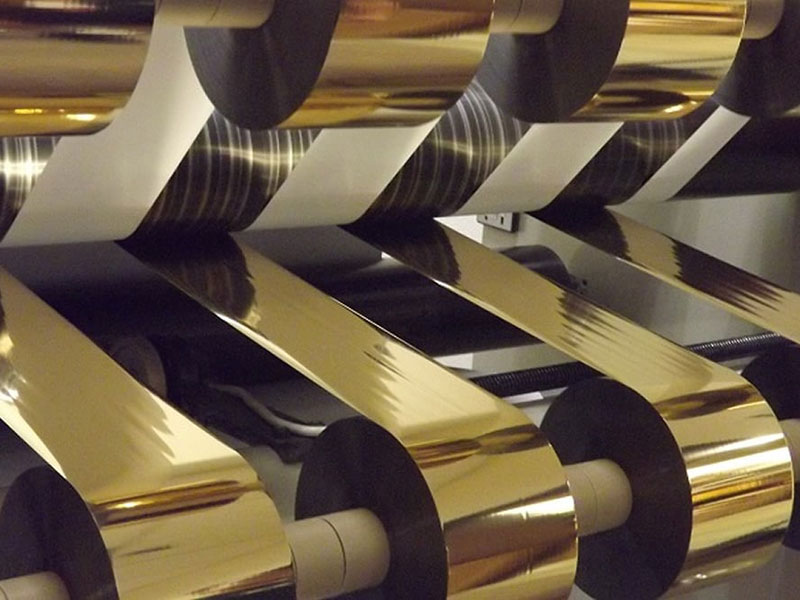
A certain hot stamping foil company's original slitting machine lacks a dust removal device, resulting in a foil stamping waste rate of about 4.2%. After adopting the above combination plan:
• The number of residual particles on the foil surface decreased from an average of 1800 particles/m² to <80 particles/m² (measurement method: tape application + microscope counting).
• Dust-induced stamping defects have decreased by 76%.
• Electrostatic voltage dropped from 15-20kV to within ±0.5kV, significantly improving winding uniformity.
• Equipment retrofit cost is about 80,000-120,000 RMB per unit (including ion air knife, dust roller, filter box, and sealing cover), with an investment payback period of 6-8 months.
5. Precautions
• The compressed air used in the ion air knife must be cooled and filtered by a dryer and three-stage filtration (oil removal, water removal, dust removal); otherwise, secondary oil and water contamination will worsen.
• The recommended hardness of the silicone layer for the dust-sticking roller is 30-40 Shore A; if too hard, it damages the foil surface; if too soft, it deforms and traps dust.
• Avoid using brush rollers or ultrasonic dust removal—the former easily scratches the coating, while the latter struggles to form a stable air gap on high-speed foil strips.
• If slitting easily generates flammable dust (such as some metal foils), explosion-proof ion rods and explosion-proof motors should be selected, along with spark detection and flame-out devices.
Conclusion
Dust removal in hot stamping foil is not an isolated equipment issue, but a system engineering involving gas, electricity, machinery, and environmental control. Through the four-dimensional coordination of "ion air knife blow-off + anti-static adhesion + negative pressure suction + enclosed environment," the cleanliness of the pressing surface can be effectively controlled within the ideal range. In today's world where hot stamping technology is advancing toward high speed and high precision, even small improvements in the slitting process can often lead to a significant leap in stamping yield. It is recommended that companies combine their own foil types and speeds, prioritizing non-contact air blades and dust-sticking rollers, gradually improving closed-loop management to achieve a balance between clean production and cost-effectiveness.
A mature automated system needs to form a closed loop simultaneously across four dimensions: correction, tension, cutting, and data management.
21. October, 2026The value of customized slitting solutions lies in turning "cutting accurately, changing quickly, and no waste" from a slogan into a quantifiable production indicator.
21. October, 2026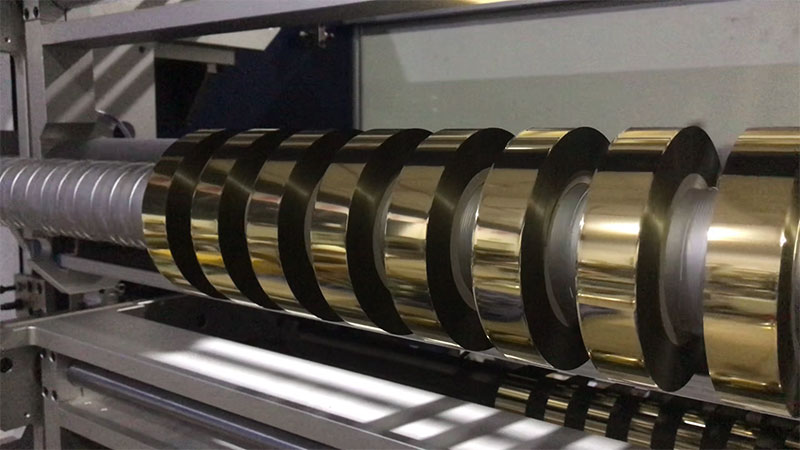
This article focuses on the two subsystems of unwinding and rewinding, explaining their functional composition, control logic, and key points of common adjustments.
21. October, 2026It is specifically designed to cut the wide master roll hot stamping foil into different narrow finished rolls according to process requirements, and is used in conjunction with hot stamping machines.
16. October, 2026A device with stable slitting accuracy and precise tension control is the fundamental link for ensuring hot stamping yield and material utilization.
16. October, 2026


 English
 Deutsch
 Français
 Español
 Português
 日本語
日本語 русский
 한국어
한국어 عربي
عربي ภาษาไทย
 Tiếng Việt
 Italiano