
In packaging printing, textile hot stamping, and high-end decorative materials, the slitting precision and efficiency of hot stamping foil directly determine production costs and delivery capability. However, traditional slitting equipment has long faced two major pain points: high edge scrap rates and limited operating speeds. Recently, a leading hot stamping foil manufacturer successfully reduced the proportion of slitting waste from 8% to 5.6% (a 30% decrease) through systematic equipment innovation, and the slitting speed jumped from 120 meters per minute to 180 meters per minute (a 50% increase). The following are the core innovation measures.
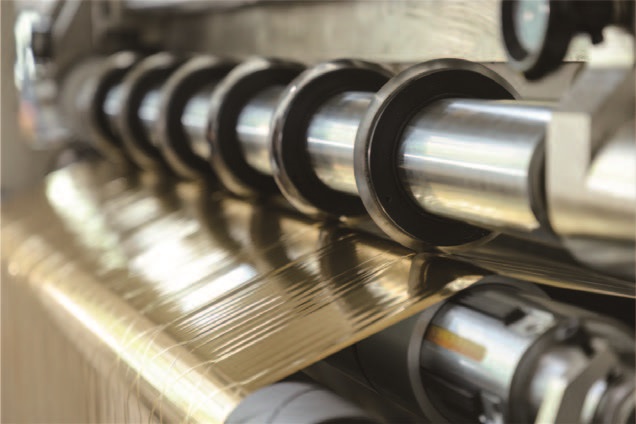
1. Key technology that reduces waste by 30%.
1. Laser-assisted positioning and closed-loop correction
Traditional mechanical edge sensors are prone to deviation due to foil reflection or tension fluctuations, resulting in excessively wide trimming edges. The innovative solution introduces a dual CCD vision system and laser ranging module, enabling real-time detection of micron-level deviations between the foil strip edges and preset tangents, and dynamic correction by a servo-driven correction roller. Result: The trimming allowance was compressed from 3mm on one side to 2mm, without the need to reserve a safety margin.
2. Optimize the tool layout algorithm and slitting mode
Developed intelligent tool layout software for multi-specification narrow strip combinations in orders. After inputting the finished product width, the system automatically calculates the tool position combination for "minimal cutting edge waste," and can select "misaligned slitting" or "cascade slitting" modes to avoid periodic gap waste caused by fixed blade spacing. Actual measurements show that the average material utilization rate of multi-specification orders increased by 4.2 percentage points.
3. Independent control of tension zones
The path from unwinding to winding is divided into three tension zones (unwinding, slitting, and rewinding), each controlled by independent servo motors and floating roller feedback. Eliminates edge stretching deformation or wrinkles caused by overall tension coupling—these are the main causes of irregular scrap edges.
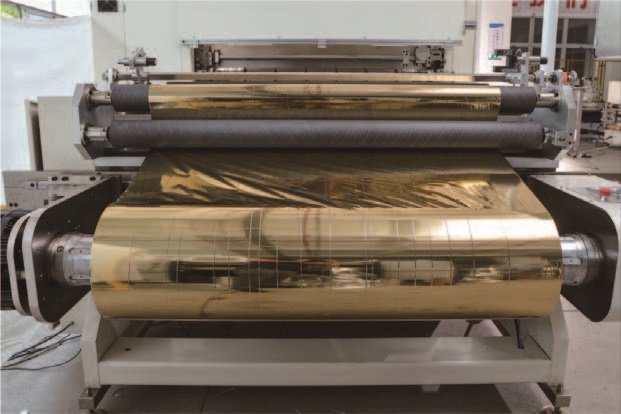
2. System upgrade with a 50% speed boost
1. High dynamic response drive system
The original variable frequency motor + mechanical brake combination slips during rapid acceleration, limiting speed. Replaced with a direct-drive permanent magnet synchronous motor (PMSM) paired with carbon fiber guide rollers, reducing inertia by 40% and increasing acceleration to 1.5g. At the same time, it adopts common DC bus technology for regenerative energy feedback, increasing the continuous operating speed from 120m/min to 180m/min, with short-term peak values reaching 200m/min.
2. Automatic foil bonding and buffer storage rack
Traditional shutdown and roll replacement take a long time. The new equipment is equipped with dual-station unwinding and vacuum adsorption automatic foil bonding devices, ensuring continuous rewinding without stopping; At the same time, a floating storage rack is added to release the stored material at the instant of foil bonding, maintaining continuous slitting at the rear end. Single roll change time has been reduced from 4 minutes to 30 seconds, and overall effective operation speed has increased by over 55%.
3. Adaptive compression cutting and dust removal system
After increasing speed, ordinary round knives tend to accumulate chips due to insufficient heat dissipation. Switched to coated carbide blades equipped with micro-lubricant spray, and added negative pressure dust brush rollers to ensure smooth cuts and no dust accumulation during high-speed slitting. At measured speeds of 180 m/min, the burr height at the cut remains below 0.02 mm, reaching the original quality level at 120 m/min.
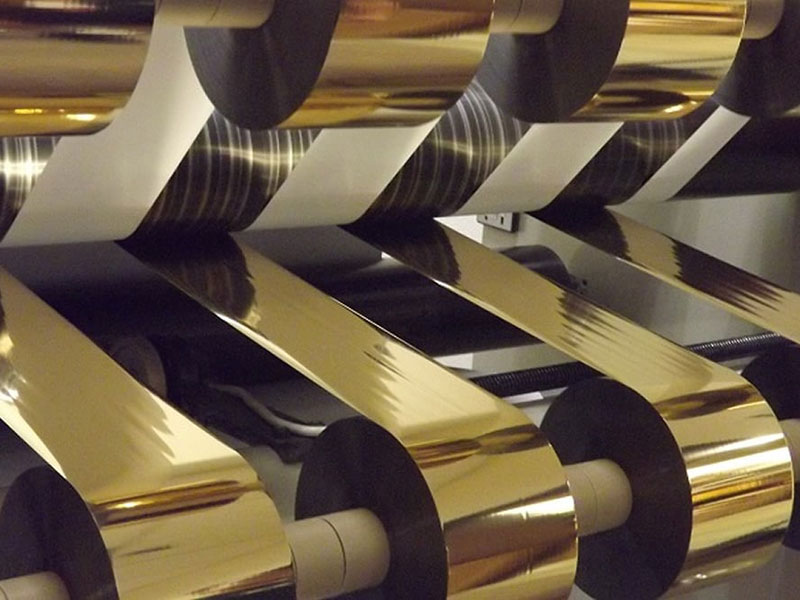
3. Implementation Results and Investment Return
| Indicators | Before innovation | After the reform | Change |
| Average scrap rate | 8.0% | 5.6% | ↓30% |
| Maximum slitting speed | 120m/min | 180m/min | ↑50% |
| Daily output (calculated by 8 hours) | Approximately 5,760 meters | Approximately 8,640 meters | ↑50% |
| Profit per ton of foil material | Benchmark | +12% | — |
The company invested about 480,000 yuan in equipment upgrades, with a single scrap savings of 370,000 yuan in annualized income. Combined with the profit from new orders from capacity increases, the payback period is about 9 months. More importantly, high-speed stable operation reduces blade replacement frequency and downtime for debugging, reducing the number of operators from three to two.
4. Suggestions for replicability
The technical solution in this case is suitable for most narrow (≤600mm) hot stamping foil, laser film, and heat transfer film slitting equipment. It is recommended that peers prioritize the implementation of the following three low-investment retrofits:
• Equipped with CCD deviation correction and laser ranging (cost about 80,000 RMB, scrap can be reduced by 15-20%);
• Replace the direct-drive motor and modify the tension control program (cost about 150,000 RMB, with speed increased by 30-40%);
• Introduced an automatic foil bonding device (cost about 120,000 yuan, with the most significant improvement in overall efficiency).
For completely new production lines, modular slitting platforms with the above functions can be directly procured, with initial investment 20-30% higher than traditional equipment, but lower lifecycle costs.
Conclusion
Hot stamping foil slitting is no longer a simple "cutting" process, but a precision machining step integrating machine vision, motion control, and intelligent algorithms. This case shows that reducing waste and increasing speed are not contradictory goals; through precise correction, dynamic tension, and high-speed drive system innovation, both "material saving" and "speed increase" can be achieved simultaneously. In today's era of rising raw material costs and normalized short lead times, this innovative solution is worth promoting in the industry.
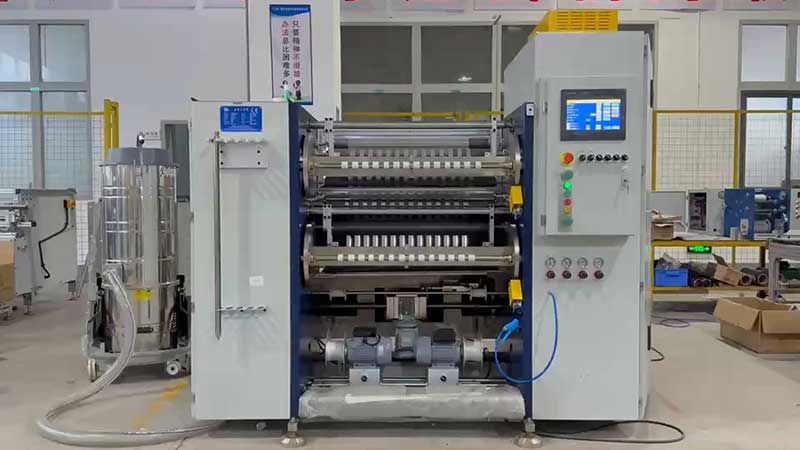
Whether you operate a slitting line or source slit rolls from a supplier, understanding these failure modes helps you protect quality and reduce downtime.
08. October, 2026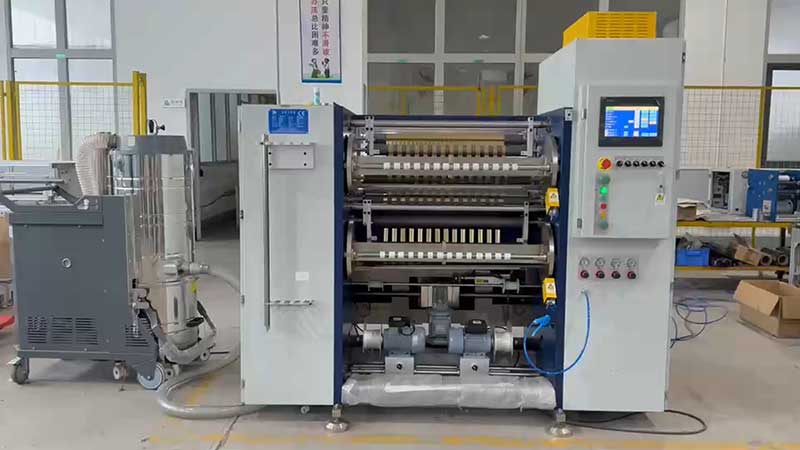
This guide breaks down the specifications that actually matter, organized by the parameters that directly affect your yield, efficiency, and bottom line.
08. October, 2026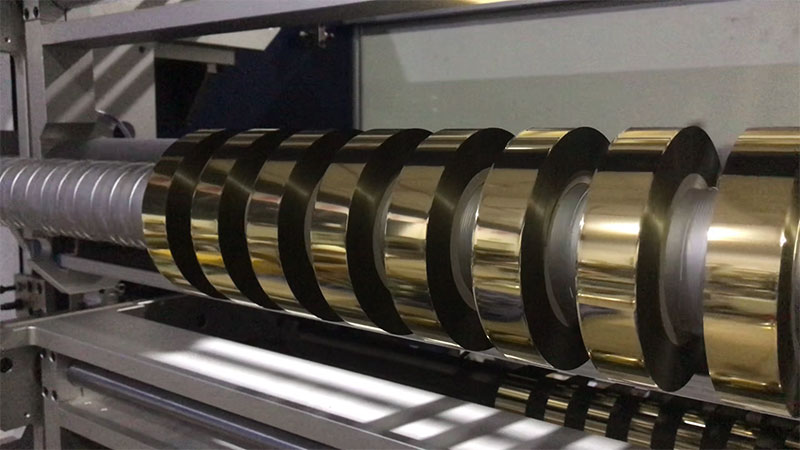
The tension control in the slitting stage directly determines the yield rate of subsequent hot stamping processes.
28. September, 2026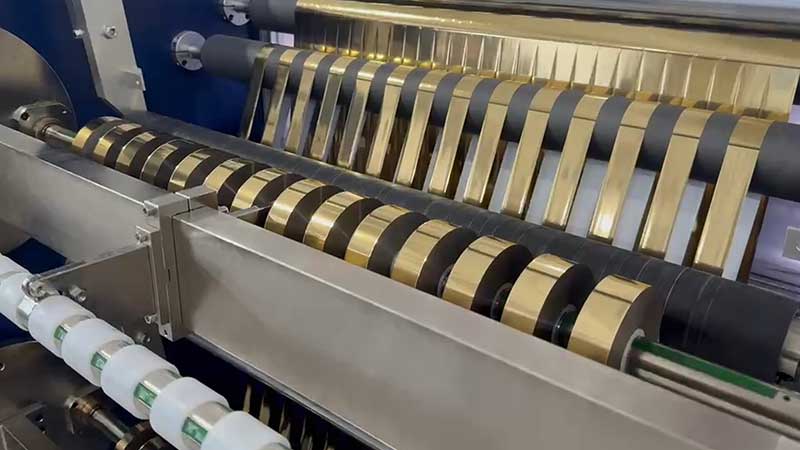
The key to selection is to grasp three parameters that truly determine slitting quality: slitting accuracy, tension control, and tool system.
28. September, 2026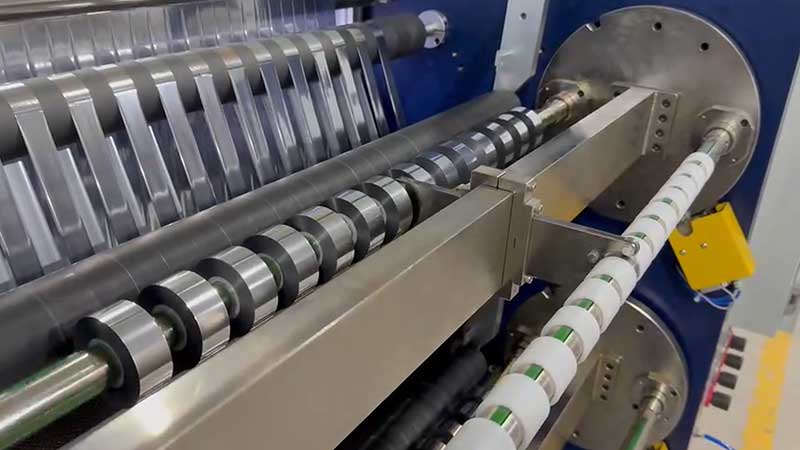
But what truly determines whether a slitting machine is "in sync" is not the absolute value of a single parameter, but the matching logic between width and speed.
28. September, 2026


 English
 Deutsch
 Français
 Español
 Português
 日本語
日本語 русский
 한국어
한국어 عربي
عربي ภาษาไทย
 Tiếng Việt
 Italiano