
In the corner of the printing and packaging industry, there is a piece of equipment that has quietly operated for more than half a century—the hot stamping foil slitting machine. It precisely cuts the wide hot stamping foil roll into narrow strips, providing raw materials for subsequent hot stamping processes. In the past, the precision of this machine relied on the feel of skilled workers and the stability of mechanical transmission; Today, an algorithm-driven revolution is quietly changing all of this.
The "craftsmanship" of the mechanical age
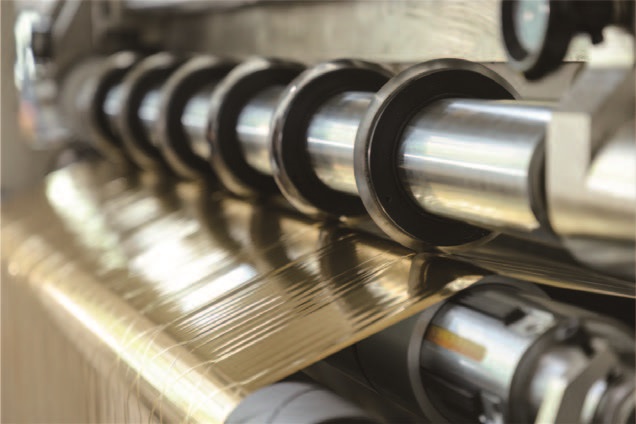
The core structure of traditional hot stamping foil slitting machines is not complicated: unwinding, pulling, slitting, and rewinding. However, the inherent properties of hot stamping foil make it a "challenge" in the cutting field. The foil is extremely thin, coated with metal powder and adhesives; even slight tension fluctuations can cause wrinkles, broken bands, and even edge burrs.
The older generation of operators often said: "Cutting and hot stamping gold foil relies on the machine for 30%, and experience for 70%. "Adjusting tension, controlling speed, and judging tool wear all rely on human ears, eyes, and fingers. A skilled craftsman needs three to five years to operate independently, and even the best workers cannot completely avoid product wear caused by uneven tension.
Sensor Intervention: Making Machines "Visible"
The starting point of the revolution is the maturity of sensor technology. Tension sensors monitor tensile force changes during foil operation in real time; Laser displacement meter detects edge swing; High-resolution cameras capture burrs and dust adhesion on the strips after slitting.
This data continuously flows into the controller at millisecond-level frequencies, allowing the slitting machine to "see" its own operating status for the first time. But data is just raw material; real transformation happens after algorithms enter the market.
The soul of algorithms: from PID to model prediction
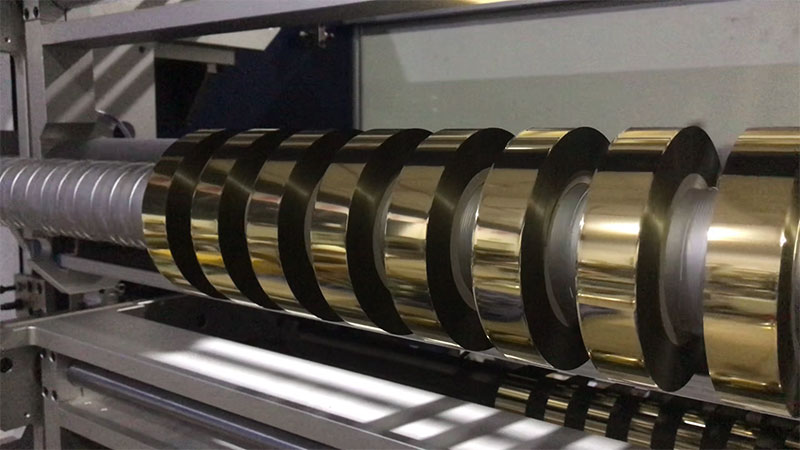
Early electronically controlled hot stamping foil slitting machines used PID (Proportional-Integral-Differential) algorithms to adjust tension. It reacts quickly but struggles with hot stamping foil as a nonlinear and strongly coupled object. The surface friction coefficients of a new roll of foil differs between a roll of old foil, so PID parameters need to be repeatedly manually adjusted.
The new generation of algorithms introduces Model Predictive Control (MPC). The system first establishes a dynamic model of the foil material under high-speed movement, including parameters such as elastic modulus, coefficient of friction, and air resistance. The controller continuously optimizes control strategies for several steps in the next few steps based on the current state, predicting and suppressing tension fluctuations in advance.
Furthermore, machine learning is used to adaptively adjust model parameters. With each roll of material produced, the algorithm "learns" once, continuously optimizing control strategies for similar materials. A model that frequently broke the belt three months ago can now run continuously for eight hours without faults.
The evolution of edge detection: from mechanical rulers to visual algorithms
The core of slitting accuracy lies in edge control. Traditional mechanical edge detectors rely on photoelectric signals to determine foil misalignment, resulting in poor anti-interference capability and often failing when encountering strongly reflective hot stamping foil.
Deep Convolutional Neural Networks (CNNs) are trained to process edge images captured by cameras in real time. The algorithm can not only identify edge positions but also detect microscopic defects such as burrs, notches, and coating peeling. Accuracy improved from the original ±0.3 millimeters to ± 0.05 millimeters, and the defect rate dropped by more than 40%.
Digital twin: Trial production eliminates material waste
In the past, switching to a new specification of hot stamping foil required multiple trial cuts on the machine, with losses ranging from tens of meters to over a hundred meters. An important milestone in the algorithm-driven revolution is the establishment of digital twin systems.
Operators input foil parameters (thickness, width, type of surface treatment) and target slitting specifications on the computer. The system calls the historical database to match the closest material model, completing the entire slitting process simulation in a virtual environment. Tension curve, velocity curve, and projected mass indicators are all clearly visible at a glance. After confirming everything is correct, it is sent to the physical device with one click. Test cutting loss is reduced from several dozen meters to within two meters.
Reconstructing human-machine relationships
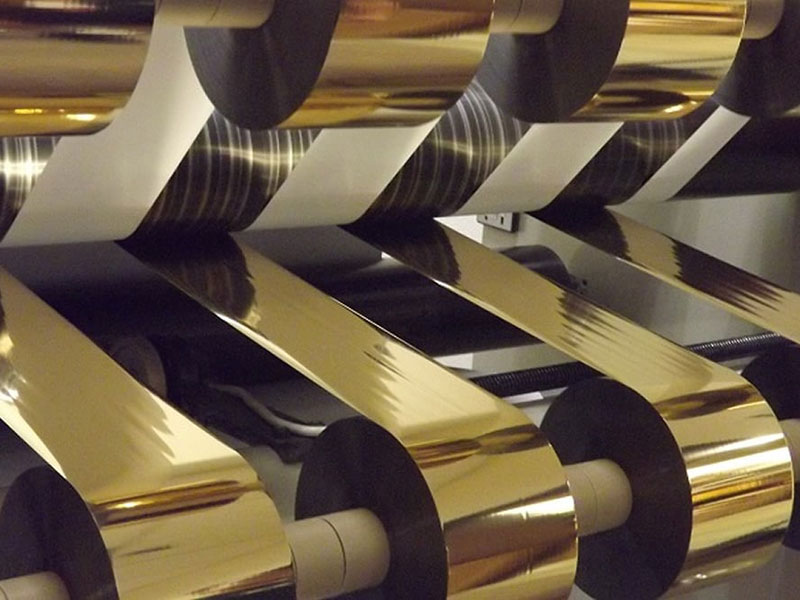
In this revolution, the role of operators underwent a fundamental transformation. They no longer need to judge the risk of band breakage by ear but can instead view real-time health scores on tablets; There is no longer a need to manually tighten the brake disc to adjust tension; instead, the target value can be set on the HMI interface.
But this does not mean machines have replaced humans. On the contrary, algorithms free operators from repetitive, stressful manual adjustments, allowing them to focus on higher-value tasks: analyzing the causes of abnormal downtime, optimizing production scheduling, and participating in the development of new product slitting processes.
A veteran craftsman who has worked in the gold foil foil industry for twenty years remarked, "When I used to teach apprentices, I was most afraid they wouldn't notice changes in tension." Now machines can hear, see, and adjust themselves, so we should learn to understand their 'language.' ”
Challenges and the future
Algorithms are not omnipotent. Foil slitting still faces several unresolved challenges: how can tiny coating differences between different batches of materials be quickly adapted? Can algorithms filter out the interference of static electricity on sensor signals during high-speed operation? Can extremely fine cracks at the edges be predicted before they form?
Researchers are trying to introduce reinforcement learning into tension control—allowing algorithms to autonomously explore optimal control strategies in a virtual environment, rather than relying on manually annotated data. At the same time, 5G low-latency communication allows multiple slitting machines to share model parameters, creating a "collective learning" effect.
Conclusion
The story of the hot stamping foil slitting machine is a small yet beautiful microcosm under the backdrop of Industry 4.0. It shows us that even the most traditional and inconspicuous manufacturing steps can be reignited by algorithms. The secrets once hidden at the fingertips of experienced craftsmen are now being deconstructed, optimized, and surpassed by line after line of code.
The shift from mechanical to digital is not just a change in device form, but a leap in cognitive paradigms. When hot stamping foil glides smoothly across the slitting machine, it is no longer human intuition or luck, but algorithms' calm and precise understanding of the physical world. This revolution is not yet complete, but it is irreversible.
It is specifically designed to cut the wide master roll hot stamping foil into different narrow finished rolls according to process requirements, and is used in conjunction with hot stamping machines.
16. October, 2026
A device with stable slitting accuracy and precise tension control is the fundamental link for ensuring hot stamping yield and material utilization.
16. October, 2026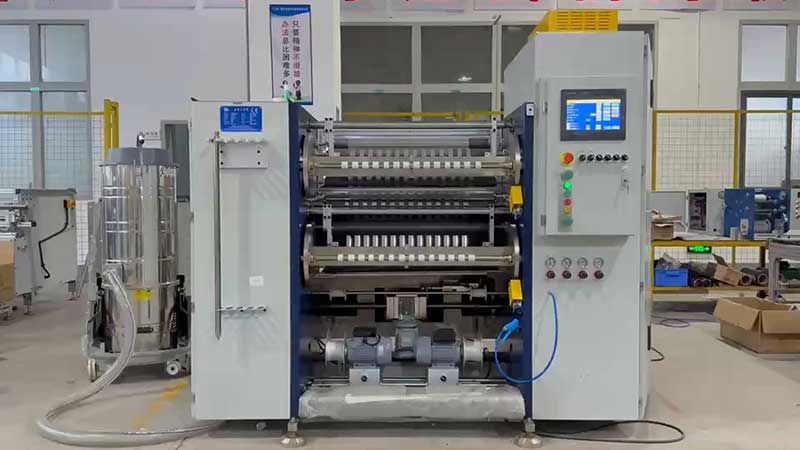
Whether you operate a slitting line or source slit rolls from a supplier, understanding these failure modes helps you protect quality and reduce downtime.
08. October, 2026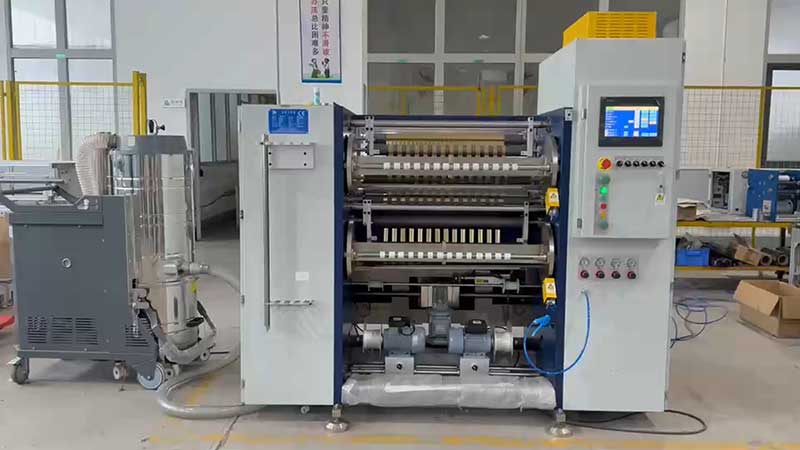
This guide breaks down the specifications that actually matter, organized by the parameters that directly affect your yield, efficiency, and bottom line.
08. October, 2026The tension control in the slitting stage directly determines the yield rate of subsequent hot stamping processes.
28. September, 2026


 English
 Deutsch
 Français
 Español
 Português
 日本語
日本語 русский
 한국어
한국어 عربي
عربي ภาษาไทย
 Tiếng Việt
 Italiano