
Against the backdrop of increasingly fierce competition and stricter environmental requirements in the printing and packaging industry, hot stamping foil (electrochemical aluminum) slitting, as a key step in post-press processing, is facing triple challenges in efficiency, precision, and energy consumption. Traditional slitting machines rely on manual adjustment of tension and speed, with motors constantly idling and a lack of waste recycling, resulting in high material waste rates and large energy costs. The new generation of intelligent energy-saving hot stamping foil slitting machines is rewriting production standards in this field through the deep integration of digital control architecture and systematic energy-saving design.
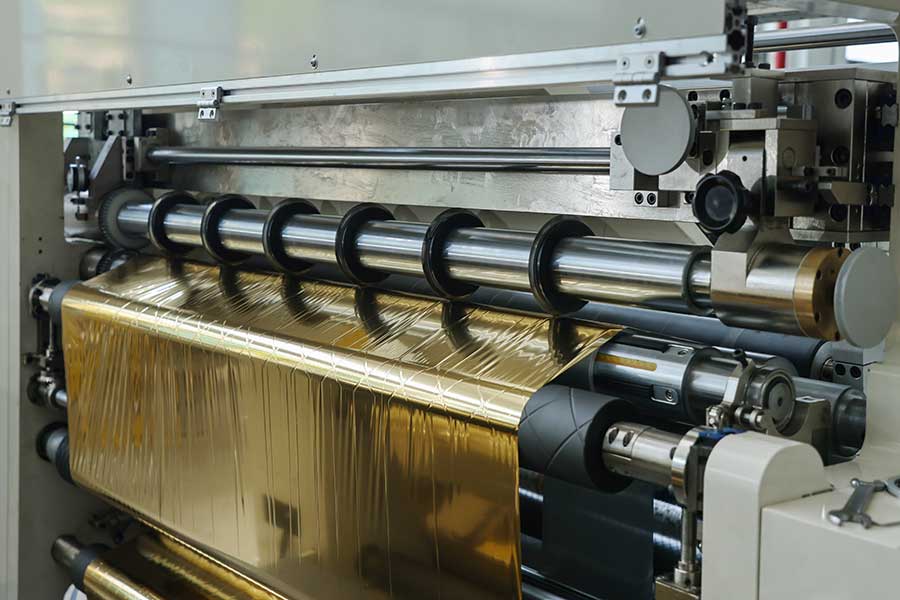
1. Intelligent Control: From "Hands-on Operation" to "Data Closed-Loop"
Intelligent control is the core of the slitting machine upgrade; essentially, it replaces human eye and touch with sensors and algorithms, achieving adaptive adjustment throughout the entire process.
1. Constant tension active control technology
The foil foil is only 6-35μm thick, making it highly prone to stretching, deformation, or paper breakage. Traditional mechanical friction pad brakes have lagging response, whereas the new equipment uses vector variable frequency motors + tension sensors for closed-loop detection: real-time detection of actual foil tension (accuracy ± 0.5N), dynamic adjustment of winding and winding torque via PID algorithm, and automatic call of tension curves for different widths and materials. This not only keeps the slitting end face neatness within ±0.1mm, but also prevents scrapping of "bamboo joint rolls" caused by tension fluctuations, increasing the yield to over 99.2%.
2. Servo tool shaft and automatic tool layout system
Traditional specification changes require stopping the machine and manually disassembling and assembling round blades, which takes more than 30 minutes. The intelligent slitting machine is equipped with an independent servo-driven tool shaft, with each tool holder having a built-in position encoder. The operator inputs the target width on the HMI interface, and the system automatically calculates and drives the tool holder to move to the preset position, reducing order change time to under 3 minutes. At the same time, the blade cut amount is calibrated by pressure sensors to avoid over-cutting that damages the bottom roller or causes burrs due to incomplete cuts.
3. Process parameter self-optimization and remote operation and maintenance
The new generation of equipment has a built-in process database (Recipe library), which can record parameters such as slitting speed, tension, and winding hardness for different specifications of hot stamping foil (such as holographic positional hot stamping, plain gold, and laser gold). Operators scan the material barcode to automatically retrieve the formula. Additionally, through 4G/5G gateways, device operation data is uploaded in real time to the cloud platform, allowing manufacturers and engineers to remotely diagnose inverter faults and predict blade lifespan, avoiding unplanned downtime.
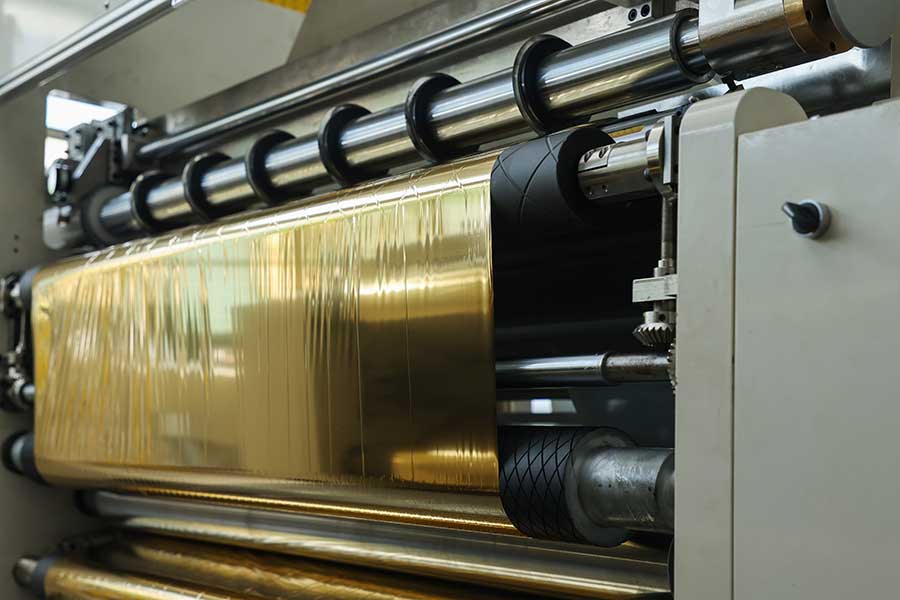
2. Energy-Saving Design: From "High Dissipation" to "Energy Efficiency Recovery"
Traditional slitting machines mainly consume energy in three areas: prolonged no-load operation of the main motor, heating and energy consumption from the brake resistor, and compressed air blowing out waste. The energy-saving design of new equipment addresses pain points one by one:
1. Permanent magnet synchronous spindle motor and energy feedback
In traditional asynchronous motors + frequency converters, regenerative energy is converted into heat dissipation through braking resistors during deceleration. The permanent magnet synchronous motor (IE5 energy efficiency level) combined with an energy feedback unit can rectify the electrical energy generated by deceleration and return it back to the grid for use by other equipment in the same workshop. In actual tests, under frequent start-stop slitting conditions (changing winds every 5 minutes), the feedback energy accounts for 15%-20% of total power consumption. At the same time, permanent magnet motors maintain high efficiency (>96%) when operating below rated load, saving about 8-12% energy compared to asynchronous motors (about 88%).
2. Non-expansion shaft and servo energy-saving winding
Traditional 3-inch expansion shafts require continuous air circulation of 0.6MPa compressed air, while the overall energy efficiency of air compressor stations is only 30%-40%. The new slitting machine uses a mechanical self-locking expansion shaft (such as a cone sleeve + spring plate structure), which transmits torque after a single manual pre-tightening session, completely eliminating compressed air consumption. A more advanced solution is servo direct-drive winding: each rewinding shaft is driven by an independent servo motor, eliminating the traditional drive belt and friction clutch, which not only reduces mechanical losses (about 5%) but also automatically cuts off motor activation during standby operation—saving about 12,000 kWh of air compressor electricity per unit annually.
3. Intelligent start-stop and lightweight transmission
By detecting material paths through sensors, it achieves an intermittent operation mode of "incoming material operation, shutdown when material runs out." For example, installing ultrasonic material shortage sensors on the roller automatically stops and lights up when the core is detected. At the same time, the drive rollers use carbon fiber or aluminum alloy hollow rollers, reducing rotational inertia by 40% and lowering energy consumption during acceleration/deceleration. Some high-end models also feature an energy-saving mode for tail material: when the unwinding diameter is less than 100mm, the speed is automatically reduced by 50% and tension settings are lowered to prevent small rolls from wrinkling and causing scrapping, while also reducing energy waste from ineffective high-speed operation.
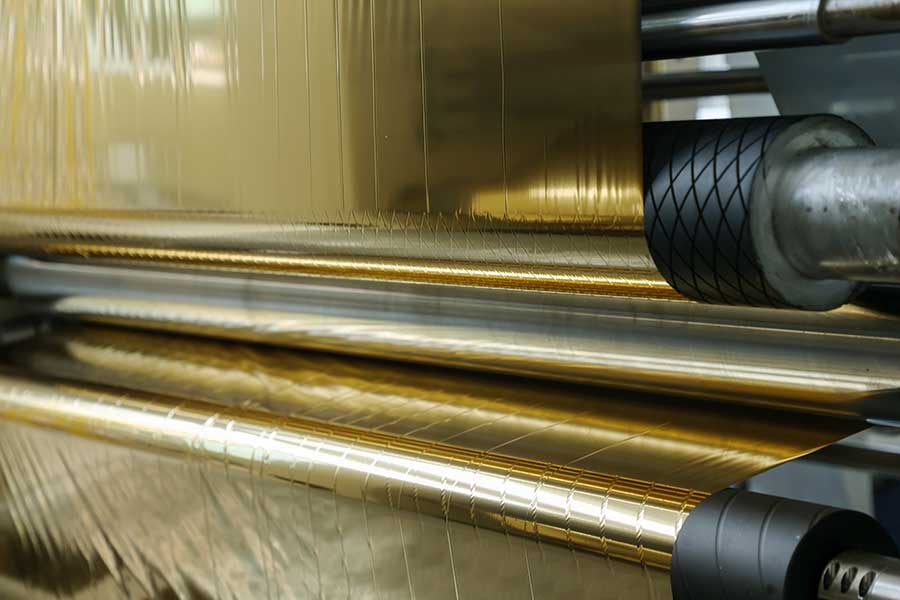
3. Economic and Environmental Benefit Verification of Upgrades
Taking a leading hot stamping foil company as a reference in actual renovation cases: the factory originally had 15 traditional slitting machines, with an average power of 7.5kW per unit and an annual electricity consumption of about 550,000kWh (including air compressors). After replacing with 10 intelligent energy-saving slitting machines:
• Power consumption: The average measured power per unit dropped to 5.2kW (net energy savings), with total annual power consumption dropping to about 410,000kWh, a reduction of 25.5%.
• Material savings: Constant tension control shortens the scrap length at both ends of each roll from 15 meters to 5 meters. With an annual output of 8 million rolls, the annual cost savings on hot stamping foil are about 180,000 yuan.
• Labor costs: Automatic tool layout and recipe calling reduce operators from 4 per shift to 2 per shift.
• Payback period: Equipment procurement costs are about 30% higher than traditional models, but overall energy and material savings usually pay off premiums within 1.8 years.
4. Future Trends: Digital Twins and Whole-Line Energy Management
In the next phase, the upgrade of the hot stamping foil slitting machine will move beyond the standalone stage and integrate into the factory-level industrial internet platform. By establishing a digital twin model of the slitting process, the blade shaft arrangement and tension curve can be optimized in a virtual environment, and the stress-strain characteristics of different batches of PET base films can even be predicted. At the same time, multiple slitting machines are linked with upstream hot stamping coating machines and downstream die-cutting machines to achieve busbar DC power supply (energy is directly balanced between equipment), or to reduce standby energy consumption during downtime and material waiting to below 0.5W. For packaging and printing companies, if they don't start upgrading now, they will lose not only profits but also a first-mover advantage in the green manufacturing track.
Conclusion
The intelligent control and energy-saving design of the hot stamping foil slitting machine essentially means refined operation of "per meter of material, electricity per watt." From constant tension closed loops to energy feedback, from automatic tool layout to gasless expansion shafts, these technologies are not expensive concepts but proven investment return logic. As industry profits are continuously diluted, whoever completes equipment upgrades first can hold the bottom line in fierce cost wars—while delivering tangible emission reductions to the "dual carbon" goals.
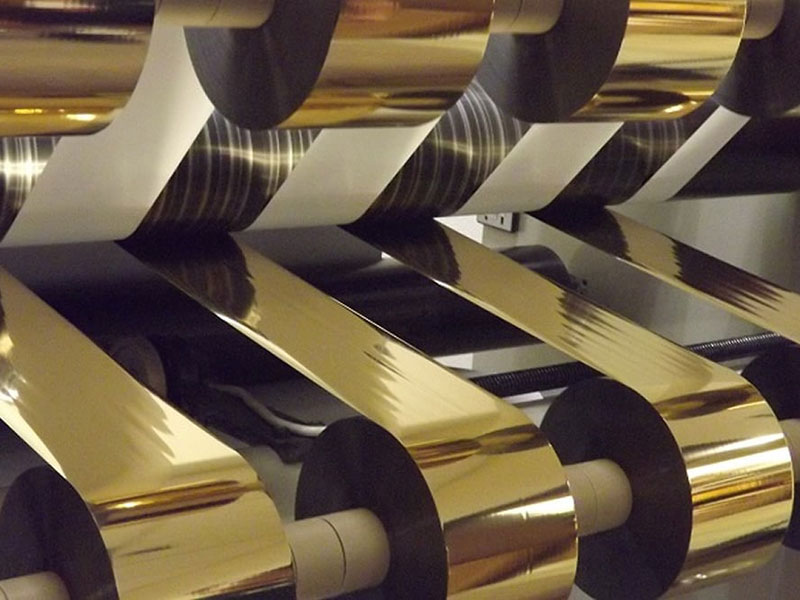
A mature automated system needs to form a closed loop simultaneously across four dimensions: correction, tension, cutting, and data management.
21. October, 2026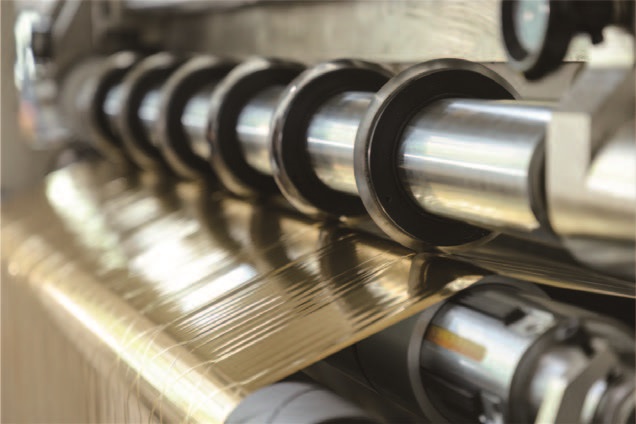
The value of customized slitting solutions lies in turning "cutting accurately, changing quickly, and no waste" from a slogan into a quantifiable production indicator.
21. October, 2026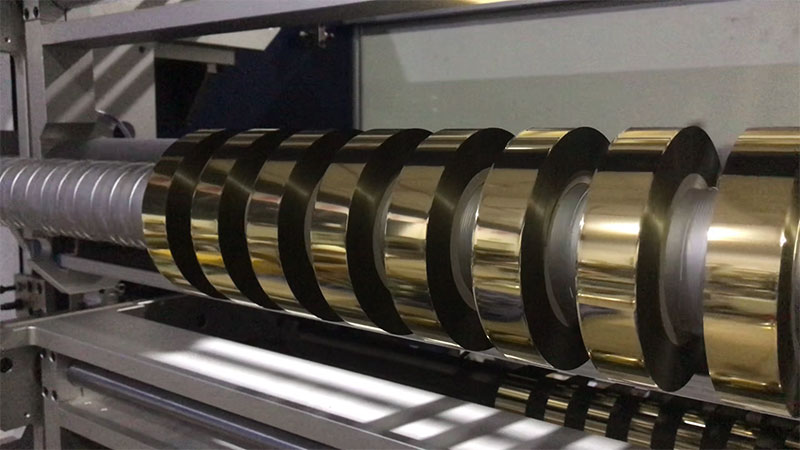
This article focuses on the two subsystems of unwinding and rewinding, explaining their functional composition, control logic, and key points of common adjustments.
21. October, 2026It is specifically designed to cut the wide master roll hot stamping foil into different narrow finished rolls according to process requirements, and is used in conjunction with hot stamping machines.
16. October, 2026A device with stable slitting accuracy and precise tension control is the fundamental link for ensuring hot stamping yield and material utilization.
16. October, 2026


 English
 Deutsch
 Français
 Español
 Português
 日本語
日本語 русский
 한국어
한국어 عربي
عربي ภาษาไทย
 Tiếng Việt
 Italiano