
As the printing and packaging industry moves toward Industry 4.0, lean production in hot stamping technology is facing a long-standing technical pain point—tension control during foil slitting. Traditional slitting machines frequently encounter issues such as foil breakage, wrinkles, and uneven winding caused by tension fluctuations when dealing with increasingly thin and wide hot stamping foil materials. In the future, standard factory solutions are evolving toward millisecond-level tension adjustment.
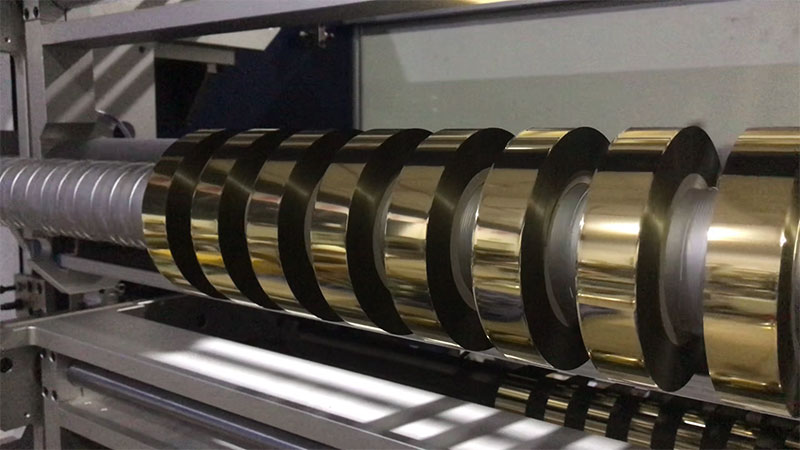
Why "millisecond-level"?
Hot stamping foil is a typical thin film material, typically between 12μm and 36μm thick. The base material is PET film, coated with a release layer, protective layer, adhesive layer, and metal coating. This multilayer structure makes it extremely sensitive to tension:
• Acceleration impact: The slitting machine goes from startup to 500m/min in only 3-5 seconds, whereas traditional PID adjustment response times are 200-500ms, which can no longer keep up with speed changes.
• Joint passage: The thickness at the ends and ends of each roll changes abruptly, causing tension disturbances to spread throughout the entire tape path within 50ms.
• High-frequency vibration: Mechanical components such as cutters and pressure rollers generate vibrations of tens of hertz, periodically disturbing tension.
To maintain tension stability within ±0.5N in such scenarios, the control system's response must be compressed to within 50ms, and the core components may even reach the 10ms level.
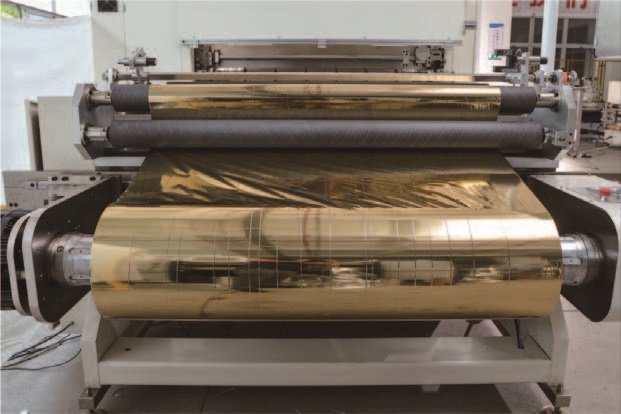
Four core technologies for millisecond-level tension adjustment
1. Low inertia servo drive and direct drive technology
The retraction and unwinding reels of traditional slitting machines are connected to motors via reducers, resulting in high mechanical inertia and obvious elastic deformation. The new millisecond-level system uses a direct-drive torque motor—the motor rotor is integrated directly with the reel, eliminating reducer clearance and elastic coupling deformation.
Taking an international brand's slitting machine as an example, the direct drive solution reduces the mechanical time constant on the unwinding side from 80ms to 12ms. Combined with a high-resolution encoder (2^23 pulses per revolution), the delay from tension adjustment instructions to actual torque output can be controlled within 5ms.
2. Dual closed-loop + feedforward control algorithm
Traditional single PID loops have inherent lag when facing high-speed changes. The millisecond-level system adopts a three-layer nested structure of current loop, velocity loop, and tension loop, with model prediction feedforward overlaid on the outermost layer:
• Current loop (response <1ms): Directly controls motor torque output
• Speed loop (response <5ms): suppresses tension disturbances caused by speed fluctuations
• Tension ring (response 10-30ms): corrects tension deviation based on sensor feedback
• Feedforward stage: Based on parameters such as coil diameter changes, acceleration/deceleration curves, and material modulus, the required torque change is calculated in advance and overlaid with the PID output
Actual tests show that at a 500m/min operating speed, the tension overshoot is about 3.5N and recovery time is about 400ms; while the feedforward + dual closed-loop scheme only 0.8N and recovery time is about 80ms.
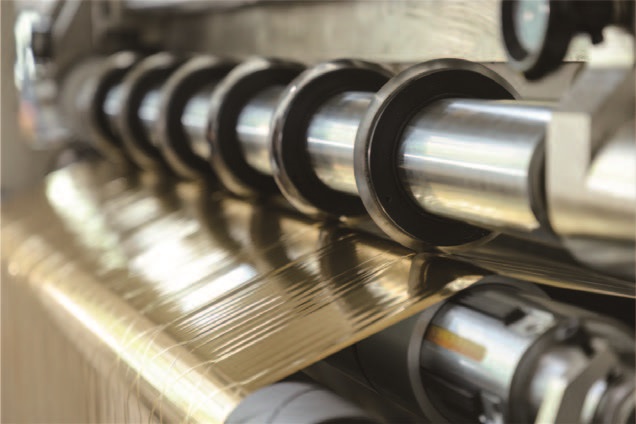
3. High-speed floating rollers and low-friction swing rollers
Tension sensors (such as weighing sensors) have high accuracy, but their signal sampling, filtering, and transmission links have inherent delays of about 15-20ms. To this end, millisecond-level systems have widely adopted pneumatic floating rollers as the first line of defense:
• The float roller provides a constant back pressure through a low-friction cylinder, equivalent to a mechanical "tension buffer"
• When tension fluctuations occur, the float roller absorbs energy changes through physical displacement within 8-15ms
• Float roller position sensor (magnetostriction or laser displacement) feeds back to the controller at a sampling rate above 2kHz
This "mechanical-electrical" collaboration allows the system to suppress tension spikes even before the electronic control fully intervenes. In a domestic high-end model's actual test, after adding a low-inertia float roller, the peak tension at the joint during passage dropped from 6.2N to 2.1N.
4. Real-time roll diameter calculation and material model adaptation
The biggest challenge in slitting hot stamping foil is that, as the unwinding diameter gradually decreases from 400mm to 100mm, to maintain the same tension, the motor torque must be reduced in sync. Traditional solutions rely on ultrasonic or proximity switches to measure roll diameter, which is slow to update and has limited accuracy.
Millisecond-level systems use a dual algorithm of pulse count per revolution + material thickness integration:
• With each rotation, the number of encoder pulses accurately reflects the current roll diameter
• Simultaneously combine material settings for thickness and number of turns for Kalman filtering fusion
• Roll diameter update rate can exceed 200 times per second
Furthermore, the system includes built-in elastic modulus-velocity-temperature characteristic curves for common hot stamping foils. When changing materials, operators only need to select the model, and the controller automatically adapts the tension-torque transfer function parameters without manual tuning.
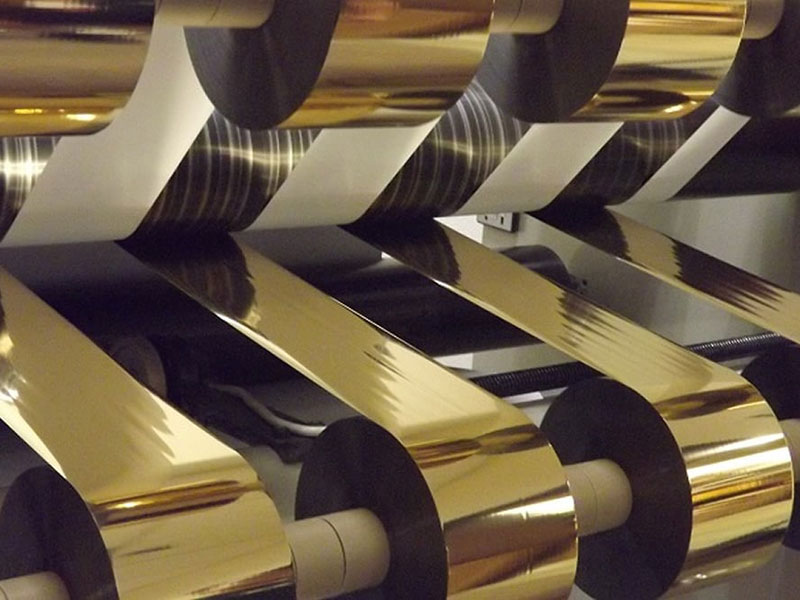
From "millisecond-level adjustment" to "future factory standard"
The foil foil slitting machine that achieves millisecond-level tension adjustment is no longer an isolated device, but an intelligent node in the future factory digital ecosystem:
• Edge Computing: The controller analyzes tension waveforms in real time and automatically identifies early fault features such as blade wear and bearing damage
• Industrial interconnection: After slitting each roll, the tension curve is uploaded to the MES system in OPC UA format, forming a closed-loop optimization with the foil foil machine's feed parameters
• Digital twin: Before slitting, the system simulates and predicts the optimal slitting speed curve based on material batch data and historical tension data
Market trends and cost considerations
Currently, high-end hot stamping foil slitting machines with millisecond-level tension adjustment capability sell for about 1.8 to 2.5 times the price per unit of traditional models. However, for hot stamping foil processing enterprises with annual output values exceeding 50 million yuan, the payback period for this investment is usually 12-18 months—mainly due to: reducing scrap rate from 3-5% to within 0.5%, increasing slitting speed by 30-50%, and saving labor by handling broken foil without stopping the machine.
With breakthroughs in the performance of domestic servo drives and controllers, this technology is spreading from high-end imported equipment to mainstream domestic models. It is expected that by 2026, millisecond-level tension adjustment will become the factory standard for medium and large hot stamping foil slitting machines in China, and will be incorporated into industry technical specifications.
At that time, hot stamping foil slitting will no longer be a process that requires skilled craftsmen to adjust by "touch," but will be a stable and reliable automated process driven by data and algorithms—this is the basic requirement for every production unit in future factories.
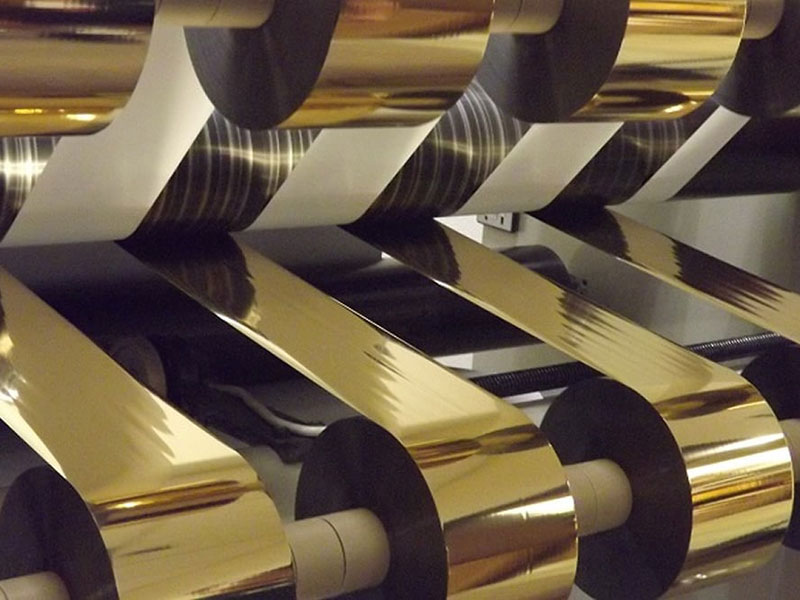
A mature automated system needs to form a closed loop simultaneously across four dimensions: correction, tension, cutting, and data management.
21. October, 2026The value of customized slitting solutions lies in turning "cutting accurately, changing quickly, and no waste" from a slogan into a quantifiable production indicator.
21. October, 2026This article focuses on the two subsystems of unwinding and rewinding, explaining their functional composition, control logic, and key points of common adjustments.
21. October, 2026It is specifically designed to cut the wide master roll hot stamping foil into different narrow finished rolls according to process requirements, and is used in conjunction with hot stamping machines.
16. October, 2026A device with stable slitting accuracy and precise tension control is the fundamental link for ensuring hot stamping yield and material utilization.
16. October, 2026


 English
 Deutsch
 Français
 Español
 Português
 日本語
日本語 русский
 한국어
한국어 عربي
عربي ภาษาไทย
 Tiếng Việt
 Italiano