
In the packaging and printing industry, the metallic sheen imparted by hot stamping techniques to products is often synonymous with quality and luxury. However, behind this dazzling effect, the quality of the slitting of the hot stamping foil directly determines the success or failure of the hot stamping. Splitting burrs and inaccurate dimensions are two major "roadblocks"—the former causes the edges of the hot stamped pattern to become fuzzy and powder to stain the layout, while the latter directly leads to inaccurate registration and material waste. As an equipment investment often involving hundreds of thousands or even millions, how exactly should you choose a hot stamping foil slitting machine to avoid these pitfalls? The following three moves hit the nail on the head.
First move: Lock in the "lifeblood of precision"—tension and correction systems
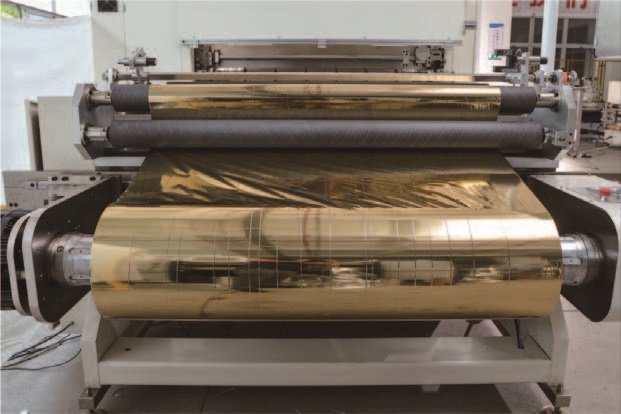
Hot stamping foil is usually made by composing multiple layers such as PET base film, release layer, and aluminum plating layer, with a thickness often only 12-25 microns, making it extremely sensitive to tension. Over 90% of the root causes of inaccurate slitting dimensions and uneven end faces lie in tension control.
Key points for selection:
Priority should be given to models equipped with fully closed-loop servo tension control systems. Compared to traditional open-loop control, closed-loop systems use high-precision sensors to provide real-time feedback and dynamically adjust tension throughout the entire process from unwinding to rewinding, ensuring constant tension during acceleration and deceleration. For high-end laser foil or ultra-thin materials, attention should also be paid to whether the equipment has taper tension technology (where tension decreases as the roll diameter increases) to prevent the inner foil from being damaged.
The correction system is a lifeline with neat edges. During high-speed operation, the foil rolls are prone to wobbling; if the edges are uneven, subsequent hot stamping machines will frequently deviate. Be sure to choose models equipped with ultrasonic correction sensors, as their detection is unaffected by foil color or metal reflection, resulting in more accurate responses; Higher-end models integrate a CCD visual recognition system that can automatically recognize printed edge markings, ensuring perfect matching between the slit position and the pattern. To determine whether the tension control is too rigid, a micrometer can be used to check the radial runout of the blade shaft. If the runout is too large, accuracy will inevitably "drift" at high speeds.
Second move: Relentlessly focus on "cutting quality"—tool and body rigidity
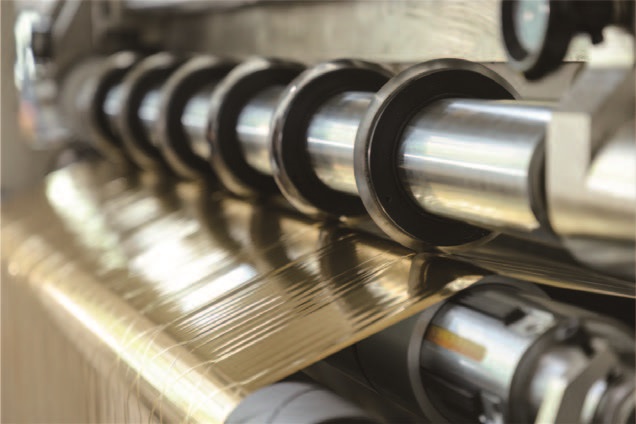
The essence of the burr issue lies in the difference between "cutting" and "tearing." If the blade is blunt or misfitted, it will "squeeze" the expensive gold leaf rather than "cut" it, inevitably producing burrs and foil powder.
Key points for selection:
First, check the tool material and precision. High-quality equipment generally uses diamond-coated or super-hard alloy round blades, with the cutting edge polished to a mirror finish and the angle finely polished according to the foil (usually 20°-60°). When inspecting the prototype, be sure to check whether the gap and overlap between the upper and lower blades are precisely adjustable—if the gap is too large, it can be cut incorrectly; if too small, it accelerates wear.
Next, look at the body structure. Priority is given to the integrated casting body, which offers much better rigidity and shock resistance than ordinary steel plate welded bodies. This is the physical basis for ensuring that the tool shaft does not shake at high speed and that cutting pressure remains stable. A detail that is often overlooked is to always check whether the surface of the guide roller is smooth and for any wear grooves, as any tiny scratch can trigger burrs.
Third tip: Assess "practical capability"—on-site trial cutting and intelligent management
No matter how beautiful the specs are, why not try rolling it up on the spot? In actual production, the same equipment can cut material A fine, but cutting material B can be a complete mess. Material compatibility and ease of operation determine long-term production efficiency.
Key points for selection:
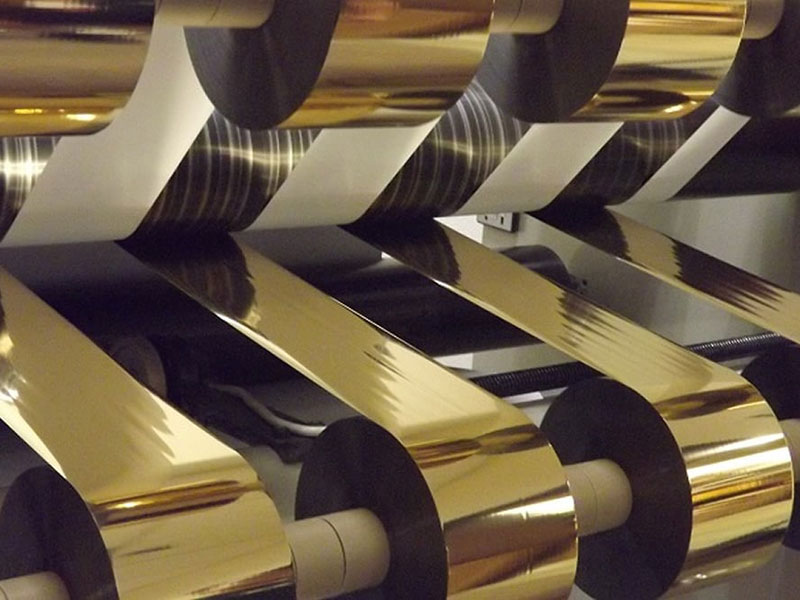
Be sure to bring your commonly used hot stamping foil master roll for on-site trial cutting. This is the most critical step. Pay special attention to whether the slitting end face is as smooth as a mirror, and whether there are any embossing marks or burrs. If possible, use a high-magnification microscope to inspect the cut edges and see if there are microcracks that are difficult to detect with the naked eye.
At the same time, pay attention to the level of intelligence of the equipment. Modern slitting machines should be equipped with formula storage functions—different widths and materials of hot stamping foil correspond to different tension and speed parameters, which can be digitally stored and accessed with one click during order changes, avoiding errors caused by manual adjustment by the master craftsman's "touch." Models equipped with online defect detection (AI visual recognition of scratches and bubbles) can further reduce material loss rates from over 5% to below 1% compared to traditional ones.
Summary
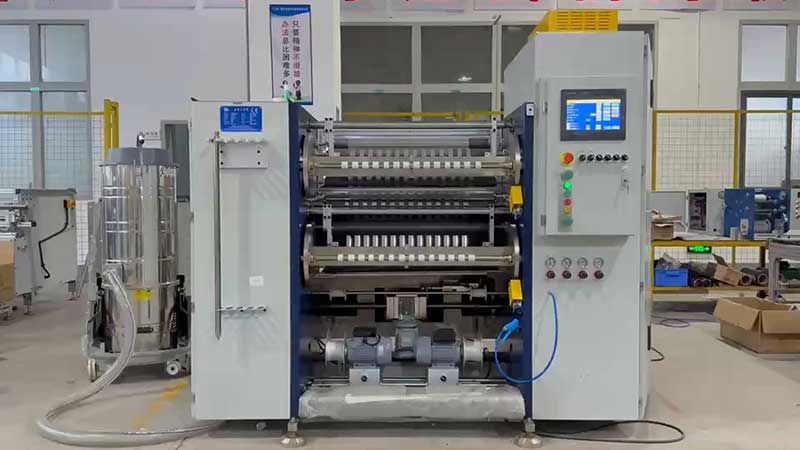
Choosing a hot stamping foil slitting machine is essentially not buying a bunch of steel parts, but rather purchasing a "precise and stable" cutting system. To avoid pitfalls caused by burrs and inaccurate dimensions, focus on three key points: check whether the tension loop is precise, whether the tool and machine body are rigid, and whether the on-site trial cutting passes the standard. Remember, the most suitable equipment is not necessarily the most comprehensive or expensive, but the one that best meets your actual production materials and precision requirements. Before making a decision, having in-depth communication with suppliers, even requesting short-term trials, is far wiser than simply comparing prices.
Whether you operate a slitting line or source slit rolls from a supplier, understanding these failure modes helps you protect quality and reduce downtime.
08. October, 2026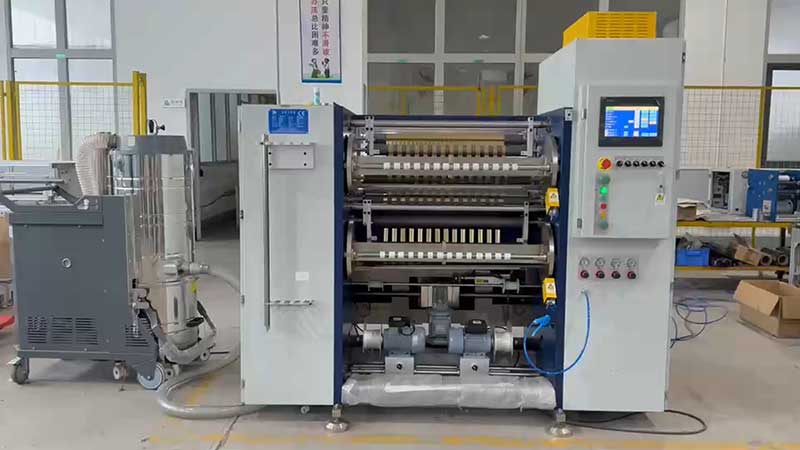
This guide breaks down the specifications that actually matter, organized by the parameters that directly affect your yield, efficiency, and bottom line.
08. October, 2026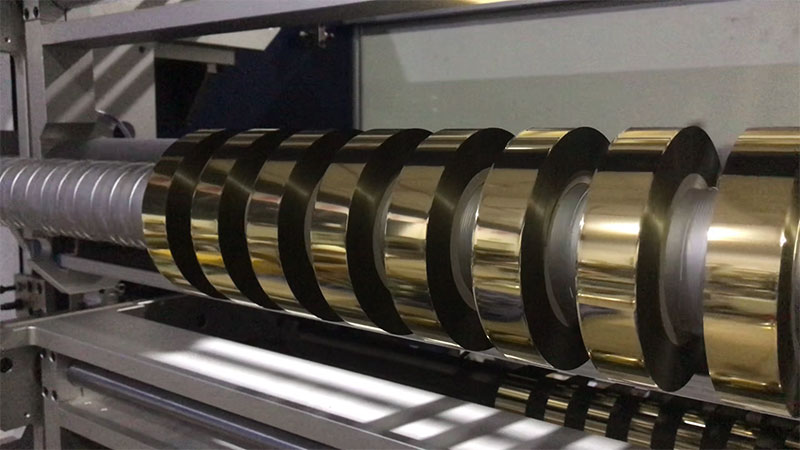
The tension control in the slitting stage directly determines the yield rate of subsequent hot stamping processes.
28. September, 2026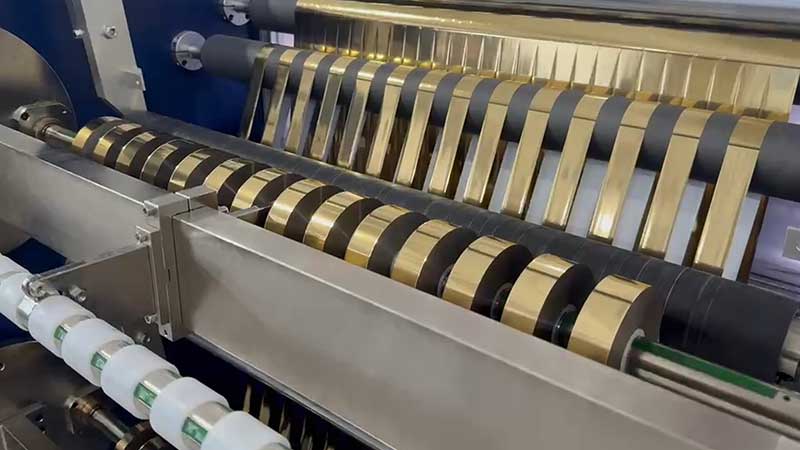
The key to selection is to grasp three parameters that truly determine slitting quality: slitting accuracy, tension control, and tool system.
28. September, 2026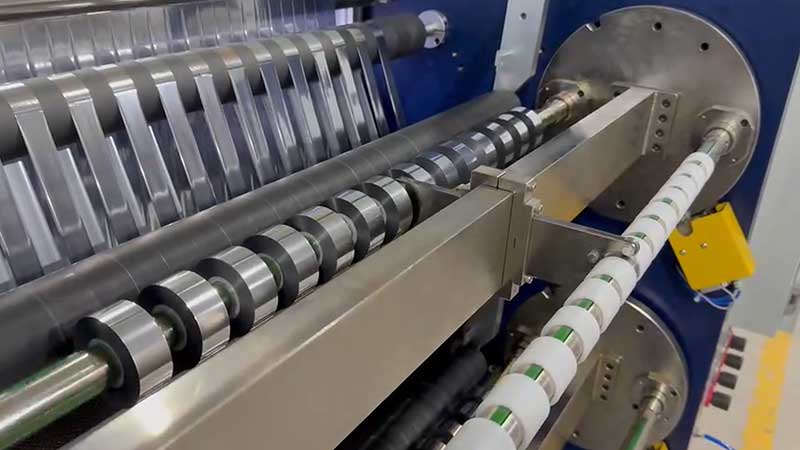
But what truly determines whether a slitting machine is "in sync" is not the absolute value of a single parameter, but the matching logic between width and speed.
28. September, 2026


 English
 Deutsch
 Français
 Español
 Português
 日本語
日本語 русский
 한국어
한국어 عربي
عربي ภาษาไทย
 Tiếng Việt
 Italiano