
The name 'gold foil slitting machine' sounds professional and expensive—equipment investments often reach hundreds of thousands or even millions. Choosing the wrong one not only wastes money but also becomes a daily production nightmare: rough edges, broken foil, misaligned sizes, frequent downtime...... Questions kept coming one after another.
This article won't beat around the bush—let's break down the three major pitfalls and six pitfalls when buying a hot stamping foil slitting machine, helping you spend your money wisely.
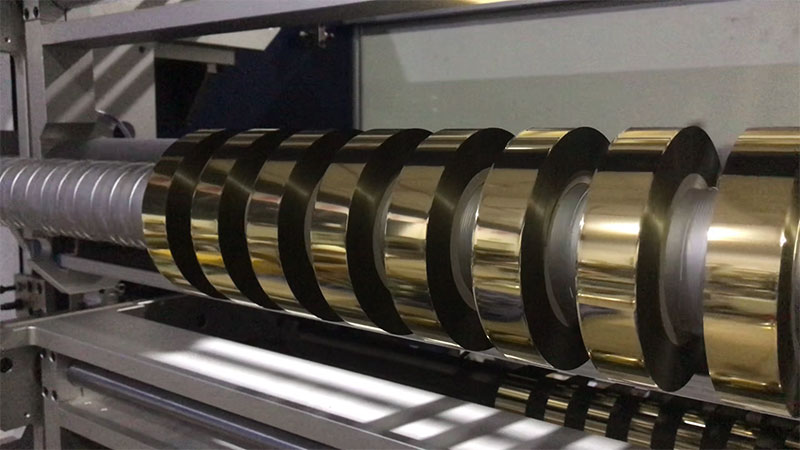
Before choosing a phone, let's first understand a fundamental question: what are you cutting?
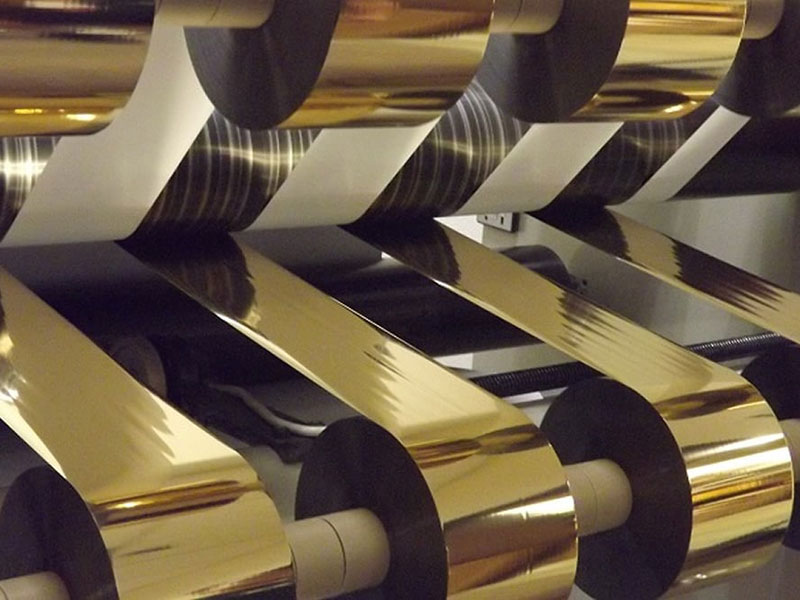
Hot foil (electrochemical aluminum) is not an ordinary "sheet of paper." It is usually made by laminating a 12-25 micron thick PET base film, release layer, aluminum coating, tinted layer, and adhesive layer. Ultra-thin, easily stretched, and extremely sensitive to tension—these are its core features and the central considerations when selecting models.
So, before engaging with any salesperson, clarify your own needs:
• What types of products are produced? Ordinary gold leaf, laser foil, holographic positioning foil, or ultra-thin specialty foil? The precision requirements vary greatly.
• What are the common width and thickness of the main roll? This directly determines the basic requirements for equipment specifications and tension control systems.
• What is the expected capacity? Is it a startup with small batches, or a factory producing in large batches continuously?
Gate One: Precision and Burrs — 90% of the problem lies in tension and cutting tools
"Inaccurate slitting size" and "edge burrs" are the two major problems with hot stamping foil slitting. The root causes of foil breakage, incomplete stamping, and inaccurate registration during stamping usually lie here.
1. Tension Control: The Device's "Anchor"
If the foil is too thin, excessive tension will cause stretching and deformation; if too small, it will be uneven and misaligned. Tension control is the primary lifeline for slitting quality.
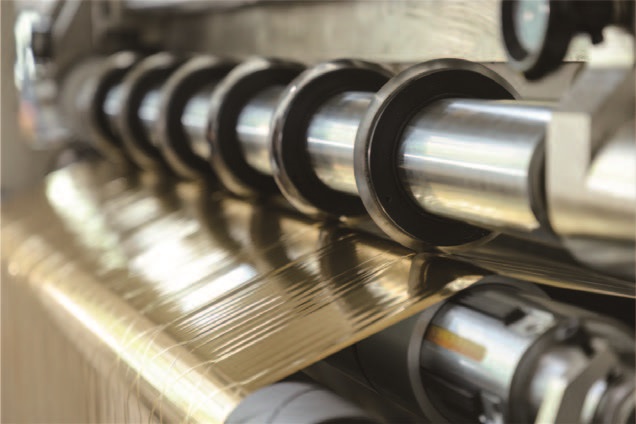
• Closed-loop tension control is essential: Compared to traditional open-loop control, closed-loop systems use sensors to provide real-time feedback and automatically adjust tension, ensuring constant tension during acceleration and deceleration. Floating swing rollers or high-precision tension sensors are key components for judging system quality.
• Focus on taper tension technology: As the winding diameter increases, the tension should gradually decrease according to the set curve. This is crucial for winding large roll diameters (such as those with diameters over 400mm), as it prevents the inner foil from being damaged.
2. Tools and Correction: The "Blade" and "Crosshair" of Cutting Quality
• Round blades are the preferred choice: For hot stamping foil, shear-type disc knives provide a smoother cut surface than ordinary flat blades (razor blades) and have a longer blade lifespan. Check the shank rigidity—the wider the slitting width, the less the shaft can bend at high speeds, otherwise it may be awkward with 'the middle cut can't cut and the sides are cut too far.'
• Correction system cannot be skipped: During high-speed operation, foil rolls are prone to oscillation and must be equipped with ultrasonic correction sensors, which are unaffected by foil color or metal reflection and respond precisely. High-end models have integrated CCD visual recognition, which can automatically recognize printed labels and ensure the slit position perfectly matches the pattern.
• On-site test cutting is a "magic mirror": no matter how beautiful the specs, it's better to cut a roll of your material on the spot and see it. Pay special attention to whether the end face is as smooth as a mirror, and whether there are visible burrs or microcracks.
Gate Two: Efficiency and Peace of Mind — Reliability Is the Biggest "Money Saving"
A device that frequently shuts down, no matter how low, is expensive. The "reliability" of equipment is the most worthwhile hidden value when selecting a model.
1. Body structure and core components
• Choose "heavy" over "light": Prioritize integrated casting frames or high-quality thickened steel and annealed welded frames. The thick chassis ensures it remains unmoved at high speeds, which is the physical foundation for accuracy and longevity.
• Transmission and electrical systems depend on the brand: Servo motor drives are standard in modern high-reliability equipment, with precision and response far exceeding traditional mechanical transmissions. The brand of key components (PLC, servo motors, sensors, bearings) (such as Mitsubishi, Siemens, SKF, NSK, etc.) is an important reference for judging grade and reliability.
2. Automation and intelligent features
• "Fully automatic" requires verification: Many machines advertise "fully automatic" but still require manual feeding and tool adjustment. True fully automatic should include functions such as automatic tension control, automatic deviation correction, and online defect detection. Require a full-process demonstration at the sales site rather than verbal commitments.
• Parameter memory function is a "must-have": hot stamping foil comes in many specifications and orders are frequently changed. Devices with recipe storage functions can digitally save slitting parameters (tension, speed, width) for different products, allowing one-click access during order changes, eliminating errors and waste caused by manual adjustment by experienced technicians.
Gate Three: Dust Removal and Safety — Details Determine Success or Failure
• The dust removal system must be in place: If aluminum powder and dust generated by slitting adhere to the foil surface, they will form "hot stamping spots" during hot stamping, directly causing scrap. The equipment must be equipped with a multi-stage dust removal device combining contact (dust sticking roller) and non-contact (ion air knife/suction outlet), and install static eliminators to prevent dust from being adsorbed by static electricity.
• Safety protection is the bottom line: Check whether the equipment is equipped with complete safety shields, emergency stop buttons, emergency braking, and other devices. This not only concerns operator safety but also reflects the manufacturer's professionalism and responsible attitude.
Pitfall Guide: You Need to Know How to "Crack Down the Salesperson's Mouth"
1. "Accuracy ±0.01mm" Trap: Follow-up question: Is this static accuracy or dynamic operating accuracy? At what speed and under what material conditions should it be achieved? It requires reviewing third-party test reports and observing actual performance at full load and high-speed operation.
2. The "Fit All Materials" Trap: No slitting machine is a cure-all. Beware of this overcommitment and choose equipment designed specifically based on your main production materials.
3. "Lifetime maintenance-free" trap: Regular maintenance and replacement of wear parts are essential for machinery. Be sure to understand the lifespan and maintenance cycles of key components.
4. Price only, no service talk: Clearly inquire about installation and commissioning, technical training, warranty policies, spare parts supply, and repair response times. If non-standard inserts run out of stock, the entire production line may face shutdown.
Summary: Your shopping list
Choosing a hot stamping foil slitting machine is essentially not about buying a bunch of steel parts, but about investing in a system that can provide stable output quality and efficiency for your production. The final decision checklist should include:
• Clarify requirements: production materials, precision, capacity, budget.
• Locking accuracy: closed-loop tension control + shear-type circular blade + ultrasonic correction.
• Relentless reliability: Heavy fuselage structure + branded servo and electrical systems.
• Validation in practice: Be sure to test cut your materials live and observe the entire process performance.
• Cost assessment: Calculate the full lifecycle cost (energy consumption, consumable parts, maintenance, material savings), rather than just looking at purchase price.
Remember, the most suitable equipment is always the one that can most stably and efficiently complete your specific production tasks
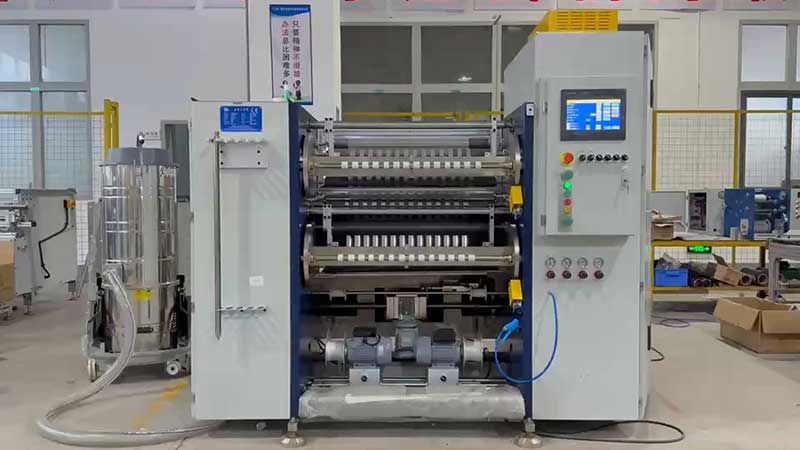
Whether you operate a slitting line or source slit rolls from a supplier, understanding these failure modes helps you protect quality and reduce downtime.
08. October, 2026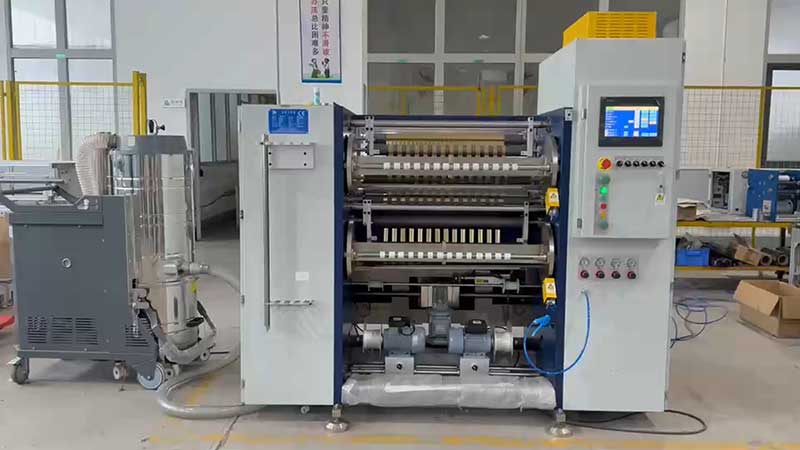
This guide breaks down the specifications that actually matter, organized by the parameters that directly affect your yield, efficiency, and bottom line.
08. October, 2026The tension control in the slitting stage directly determines the yield rate of subsequent hot stamping processes.
28. September, 2026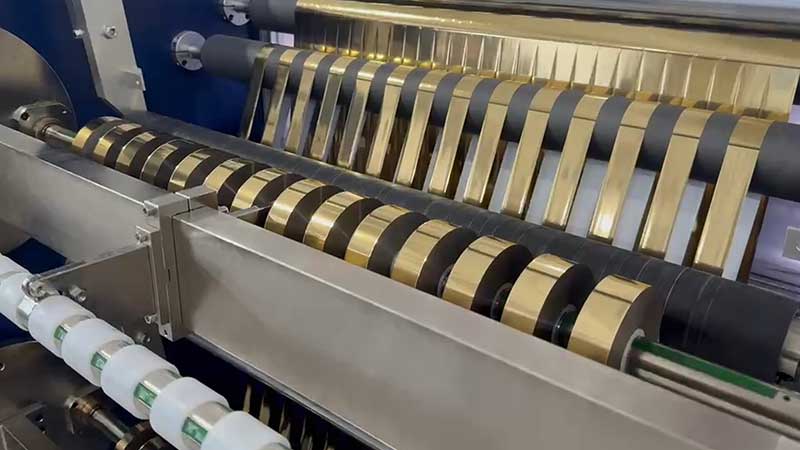
The key to selection is to grasp three parameters that truly determine slitting quality: slitting accuracy, tension control, and tool system.
28. September, 2026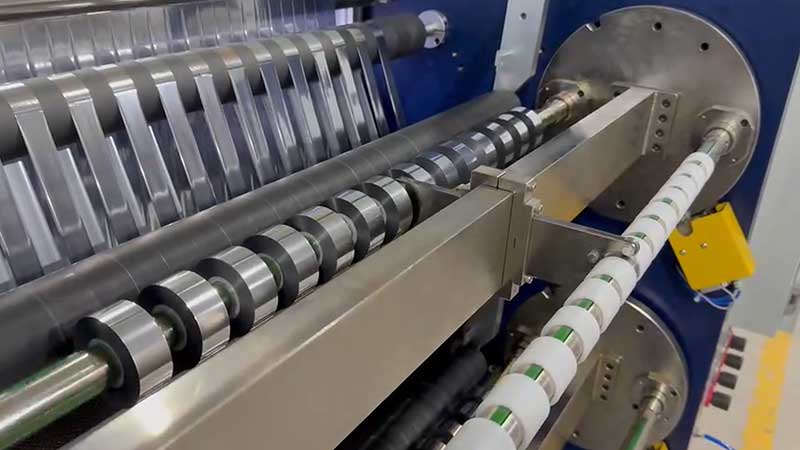
But what truly determines whether a slitting machine is "in sync" is not the absolute value of a single parameter, but the matching logic between width and speed.
28. September, 2026


 English
 Deutsch
 Français
 Español
 Português
 日本語
日本語 русский
 한국어
한국어 عربي
عربي ภาษาไทย
 Tiếng Việt
 Italiano