
In heat transfer ribbon production, slitting is a key process to convert wide-width rolls into the specifications required by customers. The carbon ribbon substrate is typically 4.5~10μm PET film, which is easy to stretch and wrinkle, making tension control the core lifeline of slitting quality. Tension is properly controlled, resulting in a flat and smooth product; When tension is out of control, burrs, broken bands, and layering follow one after another. This article will systematically review practical techniques for tension control in ribbon slitting machines.
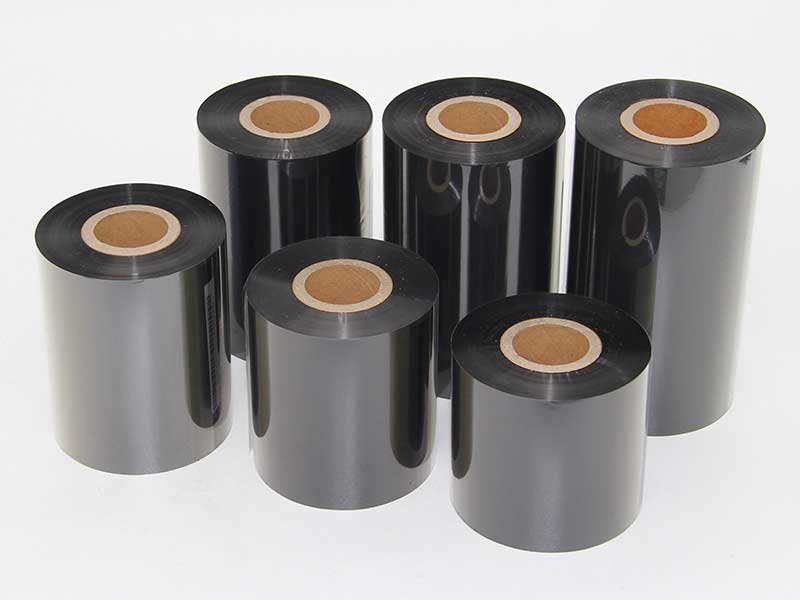
1. The "symptoms" and costs of uncontrolled tension
Tension issues are often directly exposed through the quality of finished products. Understanding the correspondence between "symptoms" and causes is the first step to quickly locating the problem:
| Quality performance | Possible causes of tension |
| Carbon ribbon rewinding varies in tightness, with off-layer layers at the end faces or forming a "tower shape" | Fluctuations in winding tension, improper taper settings |
| Periodic shaking during operation with uneven edges | Mechanical parts may be eccentric, bearing wear, or guide rollers not parallel |
| Interruption or slack occurs instantaneously during start/stop | The acceleration and deceleration times do not match the tension controller's response |
| The ribbon surface is wrinkled, with white lines and indentations appearing in the print | If the tension is too low, the ribbon becomes loose |
| Carbon ribbon powder sheds and the base film stretches and deforms | Excessive tension damages the PET base film and causes physical changes in the ink layer |
Both "over" and "insufficient" tension can cause serious consequences: excessive tension damages the PET base film by stretching, causing physical changes in the ink layer, leading to powder shedding or even product contamination; Insufficient tension, ribbon wrinkles, white lines and indentations appear during printing, and core misalignment may occur during transportation.
2. Core equipment and technology for tension control
1. Magnetic Particle Clutch: A classic tension actuator
The magnetic powder clutch is the core device for controlling tension in ribbon slitting machines. By adjusting the excitation current, the output torque can be precisely controlled, allowing flexible control of the ribbon's tightness. The winding group mechanism uses a magnetic powder clutch, allowing the speed of the winding shaft to be freely adjusted to effectively control product flatness. However, after more than a year of use, magnetic powder may settle or clump together, causing deterioration in linearity and requiring regular "activation" or replacement.
2. Closed-loop tension system: Upgrade direction
Traditional open-loop torque motor control struggles to cope with tension fluctuations caused by changes in coil diameter. Upgraded to a closed-loop vector frequency converter combined with floating roller tension feedback, real-time PID adjustment is achieved, keeping tension fluctuations within ±0.5N. For ribbons of different widths and thicknesses, a process parameter library should be established, with multiple tension formulations stored in advance for one-click recall.
3. Phased tension control strategy
Tension control is not about "one value to the end," but should be set differentiated according to the process stage:
• Unwinding area: adopts a decreasing tension curve, higher in front and lower in back, preventing inner layer sagging. Closed-loop servo tension control uses sensors for real-time feedback, with accuracy up to ±0.1N.
• Slitting zone: tension should be 10%~15% lower than in the unwinding zone, and a floating roll buffer mechanism should be added to absorb instantaneous fluctuations.
• Rewinding area: Uses taper control—initial tension is 120% of the slitting zone, linearly decreasing to 80%, ensuring consistent rolling hardness and avoiding 'chokxin-shaped' deformation.
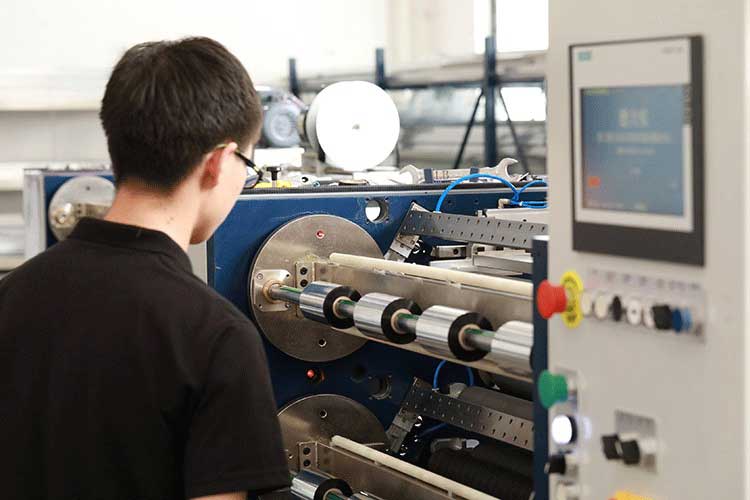
3. Different Materials, Different "Countermeasures"
The tension requirements for ribbons on different substrates vary significantly and cannot be generalized:
| Carbon ribbon types | Recommended tension range | Notes |
| PET film base | 8-12N/m | General reference value |
| Wax-based ribbons | 2-5N/m (low tension) | Combined with static eliminator to prevent adhesion |
| Blended/resin-based | 10-15N/m | Temperature control is required (20±2°C) to prevent resin layer cracking |
| Narrow band slitting (<10mm) | 60%-70% of conventional broadband | It has extremely weak lateral rigidity and is highly sensitive to tension fluctuations |
For special materials such as high-temperature resistant carbon ribbons, closed-loop servo control and temperature compensation sensors are also needed to dynamically correct tension fluctuations caused by thermal expansion and contraction. The slitting speed should also be appropriately reduced to reduce friction heat generation.
4. On-site inspection and adjustment practical procedures
When tension is unstable, avoid immediately adjusting parameters randomly. It is recommended to follow the following procedures for orderly inspection:
1. Idle test: Do not pass through the film; let the retractor and release reels run idly to observe whether the tension feedback is stable. If fluctuations persist, focus on inspecting the sensor and magnetic particle components.
2. Low-speed film penetration test: Operate at 5-10 m/min, observe the tension curve, and eliminate dynamic issues at high speeds.
3. One-side inspection: sequentially isolate release or rewinding control to determine which side of the fluctuation source is coming from.
4. Replacement Testing: Swap suspected problematic magnetic powder clutches with normal spare parts to quickly locate hardware faults.
5. Data Recording: After each adjustment, record tension values, parameters, and effects, creating maintenance records for the machine.

5. Mechanics and operational details: Don't stumble over small details
Unstable tension is rarely caused by a single cause; it is often the result of mechanical wear, electrical aging, and the combination of process settings. The following details are easiest to overlook, yet often the root of the problem:
• Guide roller parallelism: If the guide rollers are not parallel, the ribbon will generate lateral components, causing uneven tension on both sides. The error should be controlled within 0.05mm/m.
• Expansion shaft pressure: Fluctuations in air pressure can cause the core to slip or seize; it is recommended to install a pressure stabilizing valve.
• Roundness of the roll core: Deformed paper tubes or plastic cores can cause periodic bouncing during winding; be sure to check before loading.
• Film penetration path: An incorrect film penetration method can amplify or reduce the actual tension, and operators are most likely to make this mistake after changing specifications.
• Buffer distance: Provide a certain carbon belt buffer distance during startup and shutdown, during which the machine automatically adjusts speed and tension to maximize slitting tolerance.
6. Preventive maintenance recommendations
Rather than waiting for problems to be repaired, it's better to establish a regular maintenance mechanism:
• Monthly: Clean the surface of the guide roller, check bearing clearance, and measure the resistance of the magnetic powder clutch coil.
• Quarterly: Recalibrate the zero point of the tension sensor and check the gas-expanding shaft sealing ring.
• Every six months: replace the magnetic powder in the clutch (depending on usage time) and calibrate all guide roller parallelism.
• Before each batch starts: quickly pull and check for abnormal damping in the ribbon's passage path.
Tension control is an "art of balance"—finding the optimal balance between preventing breakage and avoiding looseness. Through equipment upgrades, parameter optimization, material adaptation, and standardized operations, the quality and efficiency of ribbon slitting can be significantly improved. If all conventional methods fail, consider contacting the original manufacturer—but until then, I hope this article helps you save on after-sales costs.
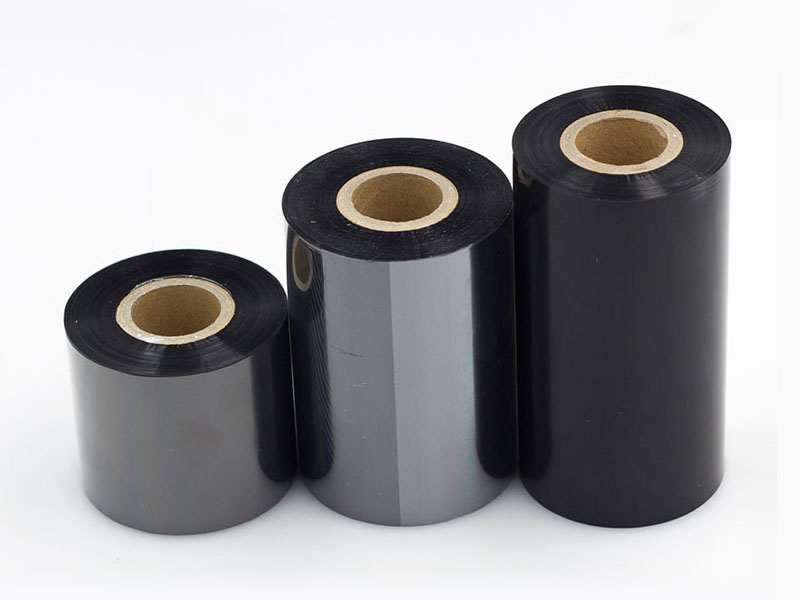
This article will break down the technical core of this function from four dimensions: signal detection, control logic, shutdown strategy, and precision calibration.
19. October, 2026The value of the automatic correction function lies in incorporating this runaway variable into a precise closed loop, shifting slitting operations from "post-event selection" to "real-time self-heali
19. October, 2026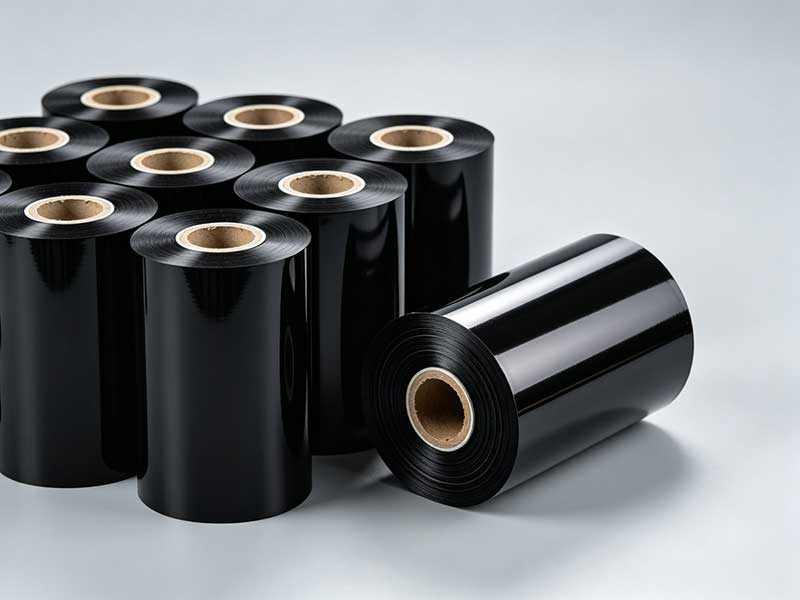
This paper proposes a practical efficiency improvement plan from three dimensions: downtime management, switching optimization, and tension upgrade.
19. October, 2026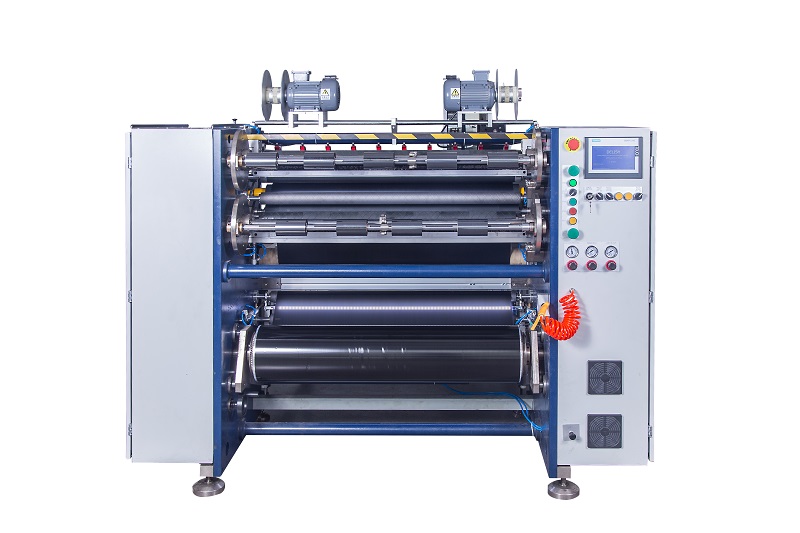
Choosing the right slitting machine is not just about buying a piece of equipment, but about establishing a production system that controls losses from the source.
17. October, 2026The barcode ribbon slitting machine can not only cut and heat transfer ribbons; it is a precision device designed and optimized for this task.
14. October, 2026


 English
 Deutsch
 Français
 Español
 Português
 日本語
日本語 русский
 한국어
한국어 عربي
عربي ภาษาไทย
 Tiếng Việt
 Italiano