
With its gorgeous metallic luster and delicate pattern rendering capabilities, hot stamping foil plays an indispensable role in packaging, printing, electronics, and other fields. However, during the process of hot stamping foil being split from wide mother rolls into narrow strips, static electricity has always been a major problem troubling manufacturers. It not only affects production efficiency but is also directly related to product quality and operational safety. This article will thoroughly analyze the mechanisms and hazards of static electricity generated during the hot stamping foil slitting process, and systematically explain a complete solution from basic protection to proactive elimination.
1. Where does static electricity come from?
Hot foil foil (commonly known as electrochemical aluminum) usually consists of PET polyester film as the carrier, with a surface layer coated with a release layer, tinting layer, aluminum plating layer, and hot melt adhesive layer, forming a multi-layered structure. Among them, PET film itself is an excellent insulator with extremely high resistivity, making it very difficult for charges to move freely and discharge naturally within the material.
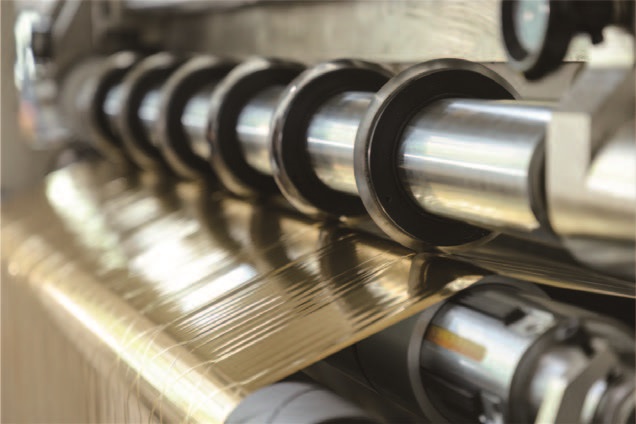
When the slitting machine runs at high speed (usually reaching 50-300 m/min), the foil and the guide roller, slitting blade, pressure roller, and other components make high-speed contact and separation, and the layers of foil also peel off quickly. Both processes generate strong contact and peeling electrostatic effects. Because the charge cannot conduct and dissipate on the insulated foil surface, it accumulates massively, forming high-voltage electrostatic fields of several thousand or even tens of thousands of volts. Additionally, if the slitting workshop environment is relatively dry (relative humidity below 40%), static electricity issues become even more pronounced.
2. The "chain harm" caused by static electricity
Seemingly invisible static electricity can actually trigger a series of issues affecting production and quality:
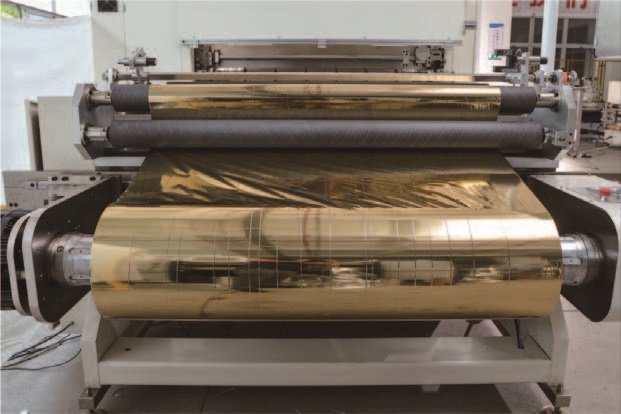
1. Inconsistent adhesion and winding of the foil surface: Electrostatic attraction can occur between the charged foil film layers, causing "pseudo-adhesion" and making it difficult to separate the foil during bonding. During winding, repulsion or adsorption caused by static electricity can cause uneven end surfaces, forming "plum blossom rolls" that affect the normal release of subsequent hot stamping processes.
2. Dust absorption and causing heat stamping spots: The live foil surface acts like a "vacuum cleaner," strongly absorbing fibers and dust in the workshop air at the 10-100μm level. These micro-particles are pressed between the foil and the substrate during stamping, forming locally insecure areas that cannot fit tightly. This ultimately manifests as fine "pit spots," "white spots," or pinhole-like defects on the hot stamping surface. This is a hidden and common cause of the rising rate of hot stamping defects.
3. Damage to the hot stamping layer, leading to oxidation and blackening: This is a more serious and hard-to-detect quality hazard. Accumulated high-voltage static charges may cause corona discharges or spark discharges in the slitting region. Sudden high temperatures can burn the extremely thin hot stamping layer (especially the aluminum plating layer) and further reduce the surface activation energy of aluminum or pigment molecules, accelerating their reaction with oxygen and moisture to form alumina or other dark compounds, which causes the hot stamping layer to oxidize and turn black. This can seriously damage the gloss and adhesion of hot stamping products.
4. Safety hazards: Operators often encounter static shocks during film penetration and roll unloading, affecting work morale and safety. In extreme cases, static sparks that encounter accumulated foil shavings or flammable solvent residues can even pose a fire hazard.
3. Systematic static elimination solution
To solve the static electricity problem of the hot stamping foil slitting machine, it is essential to follow the core approach of "guiding away + neutralization" and build a systematic protection system.
1. Foundation: A complete equipment grounding system
Grounding is the cornerstone of all electrostatic protection measures, aiming to provide a safe channel for induced charge discharge on metal components of equipment, preventing spark discharges on the foil from metal parts.
• Overall grounding: The main frame of the slitting machine, all metal guide rollers, retracting and unloading reels, tool holders, etc., must be reliably connected to the workshop's main grounding main line via copper braided tape, with a recommended grounding resistance less than 4Ω.
• Handling of rotating parts: This is a frequently overlooked point. The bearings of the guide roller and rewinding shaft contain grease, which forms an insulating layer and causes the rotating roller body to be in an "electrically suspended" state. An effective solution is to install a carbon fiber or copper grounding brush at the end of the guide roller shaft, with the brush wire gently pressing against the roller surface or shaft shoulder to ensure continuous conduction during rotation.
2. Core: Application of active static eliminators
Grounding cannot eliminate static charges on the surface of the insulating foil, so an active static eliminator is needed to intervene, using the corona discharge principle to generate positive and negative ions and neutralize the imbalanced charge on the foil surface.
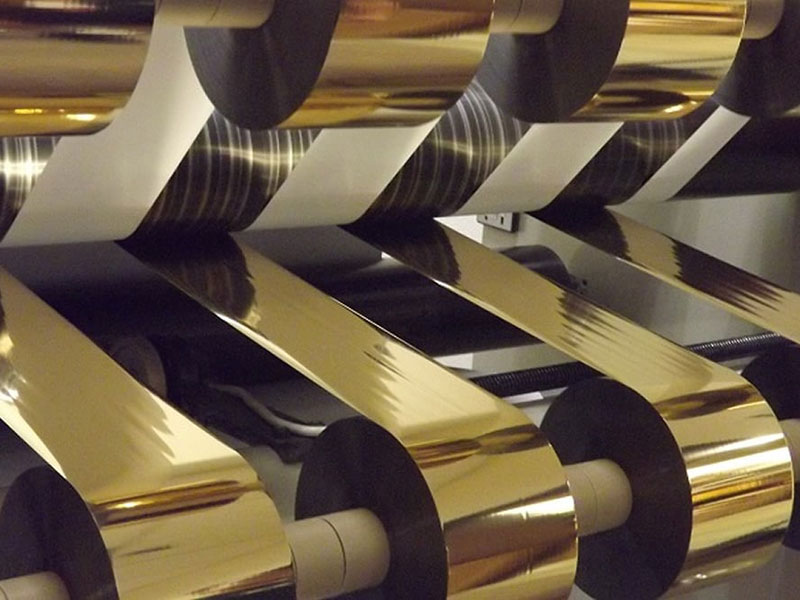
• Corona-type static elimination rod (ion bar): This is the most widely used and stable solution. By installing ion rods at key positions such as front and rear of the slitting blade group, as well as in unwinding and rewinding, they cover the entire foil width, enabling continuous and efficient neutralization of static electricity. For equipment with high vehicle speeds (such as above 200m/min), high-frequency AC or pulsed DC ion rods should be selected, as their balancing efficiency is higher. During installation, it is recommended to keep the ion bar 20-50mm away from the foil surface.
• Ion Nozzle / Ion Fan: For winding areas or other confined spaces, ion nozzles can be used to blow the foil surface with compressed ionic airflow, achieving both dust removal and static elimination.
• Static removal roller (conductive roller/ion roller): This is also an effective supplementary method. Passive conductive rollers conduct charge away through contact, suitable for situations where static electricity is not severe; Active ion rollers integrate an internal ionization device, which is even more effective for insulating thin films.
3. Advanced: The synergistic effect of dust removal and humidity control
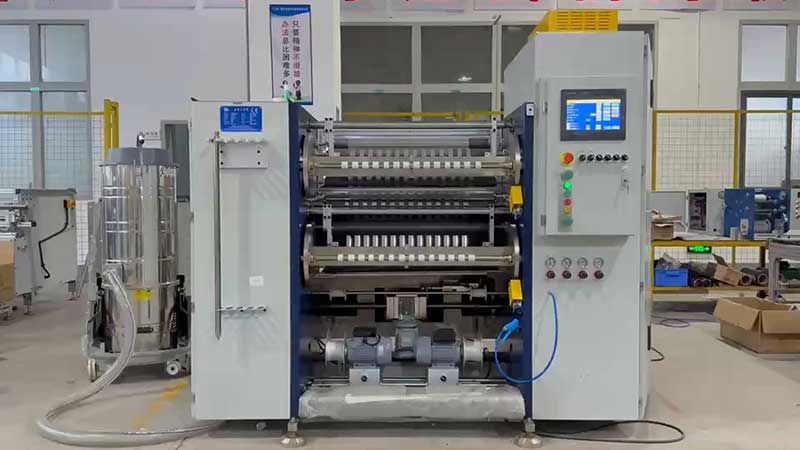
• Integrated dust removal device: tiny foil chips generated during slitting themselves carry static electricity and easily adhere to the foil edges. An effective dust removal device should include three steps: static elimination (reducing adsorption force), brush contact stripping, and negative pressure vacuum suction. This not only ensures the foil surface is clean, but also serves as a key line of defense against stamping pitting.
• Environmental humidity control: Moderately increasing workshop humidity (such as controlling it at 50%-60% RH) can reduce material surface resistance and assist in the natural discharge of static electricity. However, it is important to avoid excessive humidity to avoid affecting the release performance of the foil foil.
4. Conclusion
Eliminating static electricity from hot stamping foil slitting machines is a systematic project and cannot be completely solved by a single measure. It requires enterprises to comprehensively plan and implement everything from hardware configuration (reliable grounding, reasonable placement of static eliminators and dust removal devices), environmental management (humidity control), to daily maintenance (regular cleaning of ionization needles, checking grounding wires).
Eliminating static electricity is not only to ensure production safety and efficiency, but also to guard the final barrier to the quality of hot stamping foil products—avoiding adhesion, scratches, oxidation blackening, and stamping spots, ensuring that every meter of hot stamping foil shines with its due brilliance on the hot stamping machine.
Whether you operate a slitting line or source slit rolls from a supplier, understanding these failure modes helps you protect quality and reduce downtime.
08. October, 2026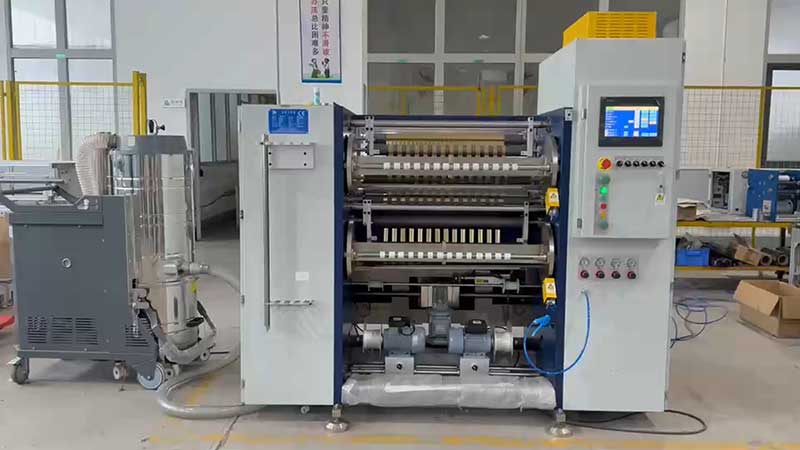
This guide breaks down the specifications that actually matter, organized by the parameters that directly affect your yield, efficiency, and bottom line.
08. October, 2026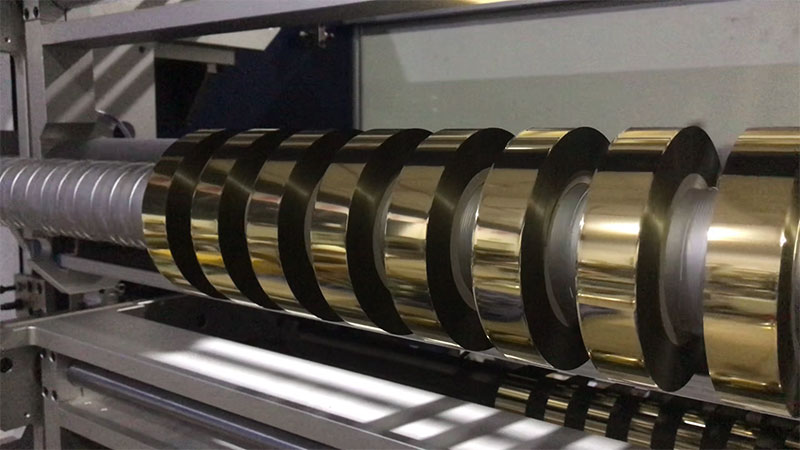
The tension control in the slitting stage directly determines the yield rate of subsequent hot stamping processes.
28. September, 2026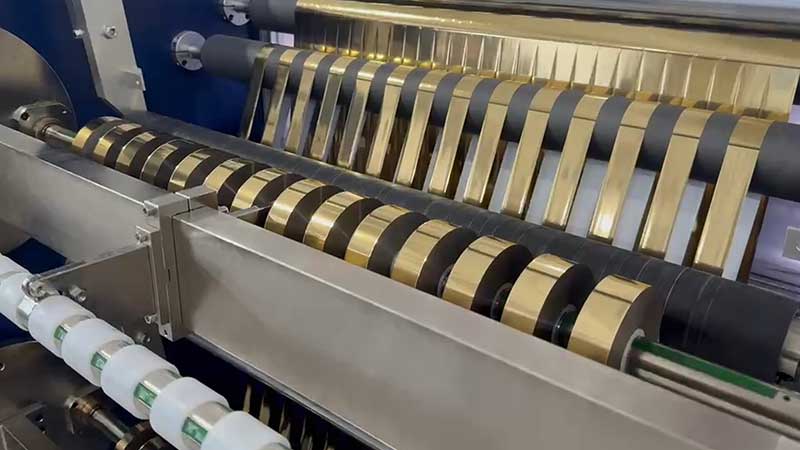
The key to selection is to grasp three parameters that truly determine slitting quality: slitting accuracy, tension control, and tool system.
28. September, 2026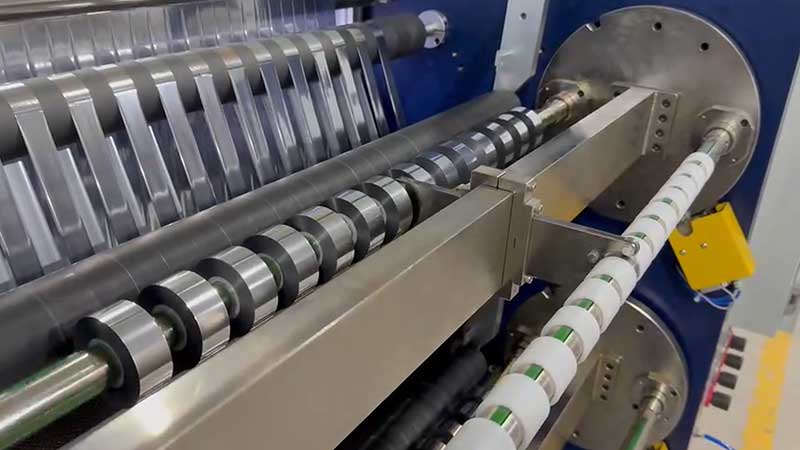
But what truly determines whether a slitting machine is "in sync" is not the absolute value of a single parameter, but the matching logic between width and speed.
28. September, 2026


 English
 Deutsch
 Français
 Español
 Português
 日本語
日本語 русский
 한국어
한국어 عربي
عربي ภาษาไทย
 Tiếng Việt
 Italiano