
Behind the price tags of retail goods, waybills on logistics packages, UDI codes on medical devices, and even ultra-small labels inside electronic products, thermal transfer printing technology is indispensable. The core consumable of this technology—the carbon ribbon—is shaped largely by a often overlooked precision process: slitting.
The ribbon slitting machine is a key device that precisely processes wide-width ribbon master rolls into rolls suitable for different printer specifications. In the label printing consumables industry, they are no longer just simple processing tools, but also a bridge connecting mass production and personalized needs. They serve as the core engine for many companies to transform from "standard product sales" to "solution services."
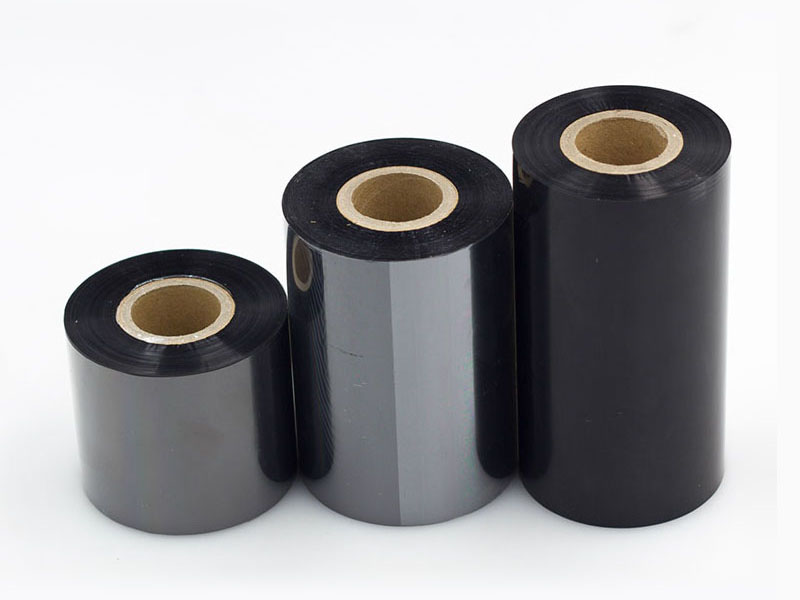
Slitting: The "final step" that determines ribbon quality
The essence of ribbon slitting is the process of slitting the coated large rolls (main rolls, commonly 910mm or even wider) into specific widths and lengths according to order requirements. Although this process is at the back end of the industry chain, it is highly technical, directly determining the ribbon's performance in the terminal printer.
Although the core working logic of the slitting machine is simplified to the three rings of "unwinding, slitting, and winding," handling micron-scale thin film materials at high speeds is extremely challenging. Its core technologies are mainly reflected in three aspects:
First is tension control, known as the "soul" of slitting machines. The ribbon substrate is PET film only 4.5-10 microns thick. If the tension is too high, the base film can stretch and damage the ink layer, causing the ribbon to shed powder; if the tension is too low, the roll becomes loose, causing wrinkles, white lines and creases during printing, and even ribbon breakage during operation. High-end equipment uses servo motors combined with taper tension control technology, dynamically decreasing tension as the coil diameter increases during winding, ensuring consistent tightness inside and outside the finished reel.
Next is the choice of slitting method. Different blade sets are required for different ribbon materials. For example, cutting soft, low-melting-point wax-based ribbons requires extremely sharp blades and effective cooling to prevent wax overflow or sticking at the edges; For resin-based carbon ribbons that are hard and brittle in texture, it is advisable to use a flat blade cutting method with instant cutting to avoid chipped edges or microcracks.
Finally, control of cleanliness and neatness. The fine toner produced by slitting can contaminate the material surface and affect print quality. High-end equipment is often equipped with ion air bars and vacuum adsorption devices to remove dust. Whether the finished product's winding end face is as smooth as a mirror is the most direct indicator of slitting quality, and its flatness is usually controlled within 0.2mm.
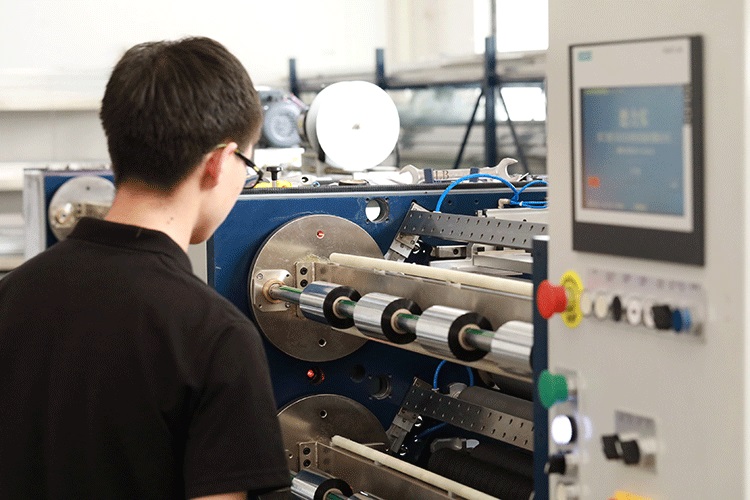
From "standard" to "customized": meeting personalized printing needs
In an era of surging demand for personalized printing, the strategic value of ribbon slitting machines is becoming increasingly prominent. In the past, consumables suppliers mainly offered ribbons of standard specifications such as 110mm wide and 300m long. However, this brings pain points for many small and medium-sized users: large capital occupation, inconvenient storage, and mismatched specifications.
The ribbon slitting machine perfectly solves this problem. It can precisely slice industrial-grade large rolls into any customized size required by the market, with width tolerances controlled within ±0.1mm. With the CNC system, suppliers can easily set any width from 20mm to 110mm, adapting to different inner diameters (such as 0.5 inches, 1 inch) and material cores.
For example, medical companies may need resin-based ribbons only 22mm wide and 45 meters long to print UDI codes resistant to high-temperature sterilization; Popular bakeries may need 30mm wide pink ribbons to fit their small printers. The ribbon slitting machine enables these "non-standard" needs to be met quickly and economically, reducing delivery cycles from the past 2-3 weeks to under 24 hours.
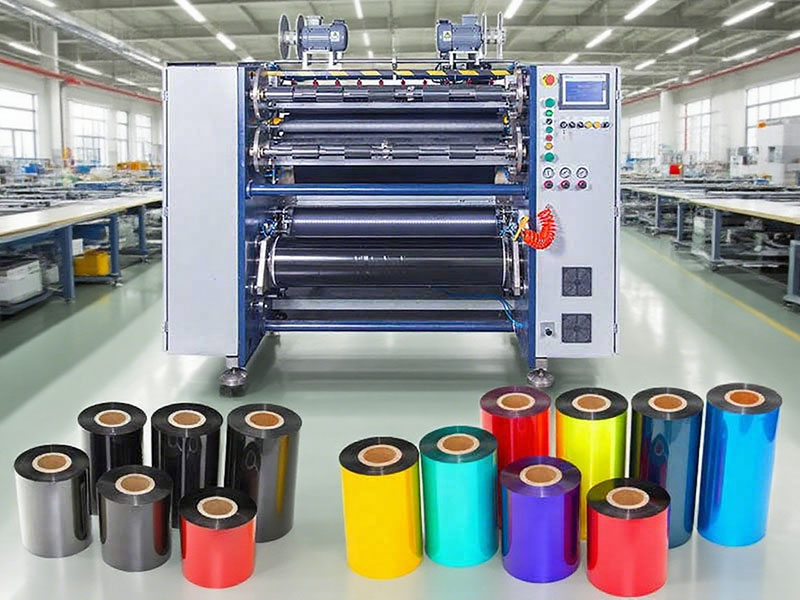
Empowering transformation: the transformation from material suppliers to service providers
A deeper transformation lies in business models. The introduction of ribbon slitting machines is driving a number of label material suppliers to complete their strategic transformation.
Take a label material supplier as an example: in the past, its slitting process relied on a contract manufacturer, resulting in uncontrollable delivery times, uneven quality, common issues like uneven end faces and edge burrs, and frequent customer complaints. After investing in and introducing a high-performance fully automatic ribbon slitting machine, the situation changed dramatically:
• Product quality leap: After slitting, ribbon rolls are perfectly shaped and have smooth edges, reducing the belt break rate on customers' production lines by over 95%, and complaint rates by more than 90%.
• Improved response speed: The fulfillment cycle for urgent and sample orders has been shortened from "weeks" to "hours."
• Service model upgrade: The company has shifted from "selling standard products" to providing a one-stop solution combining "ribbon + custom slitting." For example, we easily took on orders for 0.6mm ultra-narrow ribbons required for printing UL-certified labels for electronic products, becoming an exclusive supplier.
Ultimately, the company's repeat purchase rate increased from 68% to 92%, overall customer satisfaction increased by 30%, successfully breaking free from homogeneous price wars.
Conclusion
The role of ribbon slitting machines in the label printing consumables industry has long surpassed that of the "cutter" itself. Through precise tension control, material adaptation, and size customization, it seamlessly connects the cost advantages of industrialized mass production with the fragmented and personalized market demands of the digital economy era. For companies in the industry chain, it is both a guardian of product quality and a catalyst for business model innovation—empowering them from passive material sellers to proactive printing solution providers.
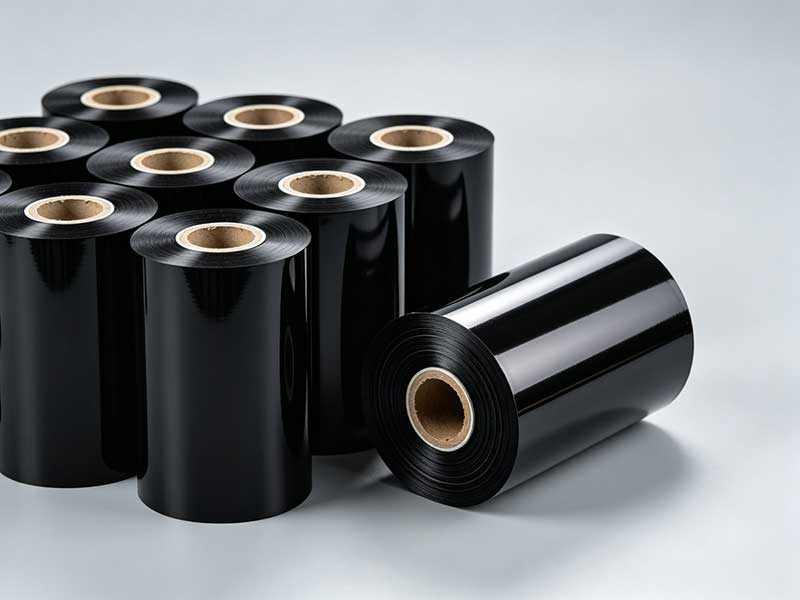
The widespread adoption of fully automatic ribbon slitting machines is changing this situation. Its core value can be summed up in six words: efficient, stable, and labor-saving.
22. October, 2026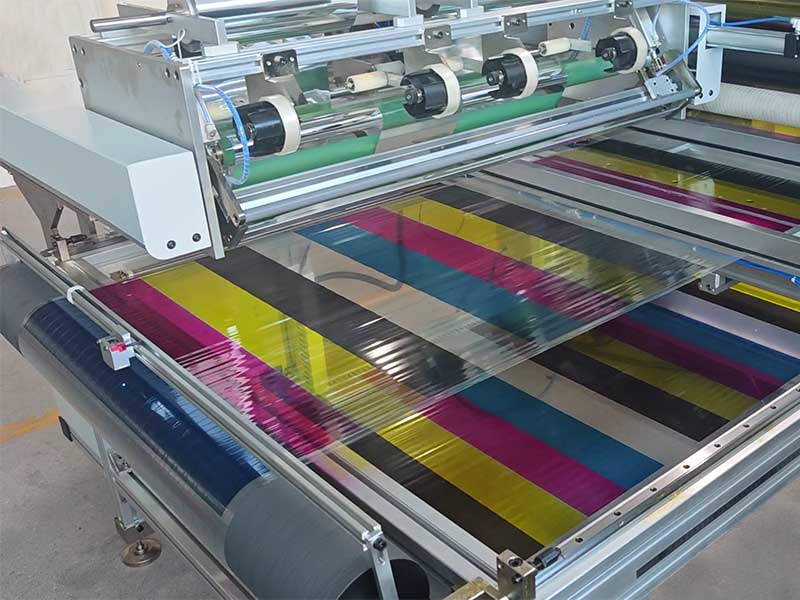
The color ribbon slitting machine is mainly used for wide roll slitting and rewinding of materials such as card printer color ribbons and thermal transfer ribbons.
21. October, 2026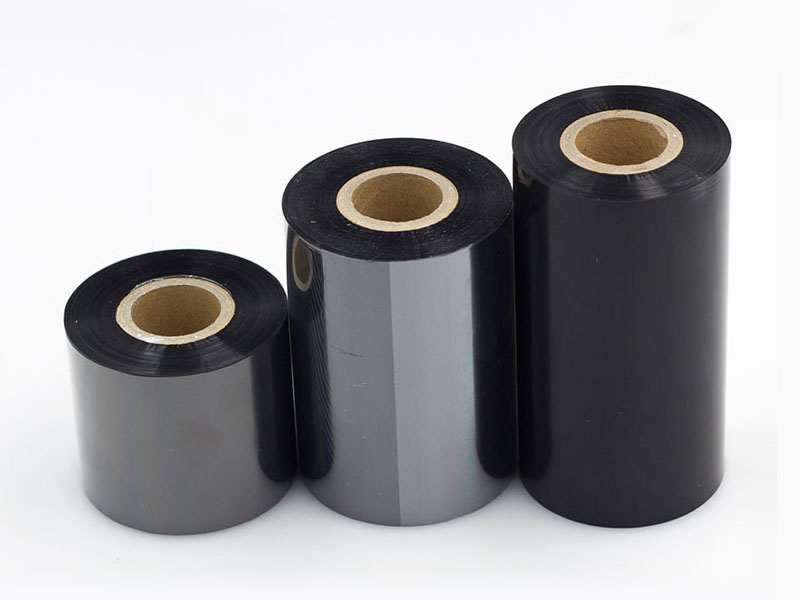
This article will break down the technical core of this function from four dimensions: signal detection, control logic, shutdown strategy, and precision calibration.
19. October, 2026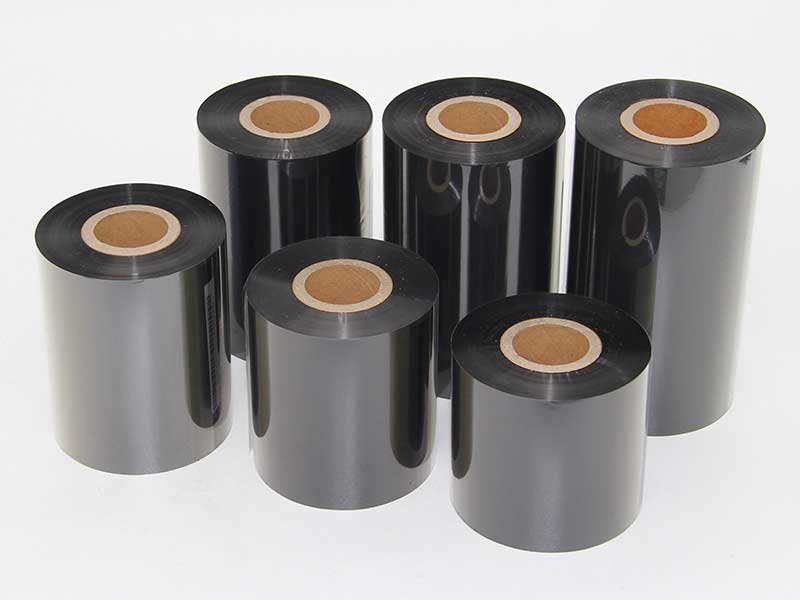
The value of the automatic correction function lies in incorporating this runaway variable into a precise closed loop, shifting slitting operations from "post-event selection" to "real-time self-heali
19. October, 2026This paper proposes a practical efficiency improvement plan from three dimensions: downtime management, switching optimization, and tension upgrade.
19. October, 2026


 English
 Deutsch
 Français
 Español
 Português
 日本語
日本語 русский
 한국어
한국어 عربي
عربي ภาษาไทย
 Tiếng Việt
 Italiano