
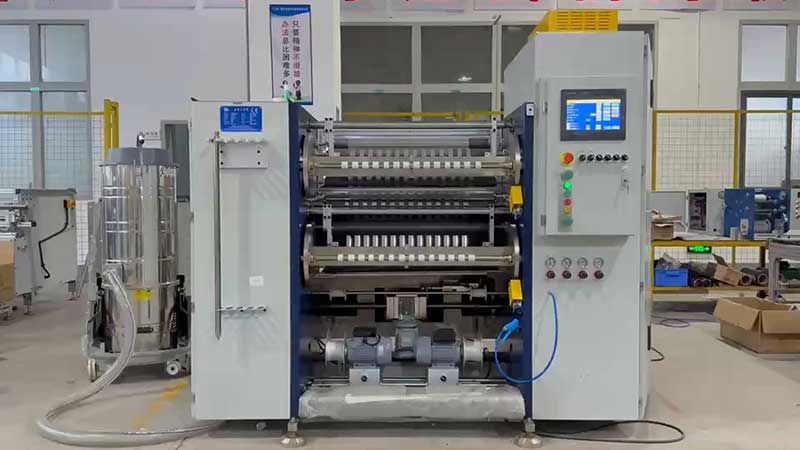
Behind the dazzling golden logos on cosmetic packaging boxes or the delicate metallic stripes on tobacco and alcohol packaging, there is always a precision material with a thickness of only 12 to 20 microns—hot stamping paper (hot stamping foil). The hot stamping paper slitting machine is the key equipment for precisely processing wide-width master rolls into narrow-width finished rolls needed downstream. Its precision and efficiency directly determine the yield of hot stamping and the total production capacity of the production line.
1. High Precision: The "Invisible Cornerstone" of Hot Stamping Quality
Hot stamping paper is a multilayer composite material composed of a base film layer, release layer, color paint layer, aluminum coating layer, and glue layer. The so-called "high-precision slitting" is by no means simply cutting large rolls narrowly, but rather a comprehensive control of width accuracy, end face quality, and winding quality. Minor defects in the slitting process can be magnified dramatically during subsequent hot stamping production—width errors or edge burrs may cause foil misalignment, white exposure, or dust debris generation; Uneven winding or uneven tension can easily cause strip breakage, and every stoppage for material collection means efficiency loss and material waste.
The core competitiveness of modern high-precision hot stamping paper slitting machines lies in the precise control of three core systems:
Tension control—the soul of the sliced mass. The base material of hot stamping paper is extremely thin and easily stretched; excessive tension causes deformation like pulling on spider silk, while too low tension causes it to roll softly and wrinkles. High-end slitting machines use full-servo or magnetic powder clutches to achieve independent closed-loop control of tension in three stages: unwinding, traction, and rewinding, with tension fluctuations controlled within ±0.5N. Tension strategies also need to be adjusted for different materials: PET substrates have high strength and can withstand large tensions to ensure tight rolling, while OPP is softer and requires low-tension control combined with taper tension functions. As the roll diameter increases, tension is gradually reduced to prevent inner layer deformation under pressure.
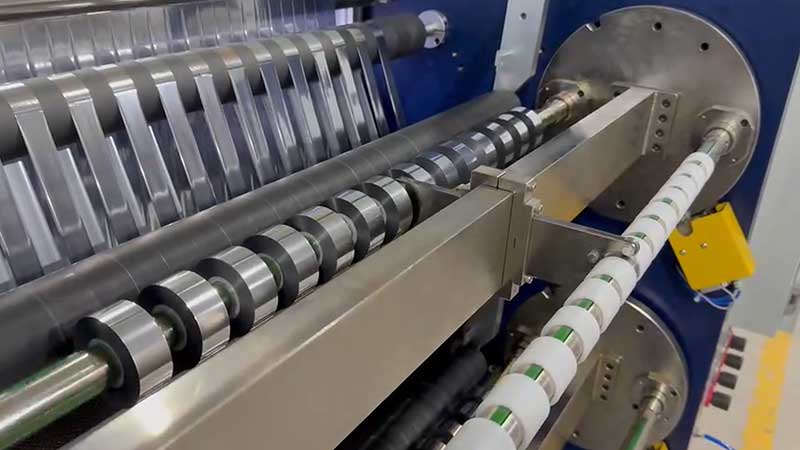
Knife system—determines the quality of "scalpel-level" incisions. Slitting methods include shear, suspended, and extrusion types. The shear type achieves the cleanest edge cut through precise meshing of the upper and lower circular blades, suitable for most materials such as PET and PVC. Tool material directly affects lifespan and trimming quality—tungsten carbide or diamond-coated blades can harden above HRC90, effectively coping with the high wear of PET substrates. The precision tool holder must ensure radial runout is less than 0.003mm to achieve smooth edges and no burrs.
Correction and detection system—double protection for accuracy. The closed-loop photoelectric correction system ensures the main roll maintains edge alignment before entering the cutting edge, while high-end equipment equipped with CCD cameras can monitor slitting width in real time, with an accuracy of up to ±0.01mm.
2. High Efficiency: From "Fast Cutting" to "Winning Performance"
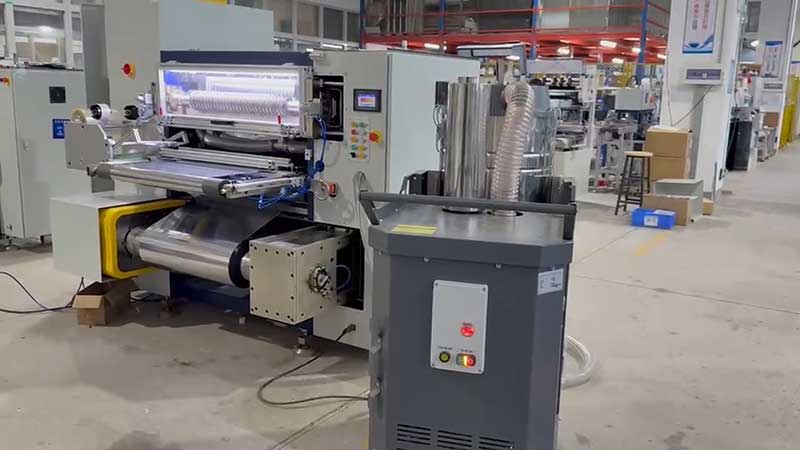
Traditionally, improving slitting machine efficiency is almost equivalent to "increasing slitting speed." However, the efficiency improvements of modern hot stamping paper slitting machines have evolved from breakthroughs in single speed to systematic innovations encompassing automated order change, non-stop production, and high-speed stability. A truly efficient production line pursues not only "fast cutting" but also "winning the race"—winning through shorter downtime, lower material loss, and more flexible order response.
Automated order exchange: Turning "people waiting for machines" into "machines waiting for people." In today's era where "small batches, multiple varieties" have become mainstream, order change and machine adjustment times have become the biggest black hole in eating up efficiency. When changing specifications in traditional equipment, operators had to manually disassemble and install the tool holder, often taking more than 30 minutes. Modern slitting machines are equipped with a formula management system that can store slitting parameters for different materials as digital recipes, allowing one-click recall during reproduction, reducing order change times to under 3 minutes. Combined with a servo-driven automatic positioning system, the tool holder automatically moves synchronously into position, achieving positioning accuracy up to ±0.1mm, completely eliminating manual measuring and repeated trial cutting.
Non-stop production: Bringing auxiliary time to nearly zero. Traditional slitting machines must stop to change coils when they are about to run out of winding, with each session taking 20-30 minutes. The new generation equipment uses dual-station unwinding and vacuum suction automatic foil bonding devices to achieve continuous coil changes—when old coils are about to run out, the system precisely connects the new coil head and tail, reducing the time for a single roll change from 4 minutes to 30 seconds, which alone can improve overall operational speed by about 20%. Meanwhile, the application of electrostatic adsorption waste edge recycling technology compresses the waste edge width from 3mm in traditional processes to 1.5mm, increasing material utilization to 98.5%.
Stability at high speeds: tension and tool systems engineering. The slitting speed has increased from 50m/min in traditional models to 800m/min today. Simply accelerating is not difficult; the challenge is ensuring the hot stamping foil coating remains completely undamaged at high speeds. Modern high-performance slitting machines use multi-stage closed-loop tension systems and vibration suppression algorithms to ensure smooth operation from unwinding to rewinding; At the tool end, round blades coated with cemented carbide or diamond are combined with low-temperature slitting technology to keep the blade temperature below 50°C to prevent the heat-sensitive adhesive layer from melting and sticking.
3. Specialized materials: Differentiated process adaptation
The base materials for hot stamping paper mainly fall into three categories: PET and OPP, each presenting different challenges to the slitting process. PET hot stamping paper has become the mainstream choice due to its high strength and good dimensional stability, but its high hardness and toughness require extremely high tool wear resistance and are prone to static electricity, so it must be equipped with a high-efficiency static eliminator. OPP hot stamping paper is soft in texture and has low tensile strength. Improper tension control can cause deformation or breakage, so a low-tension, high-precision control scheme is required, and the slitting speed should not be too fast to avoid frictional heat accumulation. Truly high-level equipment should have the ability to "teach according to the student's needs," automatically retrieving the optimal slitting parameters for different materials.
The high precision and efficiency of hot stamping paper slitting machines are not two isolated technical indicators, but rather a systematic result of the integration of precision control, intelligent detection, and digital technology. From micron-level tool control to non-stop automated production, from multi-stage closed-loop tension to differentiated material processes, modern slitting machines are forging the "throat" of hot stamping into the "core engine" that determines quality and efficiency.
Whether you operate a slitting line or source slit rolls from a supplier, understanding these failure modes helps you protect quality and reduce downtime.
08. October, 2026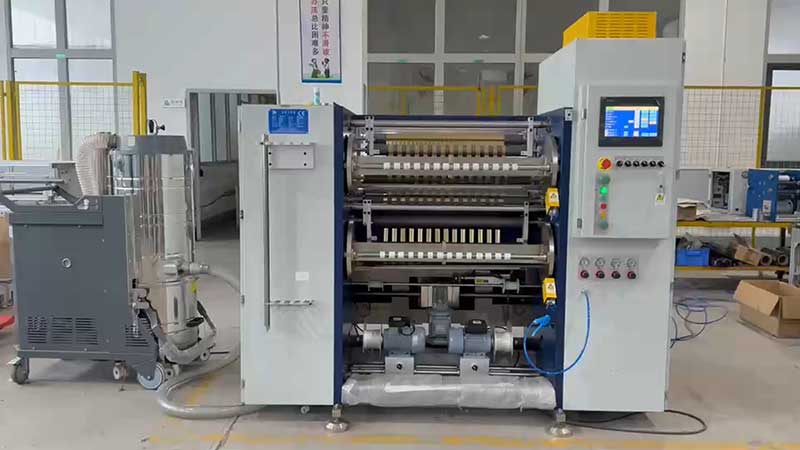
This guide breaks down the specifications that actually matter, organized by the parameters that directly affect your yield, efficiency, and bottom line.
08. October, 2026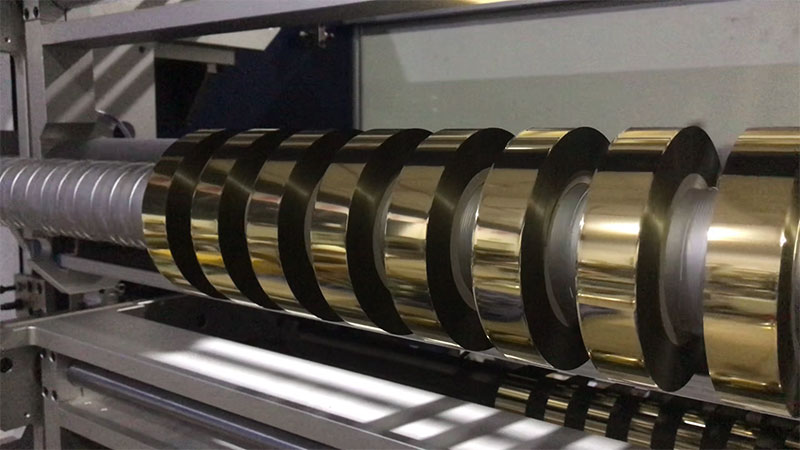
The tension control in the slitting stage directly determines the yield rate of subsequent hot stamping processes.
28. September, 2026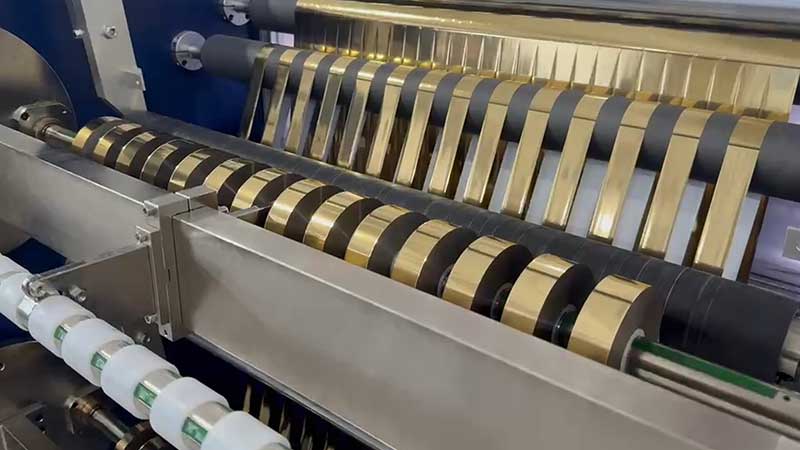
The key to selection is to grasp three parameters that truly determine slitting quality: slitting accuracy, tension control, and tool system.
28. September, 2026But what truly determines whether a slitting machine is "in sync" is not the absolute value of a single parameter, but the matching logic between width and speed.
28. September, 2026


 English
 Deutsch
 Français
 Español
 Português
 日本語
日本語 русский
 한국어
한국어 عربي
عربي ภาษาไทย
 Tiếng Việt
 Italiano