
Ribbon slitting machines play a key role in the production of thermal transfer consumables, and whether the slitting end face is neat is not only the 'face' of the product, but also one of the core indicators for measuring quality. Uneven end faces can at best affect the customer experience, or at worst cause ribbons to wrinkle, break, or even damage the print head during printing. However, uneven rewinding end faces are often not caused by a single factor, but rather result from a subtle balance between tension control, mechanical precision, tool condition, and auxiliary systems.
Tension control: the core variable of end face uniformity
Tension control is the "soul" of slitting and rewinding. The substrate for carbon ribbons is usually PET film only a few microns thick, extremely sensitive and responsive to even slight fluctuations in tension.
When tension is too high, the tape is stretched too tightly, causing uneven stress on the inner and outer layers, which can later form a "tower-shaped" or "bell-shaped" or "bell-shaped" shape, and damage the base film causing powder shedding. If the tension is too low, the roll becomes loose, the inner layer wrinkles, and the end face naturally cannot be smooth. A more hidden issue lies in the taper design: as the roll diameter increases, if the tension does not gradually decrease along the taper curve, the outer layer will crush the inner layer, forming a "daisy core" staggered layer.
A common misconception is "increasing tension when the ends and faces are not aligned." In fact, higher winding tension is not always better; the key is dynamic matching. Thinner, more stretchable ribbon substrates require lower winding tension, steeper taper, and slow acceleration and deceleration. Experience shows that for most ribbons, controlling the winding tension at 3-5N (based on a 10mm wide test strip) is a reasonable reference range.
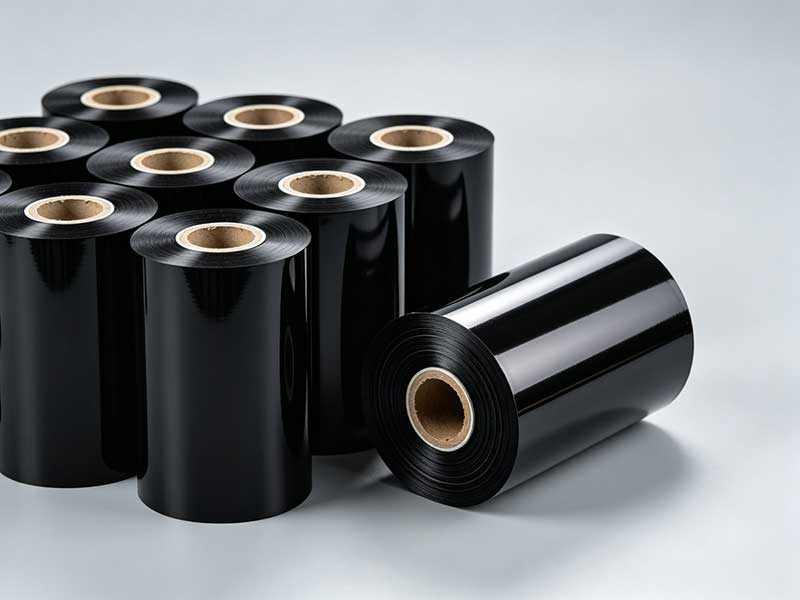
Mechanical precision: Parallelism determines the direction of the end face
The mechanical precision of the equipment itself is the foundation for ensuring neatness. If the rewinding shaft and guide roller are not parallel, the ribbon will be subjected to lateral components, naturally drifting to one side, forming a "unilateral protrusion." The tolerance for this parallelism deviation should usually be kept within 0.05mm/m; if it exceeds this range, the bearing seat shim or bracket position needs to be adjusted.
The fit between the core and the shaft is equally crucial. If the gap between the core inner diameter and the rewinding shaft is too large, "eccentricity" and periodic runout will occur during rotation, which is an important cause of periodic swing on the end face. The standard fit clearance should be controlled within 0.3mm; if the gap exceeds 0.5mm, even with proper tension control, the end face will not be neat.
The reel reel bounces itself as a factor that cannot be ignored. Bearing wear, shaft bending, or loose installation can all cause radial runout during rotation, causing the ribbon edges to become uneven as the shaft swings. Measure the runout of the winding shaft; if it exceeds 0.1mm, the shaft core needs to be replaced or the shaft body corrected.
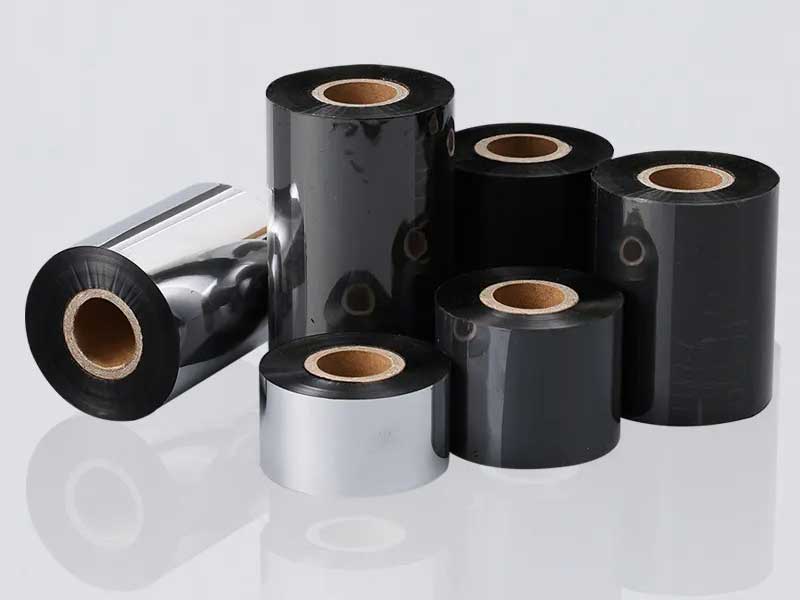
Roller Press: The Underrated "End-Face Guardian"
Experience shows that over 80% of winding issues are related to improper adjustment of the pressure roller. The core function of the pressure roller is to provide a controllable radial pressure at the winding point, assisting in expelling air between layers and ensuring the coil is tightly arranged.
When the pressure at both ends of the roller is uneven, the ribbon is subjected to uneven force at the contact points, causing local bulging or "rebar exposure." A more hidden issue is the parallelism of the pressure roller: if the axis of the pressure roller and the rewinding shaft are not parallel in three-dimensional space, each rotation generates axial thrust, causing the ribbon to move back and forth along its width. During static inspection, use feeler gauges to measure the gap between the pressure roller and the winding shaft, with an error controlled within 0.05mm/m.
The surface condition of the pressure roller is equally important. After rubber aging or localized wear forms pits, the pressure distribution experiences periodic fluctuations. It is recommended to use polyurethane overmolding with a Shore A hardness of 60-70 degrees. If it is too soft, it will cause delayed deformation, while if too hard, it cannot compensate for the ovality of the paper tube.

Tools and correction: dual protection of source and process
The condition of the slitting tool directly affects the stability of the winding. When the blade wears out or cracks, the blunt blade turns "cutting" into "squeezing," causing the ribbon edges to develop burrs or wavy edges, causing the "twisted" ribbon to deviate during rewinding. The overlap between the upper and lower blades needs precise control. The recommended ribbon material gap is 0.01-0.03mm; too large causes indentation, too small means the cut cannot be cut.
The correction system is responsible for correcting the strip's movement trajectory in real time. If photoelectric or ultrasonic sensors are obscured by dust, or if the actuator operates slowly, the system cannot correct the ribbon's trajectory in real time. Correction response speed requires fine adjustment: too slow causes correction lag, too fast causes oscillation, so setting the response time between 0.2 and 0.5 seconds is generally appropriate.
It is worth noting that the condition of the incoming materials themselves is often overlooked. If the large ribbon is compressed during transport or storage, the end face becomes "bell-mouthed," and the ribbon shifts left and right during unwinding, preventing the slitting cutter from stably cutting into the same position, making all subsequent adjustments ineffective.
Rapid diagnosis from symptoms to causes
Different forms of end face defects point to different causes. A single side protrudes, overall conical shape, usually indicating excessive winding tension or uneven pressure at both ends of the pressure roller; If both ends are neat but the middle is loose or protruding, it indicates a bent winding reel or excessive clearance between the inner diameter of the paper tube and the shaft; The end face exhibits periodic wave oscillation, often caused by wear of the slitting blade or uneven tool clearance; If the entire roller shifts to one side, it is a typical sign of the guide roller being not parallel or the correction system failing.
The essence of uneven end faces in ribbon slitting machines is an external manifestation of subtle imbalances between tension, parallelism, correction, and tool condition. During inspection, follow the principle of "soft first, then hard": first check tension parameters and correction sensors, then verify the parallelism of the pressure rollers and tool clearance, and finally examine mechanical accuracy and incoming material status. In most cases, the first three adjustments can resolve most of the uneven end face issues.
The widespread adoption of fully automatic ribbon slitting machines is changing this situation. Its core value can be summed up in six words: efficient, stable, and labor-saving.
22. October, 2026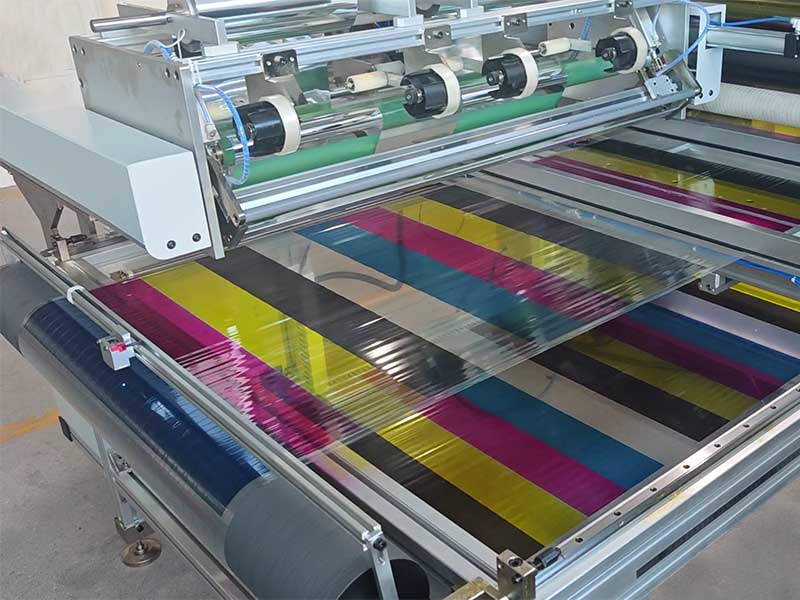
The color ribbon slitting machine is mainly used for wide roll slitting and rewinding of materials such as card printer color ribbons and thermal transfer ribbons.
21. October, 2026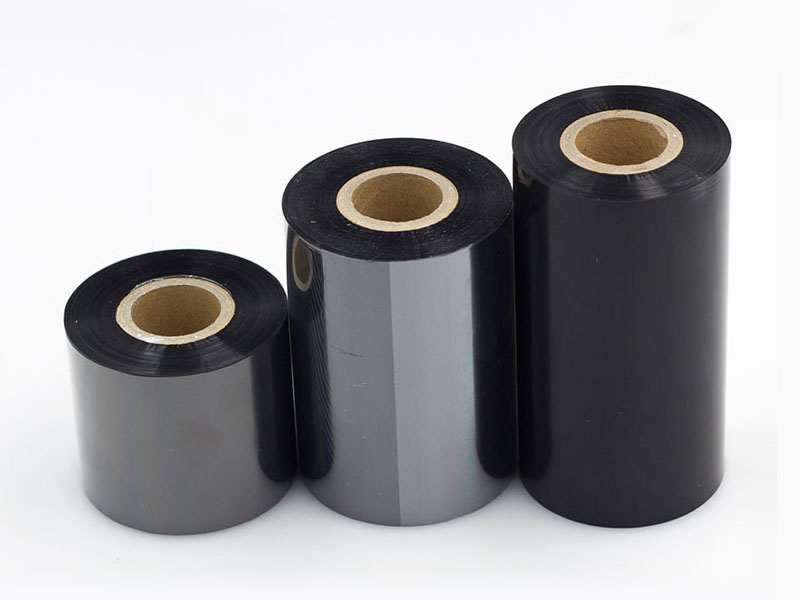
This article will break down the technical core of this function from four dimensions: signal detection, control logic, shutdown strategy, and precision calibration.
19. October, 2026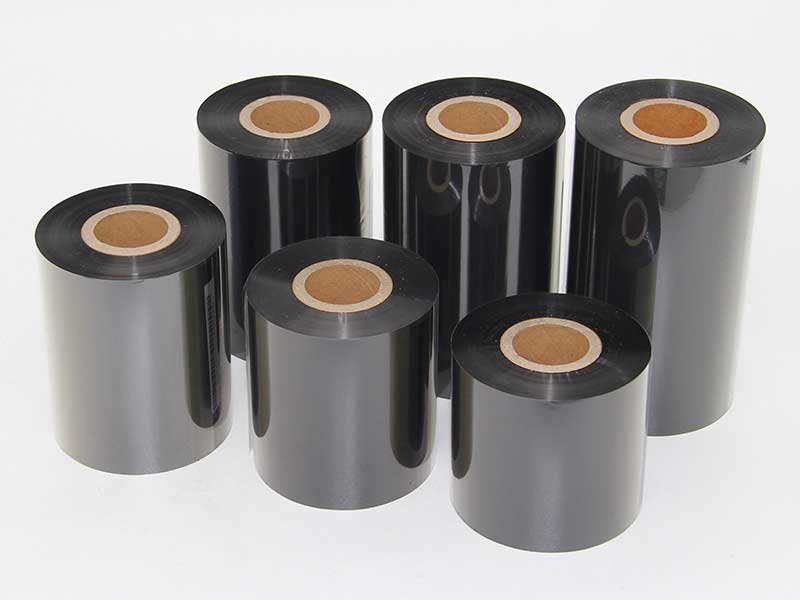
The value of the automatic correction function lies in incorporating this runaway variable into a precise closed loop, shifting slitting operations from "post-event selection" to "real-time self-heali
19. October, 2026This paper proposes a practical efficiency improvement plan from three dimensions: downtime management, switching optimization, and tension upgrade.
19. October, 2026


 English
 Deutsch
 Français
 Español
 Português
 日本語
日本語 русский
 한국어
한국어 عربي
عربي ภาษาไทย
 Tiếng Việt
 Italiano