
The hot stamping foil slitting machine is a key piece of equipment in the hot stamping foil hot stamping industry chain. Its core task is to precisely slice and rewind the wide foil foil master roll into the narrow coil specifications required by downstream hot stamping machines. For high value-added industries such as packaging, printing, tobacco and alcohol, and cosmetics, the quality of slitting directly affects the yield of finished products and material utilization in subsequent hot stamping processes.
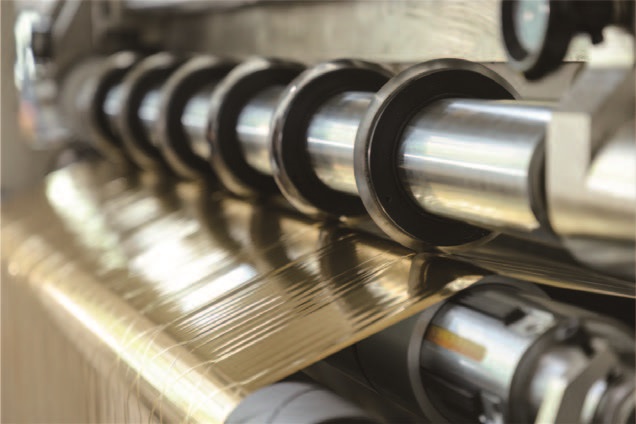
1. Working Principle
The operation of the hot stamping foil slitting machine can be summarized into four consecutive stages: "unwinding—pulling—slitting—winding."
Releasing and correcting the book is the starting point. The wide main roll is installed on the unwinding reel. The equipment uses an automatic edge tracking or line-tracking automatic correction system to ensure the foil maintains a stable lateral position during movement, avoiding slitting position shifts that could cause uneven width in the finished product.
Traction and tension control run throughout the entire process. The thickness of hot stamping foil is usually between 4 and 30 microns, making it thin and prone to wrinkles, so tension control is especially critical. The equipment uses servo motors combined with an automatic tension control system to fully adjust the foil tightness throughout the process, preventing wrinkling or stretching deformation during high-speed operation.
Slitting is the core process. Depending on your needs, you can choose a round or square knife for cutting. Round blades are suitable for narrower slitting, while square blades can achieve a minimum finished product width of 10mm. Some new slitting devices also support adjustment of cutting angles, with knobs synchronously driving the cutter to rotate to suit the cutting characteristics of different materials.
Rewinding determines the finished product's form. After slitting, the narrow rolls are rewound by a servo motor-controlled winding shaft, commonly configured with one-inch and three-inch pneumatic shafts to ensure neat winding and flat end faces.
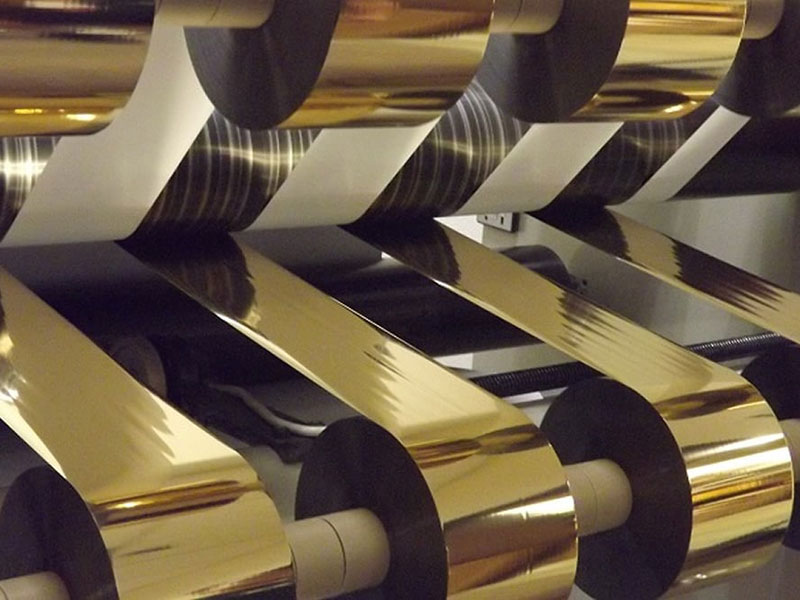
2. Core Advantages
High slitting precision and neat edges. The automatic deviation correction system combined with a precision transmission mechanism ensures accurate slitting positions and smooth edges of the finished product, preventing stamping pattern defects caused by burrs or width deviations.
Production efficiency is outstanding. The automated high-speed operation speed can reach several hundred meters per minute, completing multi-roll slitting in a single feeding, greatly shortening the processing cycle from the mother roll to the finished narrow roll.
Stable tension and strong adaptability. Fully automatic tension control enables the machine to handle various materials such as hot foil film, laser film, and holographic hot stamping foil, while the quick tool adjustment function makes switching between different width specifications convenient.
Intelligent operation. Modern models are commonly equipped with PLC touch screens, which are intuitive to operate and support automatic meter counting, automatic shutdown, and other functions, reducing dependence on operator expertise and minimizing human errors.
Balancing cost and safety. Automated operation reduces manual intervention and lowers labor costs; Multiple safety protection measures ensure operational safety at high speeds.
From the perspective of the industry chain, although the hot stamping foil cutting machine does not directly participate in the transfer of stamping patterns, it determines whether the foil material can enter the hot stamping process at the optimal specification. A device with stable slitting accuracy and precise tension control is the fundamental link for ensuring hot stamping yield and material utilization.
It is specifically designed to cut the wide master roll hot stamping foil into different narrow finished rolls according to process requirements, and is used in conjunction with hot stamping machines.
16. October, 2026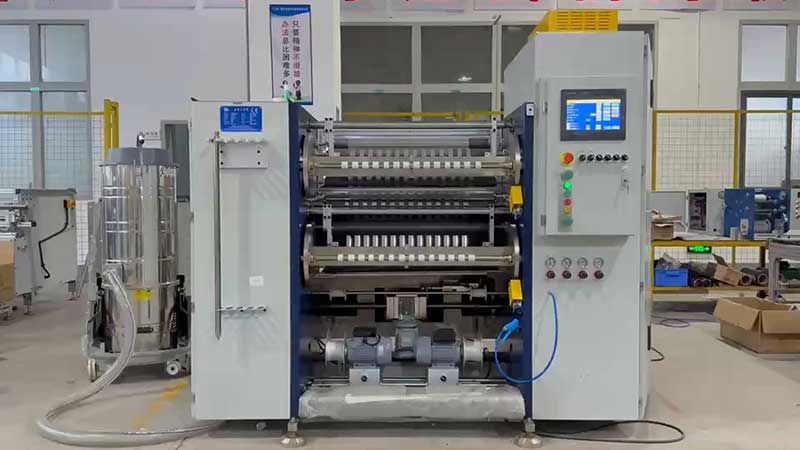
Whether you operate a slitting line or source slit rolls from a supplier, understanding these failure modes helps you protect quality and reduce downtime.
08. October, 2026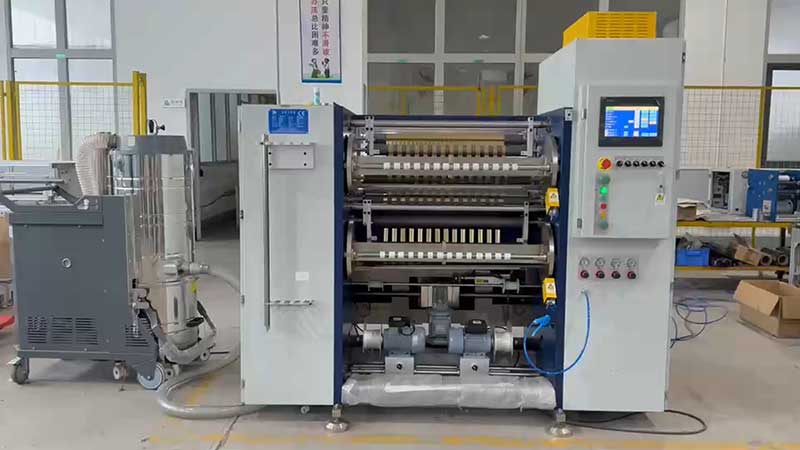
This guide breaks down the specifications that actually matter, organized by the parameters that directly affect your yield, efficiency, and bottom line.
08. October, 2026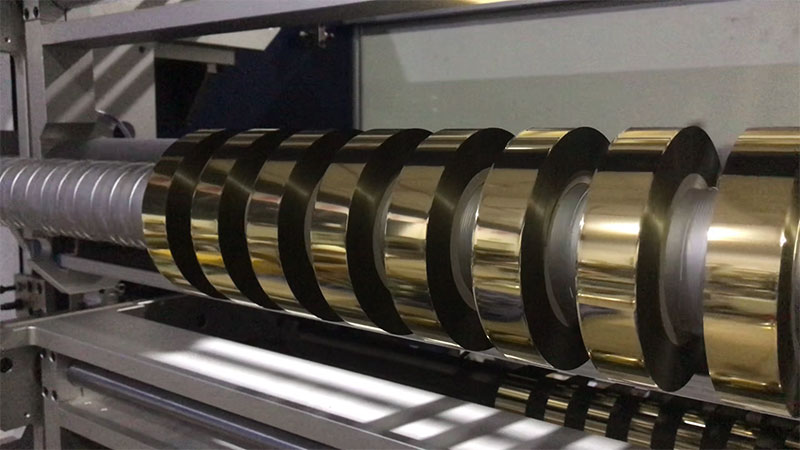
The tension control in the slitting stage directly determines the yield rate of subsequent hot stamping processes.
28. September, 2026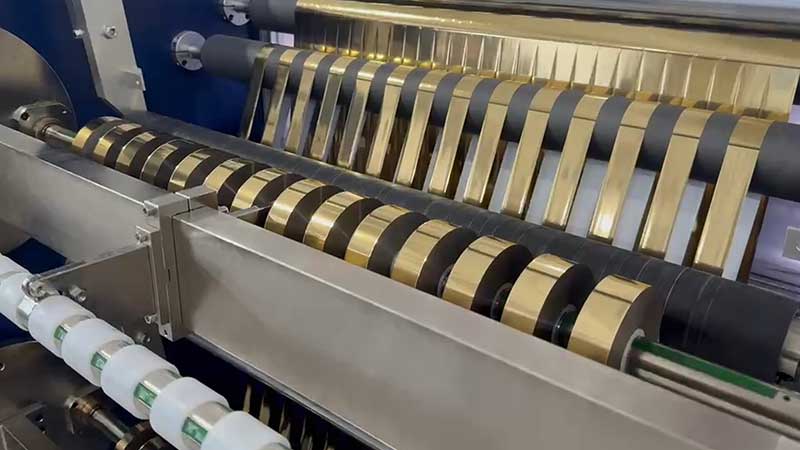
The key to selection is to grasp three parameters that truly determine slitting quality: slitting accuracy, tension control, and tool system.
28. September, 2026


 English
 Deutsch
 Français
 Español
 Português
 日本語
日本語 русский
 한국어
한국어 عربي
عربي ภาษาไทย
 Tiếng Việt
 Italiano