
The winding and unwinding system of the hot stamping foil slitting machine is the core module in the entire equipment that directly determines the quality of the finished roll. Hot stamping foil is usually only 6~20μm thick, with a smooth surface, low elongation, and fragile coating structures. Its sensitivity to tension fluctuations and mechanical contact is much higher than that of ordinary packaging films. No matter how fast the slitting speed or how sharp the cutter is, if the winding and rewinding system cannot wind each meter of foil with proper tightness and neat end faces, the precision of the previous process cannot be achieved. This article focuses on the two subsystems of unwinding and rewinding, explaining their functional composition, control logic, and key points of common adjustments.
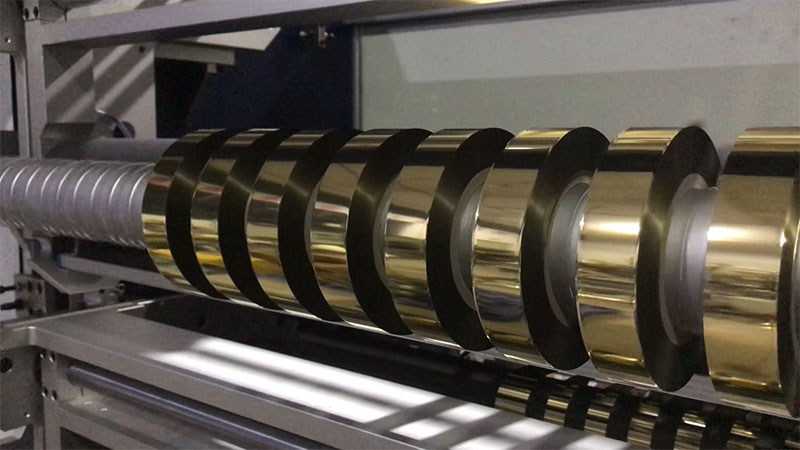
1. Unrolling system: Steady is key to accurate cutting
The task of the unwinding system may seem simple—loosening the main roll and feeding it into the slitting blade area, but in practice, it serves the key function of isolating disturbances and establishing foundational tension. From full roll to hollow core, the diameter can change several times, causing a dramatic change in rotational inertia. If the unwinding end cannot be adapted in real time, tension fluctuations will be directly transmitted to the cutter, causing dimensional deviations in slitting or material wrinkles.
The core actuator of the unwinding mechanism is usually completed by the gas expansion shaft and magnetic powder brake. The air expansion shaft is responsible for clamping the coil core. The air pressure is generally set at 0.4~0.6MPa. For paper coils, the lower value is used, while the plastic or aluminum core can be slightly higher. After inflation, the pressure holding performance must be checked. If the pressure drop exceeds 0.05MPa within 5 minutes, it indicates leakage, and the core will slowly slip during operation, manifesting as tension "stabilizing first then floating." Magnetic powder brakes provide the reverse resistance torque, and the stability of the output torque directly determines whether the unwinding tension is straight. Under long-term low-current conditions, magnetic particles tend to caking. For brakes used for more than a year, it is recommended to increase the set current by 10%~15% to compensate for performance degradation.
In terms of control strategy, constant tension should not be used at the unwinding end. As the coil diameter decreases and the braking torque remains unchanged, internal stress in the material gradually becomes unstable, making the base layer of the large coil prone to excessive stretching and longitudinal stripes appearing when unfolded. The correct approach is to enable reverse taper control: the control system automatically reduces the braking torque based on real-time roll diameter, ensuring that the foil maintains similar surface stress at the moment the master roll is removed. The reference tension depends on the width and thickness. Hot stamping foil usually falls within the 3N~8N range. During high-speed operation, lateral jitter can slightly increase by 5%~10%. If longitudinal stretch marks appear, it should be immediately reset.
In addition, unwinding and deviation correction is the first gate for slitting accuracy. The photoelectric sensor detects the edge position of the mother roll in either edge tracking or line tracking mode, and the deviation signal drives the uncoiling seat to move laterally. If the correction response is too slow, the offset will accumulate before entering the cutter; If the response is too strong, it may introduce new serpentine swings. Modern equipment typically decouples correction execution from tension control to avoid mutual interference.
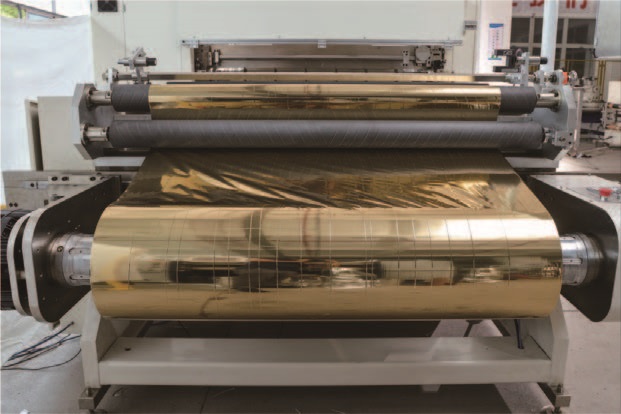
2. Collection System: Only complete rolls are complete
Rewinding is the final manifestation of slitting quality. The manifestations of uneven winding of hot stamping foil vary—uneven end faces, tower-shaped rolls, local protrusions, bell-shaped edges—but the root causes are highly concentrated: unstable tension control and poor roller condition, accounting for over 80% of the total. Therefore, the description of the winding system must revolve around two main lines: tension and pressure rollers.
The core of winding tension control is taper tension. During the winding process, the diameter increases from hollow to full, with a diameter ratio of 5:1 or even higher. If constant tension is maintained, the outer material exerts excessive compression on the inner layer, causing mild end slippage and severe core compression forming daisy-shaped wrinkles. The logic of taper control is: as the coil diameter increases, the winding tension decreases according to a preset ratio. For thin materials like hot stamping foil, it is recommended to set the taper rate between 60%~80%, meaning the full roll tension should drop to 60% to 80% of the initial value. A more refined solution uses segmented control: the starting section (0~20% of the coil diameter) ensures a smooth and fitting core with lower tension; Maintain stable interlayer pressure in the constant tension section (20%~70%); The taper descent section (70%~100%) gradually reduces tension to compensate for the extra compression effect caused by the outer ring's own weight. The tension reference value can start from 2~4N per millimeter width, starting with a test run at slightly lower tension. If there is interlayer slip on the end face, increase by 5%~10%.
The winding shaft itself often uses either a gas expansion shaft or a slip shaft. The gas expansion shaft is suitable for conventional slitting, while the slip shaft allows for a slight speed difference between rolls when multiple rolls are wound simultaneously, compensating for uneven thickness or tension between slitting strips. Each winding shaft is typically driven by an independent servo motor, ensuring consistent tension across rolls under different diameters.
The role of the pressure roller is often underestimated. It is not just about "pressing the roll" but about evenly expelling air rolled between layers, helping to establish interlayer friction, and suppressing axial slip of the foil. The parallelism between the roller axis and the winding shaft axis is the top priority, and the error should be controlled within 0.05mm/m. If one end of the pressure roller is tight and the other is loose, each rotation of the film roll will be subjected to axial thrust, resulting in the tower roll. Pressure settings should also vary according to the coil diameter: at the initial stage of winding, the diameter is small and interlayer air is easily expelled, requiring higher contact pressure; In the later stage of winding, as the diameter increases, the pressure should gradually decrease; otherwise, transverse indentations may be left on the foil surface or even cause strip breakage. The surface hardness of the pressure roller should be between HS 60~75. Excessive softness easily causes deformation and uneven pressure distribution, while excessive hardness cannot adapt to slight thickness fluctuations of the foil.
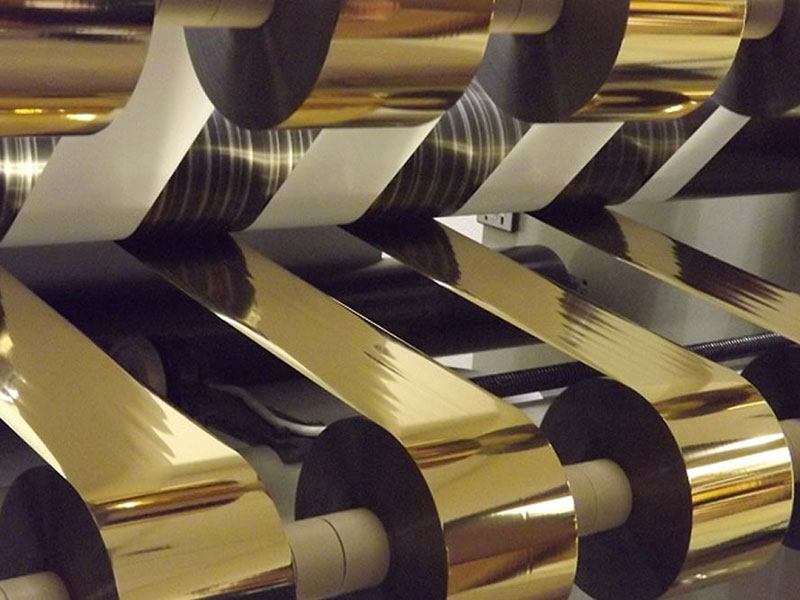
3. Coordination of winding and unwinding and the overall machine interface
Unwinding and rewinding do not operate independently. The area where the slitting blade is located should form a transition section with relatively "neutral" tension, so that the foil does not bear excessive longitudinal tension when entering the shearing point; otherwise, the circular blade will be cut with tearing rather than pure shearing, resulting in edge burrs. Modern slitting machines usually separate the unwinding tension, traction tension, and winding tension into independent control zones. Through floating rolls or tension sensors, each segment is fed back, and the PLC coordinates the set values for each segment, allowing the foil to follow a smooth tension curve from the master roll to the finished roll.
On the operational side, the touchscreen centrally sets parameters such as unwinding reference tension, winding starting tension, taper rate, and pressure curve of the compression roll, and displays the current roll diameter and actual tension values in real time. Both automatic metering and fixed-length shutdown functions rely on encoder feedback for winding and unwinding, ensuring consistent length for each roll. During recoiling, the receiving platform works with the master coil splicing or finished product uncoiling. The winding and uncoiling system enters standby or low-speed mode, and after the new coil is in position, tension is reestablished and accelerated to working speed.
Conclusion
The winding and rewinding system of the hot stamping foil slitting machine ultimately addresses a contradiction: the unwinding end must be "pulled firmly," the winding end must be "rolled evenly," and the foil material that has been slitted in the middle must neither loosen nor tighten. By understanding the pressure holding check of the expansion shaft, current compensation of the magnetic powder brake, segmented setting of the winding taper, and the logic of pressure parallelism and pressure linkage, operators can quickly determine whether the problem lies in the unwinding or rewinding section, whether parameter adjustment or hardware inspection is necessary when abnormalities occur on the end face. Once this system is streamlined, the foundation of quality for hot stamping foil slitting can truly be established.
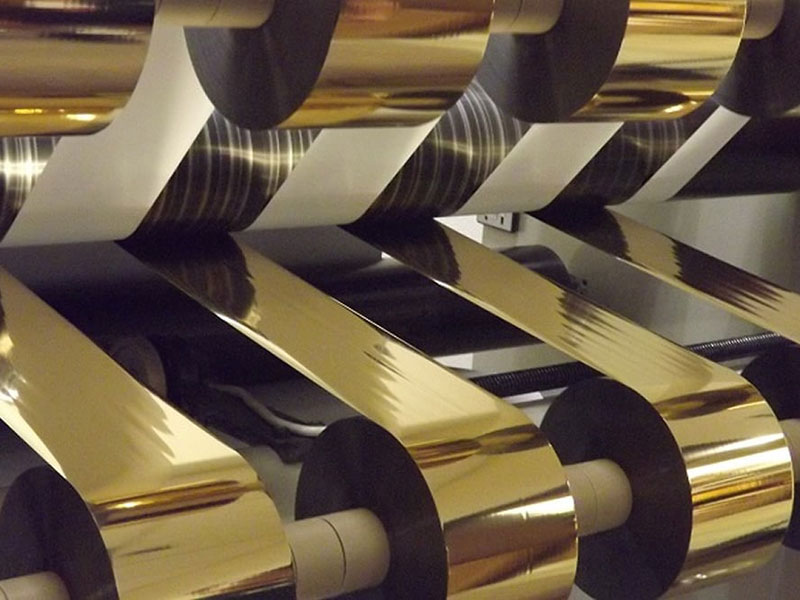
A mature automated system needs to form a closed loop simultaneously across four dimensions: correction, tension, cutting, and data management.
21. October, 2026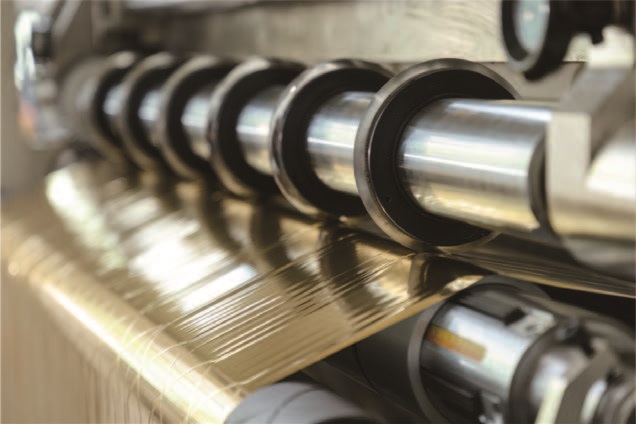
The value of customized slitting solutions lies in turning "cutting accurately, changing quickly, and no waste" from a slogan into a quantifiable production indicator.
21. October, 2026It is specifically designed to cut the wide master roll hot stamping foil into different narrow finished rolls according to process requirements, and is used in conjunction with hot stamping machines.
16. October, 2026A device with stable slitting accuracy and precise tension control is the fundamental link for ensuring hot stamping yield and material utilization.
16. October, 2026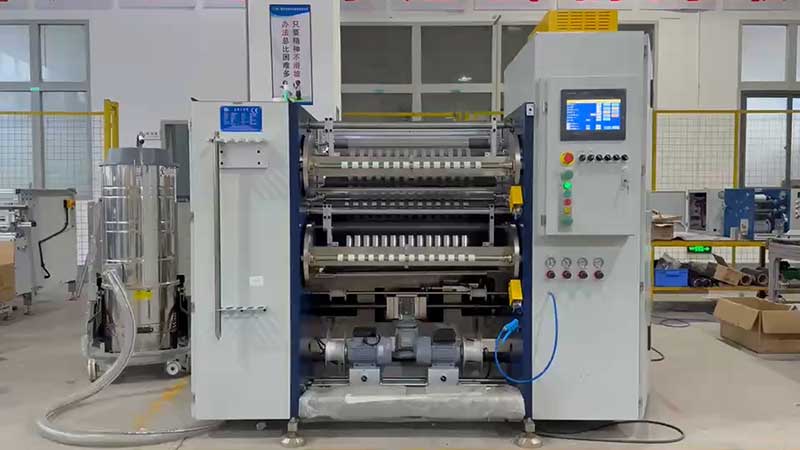
Whether you operate a slitting line or source slit rolls from a supplier, understanding these failure modes helps you protect quality and reduce downtime.
08. October, 2026


 English
 Deutsch
 Français
 Español
 Português
 日本語
 русский
 한국어
 عربي
 ภาษาไทย
 Tiếng Việt
 Italiano