
In the back-end processes of label printing factories, the slitting machine is often not the most prominent piece of equipment, but it is frequently the key factor determining shipment quality and cost. A wrong slitting machine causes misalignment when cutting paper, wrinkles when cutting film, and changing a single tool for half an hour. Though the problems seem scattered, the root cause points to the same place: not matching "material characteristics" with "core functions" during model selection. Self-adhesive materials range from coated paper to PET film, with vastly different physical properties. Using one machine to "cover everything" often results in insufficient cutting of any type. To avoid this pitfall, you need to break down the slitting accuracy step by step from several dimensions: tension control, tool shape selection, and automated configuration.
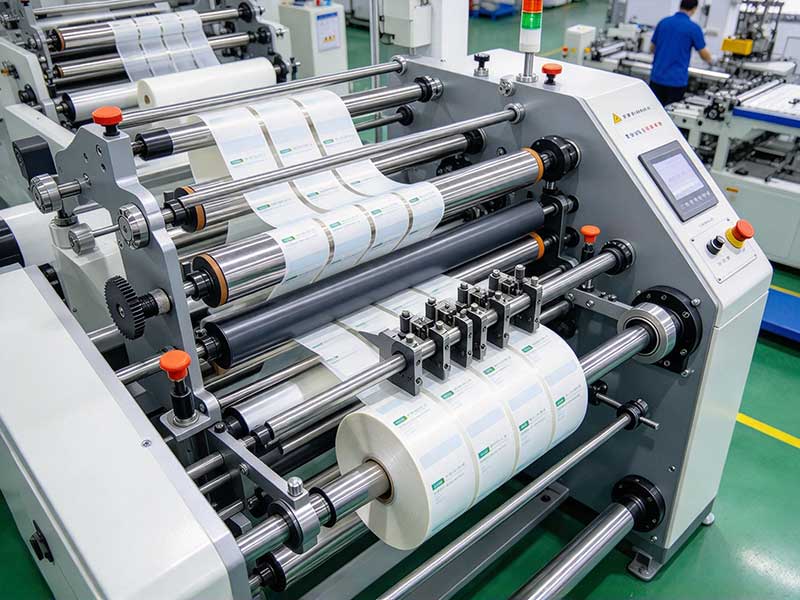
Accuracy: Don't be fooled by the nominal numbers; focus on the "stable" range
Slitting accuracy is a hard metric for slitting machine grades, but there is a common pitfall in parameter labeling on the market. Machines rated "±0.01mm" are not uncommon, but under real working conditions such as material tension fluctuations, blade shaft runout, and changes in environmental temperature and humidity, this figure is almost impossible to reliably reproduce. A relatively pragmatic judgment is: ordinary paper self-adhesive tape, ±0.1mm to ±0.2mm, is sufficient to meet most orders; Film types or high value-added labels (electronic labels, pharmaceutical labels) need to be placed on servo drive equipment with a ± of 0.05mm.
More important than precision numbers is "what makes this happen." Circular blade slitting uses an up-and-down axis diagonal cutting method, working like scissors, with neat cuts and long blade life, making it the mainstream choice for high-precision solutions; Flat blades are low-cost, but their precision and lifespan are significantly inferior, making them suitable for low-speed, narrow-width, or scenarios where cutting requirements are not exquisite. When selecting models, manufacturers can be asked to provide actual slitted end-face inspection data, which is much more reliable than flipping through brochures.
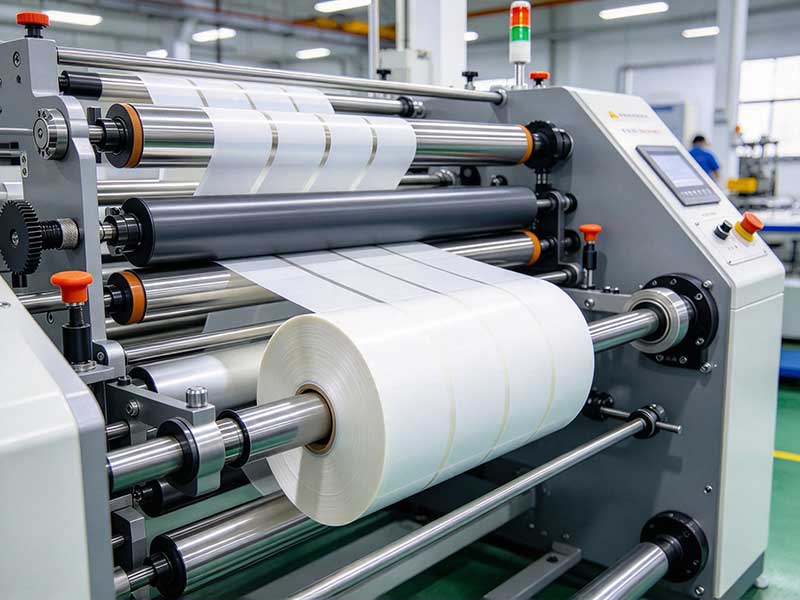
Tension control: The invisible link determines whether the finished product is usable
Tension control is the core technical challenge of slitting machines and also the most easily overlooked area. Self-adhesive is a composite material of "surface material + glue + base paper." If any layer has uneven tension, the small rolls after slitting will show uneven edges, glue leakage, or even "chrysanthemum cores."
Paper materials have good tensile resistance and require relatively tolerant tension; Thin-film materials are the watershed. PET, PP, and PE are easily stretched and prone to static electricity. During the process of unwinding from full to empty, the diameter keeps changing. If tension cannot be adjusted in real time, wrinkling and slipping are almost inevitable. A qualified tension system should at least have: the unwinding end is actively unwound using a variable frequency or servo motor, with closed-loop control in conjunction with floating rollers or tension sensors; The winding end uses an independently driven slip shaft that automatically adjusts torque according to changes in the coil diameter. There is a simple and effective method for machine testing: run a roll of actual production material, hold the finished roll to feel whether all layers are evenly tight, loose on the outside or on the inside or have a hard core, or the tension system is not properly adjusted.
The static elimination device is equally essential for film slitting. Static electricity accumulated during high-speed operation of PET and PP can at best attract dust and cause winding misalignment or material adherence to the roller and prevent material feeding. When selecting the model, confirm that static elimination rods are standard and not optional at an additional cost.
Blade Shapes and Waste Removal: Round blades are mainstream, but not the only answer
Circular blade slitting is currently the mainstream configuration for industrial slitting machines, suitable for high-speed operation, stable cut quality, and long blade life. For the vast majority of paper and film-type adhesives, the round knife solution is a reliable choice. However, for "delicate" materials like hot stamping paper or laser film with metallized coatings or holographic patterns, in addition to the blade shape, extra attention must be paid to the hardness of the blade shaft and the scratch-resistant design of the guide roller surface—a blade shaft with insufficient hardness tends to wear out over time, causing cut edges to burr, while a roller that is not smooth enough may leave scratches on the material surface.
The waste disposal process is also worth confirming during model selection. If the edge material produced during slitting is not discharged smoothly, it will accumulate near the tool shaft, affecting cut quality and even damaging the blade. Mainstream models are equipped with exhaust fans or blowing devices, where edge material is actively blown away and collected—a function especially important for narrow strip slitting.
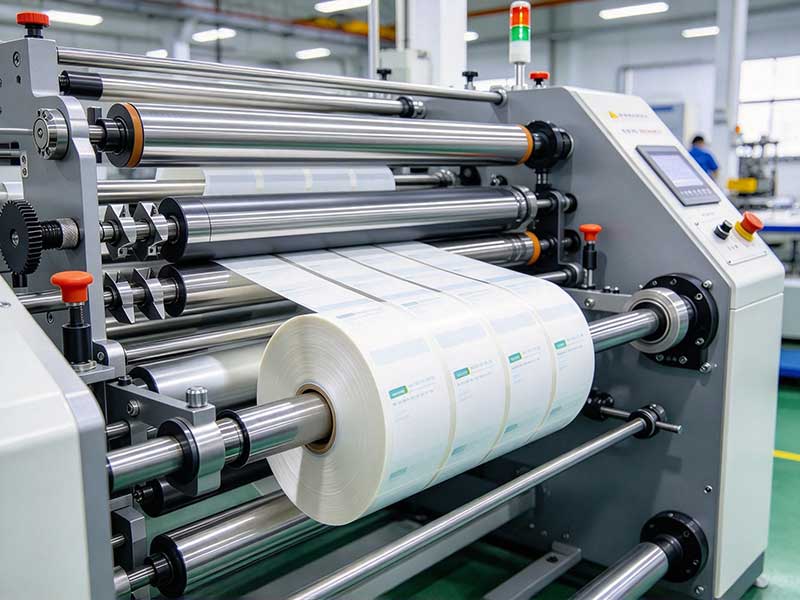
Automation: Speak according to order structure; don't pay for features you don't use
The level of automation is directly related to order change efficiency and labor costs, but the judgment that "the more automated, the better" is a judgment that needs to be revised. The key variable is order structure.
If there are many batches and specifications change daily, the automatic tool layout system is a real efficiency tool. Traditional manual tool layout takes 10 to 30 minutes to shut down and adjust, while automatic tool layout can be completed within 1 to 3 minutes after entering specifications on the touchscreen. Changing orders five times a day means a difference of one or two hours of production capacity. Conversely, if there are few orders and a full day of operation, the ability to run continuously at high speed is more noteworthy than tool layout automation. Mainstream slitting speeds range from 70 to 200 m/min, while high-speed models can exceed 300 m/min.
Features like automatic meter counting, fixed-length shutdown, and automatic counting directly help ensure consistency in the specifications of finished rolls, making them basic configurations that are "once used and never returned." The choice of unwinding diameter also comes with efficiency: the rewinding frequency varies significantly between 500mm and 700mm, so for large orders, it is best to select larger winding diameters to reduce downtime.
Classification by material: Three selection paths
Applying these dimensions to specific materials makes the selection approach much clearer.
Paper-based adhesive tape is the most widely used category; coated paper, thermal paper, and mirror-finish coated paper have relatively crisp textures. Standard belt-type drive models can meet most needs, with the core focus on photoelectric correction during winding and taper tension control during winding to prevent the mother roll from deviating or being "tight inside, loose outside." Processing of narrow-width label paper, with a compact structure and strong targeting of 320mm format models, is a common choice.
Film-type self-adhesive labels require the utmost care. The closed-loop tension control system and static elimination device are the baseline configurations, while the slip shaft at the winding end combined with taper tension control is key to ensuring the neatness of the end face. PE material is soft, has poor tensile strength, and should have as low tension as possible; PET has high stiffness and requires higher precision, making the circular cutter solution more suitable.
Special materials such as hot stamping paper and laser film, in addition to conventional slitting capacity, also examine the hardness of the tool shaft and the surface treatment process of the guide roller. Once the surface of these materials is scratched, they are considered defective, and scratch-resistant design takes priority over speed parameters.
Ultimately, slitting machine selection is not a process of "comparing parameters," but a process of "meeting demand." Accurate and stable precision, tension systems capable of withstanding the test of actual material rolls, tool profiles and waste discharge matching material characteristics, and automation levels matching order rhythms—these four points align so the machine won't become the next "just to make do" equipment.
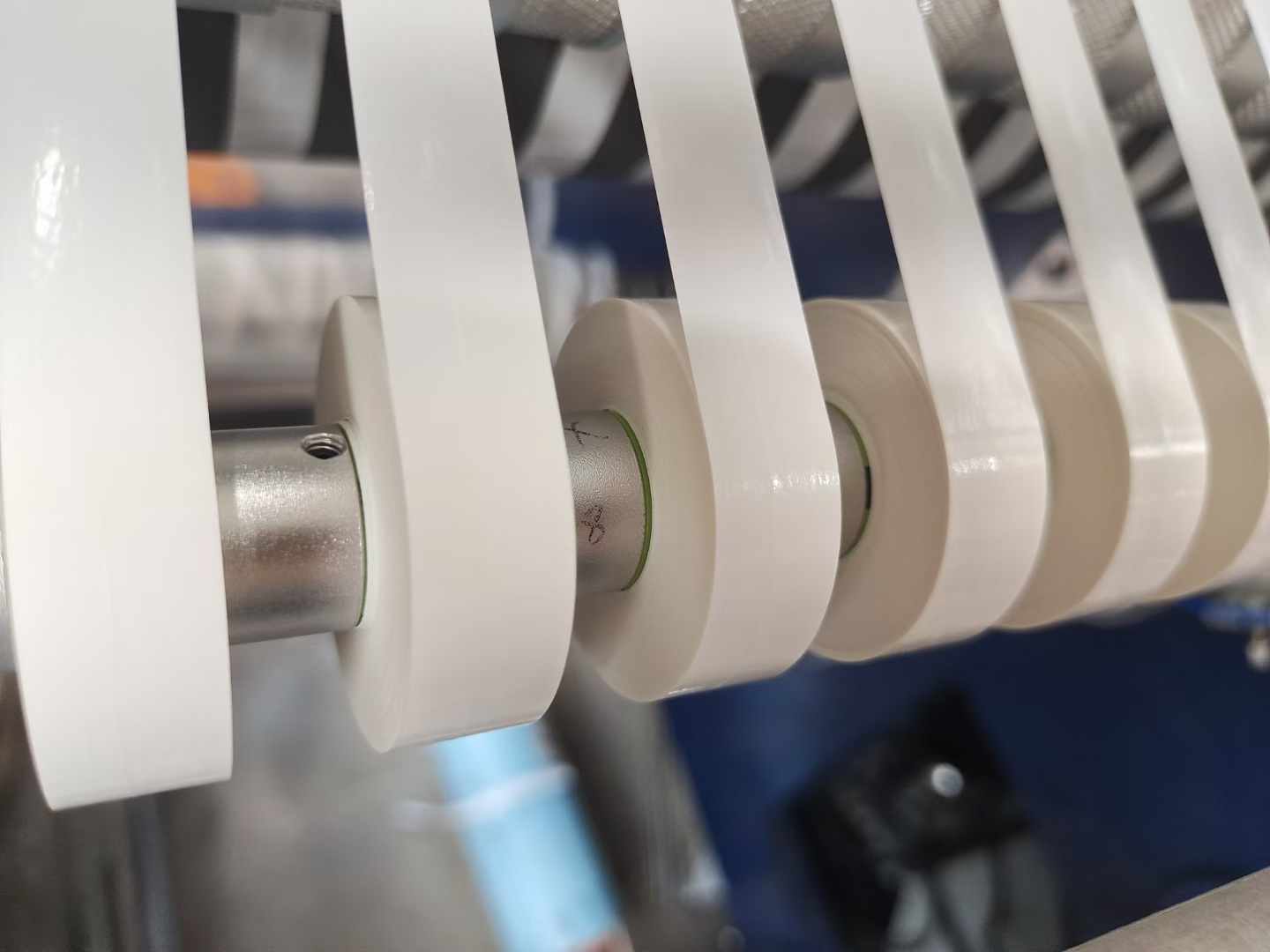
The application scenarios of self-adhesive label slitting machine are very wide, mainly covering the following fields:
30. November, 2024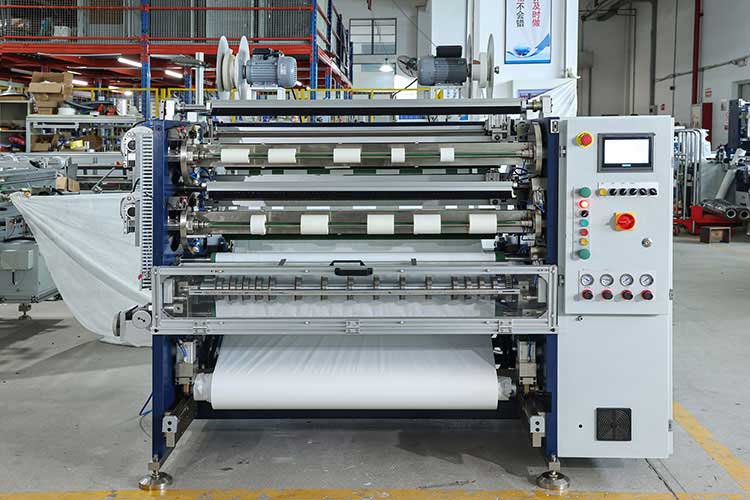
These advantages make it play an important role in the production and processing of self-adhesive labels.
29. November, 2024
The self-adhesive slitting machine is mainly used to cut the self-adhesive material according to a certain specification and shape to meet the production needs of the product.
26. November, 2024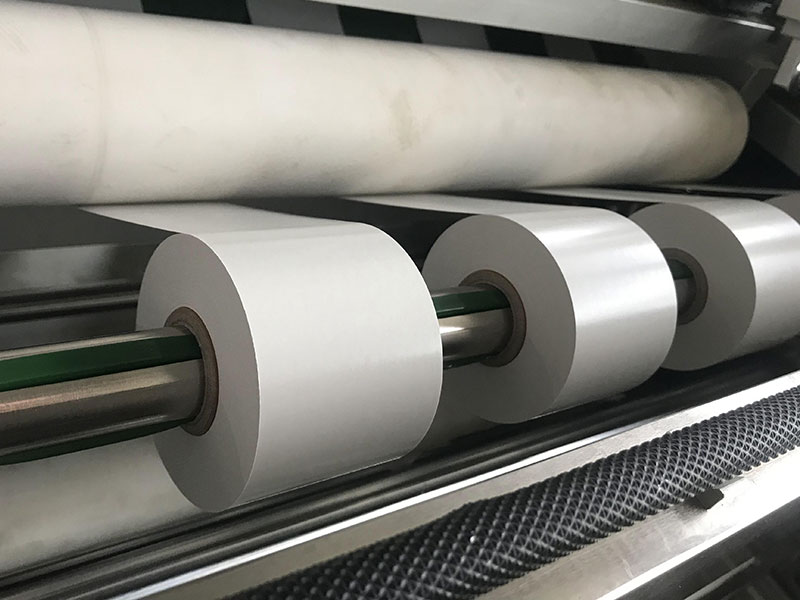
In the future, the self-adhesive slitting machine market is expected to continue to grow steadily and has certain development prospects.
26. November, 2024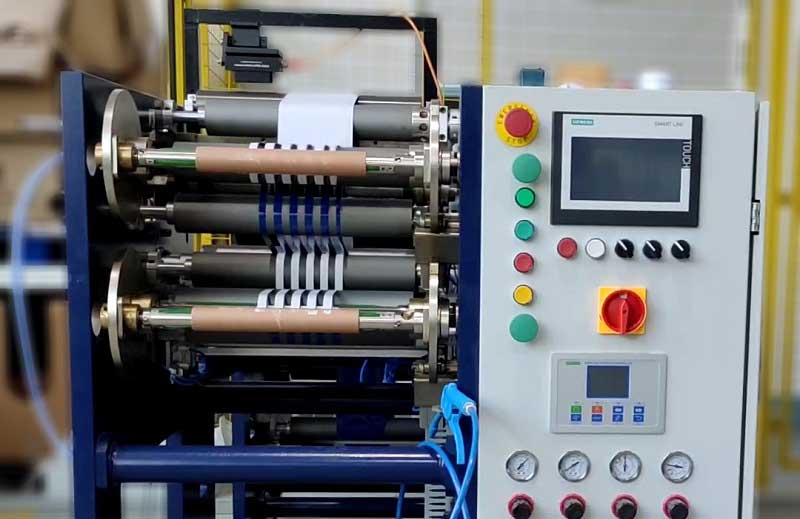
It is suitable for rewinding and slitting all kinds of self-adhesive materials and paper materials.
26. November, 2024


 English
 Deutsch
 Français
 Español
 Português
 日本語
 русский
 한국어
 عربي
 ภาษาไทย
 Tiếng Việt
 Italiano