
In modern production, the maximum use of materials is an important issue. A slitter, on the other hand, is a machine that maximizes the use of materials, with cutting and separation technologies that minimize waste and loss. So, how to maximize the use of materials by slitting machine is discussed from the following three aspects:
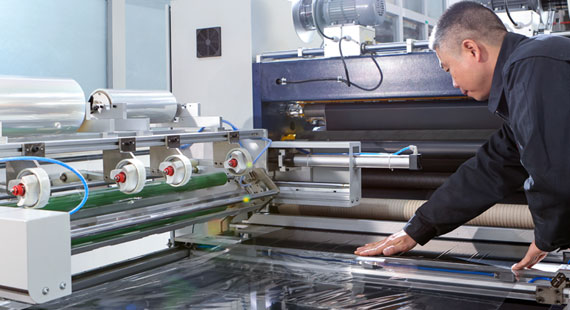
1. Efficient working mode
The slitting machine has an efficient working mode that can achieve fast, continuous and precise cutting and separation. Compared with traditional manual cutting methods, it can minimize errors and waste, and improve material utilization. At the same time, it can also maximize the use of materials by adjusting cutting modes and parameters according to different material and process needs.
2. Precision control system
The slitting machine adopts a precision control system, which can realize high-precision control of various parameters and ensure the accuracy and consistency of cutting. At the same time, it can be intelligently optimized for different materials and cutting tasks, minimizing waste and losses. This sophisticated control system ensures maximum use of materials, increases productivity and reduces costs.
3. Design of human-computer interaction
The slitting machine adopts a human-computer interactive design, which can be easily adjusted and optimized by the operator. It is also equipped with a corresponding monitoring system and feedback mechanism, which can detect problems and deal with them in time. In practice, the operator can monitor the system to understand the operating status and process flow, so that the necessary adjustments and optimizations can be made to maximize the use of materials.
In summary, the slitter can maximize the use of materials through efficient working mode, precise control system and human-computer interaction design. In the future, with the continuous advancement of science and technology, the performance of the slitting machine will be optimized and upgraded to better serve the production needs of all walks of life.
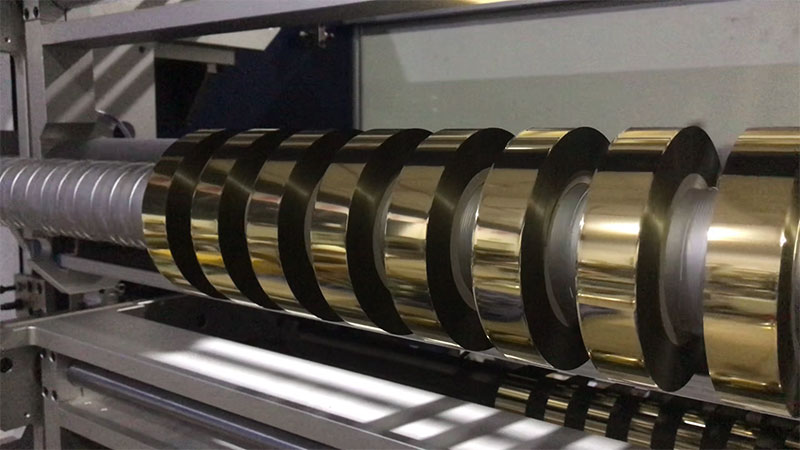
The tension control in the slitting stage directly determines the yield rate of subsequent hot stamping processes.
28. September, 2026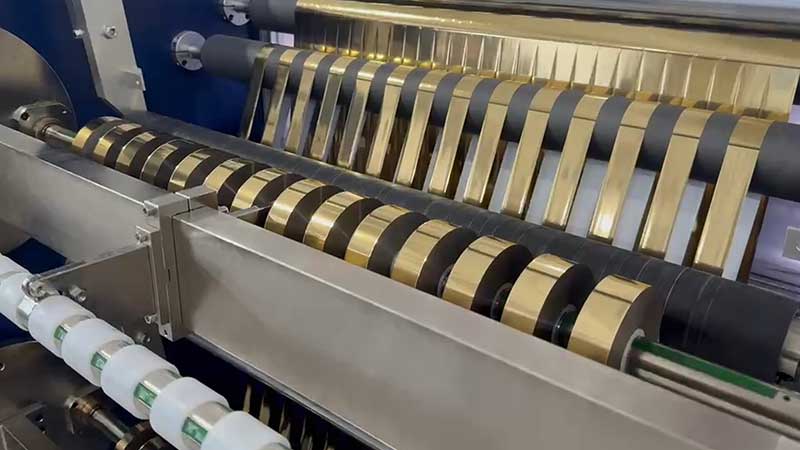
The key to selection is to grasp three parameters that truly determine slitting quality: slitting accuracy, tension control, and tool system.
28. September, 2026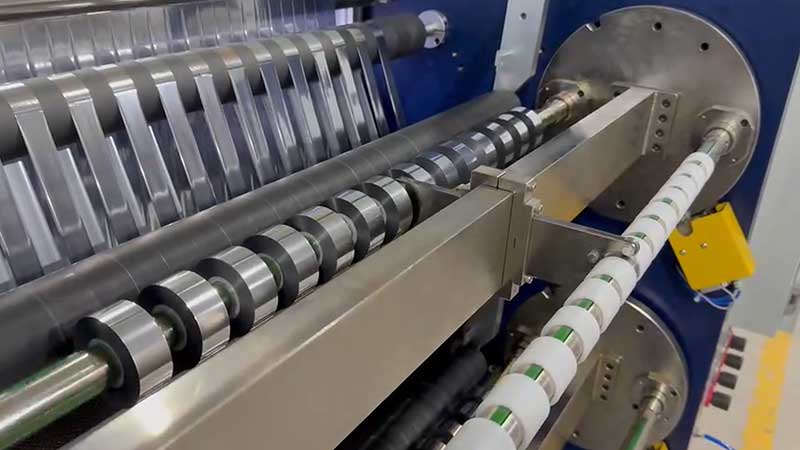
But what truly determines whether a slitting machine is "in sync" is not the absolute value of a single parameter, but the matching logic between width and speed.
28. September, 2026Width determines the rigidity and correction accuracy of the equipment's structure, while speed tests the real-time responsiveness of tension control.
24. September, 2026This article provides a current selection framework from four dimensions: material adaptation, core parameters, intelligent configuration, and cost evaluation.
24. September, 2026


 English
 Deutsch
 Français
 Español
 Português
 日本語
日本語 русский
 한국어
한국어 عربي
عربي ภาษาไทย
 Tiếng Việt
 Italiano