
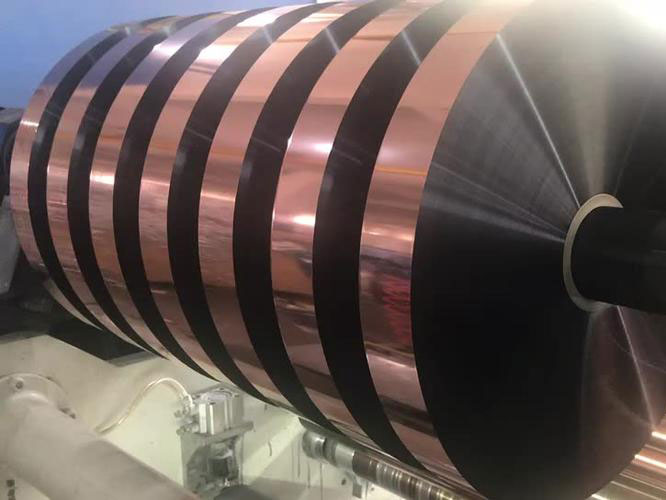
The slitting machine we generally use can also be called a slitting machine or a rewinding machine. The slitting machine has a horizontal slitting machine and a vertical slitting machine, among which the vertical slitting is faster than the horizontal slitting machine.
The copper foil slitting machine is mainly used for copper foil slitting, it requires a very high precision of the slitting machine, the use of the copper foil slitting machine is actually very simple, the most important thing is to do a good job in the hardware and software part of the machine.
1. First of all, we need to improve the accuracy of the machine sheet metal of the roller of the copper foil slitting machine, and the minimum difference between the difference and the accuracy of 0.1mu can not be used, so that the hardware part of the machine can achieve accurate hardware;
2. The next is the bearing, a roller is installed on the machine, if the bearing is used poorly, the roller is rotated by hand, and the rotation time is slow, and the time with the good bearing is used to rotate by hand for more than 3 minutes.
3. In terms of software and electrical components, the program is best developed by the company's electronic control engineers, and then put on the machine to ensure the normal operation of the software
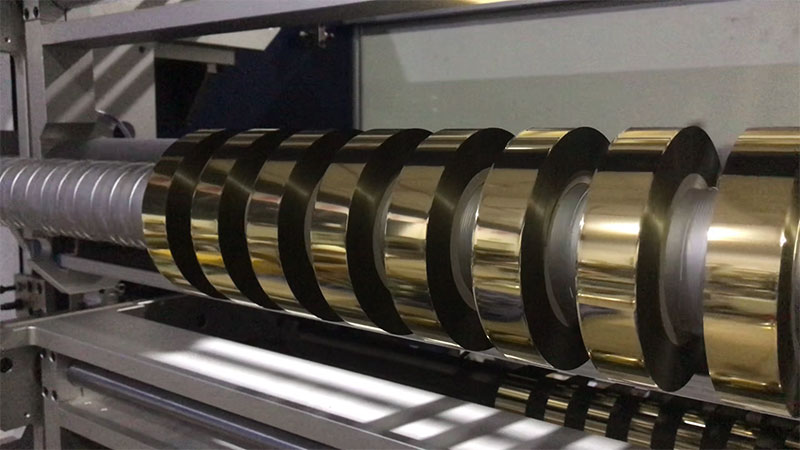
The tension control in the slitting stage directly determines the yield rate of subsequent hot stamping processes.
28. September, 2026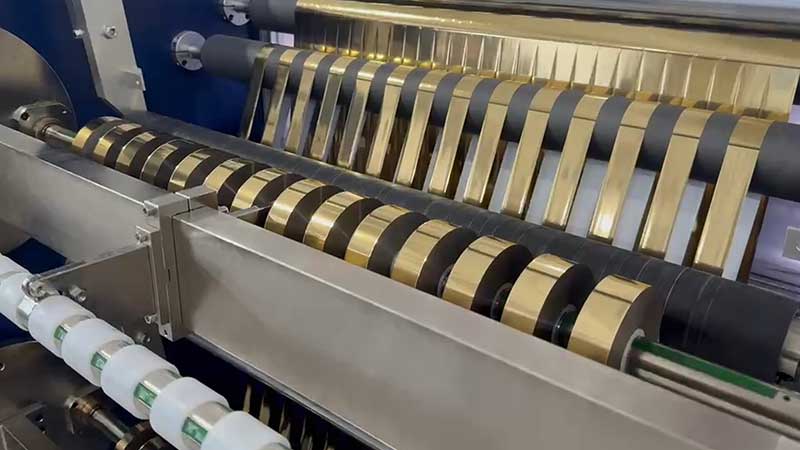
The key to selection is to grasp three parameters that truly determine slitting quality: slitting accuracy, tension control, and tool system.
28. September, 2026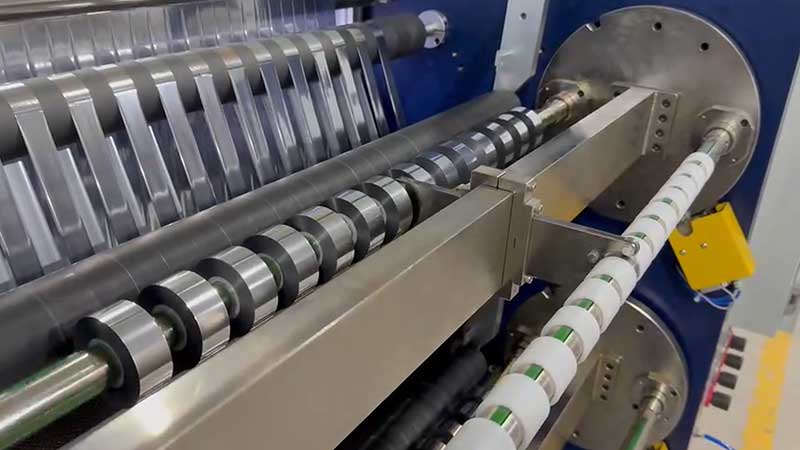
But what truly determines whether a slitting machine is "in sync" is not the absolute value of a single parameter, but the matching logic between width and speed.
28. September, 2026Width determines the rigidity and correction accuracy of the equipment's structure, while speed tests the real-time responsiveness of tension control.
24. September, 2026This article provides a current selection framework from four dimensions: material adaptation, core parameters, intelligent configuration, and cost evaluation.
24. September, 2026


 English
 Deutsch
 Français
 Español
 Português
 日本語
日本語 русский
 한국어
한국어 عربي
عربي ภาษาไทย
 Tiếng Việt
 Italiano