
When adjusting the parameters of the hot stamping foil slitting machine to adapt to different materials, it is necessary to comprehensively consider the material characteristics, slitting accuracy, machine performance and other factors. Here are the key steps and considerations:
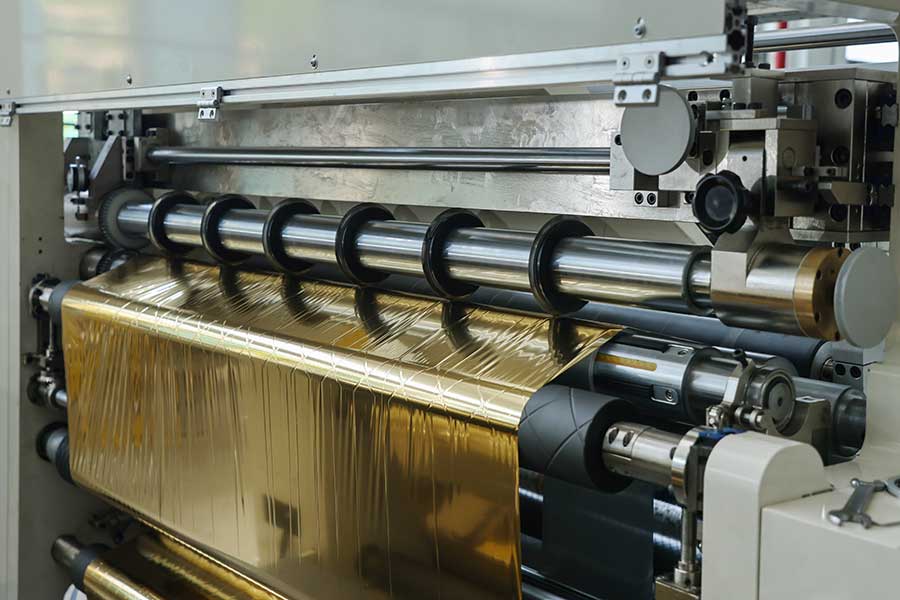
1. Clarify the material characteristics
• Material type: distinguish between substrates such as PET, OPP, PVC, and paper, as well as the thickness and hardness of the hot stamping layer.
• Heat sensitivity: Some materials are sensitive to temperature, and high temperatures may cause deformation or sticking.
• Tensile strength: Soft materials (such as thin PET) need to control tension to avoid tensile deformation.
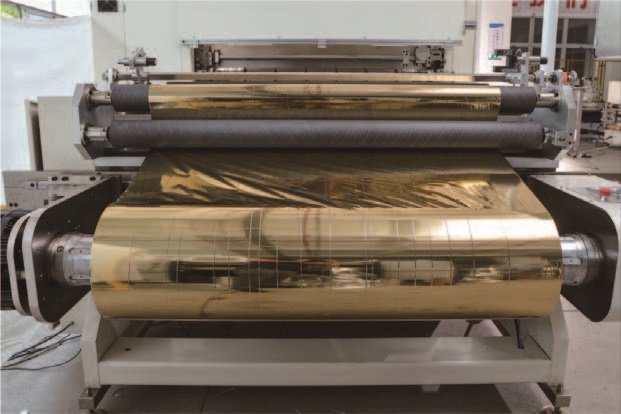
2. Adjust key parameters
(1) Slitting speed
• High hardness materials (e.g. thick PVC): reduce the speed (e.g. 30-50 m/min) to avoid edge wear or burrs.
• Soft materials (e.g. thin OPP): can be increased appropriately (e.g. 60-80 m/min), but with tension control.
(2) Tension control
• High tension materials (e.g. metal foil): High tension (e.g. 15-20N) is required to ensure smooth slitting.
• Low-tension materials (e.g. films): reduce tension (e.g. 5-10N) to prevent tensile deformation.
• Recommendation: Use a tension sensor for real-time monitoring and gradually fine-tune the material to be jitter-free and wrinkle-free.
(3) Tool selection and adjustment
• Blade type: Carbide knives are suitable for thick materials, and round blades are suitable for high-speed slitting of films.
• Tool angle: Adjust the inclination angle of the blade (usually 15°-30°) to reduce cutting resistance.
• Pitch pressure: Thick materials need to increase the pressure, thin materials need to be lightly pressed (to avoid indentation).
(4) Temperature control (if heating and slitting is required)
• High temperature materials (e.g. some composite foils): 80-120°C.
• Low temperature sensitive material: Turn off the heat or set the low temperature (≤50°C).
(5) Rewinding and unwinding parameters
• Winding tension: generally 80%-90% of the slitting tension, too large will cause core deformation.
• Winding ratio: large winding diameter (such as Φ300mm or more) needs to reduce the winding speed.
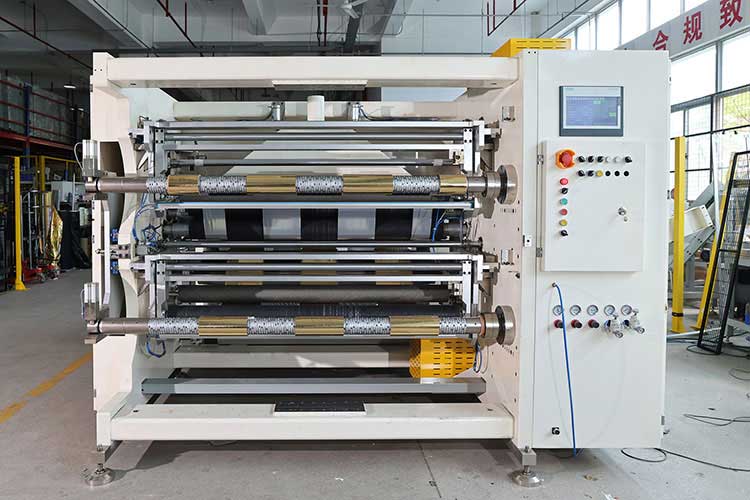
3. Test & Optimize
1. Sample test: first use scrap to test cut to see whether the slitting edge is smooth, whether there are burrs or delamination.
2. Parameter recording: record the best parameters of each material (such as speed, tension, knife pressure) and establish a database.
3. Dynamic adjustment: real-time monitoring of slitting quality in production, timely fine-tuning of parameters.
4. FAQ Resolution
• Flash/burr: Check blade sharpness or increase tension.
• Material wrinkling: reduce tension or adjust guide roller parallelism.
• Web eccentricity: Check whether the winding shaft is level and adjust the guiding system.
5. Equipment maintenance
• Clean the knives and guide rollers regularly to avoid dust accumulation affecting the slitting accuracy.
• Lubricate the transmission parts to ensure the stability of the tension system.
Through systematic adjustment and continuous optimization, the slitting efficiency and quality can be significantly improved. Different brands of equipment may vary, it is recommended to refer to the equipment manual and adjust it based on actual experience.
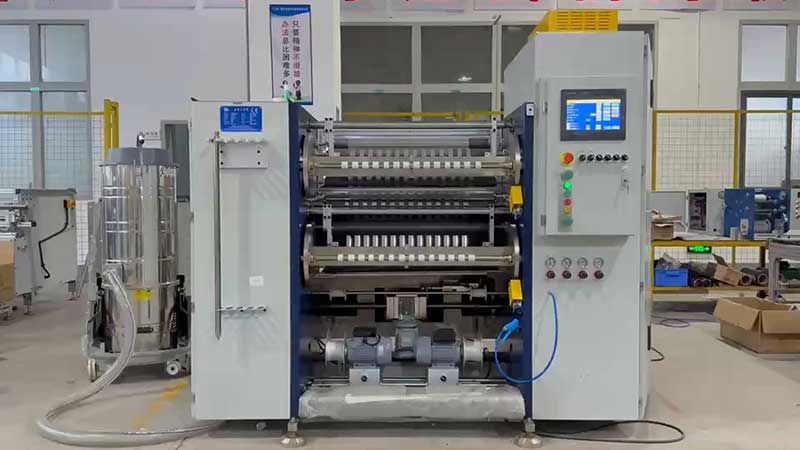
Whether you operate a slitting line or source slit rolls from a supplier, understanding these failure modes helps you protect quality and reduce downtime.
08. October, 2026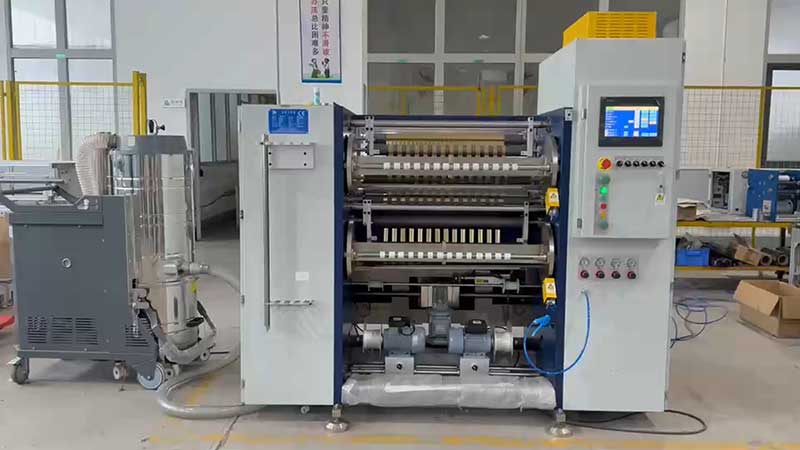
This guide breaks down the specifications that actually matter, organized by the parameters that directly affect your yield, efficiency, and bottom line.
08. October, 2026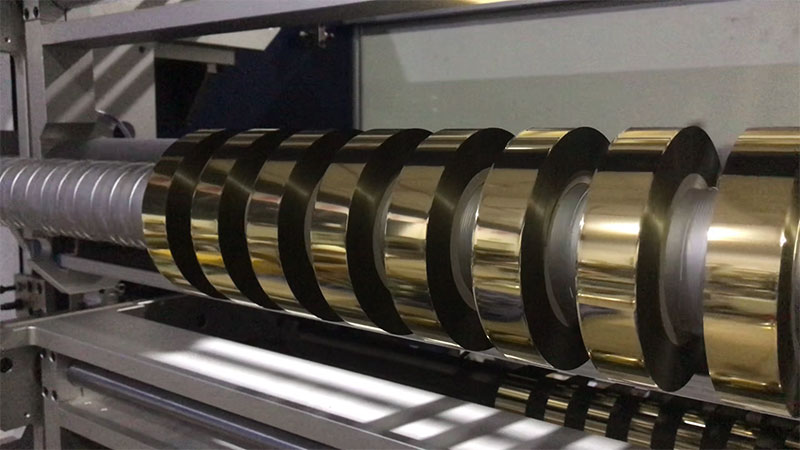
The tension control in the slitting stage directly determines the yield rate of subsequent hot stamping processes.
28. September, 2026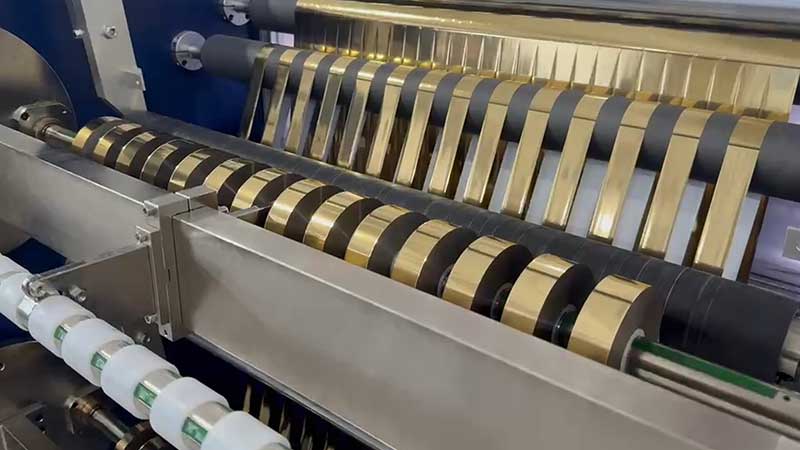
The key to selection is to grasp three parameters that truly determine slitting quality: slitting accuracy, tension control, and tool system.
28. September, 2026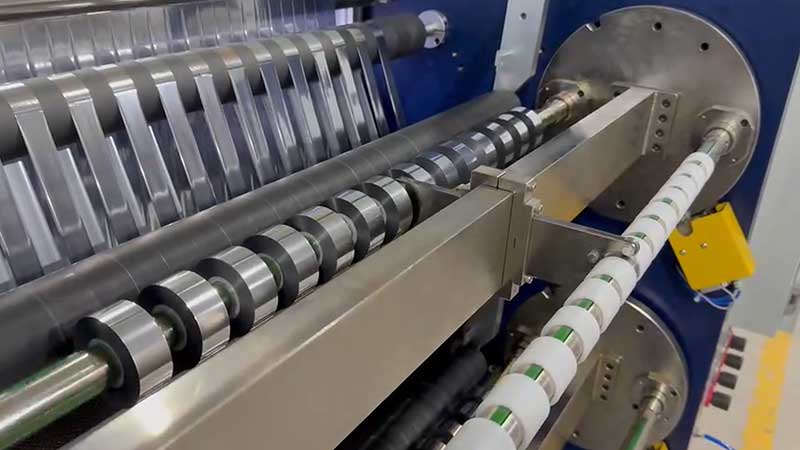
But what truly determines whether a slitting machine is "in sync" is not the absolute value of a single parameter, but the matching logic between width and speed.
28. September, 2026


 English
 Deutsch
 Français
 Español
 Português
 日本語
日本語 русский
 한국어
한국어 عربي
عربي ภาษาไทย
 Tiếng Việt
 Italiano