
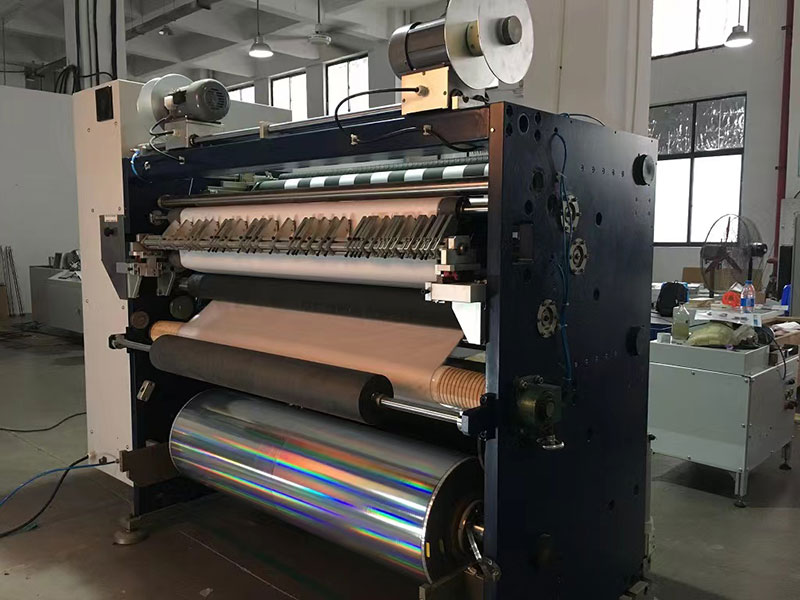
The function of the slitting machine is mainly to carry out cut-to-length slitting processing of whole rolls or whole rolls of raw materials, such as plastic packaging materials, packaging cartons, steel plates, films, leather, sawdust and other materials that need to be controlled by cut-to-length slitting. The cutting length can be set continuously, and if there is an error in the actual cutting length, it is easier to calibrate by setting the parameters.
The punching control of the punching machine is mainly divided into static punching and dynamic punching. When the set length is reached, the machine stops precisely and then proceeds to a static grooving process, which restarts the operation after the grooving is completed. When the set length is reached, the slitting signal is sent out uninterruptedly, and the slitting machine dynamically slits during the movement of the material. The most important performance index of cut-to-length slitting is the slitting accuracy, and the length of the finished product is consistent.
The slitting length can be set continuously. If there is an error in the actual slitting length, it is easy to calibrate by setting the parameters. For the operation of the slitting machine, it can be set continuously, or dynamically and statically, and the performance index of slitting accuracy is also very important, I hope you can understand the principle and operation process of the slitting machine through the introduction of this article.
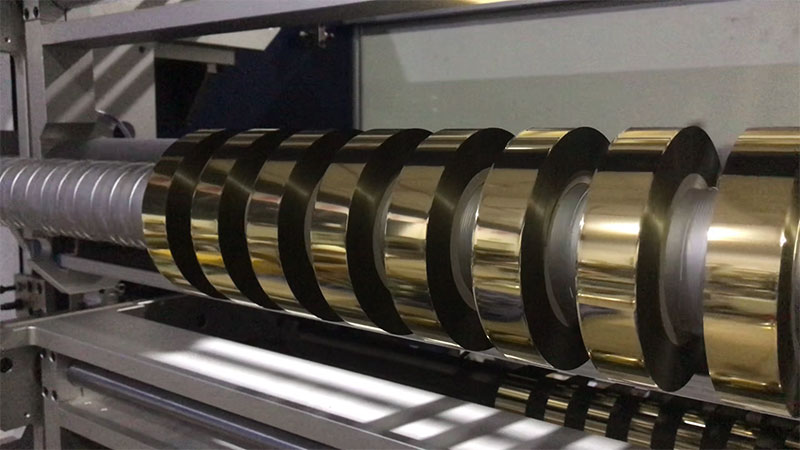
The tension control in the slitting stage directly determines the yield rate of subsequent hot stamping processes.
28. September, 2026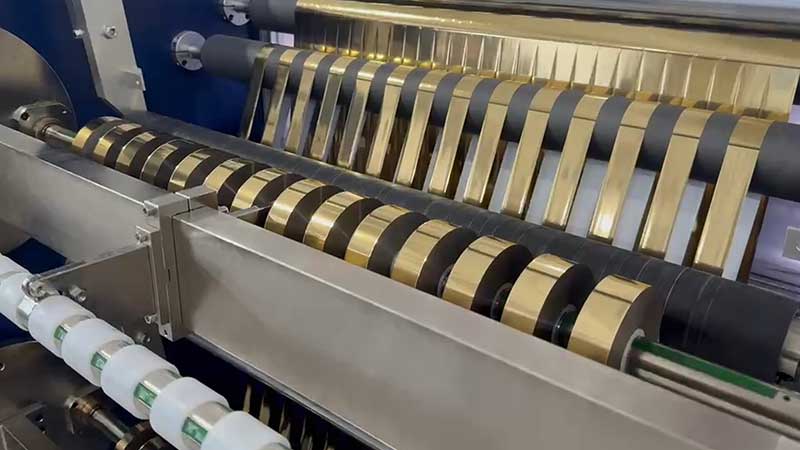
The key to selection is to grasp three parameters that truly determine slitting quality: slitting accuracy, tension control, and tool system.
28. September, 2026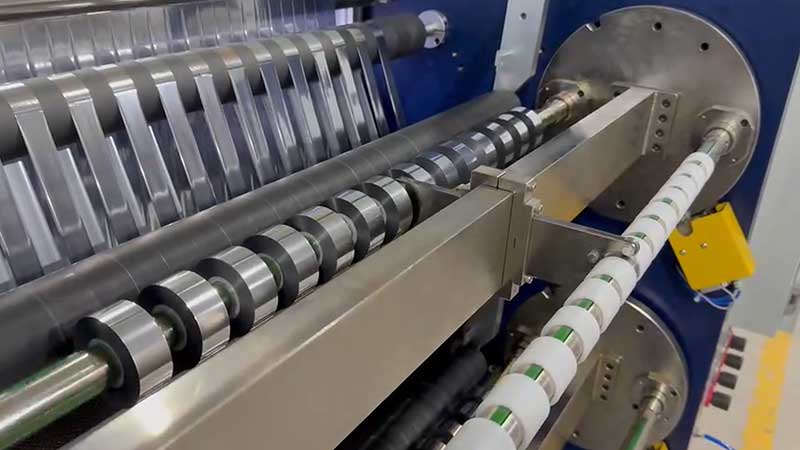
But what truly determines whether a slitting machine is "in sync" is not the absolute value of a single parameter, but the matching logic between width and speed.
28. September, 2026Width determines the rigidity and correction accuracy of the equipment's structure, while speed tests the real-time responsiveness of tension control.
24. September, 2026This article provides a current selection framework from four dimensions: material adaptation, core parameters, intelligent configuration, and cost evaluation.
24. September, 2026


 English
 Deutsch
 Français
 Español
 Português
 日本語
日本語 русский
 한국어
한국어 عربي
عربي ภาษาไทย
 Tiếng Việt
 Italiano