
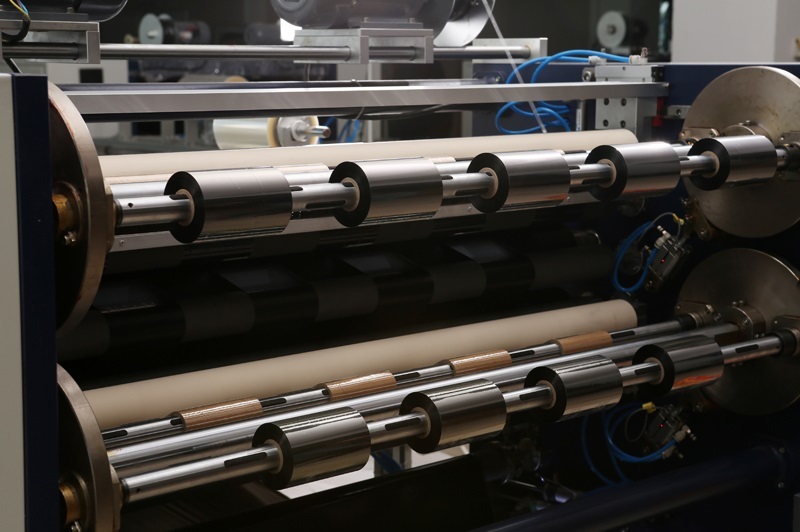
The effect of the slitting machine has been improving, and we also have a certain concern about its efficiency and capacity, and we have our own methods and skills for improving production capacity. The actual control value of the slitter tension remains constant.
Tension control of slitter unwinding: During the rewinding of a set of paper rolls, the rewinding tension should be avoided as much as possible to ensure that the winding tightness of the slitting rewinder is uniform inside and outside. Secondly, in the rewinding process of the slitting machine, if the tension control of the paper web is too small, the paper roll will be loose or slip on the bottom roller, resulting in wrinkles, paper interweaving and other paper problems.
If the tension control of the slitting machine is too large, it will cause the roll to burst or damage the paper core. Therefore, it is necessary to keep the actual control value of the tension constant during the rewinding operation of the paper web and to install a well-tuned inertia instantaneous compensation regulator in the tension closed-loop control system. The traditional control scheme of the slitting machine is to use a large motor to drive the shaft of the rewinding and unwinding, and a magnetic particle clutch is added to the rewinding and unwinding reel, and the resistance generated by it is controlled by adjusting the current of the magnetic particle clutch to control the tension on the surface of the material.
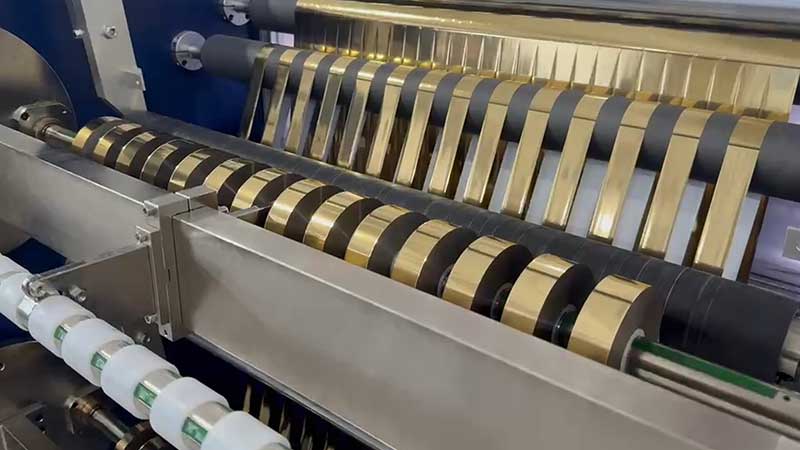
This guide breaks down the critical factors—from tension control to automation—to help you make an informed capital investment.
14. September, 2026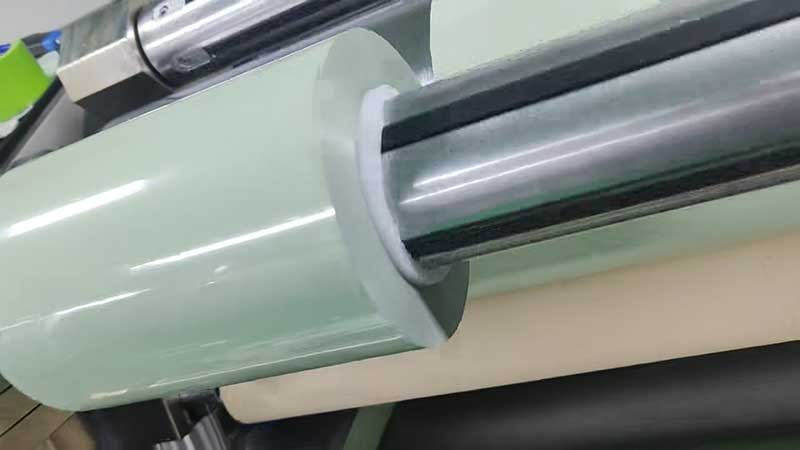
This article outlines a clear selection approach from four dimensions: material adaptation, core technical parameters, efficiency and cost, and supplier selection.
09. September, 2026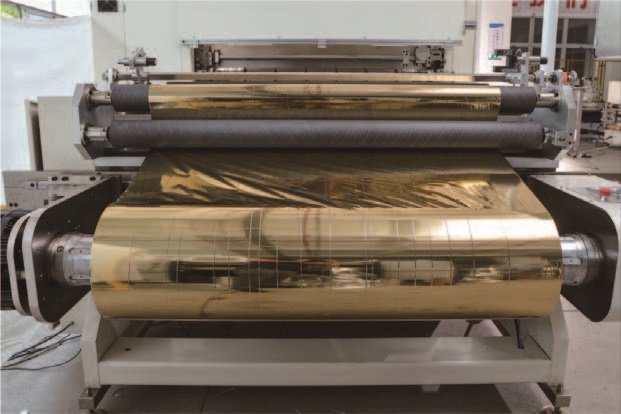
Avoiding foil breakage and wrinkling, the key lies in building a dynamically balanced micro-stress system.
08. September, 2026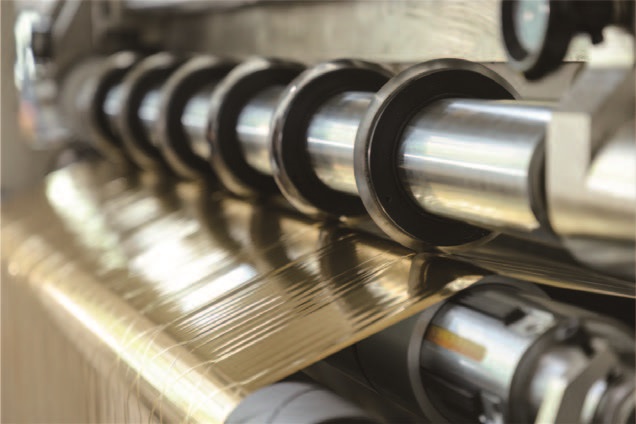
This article will systematically analyze solutions to burr and debris issues from four dimensions: tool systems, tension control, electrostatic and dust removal, and equipment precision.
08. September, 2026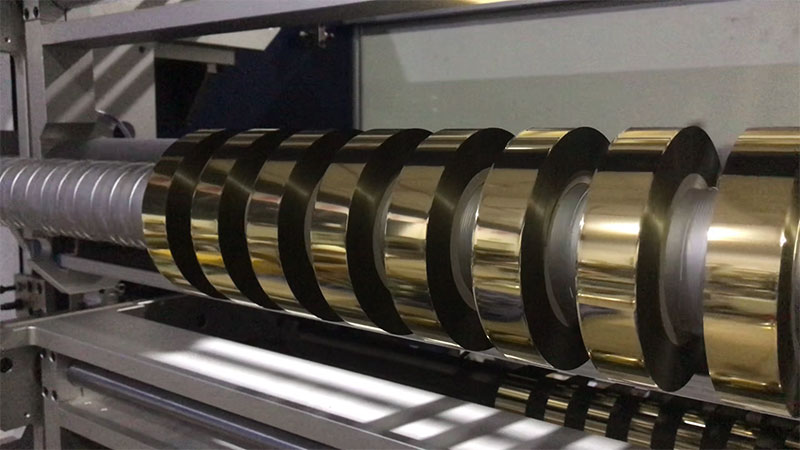
The core principle for selecting a knife is: let the blade "cut" the foil, rather than "tear" or "squeeze through."
08. September, 2026


 English
 Deutsch
 Français
 Español
 Português
 日本語
日本語 русский
 한국어
한국어 عربي
عربي ภาษาไทย
 Tiếng Việt
 Italiano