
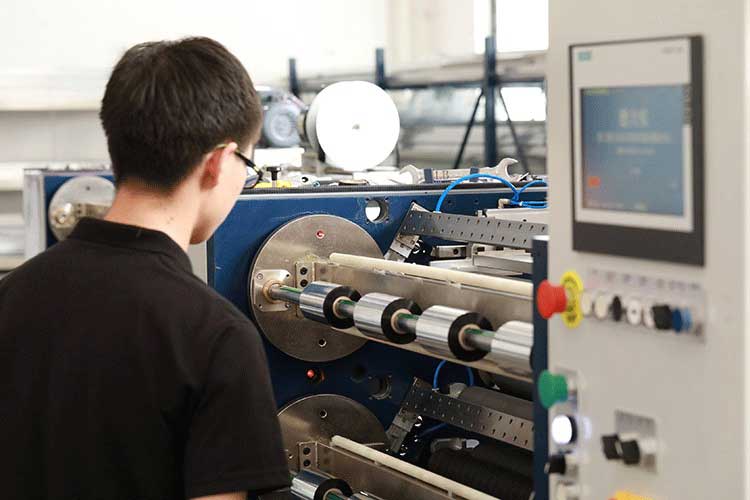
1. The cutter is not sharp or the swing is not effective: the cutter is not sharp or the swing is not effective, which will lead to uneven cutting or continuous cutting, at this time, the cutter should be replaced or the cutter swing mechanism should be repaired in time.
2. Inaccurate cutting width: If the cutting width is inaccurate, it may be that the gap between the cutting knife and the upper cutting roller is incorrect, and the gap needs to be adjusted at this time.
3. Uneven or wrinkled surface of the strip: The uneven or wrinkled surface of the strip may be caused by uneven tension or too fast cutting speed, at this time the tension should be adjusted or the cutting speed should be slowed down.
4. Cutting accuracy decreases: If the cutting accuracy decreases, it may be caused by worn cutters or incorrect cutter installation, at this time the cutter should be replaced or reinstalled.
5. Excessive machine noise or severe vibration: Excessive machine noise or severe vibration may be caused by loose or damaged machine parts, at this time the damaged parts should be checked and fastened or replaced.
6. Electrical failure: The electrical failure of the slitting machine may cause the machine to fail to start or work normally, at this time, it is necessary to check the electrical parts, such as switches, fuses, power supplies, etc.
The above are the common faults and treatment methods of the slitting machine, if there are other faults that need to be dealt with, you can adjust them according to the specific situation or contact professional maintenance personnel.
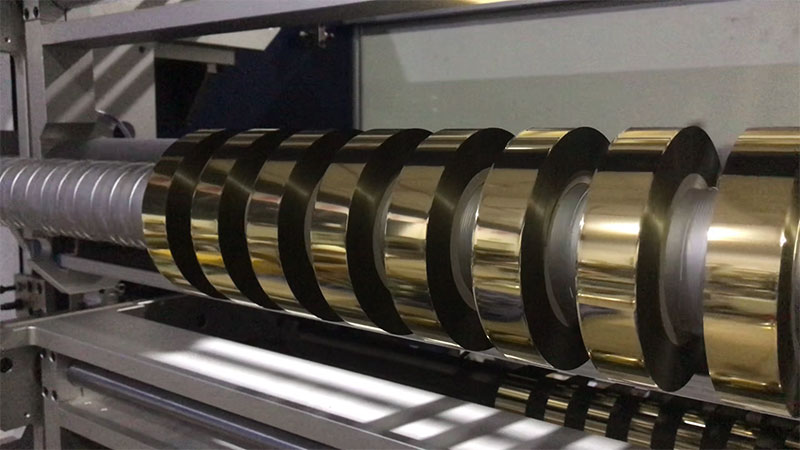
The tension control in the slitting stage directly determines the yield rate of subsequent hot stamping processes.
28. September, 2026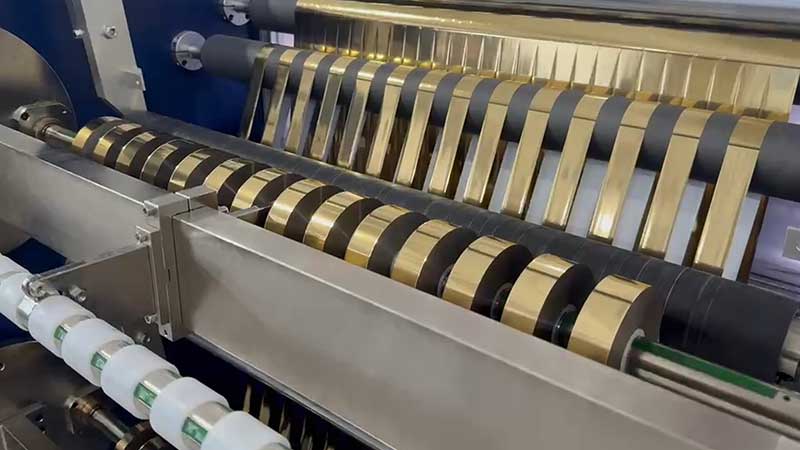
The key to selection is to grasp three parameters that truly determine slitting quality: slitting accuracy, tension control, and tool system.
28. September, 2026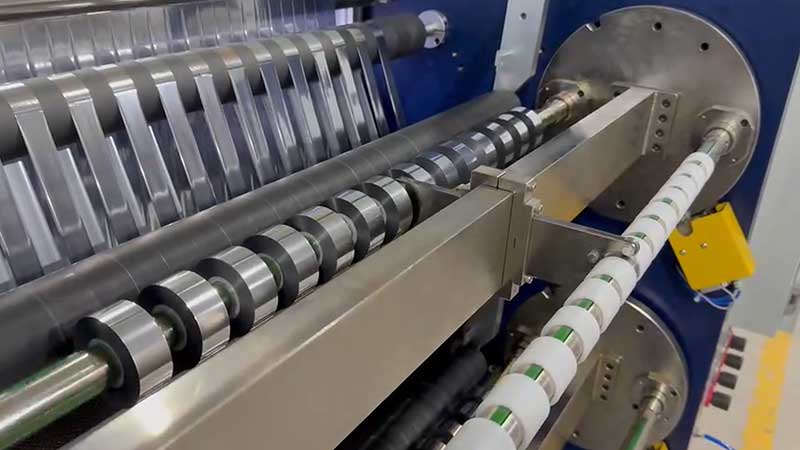
But what truly determines whether a slitting machine is "in sync" is not the absolute value of a single parameter, but the matching logic between width and speed.
28. September, 2026Width determines the rigidity and correction accuracy of the equipment's structure, while speed tests the real-time responsiveness of tension control.
24. September, 2026This article provides a current selection framework from four dimensions: material adaptation, core parameters, intelligent configuration, and cost evaluation.
24. September, 2026


 English
 Deutsch
 Français
 Español
 Português
 日本語
日本語 русский
 한국어
한국어 عربي
عربي ภาษาไทย
 Tiếng Việt
 Italiano