
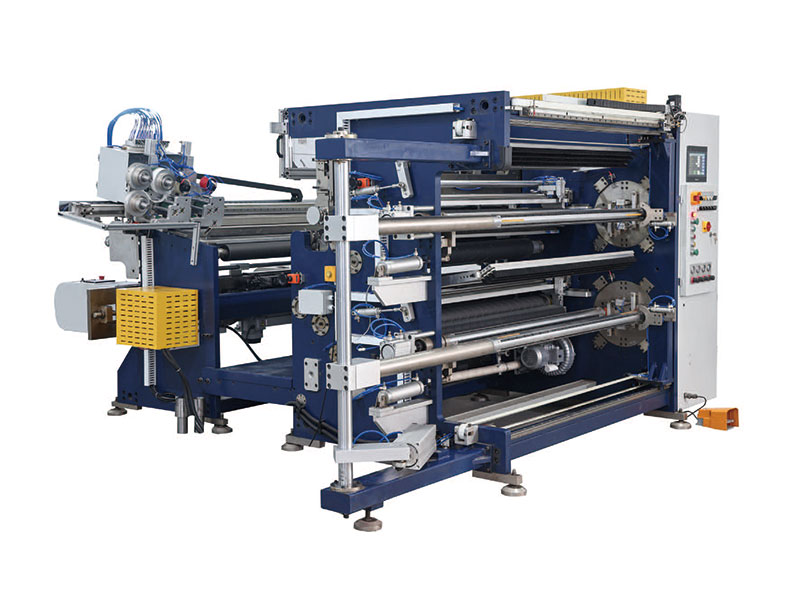
A slitting machine is a mechanical device used to cut continuous coils into the desired length. It is widely used in paper, plastic film, tape, aluminum foil, fabric, foam material and other industries, providing an efficient and precise solution for cutting work in the production process. The uses of slitters and their applications in different industries will be detailed below.
First of all, slitting machines have a wide range of applications in the paper industry. The paper slitting machine is able to cut large rolls of paper into the required paper size, such as A4, A3 and other standard sizes to meet different needs. This kind of machine usually has the characteristics of high speed, high precision and high degree of automation, which can greatly improve the efficiency and quality of paper production.
Secondly, the slitting machine also plays an important role in the plastic film industry. The plastic film slitting machine is able to cut the plastic film into the required width and length for packaging, printing, construction, and other fields. This kind of machine usually has functions such as automatic feeding, automatic positioning and automatic cutting, which can achieve high-speed and precise cutting, and improve production efficiency and product quality.
In addition, slitting machines are also widely used in the tape industry. The tape slitting machine is capable of cutting large rolls of tape into the required width and length for packaging, case sealing, electronics assembly, and other fields. This kind of machine usually has functions such as automatic feeding, automatic positioning and automatic cutting, which can achieve high-speed and precise cutting, and improve production efficiency and product quality.
In addition, slitting machines also play an important role in the aluminum foil industry. The aluminum foil slitting machine is able to cut large rolls of aluminum foil into the required width and length, which is used in food packaging, pharmaceutical packaging, electronic product packaging, and other fields. This kind of machine usually has functions such as automatic feeding, automatic positioning and automatic cutting, which can achieve high-speed and precise cutting, and improve production efficiency and product quality.
In addition, slitting machines are also widely used in the fabric industry. The fabric slitting machine is capable of cutting large rolls of fabric into the desired width and length for clothing, home textiles, automotive interiors, and more. This kind of machine usually has functions such as automatic feeding, automatic positioning and automatic cutting, which can achieve high-speed and precise cutting, and improve production efficiency and product quality.
Finally, slitting machines also play an important role in the foam material industry. The foam material slitting machine is able to cut large rolls of foam material into the required width and length for packaging, filling, sound insulation, and other fields. This kind of machine usually has functions such as automatic feeding, automatic positioning and automatic cutting, which can achieve high-speed and precise cutting, and improve production efficiency and product quality.
In a word, as a mechanical equipment used to cut continuous coils into the required length, slitting machines have a wide range of applications in industries such as paper, plastic film, tape, aluminum foil, fabric, foam materials, etc. It enables high-speed, precise cutting, improved productivity and product quality, and provides important support for production processes in a wide range of industries.
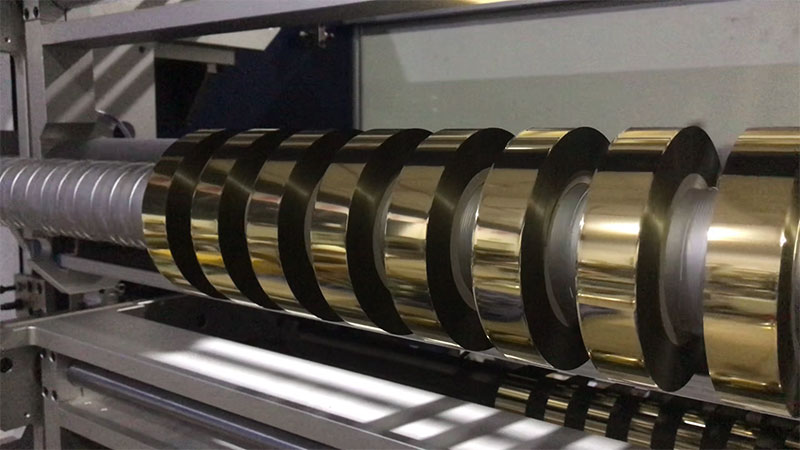
The tension control in the slitting stage directly determines the yield rate of subsequent hot stamping processes.
28. September, 2026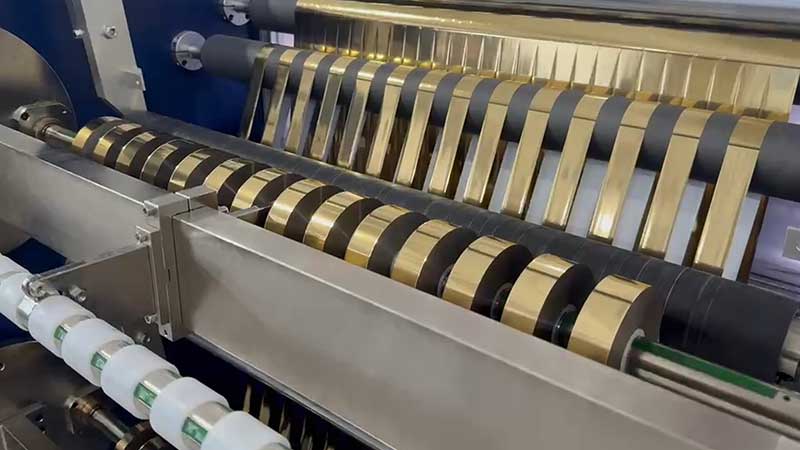
The key to selection is to grasp three parameters that truly determine slitting quality: slitting accuracy, tension control, and tool system.
28. September, 2026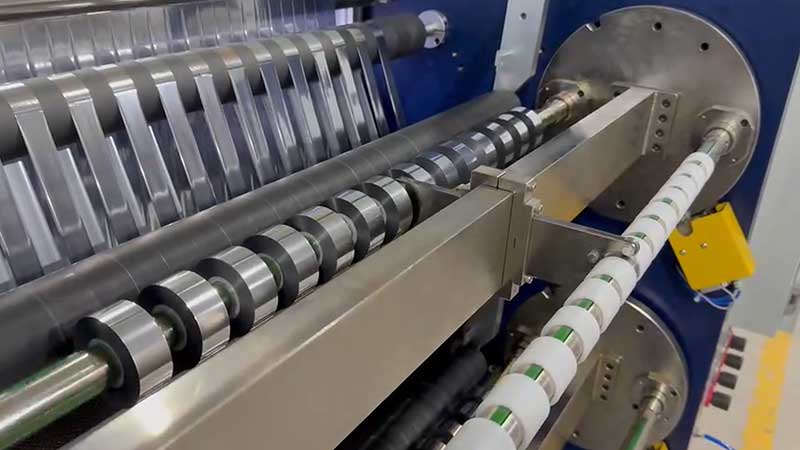
But what truly determines whether a slitting machine is "in sync" is not the absolute value of a single parameter, but the matching logic between width and speed.
28. September, 2026Width determines the rigidity and correction accuracy of the equipment's structure, while speed tests the real-time responsiveness of tension control.
24. September, 2026This article provides a current selection framework from four dimensions: material adaptation, core parameters, intelligent configuration, and cost evaluation.
24. September, 2026


 English
 Deutsch
 Français
 Español
 Português
 日本語
日本語 русский
 한국어
한국어 عربي
عربي ภาษาไทย
 Tiếng Việt
 Italiano