
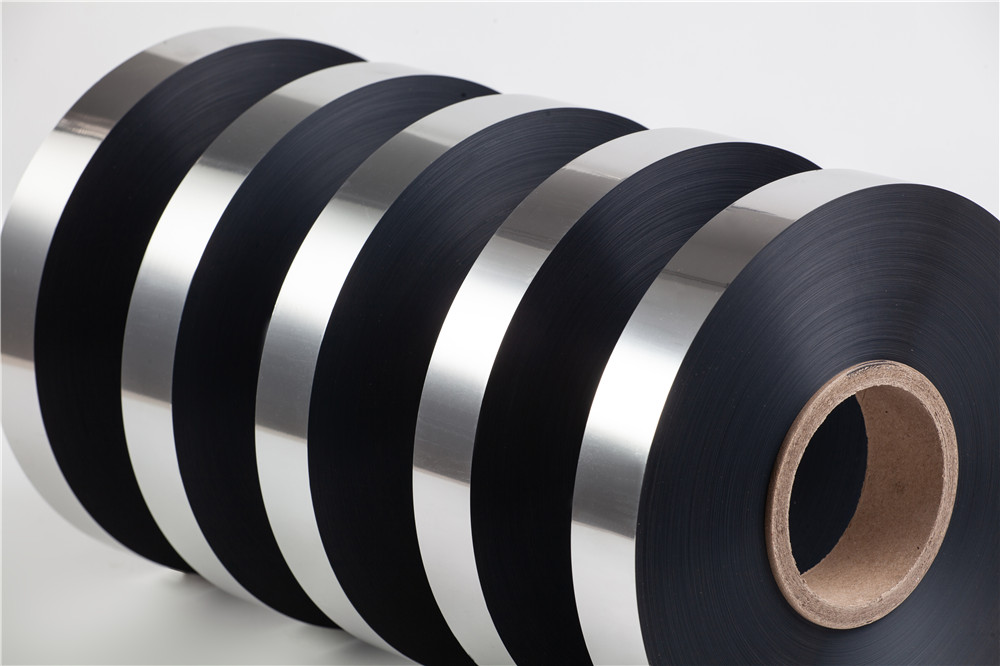
As a key equipment in modern industrial production, slitting machines are widely used in textile, packaging, electronics, automobiles and other fields, playing an important role. According to the specific needs of different industries, the slitting machine continuously improves its flexibility and efficiency in material processing through technological innovation and customized design. Today we will introduce the role and optimization of slitting machines in processing in different industries.
In the textile industry, slitters are optimized to handle a wide range of fibers and fabrics, from light and thin silks to heavy fabrics, to achieve uniform and non-destructive cutting, meeting the diverse cutting needs of apparel and home textiles. Through the introduction of laser or ultrasonic cutting technology, it shows the advantage of high precision in complex pattern processing.
In the field of packaging, the slitting machine needs to adapt to a variety of materials such as plastic film, paper, metal foil, etc., through high-speed continuous cutting and precise control of margins, to ensure the output and quality stability of packaging materials, and provide strong support for FMCG and electronic product packaging.
In the electronics manufacturing industry, the slitting machine focuses on the precision cutting of thin materials such as circuit boards and protective films, and uses microcomputer control and visual positioning systems to ensure that the cutting accuracy reaches the micron level and meets the strict standards of precision components.
Slitting machines are also widely used in the automotive industry, especially in the processing of interior materials, leather, and soundproofing materials, through customized knives and powerful flattening devices, to achieve the cutting of complex shapes, and improve the accuracy and productivity of component assembly.
To sum up, through continuous technological innovation and the expansion of application scenarios, the slitting machine has optimized its own performance, promoted the progress of processing technology and the improvement of production efficiency in various industries, and demonstrated its core value in diversified applications.
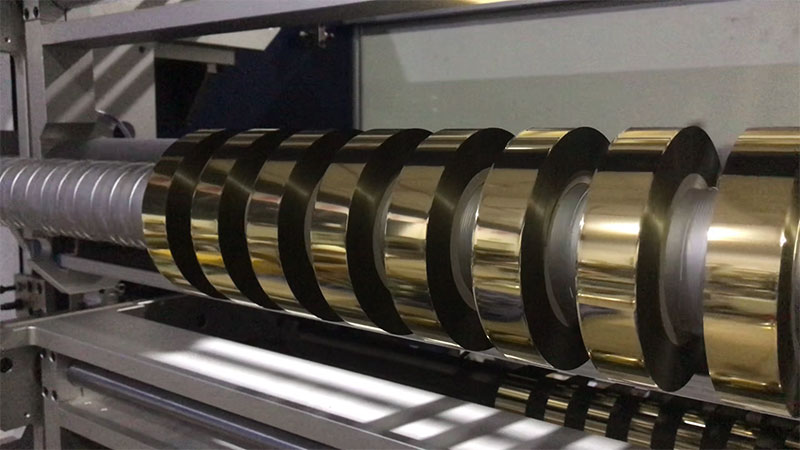
Width determines the rigidity and correction accuracy of the equipment's structure, while speed tests the real-time responsiveness of tension control.
24. September, 2026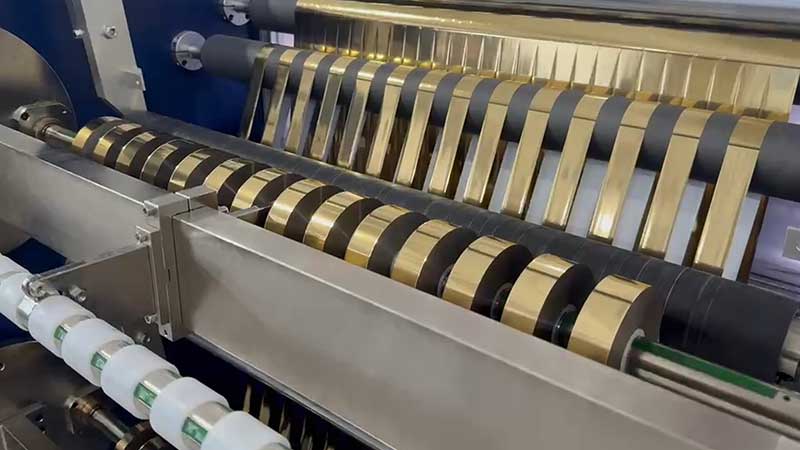
This article provides a current selection framework from four dimensions: material adaptation, core parameters, intelligent configuration, and cost evaluation.
24. September, 2026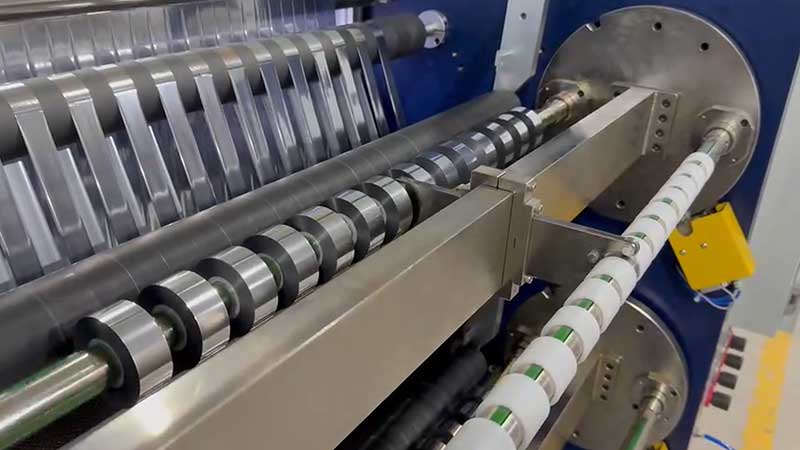
Faced with the wide variety of promotions in the market, buyers only need to focus on five core dimensions to avoid most pitfalls.
24. September, 2026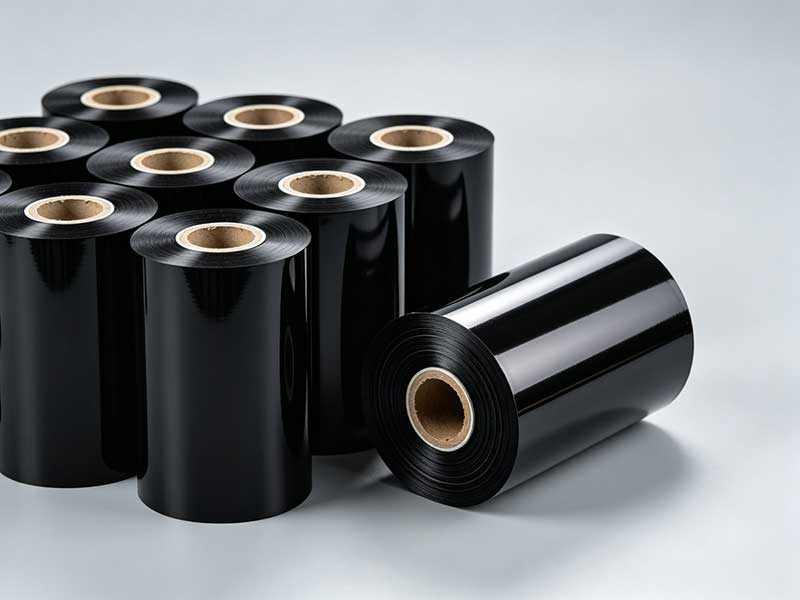
The first watershed in choosing a model isn't speed or brand, but rather — which type of ribbon do you mainly cut?
23. September, 2026
When asking suppliers the following seven questions, the quality of the answers is far more valuable than the numbers on the parameter table.
21. September, 2026


 English
 Deutsch
 Français
 Español
 Português
 日本語
日本語 русский
 한국어
한국어 عربي
عربي ภาษาไทย
 Tiếng Việt
 Italiano