
When purchasing a ribbon (thermal transfer ribbon) slitting machine, the slitting width and accuracy are the core indicators, which directly affect the compatibility and printing effect of the label printer. Here's a guide to choosing a product for different needs:
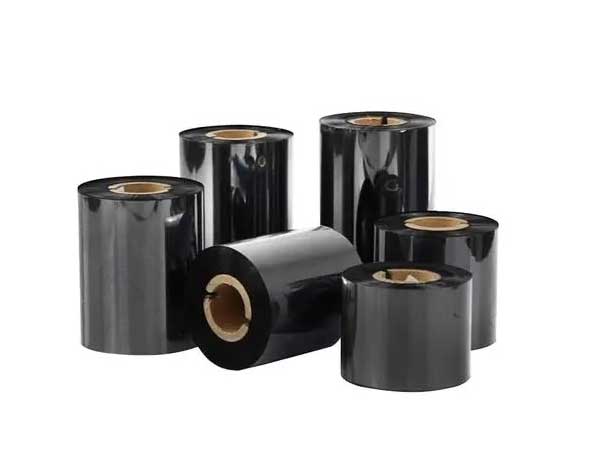
1. Slitting width selection: match the printer and ribbon type
1. Define end-point requirements
• Printer specifications: Common ribbon widths are 25mm, 50mm, 80mm, and 110mm (corresponding to label printers such as Zebra, TSC, etc.).
• Ribbon Type:
◦ Wax base/mixed base: general purpose, width error is allowed ± 0.2mm (such as storage labels).
◦ Resin-based: high-precision requirements (such as high-temperature labels), the error needs to be ≤±0.1mm.
2. Slitter width range
• Basic model: fixed slitting width (e.g. only 50mm or 80mm) for a single product line.
• General model: adjustable range 10~300mm (realized by moving tool holder), suitable for multi-specification production.
◦ Key configuration: servo motor driven CNC tool adjustment system, repeat positioning accuracy ± 0.05mm.
3. Special needs processing
• Ultra-narrow slitting (e.g. ≤5mm): Equipped with micro guide rollers and anti-flashing device to avoid ribbon breakage.
• Variable width slitting (e.g. continuous change pattern): Choose a high-end model with dynamic tool adjustment function (e.g. Kampf in Germany).
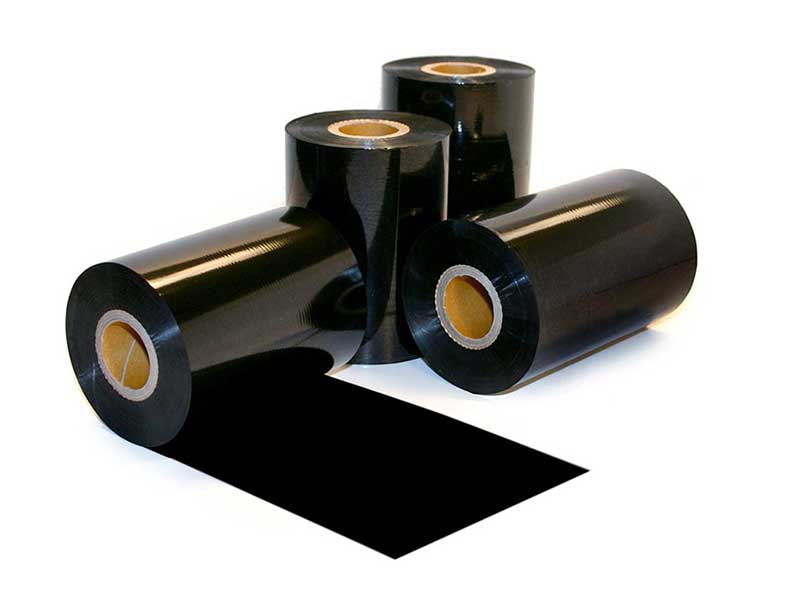
2. Slitting accuracy level: selected according to the application scenario
1. Comparison of accuracy standards
| grade | Allowable error | Applicable scenarios | Device configuration requirements |
| Economy grade | ±0.2mm | General logistics labeling, warehouse management | Mechanical knife adjustment + ordinary tension control |
| Industrial grade | ±0.1mm | Electronic product labels, pharmaceutical traceability codes | Servo motor + closed-loop tension |
| Precision | ±0.05mm | High-resolution printing (e.g. barcodes, QR codes) | CCD guiding + air bearing tool shaft |
2. Key technologies to achieve high accuracy
• Tooling system:
◦ Round knife cutting: suitable for resin-based ribbons (smooth cutting surface, no burrs).
◦ Laser slitting: used for ultra-thin ribbons (e.g. 3μm PET substrates) without contact damage.
• Tension Control:
◦ The slitting tension of the ribbon is usually 2~10N (if it is too large, it will be broken, and if it is too small, it will be loosened).
◦ Recommended configuration: magnetic particle brake + tension sensor (fluctuation ≤± 0.5N).
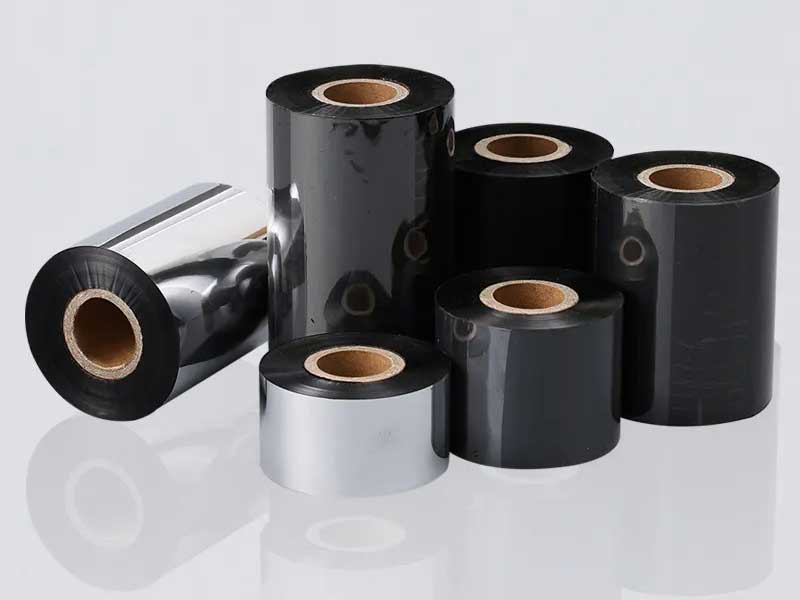
3. Other key parameters
1. Slitting speed
• Conventional ribbon: 30~100m/min (low speed is required for resin base, high speed can be used for wax base).
• High-speed models (≥150m/min) need to be equipped with dynamic balance tool spindles.
2. Winding quality
• End face uniformity: staggered ≤0.1mm (affecting printer loading).
• Core adaptation: support 1/2" or 1" paper core, with inflatable shaft automatic locking.
3. Environmental adaptability
• Anti-static design: The ribbon is easy to absorb dust, and it needs to be removed by ionic air rods.
• Temperature and humidity control: 25±5°C, humidity 50±10% RH is recommended.
Suggestions for commissioning:
Ribbon samples (especially resin-based) are available to test the following items:
1. Width consistency of 10 rolls of continuous slitting;
2. Whether the end face of the winding is smooth and without steps;
3. Observe whether there are burrs or glue layer peeling off the cut edge.
Accurate matching of slitting parameters can reduce the ribbon breakage rate and printing defect rate in the printer!
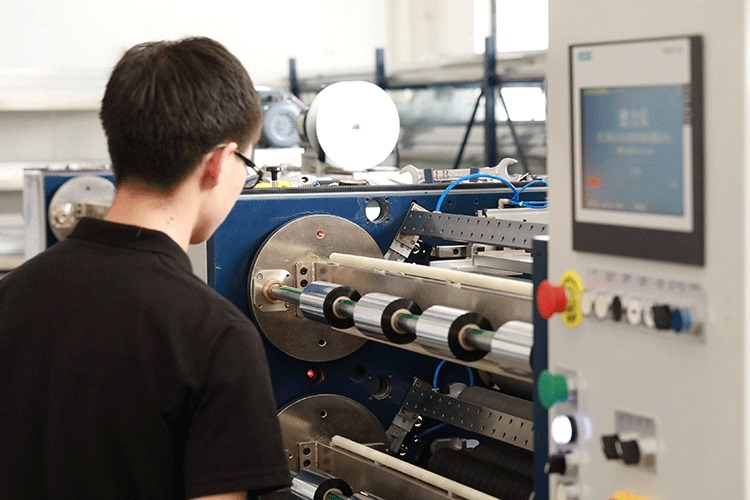
The core logic of selection is not to buy the "best" or "cheapest," but to find a match between your material characteristics, order structure, and long-term operating costs.
30. October, 2026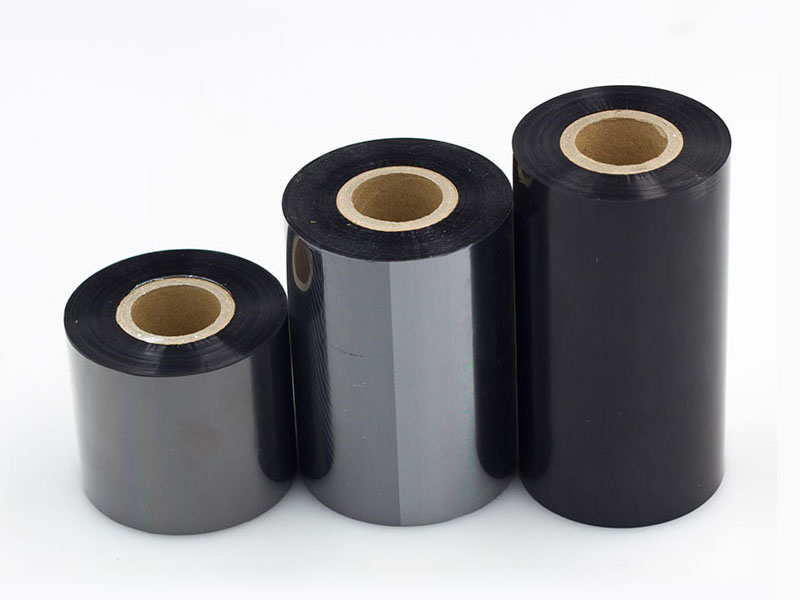
The value of the fully automatic ribbon slitting machine lies precisely in these two most basic criteria: precise cutting, minimal waste.
27. October, 2026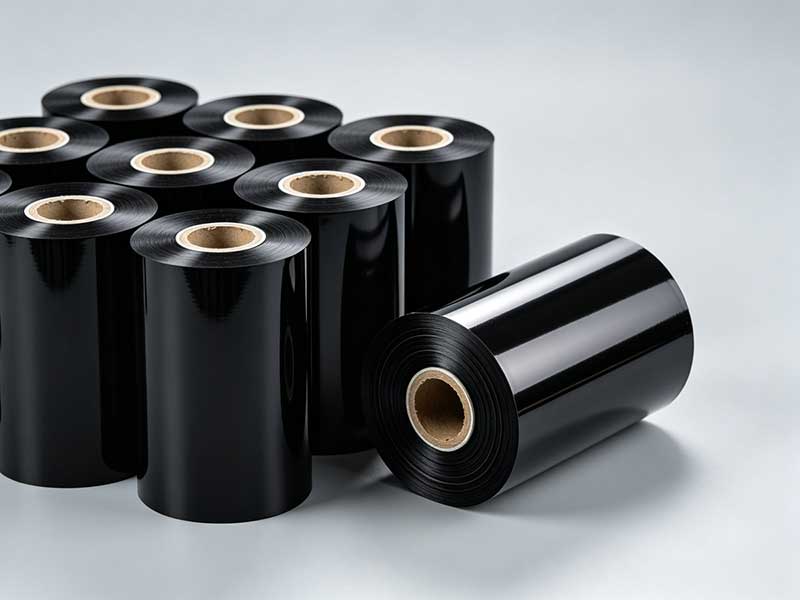
The widespread adoption of fully automatic ribbon slitting machines is changing this situation. Its core value can be summed up in six words: efficient, stable, and labor-saving.
22. October, 2026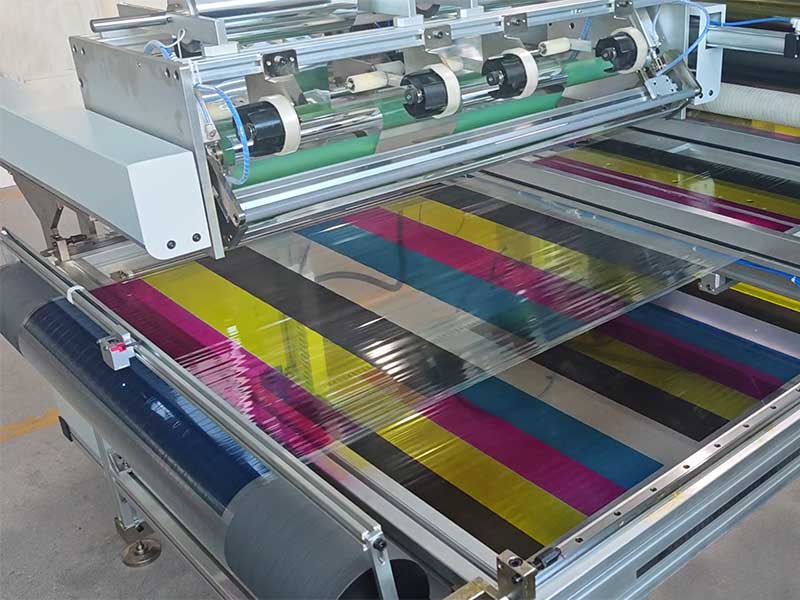
The color ribbon slitting machine is mainly used for wide roll slitting and rewinding of materials such as card printer color ribbons and thermal transfer ribbons.
21. October, 2026This article will break down the technical core of this function from four dimensions: signal detection, control logic, shutdown strategy, and precision calibration.
19. October, 2026


 English
 Deutsch
 Français
 Español
 Português
 日本語
 русский
 한국어
 عربي
 ภาษาไทย
 Tiếng Việt
 Italiano