
Achieving micron-level precision slitting of film slitting machine involves the collaborative optimization of multiple core technologies, and the following are the key technologies and implementation methods:
1. High-precision mechanical system design
• Rigid structure and vibration damping design
Structural optimization with high-rigidity materials (e.g., granite platforms, alloy steels) and finite element analysis to reduce vibration and deformation during slitting. Gas springs or active damping systems isolate external vibrations.
• Precision guide rails and transmissions
Linear motion (repeatability ≤± 1 μm) is achieved using a linear motor or a high-precision ball screw (with a closed-loop encoder) with air bearings or hydrostatic guides.
2. Dynamic tension control
• Closed-loop tension control system
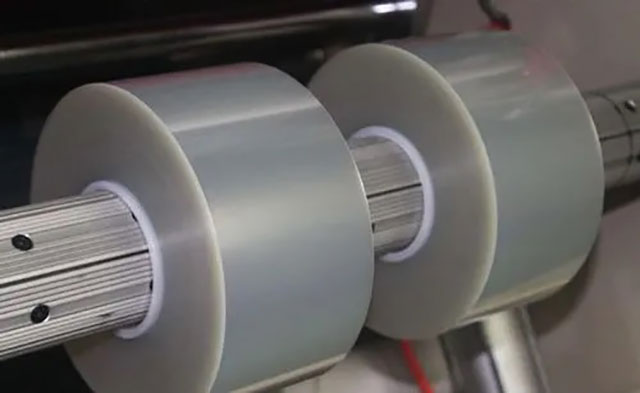
Through the real-time feedback of magnetic particle brake/servo motor + tension sensor, the tension fluctuation of film unwinding/winding (within 0.1N ±) is controlled. The multi-segment PID algorithm adapts to different material properties.
• Floating roller buffer mechanism
Pneumatic or electric floating rollers are used to compensate for speed differences and eliminate film stretching distortion.
3. Ultra-precision slitting tools
• Blade material and geometry optimization
Diamond-coated or tungsten carbide inserts (cutting edge radius <0.1 μm) with mirror grinding. Beveled knife design reduces slitting resistance.
• Pneumatic/hydraulic turret control
The constant pressure turret system ensures that the contact pressure between the blade and the film is stable (e.g. ± 5g control) to avoid material crushing or burrs.
4. On-line detection and real-time deviation correction
• High-resolution sensor
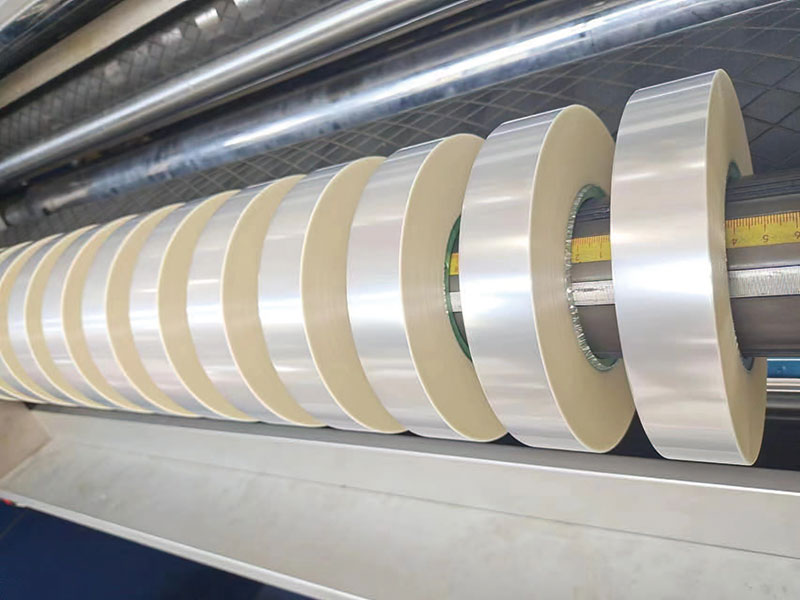
Laser rangefinder (resolution 0.1 μm) or CCD vision system monitors the position of the edge of the film in real time, and combines with PLC/PCC to achieve millisecond-level deviation correction (accuracy ± 3 μm).
• Automatic tool setting system
Machine vision or laser interferometer guides blade positioning to compensate for deflection due to thermal expansion.
5. Environmental and process control
• Temperature and humidity stability
The constant temperature workshop (±0.1°C) reduces the thermal deformation of the material, and the humidity control (±2%RH) reduces the influence of electrostatic electricity.
• Optimization of slitting process parameters
According to the material characteristics (such as PET, PP), the knife speed, tension, overlap amount, etc. are adjusted, and the optimal parameter combination is determined by DOE experiments.
6. Intelligent control system
• Multi-axis cooperative motion control
Multi-servo synchronous drive based on EtherCAT bus with an interpolation accuracy of 0.01 μm. Adaptive algorithms predict changes in material ductility.
• Digital Twin & Predictive Maintenance
Tool wear is predicted through the simulation model, and it is automatically compensated or replaced (life management accuracy ± 1 μm).
Typical application cases
• Optical film slitting: PET film with a thickness of 5 μm, the slitting width error is ≤± 2 μm, and there is no burr.
• Lithium battery separator: using ultrasonic slitting technology, the insision heat-affected zone < 10μm.
Technology Challenges & Trends
• Challenges: Differences in material ductility, real-time monitoring of tool wear.
• Cutting-edge direction: AI-driven adaptive slitting, femtosecond laser ultra-precision cutting.
Through the system integration of the above technologies, the modern film slitting machine can achieve a stable slitting accuracy of sub-micron level (0.5~3μm) to meet the needs of high-end electronics, medical and other fields.
This article outlines a clear selection approach from four dimensions: material adaptation, core technical parameters, efficiency and cost, and supplier selection.
09. September, 2026Balancing speed and precision in film slitting machines is essentially a test of "control capability."
02. September, 2026This article will delve into the current application status, core technologies, and development trends of this equipment in the new energy sector.
28. August, 2026the film slitting machine is the core equipment for slicing wide, large rolls into narrow rolls of specific specifications.
26. August, 2026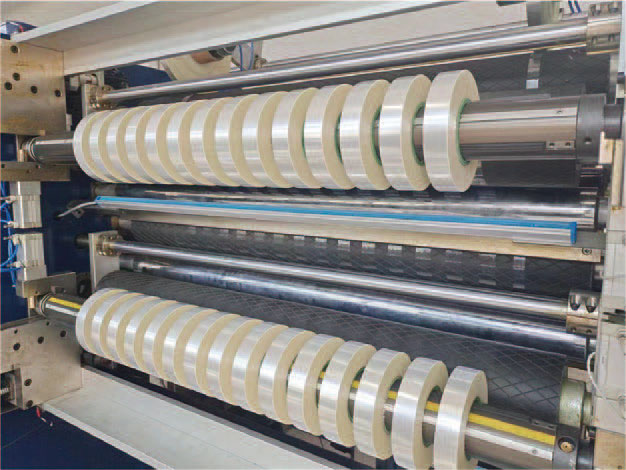
Tension control technology for thin film slitting machines involves interdisciplinary integration of control theory, mechanical design, and material mechanics.
26. August, 2026


 English
 Deutsch
 Français
 Español
 Português
 日本語
日本語 русский
 한국어
한국어 عربي
عربي ภาษาไทย
 Tiếng Việt
 Italiano