
The key technology of plastic film slitting machine in dust-free cutting involves many aspects such as equipment design, environmental control, material handling and operation process. Here are the key measures to ensure dust-free cutting:
1. Equipment design and key component optimization
• Anti-static system
◦ Ionizing air rods, static eliminators and other devices are used to reduce the adsorption of dust by the film due to static electricity.
◦ Use conductive rollers or grounding devices to derive static electricity.
• Dust-free blade technology
◦ High-precision round knives or flat knives, regular polishing and maintenance to avoid burrs or chips.
◦ Laser cutting or ultrasonic slitting (some high-end models) to reduce mechanical friction dust.
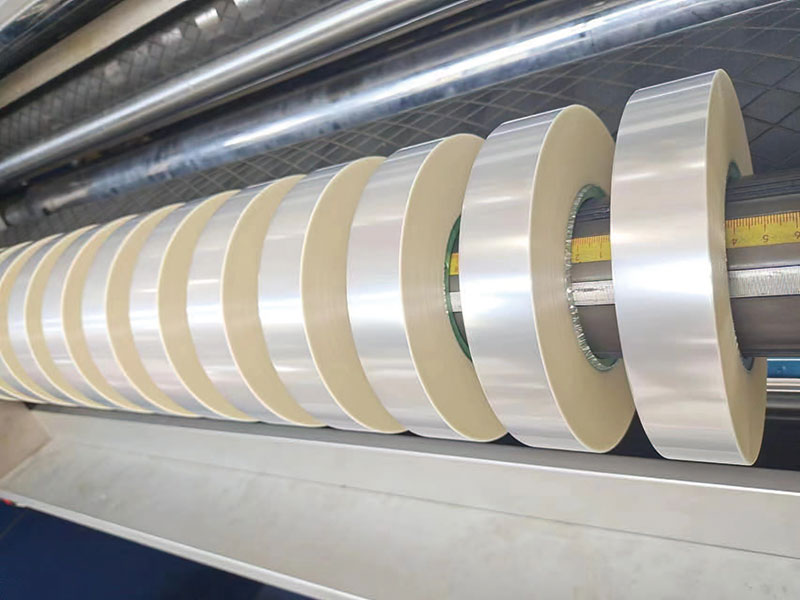
• Closed cutting area
◦ Transparent protective cover is installed in the slitting area to isolate external contamination.
◦ Built-in vacuum cleaner to directly collect particles from cutting.
2. Environmental control
• Clean room
◦ The slitter is installed in a clean room with clean standards (such as ISO Class 8 or above).
◦ Control temperature and humidity (usually 25±2°C, humidity 50±5%) to prevent film deformation or static accumulation.
• Partial air purification
◦ Install a HEPA filter near the slitting point to continuously filter particulate matter from the air.
◦ Use an air shower to clean the surface of the film before entering the cutting zone.
3. Dust collection and disposal
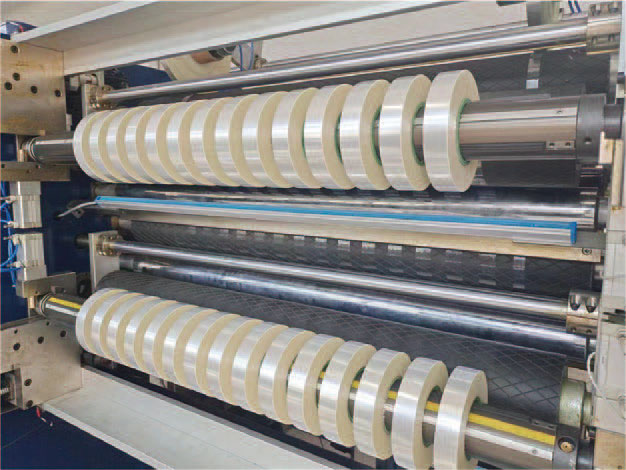
• Integrated suction system
◦ Vacuum nozzles are installed on both sides of the blade to suck up the debris generated by the cut in real time.
◦ Connect to a central dust collection system or a stand-alone dust collector (e.g., pulse backflush).
• Material cleaning pre-treatment
◦ Surface impurities are removed by means of cleaning rollers or sticky rollers before film unwinding.
◦ Use a dust-free unwinder to avoid dust contamination during roll handling.
4. Material and process optimization
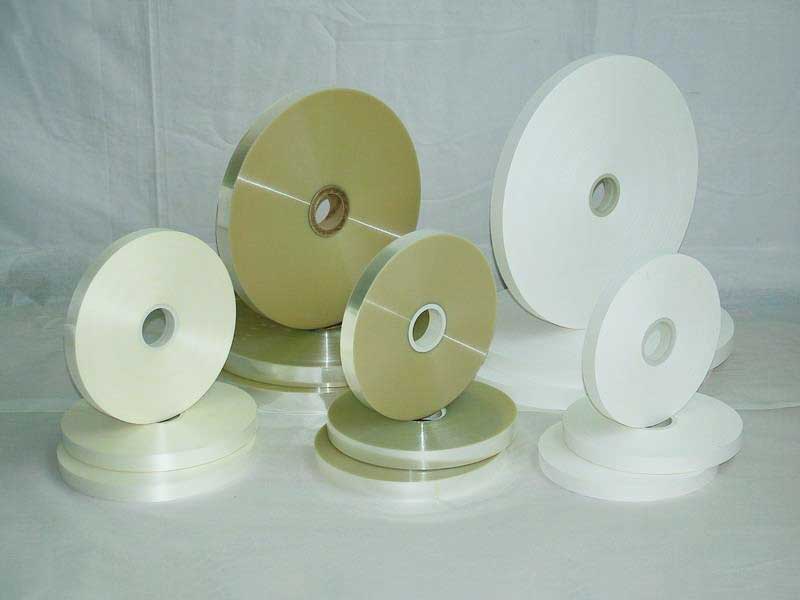
• Film quality control
◦ Use low-precipitation, additive-free film raw materials to reduce volatiles during cutting.
◦ Inspect the cleanliness of the roll before slitting and remove the contaminated sections.
• Slitting parameter adjustment
◦ Adjust tension, knife pressure, and speed according to film thickness to avoid excessive friction.
◦ Low-speed slitting (e.g. < 300m/min) can reduce dust generation (need to balance efficiency).
5. Operation and maintenance specifications
• Personnel protection
◦ Operators wear dust-free clothing and gloves to avoid human contamination.
◦ Clean the surface of the device regularly (using a dust-free cloth and alcohol).
• Preventative maintenance
◦ Replace the blades and clean the air ducts and filters regularly.
◦ Inspect moving parts such as bearings and guide rails to prevent metal wear and dust.
6. Application of advanced technology (optional)
• Laser slitting: non-contact cutting, completely avoiding mechanical dust, but the cost is higher.
• On-line detection system: monitor the quality of the cutting edge in real time through cameras or sensors, and adjust the parameters in time.
Common Problem Solving
• Dust residue: Check if the air pressure in the vacuum system is insufficient or the filter is clogged.
• Film burrs: Replace the passivated blade or adjust the blade angle.
• Electrostatic adsorption: increase the number of ionizing fans or optimize grounding.
Through the above comprehensive measures, the slitting machine can achieve high-standard dust-free cutting and meet the needs of industries with strict cleanliness requirements such as electronics, medical treatment, and optical films. In practical applications, the scheme needs to be adjusted according to the specific material and slitting accuracy requirements.
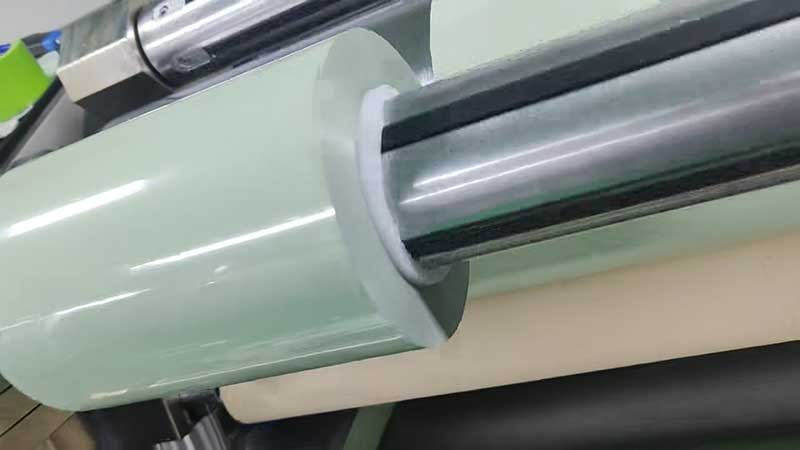
the film slitting machine is the core equipment for slicing wide, large rolls into narrow rolls of specific specifications.
26. August, 2026Faced with the dazzling array of models on the market, how can you clear away the spec fog and make wise decisions?
31. July, 2026It is necessary to systematically investigate and resolve issues from four dimensions: process parameters, equipment status, excipient quality, and technological innovation.
10. July, 2026By 2026, the following five technological breakthroughs are redefining industry standards for slitting efficiency and value.
06. July, 2026slitting machines are the core equipment for slicing wide, large rolls into narrow rolls of specific specifications.
02. July, 2026


 English
 Deutsch
 Français
 Español
 Português
 日本語
日本語 русский
 한국어
한국어 عربي
عربي ภาษาไทย
 Tiếng Việt
 Italiano