
In the world of foil stamping, behind the dazzling gold, silver, or iridescent decorations lies a complex set of technical challenges. For a long time, hot stamping production has faced a seemingly small but far-reaching problem: how to accurately control the slitting quality of hot stamping foil while ensuring high efficiency? It wasn't until the advent of the hot foil slitting machine that the last problem in the production process was solved.
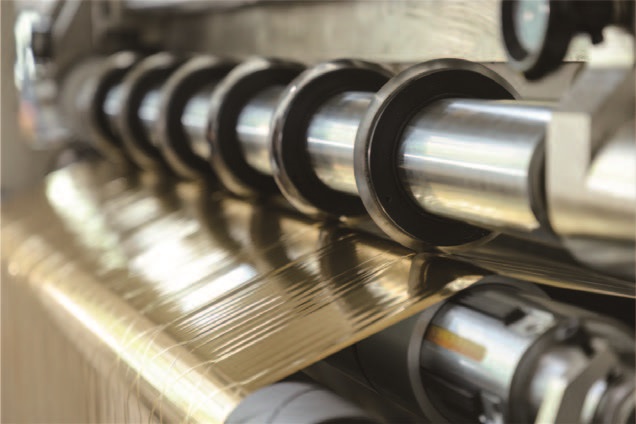
The "last mile" challenge of the hot stamping process
The hot stamping process is widely used in packaging, printing, textiles, handicrafts, and other fields, and its core material, hot stamping foil, needs to be accurately cut into different widths and lengths during the production process. Traditional manual or semi-automatic slitting methods have many limitations:
• Insufficient precision: It is difficult to ensure the uniformity of the slitting edges during manual operation, affecting the subsequent hot stamping effect
• Inefficiency: Traditional methods become production bottlenecks in the face of large orders
• Material waste: Inaccurate cutting leads to reduced utilization of hot stamping foil and increased costs
• Quality fluctuations: Differences in operator skills lead to inconsistent product quality
These problems have long plagued hot stamping manufacturers and become the "last mile" obstacle restricting the development of the industry.
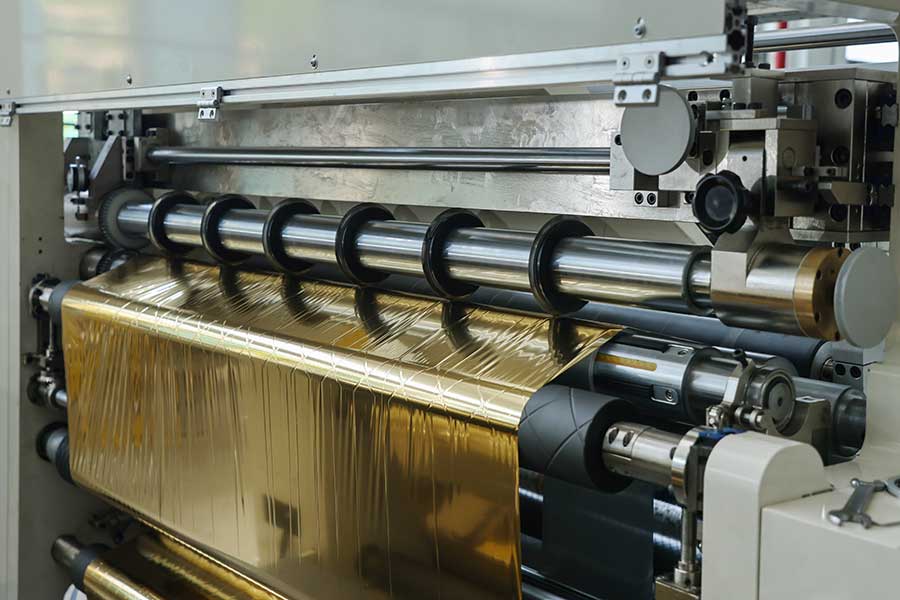
Technological Breakthrough: The Revolution of Smart Slitting Machines
The advent of modern hot stamping foil slitting machines has completely changed this situation. These devices integrate precision machinery, automatic control, and intelligent inspection technology to achieve fully automated processing from coils to finished products.
Core technical features:
1. High-precision cutting system: With servo motor drive and precision guide rails, the slitting accuracy can reach ±0.1 mm, ensuring that the edges of each roll of hot stamping foil are neat like knife cutting
2. Intelligent Tension Control: Through the closed-loop tension control system, the tension of the material is kept constant during the slitting process, avoiding tensile deformation or wrinkling
3. Visual inspection technology: Integrated CCD camera monitors slitting quality in real time, automatically identifying and rejecting defective parts
4. Versatile Adaptability: It can handle different materials (such as PET, OPP, PVC, etc.) and thicknesses of hot stamping foil, adapting to various process needs
5. Data-based production management: Connect to the factory MES system to achieve production parameter recording, quality traceability, and efficiency analysis
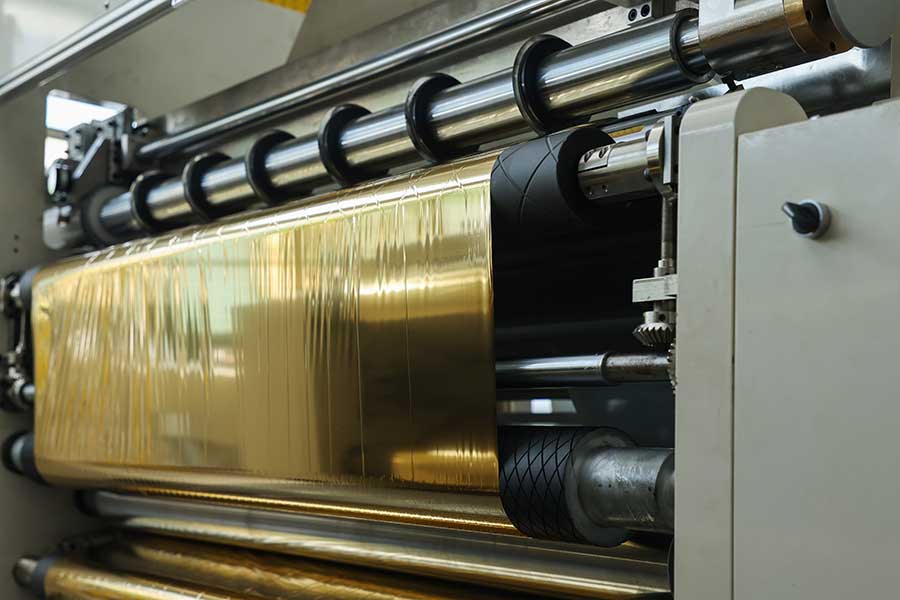
Multi-dimensional improvement of production efficiency
The application of hot stamping foil slitting machine has brought about all-round production improvements:
Leap in efficiency: The slitting speed can reach 5-10 times that of traditional methods, and one machine can meet the all-day production needs of medium-sized enterprises
Quality Revolution: Product consistency and aesthetics have been significantly improved, meeting the stringent requirements of high-end packaging and precision printing
Cost optimization: Material utilization rate increased by 15-25%, and scrap rate reduced to less than 0.5%, significantly reducing comprehensive costs
Enhanced flexibility: Quickly switch between different specifications of slitting schemes to adapt to modern production trends in small batches and multiple varieties
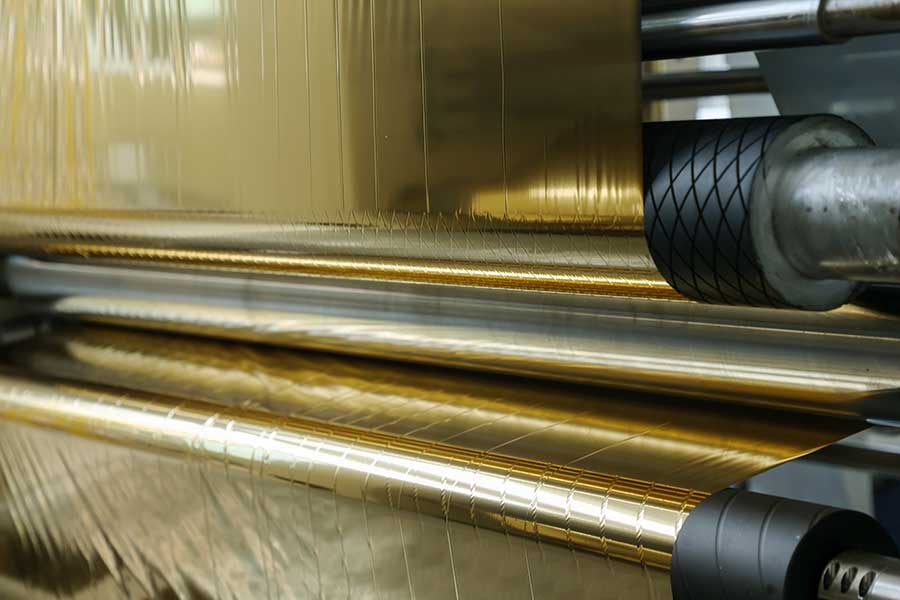
Industry applications and future prospects
In the fields of luxury packaging, high-end tobacco and alcohol labels, and special book binding, hot stamping foil slitting machines have become indispensable production equipment. After the introduction of intelligent slitting machines, a well-known packaging company not only increased the production efficiency of hot stamping by 40%, but also successfully obtained long-term orders from many international luxury brands due to the significant improvement in product quality.
In the future, with the further integration of the Internet of Things and artificial intelligence technology, the hot stamping foil slitting machine will develop in a more intelligent direction:
• Predictive maintenance: Early warning of potential failures through equipment data monitoring
• Adaptive optimization: Automatically adjusts slitting parameters based on material properties
• Full-process integration: Seamless connection with hot stamping machines, quality inspection machines and other equipment to form an intelligent production line
epilogue
The hot stamping foil slitting machine seems to be just a link in the production chain, but with its precise and efficient solutions, it opens up the "last mile" of hot stamping production. It not only solves a specific technical problem, but also represents a model of the integration of traditional craftsmanship and modern technology - while respecting traditional aesthetic values, embracing the infinite possibilities brought by technological innovation.
Behind the shine of hot stamping shine, these smart devices silently ensure that every inch of metal foil can be fully utilized, perfectly transforming designers' ideas into realistic products within reach. This is the beauty of industry: to solve the most critical problems in the most inconspicuous links, so that art and efficiency can be harmonized in the last link of production.
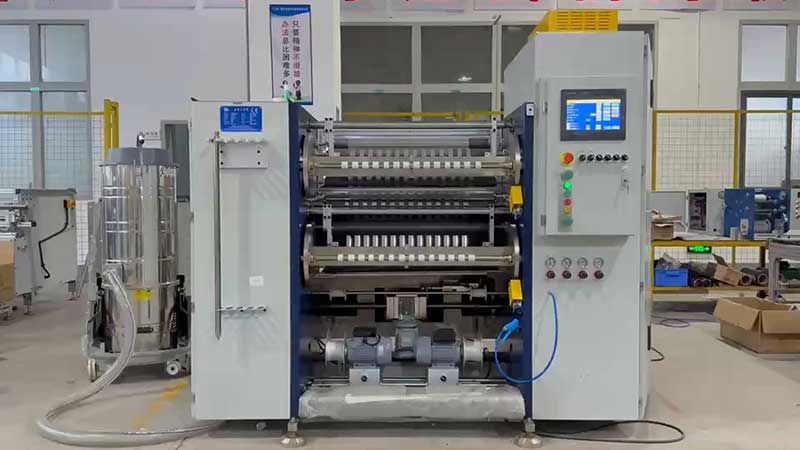
Whether you operate a slitting line or source slit rolls from a supplier, understanding these failure modes helps you protect quality and reduce downtime.
08. October, 2026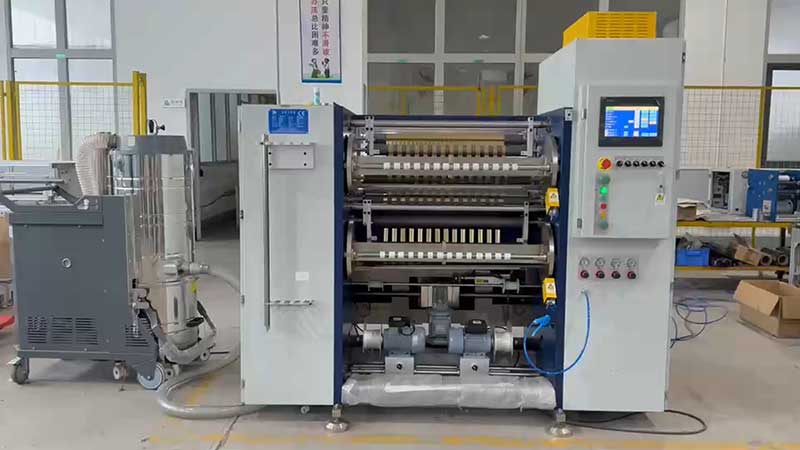
This guide breaks down the specifications that actually matter, organized by the parameters that directly affect your yield, efficiency, and bottom line.
08. October, 2026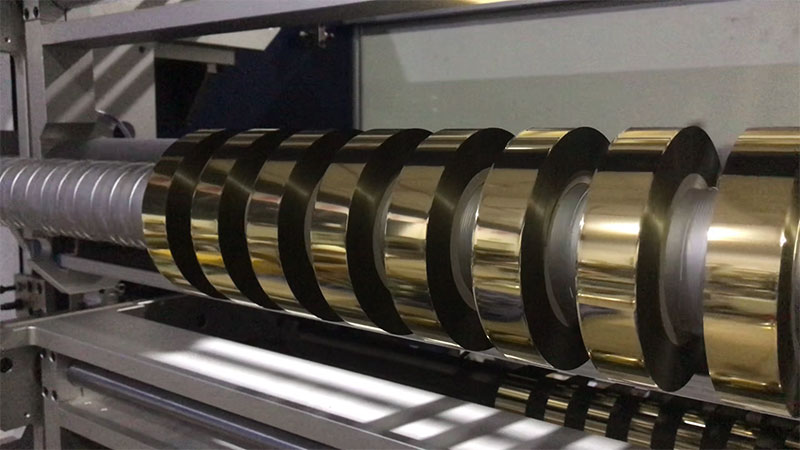
The tension control in the slitting stage directly determines the yield rate of subsequent hot stamping processes.
28. September, 2026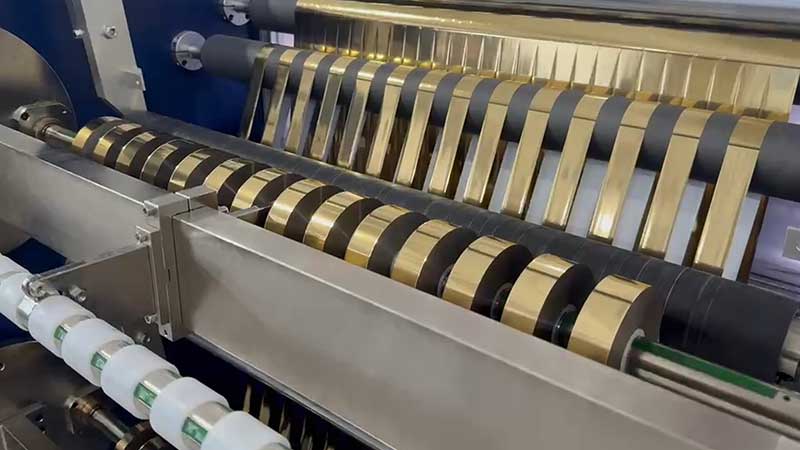
The key to selection is to grasp three parameters that truly determine slitting quality: slitting accuracy, tension control, and tool system.
28. September, 2026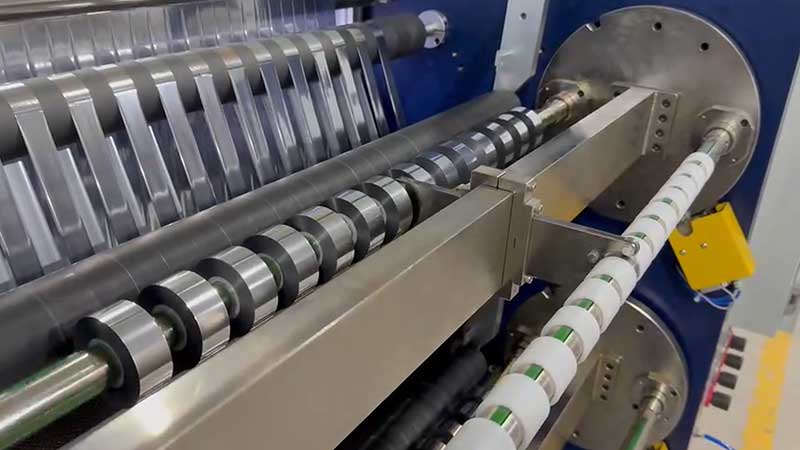
But what truly determines whether a slitting machine is "in sync" is not the absolute value of a single parameter, but the matching logic between width and speed.
28. September, 2026


 English
 Deutsch
 Français
 Español
 Português
 日本語
日本語 русский
 한국어
한국어 عربي
عربي ภาษาไทย
 Tiếng Việt
 Italiano