
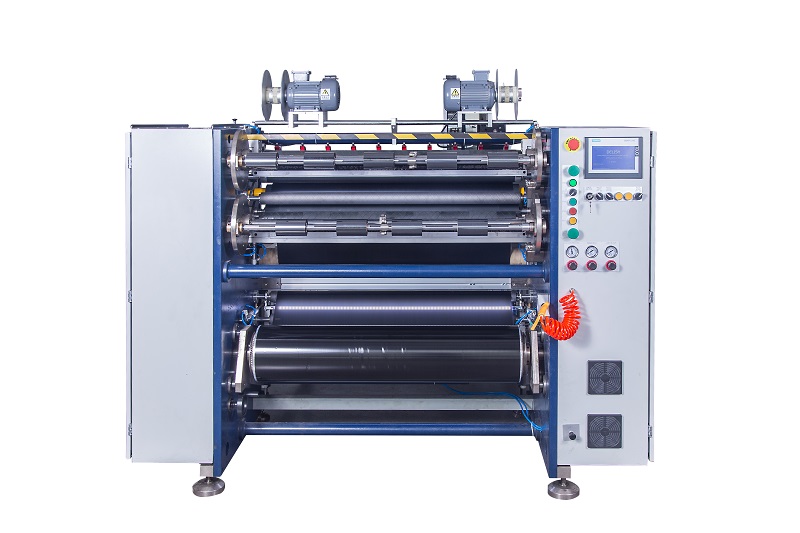
In the increasingly sophisticated manufacturing industry, ribbon, as a core consumable in barcode printing, label making, and other fields, its slitting accuracy and efficiency directly affect the quality and production cost of the final product. Although traditional ribbon slitting machines can complete basic tasks, they still have limitations in terms of stability, slitting accuracy, and adaptive ability under high-speed operation. Through a series of breakthrough technological innovations, the new generation of ribbon slitting machine has achieved a leap from "usable" to "reliable and efficient", injecting strong impetus into the development of the industry.
Technological innovation point 1: intelligent adaptive tension control system
The tension control of traditional slitting machines mostly relies on mechanical adjustment or simple closed-loop control, which is difficult to cope with differences in material properties, changes in ambient temperature and humidity, and dynamic fluctuations in high-speed operation. The new generation of slitting machines is equipped with an adaptive tension control system based on multi-sensor fusion and artificial intelligence algorithms.
The system uses machine learning models to dynamically predict and adjust tension values by monitoring multi-dimensional parameters such as roll diameter changes, material elastic modulus, operating speed, and vibration frequency in real time. Its innovation points are:
• Real-time material property identification: Automatically identify the mechanical properties of different substrates (e.g., polyester, polyimide) and match the optimal tension curve through high-frequency sampling and fast Fourier transform analysis.
• Feedforward-feedback compound control: Combined with the current error and future trend prediction, the tension fluctuation is controlled within ±0.5%, which is far better than the traditional standard of 3% ±.
• Self-learning capability: The system can accumulate production data and continuously optimize control parameters to achieve long-term reliability improvement that is more accurate with more use.
This system ensures that the equipment is stable in a variety of operating conditions and significantly reduces edge tearing, meandering or loose curling due to improper tension.
Technological innovation point 2: high dynamic precision linear motor drive technology
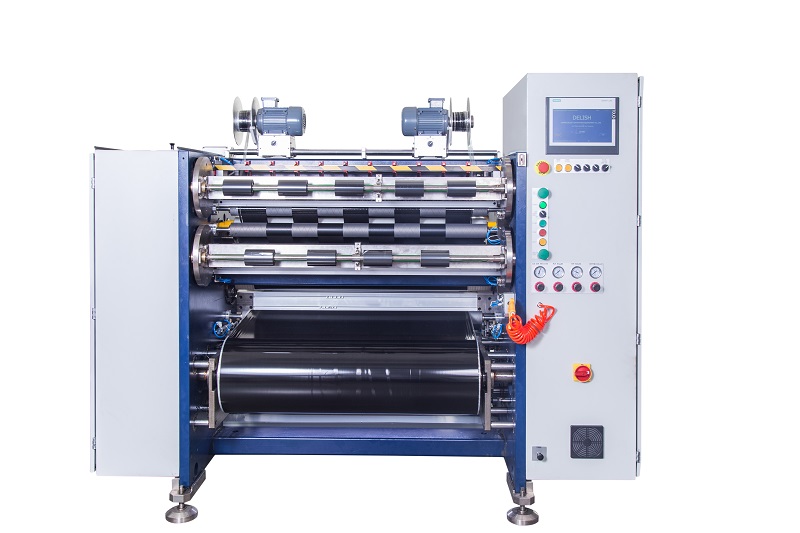
The core of slitting accuracy lies in the positioning and control of the tool holder. The new generation of slitting machines abandons the traditional ball screw or belt drive and uses a high-dynamic precision linear motor to directly drive the slitting tool holder.
Its technological breakthroughs are reflected in:
• Nano-level positioning accuracy: The linear motor eliminates the backlash and elastic deformation of the intermediate transmission link, and with the closed-loop control of the grating ruler, it achieves repeatable positioning accuracy of ± 1 micron to ensure the consistency of the slitting width.
• Extremely fast response ability: the acceleration can reach more than 2G, and the tool adjustment time when changing specifications is shortened from minutes to seconds, supporting the flexible production needs of small batches and multiple varieties.
• Active vibration suppression: The driver integrates real-time vibration spectrum analysis to actively cancel high-frequency vibrations through reverse force compensation, ensuring the stability of the tool holder during high-speed (up to 800 m/min) slitting.
The application of this drive technology enables the slitting machine to pursue high speed without compromising accuracy and stability, meeting the needs of high-end electronic labels, medical barcodes and other fields with extremely demanding slitting quality.
Technological innovation point 3: full life cycle health management and predictive maintenance
The highest level of reliability is to prevent problems before they happen. The new generation of slitting machines has a built-in full lifecycle health management system based on the Industrial Internet of Things (IIoT).
The innovative architecture of the system includes:
• All-round condition awareness: Vibration, temperature, acoustics, and other sensors are placed on key components (such as spindles, bearings, and guides) for 24/7 condition monitoring.
• Digital twin model: Build a virtual image of the device in the cloud, synchronize physical data in real time, and predict component wear and fatigue life in advance through simulation.
• Predictive maintenance reminders: The system not only alerts for faults, but also warns of potential risks (such as insufficient bearing lubrication, micro-chipping blades) hours to days in advance, and recommends maintenance strategies to reduce unplanned downtime by more than 90%.
This shifts equipment from "reactive maintenance" to "active health management", greatly improving equipment availability and total lifecycle value.

Technological innovation point 4: modular and reconfigurable design
In order to adapt to the rapidly changing market demands, the new generation of slitting machines adopts a deep modular and reconfigurable design in terms of mechanical and electrical architecture.
Key features include:
• Plug-and-play function modules: such as unwinding modules, dust removal modules, visual inspection modules, etc., can be flexibly combined according to needs, and the expansion function does not require large-scale transformation.
• Standardized interfaces and buses: Unified mechanical interfaces and high-speed industrial Ethernet are used to ensure fast and reliable data exchange and physical connections between modules.
• Software-defined function: Switching between different slitting processes (such as single tool, multiple tools, and mark-catching slitting) can be realized through parameter configuration, and one device can cover a wider range of application scenarios.
This design improves equipment adaptability, reduces the cost and time of upgrades, and builds reliability on flexibility and future compatibility.
Conclusion: A new definition of reliability
The technological innovation of the new generation of ribbon slitting machine essentially redefines "reliability" from a single emphasis on durability and stability to continuous and stable output under high-speed, high-precision, and changeable working conditions, as well as intelligent maintenance and adaptability throughout the whole life cycle. It is no longer a static indicator but a dynamic, evolving system property.
These innovations not only solve the pain points in the current ribbon slitting, but also lay a solid foundation for the digitalization and flexibility of future factories through intelligent and modular design. When equipment can foresee its own state, adapt to a variety of materials, and continuously optimize performance, the value it brings far exceeds the "slitting" itself, and has become the core engine to promote the entire industrial chain towards efficiency, high quality, and high reliability. Behind the reliability upgrade is a profound change in the deep integration of manufacturing philosophy and technology.
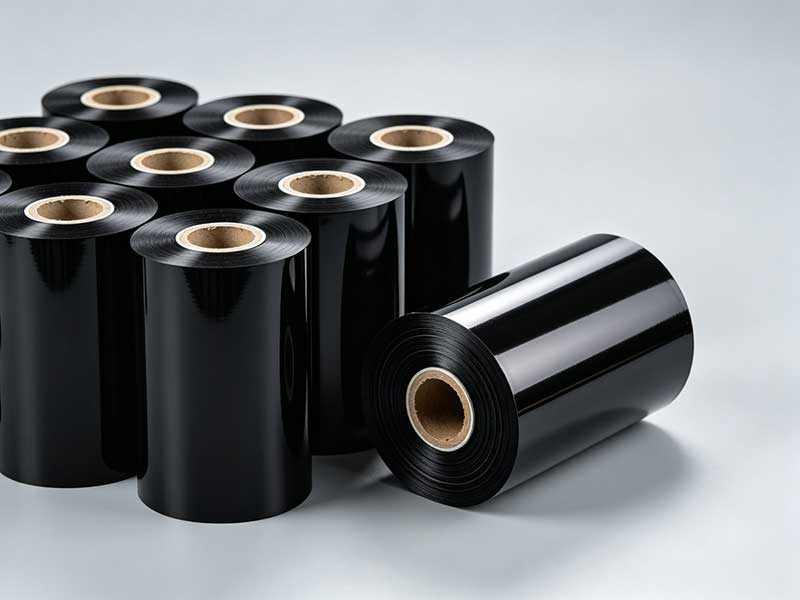
the key to choosing a model is not to pursue the "highest configuration," but to find a balance that matches your own business.
12. October, 2026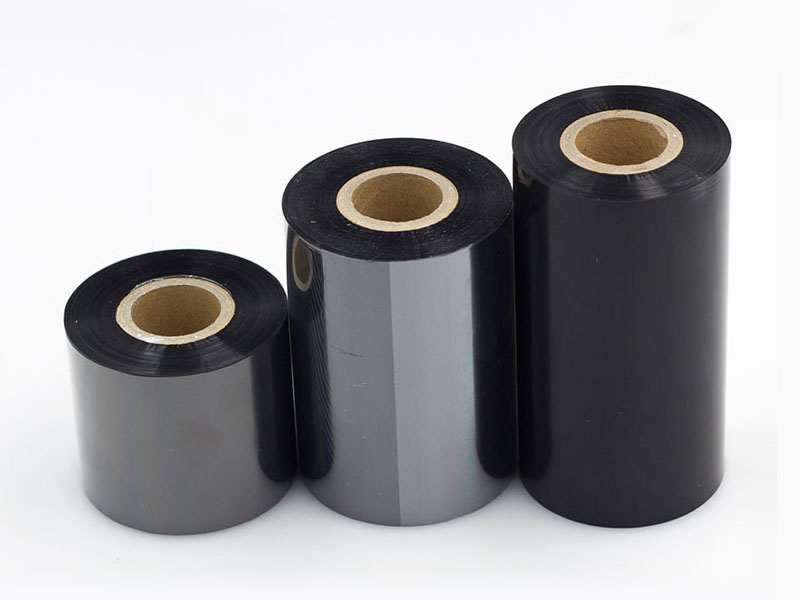
The coating formula, base film characteristics, and physical specifications of the ribbon directly affect the suitability and yield of the slitting machine.
09. October, 2026The core function of a ribbon slitting machine revolves around three dimensions: "precise cutting, stable rolling, and fast running."
09. October, 2026This article starts from actual usage scenarios to outline a clear selection approach.
09. October, 2026The essence of uneven end faces in ribbon slitting machines is an external manifestation of subtle imbalances between tension, parallelism, correction, and tool condition.
05. October, 2026


 English
 Deutsch
 Français
 Español
 Português
 日本語
日本語 русский
 한국어
한국어 عربي
عربي ภาษาไทย
 Tiếng Việt
 Italiano