
In the modern world of label and barcode manufacturing, ribbon slitting machines are indispensable core equipment. Subtle improvements in performance often lead to significant leaps in production efficiency. In recent years, a key technological innovation in the industry - convenient belt change function - is quietly changing the operation rhythm of the production workshop and becoming an invisible weapon for enterprises to reduce costs and increase efficiency.
Traditional Belt Changing Processes: A Neglected Black Hole of Time
On slitting machines that are not equipped with convenient belt change, a complete belt change usually includes the following steps:
• Shutdown, power outage, safety confirmation
• Remove the shield and old ribbon shaft
• Clean up residual ribbons and debris
• Install the new ribbon shaft and adjust the position carefully
• Manual strapping, tension adjustment system
• Multiple test runs to calibrate accuracy
• Restart equipment and monitor initial production quality
This series of operations takes an average of 15-25 minutes and is highly dependent on the technical proficiency of the operator. In a production environment where belts are changed multiple times a day, these fragmented times add up to a staggering amount of time loss.
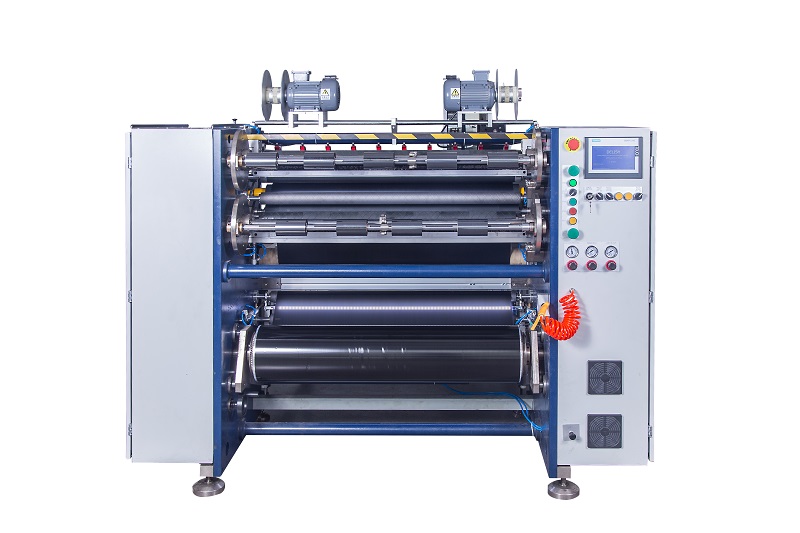
Technological innovation of convenient belt change function
The convenient belt change system of modern ribbon slitting machines often incorporates the following innovative designs:
• Quick snap system: No tools are required to remove and install the ribbon shaft
• Automatic tension adjustment: built-in sensor and fine-tuning device to automatically restore the preset tension after changing the belt
• Integrated Belt Path: Simplifies the strapping process and reduces manual intervention
• Intelligent memory function: Store parameters of different ribbon specifications to achieve one-click switching
Time-saving quantitative analysis
Comparison of practical application data of multiple manufacturing enterprises:
| Belt change | The traditional way is time-consuming | Convenient and time-consuming tape change | Save time in a single time |
| Disassembly and cleanup | 5-8 minutes | 1-2 minutes | 4-6 minutes |
| Installation and adjustment | 7-10 minutes | 2-3 minutes | 5-7 minutes |
| Testing and calibration | 3-7 minutes | 0.5-1 min | 2.5-6 minutes |
| Total | 15-25 minutes | 3.5-6 minutes | 11.5-19 minutes |
Data shows that a single tape change job saves 70-80% of the time.
Time economics in production scenarios
High-frequency belt change environment
In small-batch, multi-variety production that requires frequent replacement of ribbon specifications, it is assumed that the belt is changed 8 times a day:
• Traditional method: 120-200 minutes (2-3.3 hours) per day
• Easy belt change: It takes 28-48 minutes (about 0.5-0.8 hours) to change the belt every day.
• Daily time savings: 92-152 minutes (about 1.5-2.5 hours)
Monthly calculations of 22 working days save 33-55 hours, which is equivalent to an increase of 4-7 full working days of production capacity.
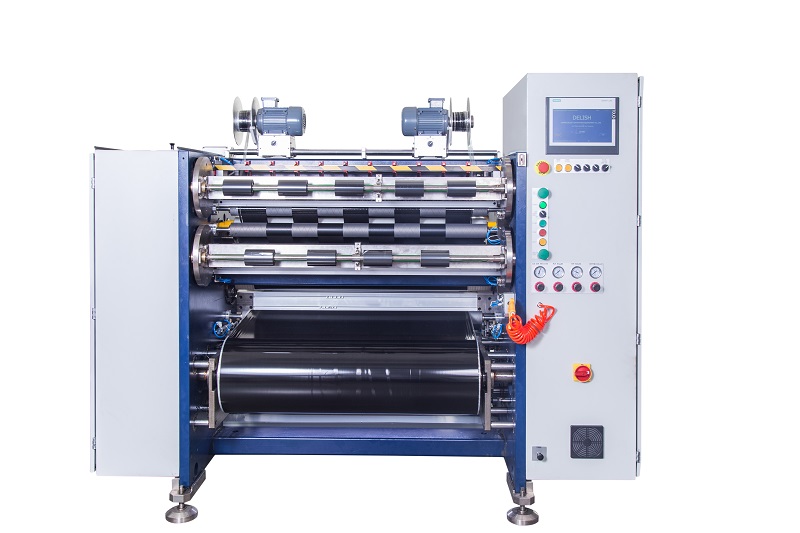
Reduce human error and idle equipment
The convenient tape change not only saves direct operation time, but also creates indirect time value by:
• Reduced training costs: 60% less time for new operators to master the skill of changing belts
• Reduced reject rate: automatic calibration reduces start-up scrap rate by 40-50% after tape change
• Extend the effective operation time of the equipment: reduce unplanned downtime and increase the overall utilization rate of the equipment by 15-20%
Beyond time: comprehensive benefit considerations
In addition to saving time, the convenient belt change function also brings multiple added values:
1. Workforce Optimization: Operators can redirect their time savings into value-added activities such as equipment monitoring and quality inspection
2. Material saving: precise automatic adjustment reduces ribbon trial run waste, and material utilization is increased by 3-5%
3. Safety Enhancement: Simplify the operation steps and reduce the risk of accidental contact between personnel and equipment
4. Enhanced Flexibility: Faster belt changes allow businesses to respond more flexibly to urgent orders and special needs

Industry practice cases
A large label manufacturer has recorded the following improvements after introducing a slitting machine with a convenient tape changer:
• Reduced average monthly tape change time from 87 hours to 19 hours
• 18% increase in overall equipment effectiveness (OEE)
• 70% reduction in overtime for operators involved in belt changes
• 35% reduction in urgent order response time
Future outlook
With the integration of Industry 4.0 technologies, the belt change function of the next generation of ribbon slitting machines is moving towards full automation:
• Predictive belt change prompt: Based on IoT sensors, early warning of the ribbon is about to run out
• Automated guided transportation system (AGV) cooperation: realize automatic replenishment of ribbons
• Digital twin technology: Virtual pre-tuning reduces physical commissioning time
Epilogue
The convenient belt change function of the ribbon slitting machine seems to be just an improvement detail of the equipment, but in fact it profoundly affects the economy of production. It creates a cumulative time dividend in repetitive jobs by compressing a single tape change time from "quarter of an hour" to "minute". In an increasingly competitive manufacturing environment, this time savings translate directly into increased capacity, cost reduction, and faster response, creating an imperceptible but crucial competitive advantage.
For businesses striving for operational excellence, investing in such capabilities is no longer a question of "if" but a strategic consideration of "how quickly" it can be achieved. After all, in the competition of the manufacturing industry, every minute saved can become a critical moment in the decisive moment of market victory.
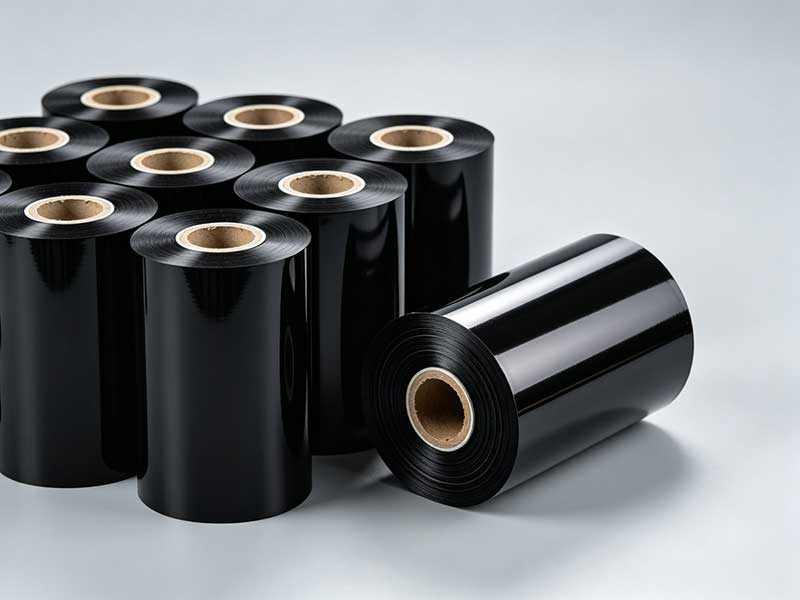
the key to choosing a model is not to pursue the "highest configuration," but to find a balance that matches your own business.
12. October, 2026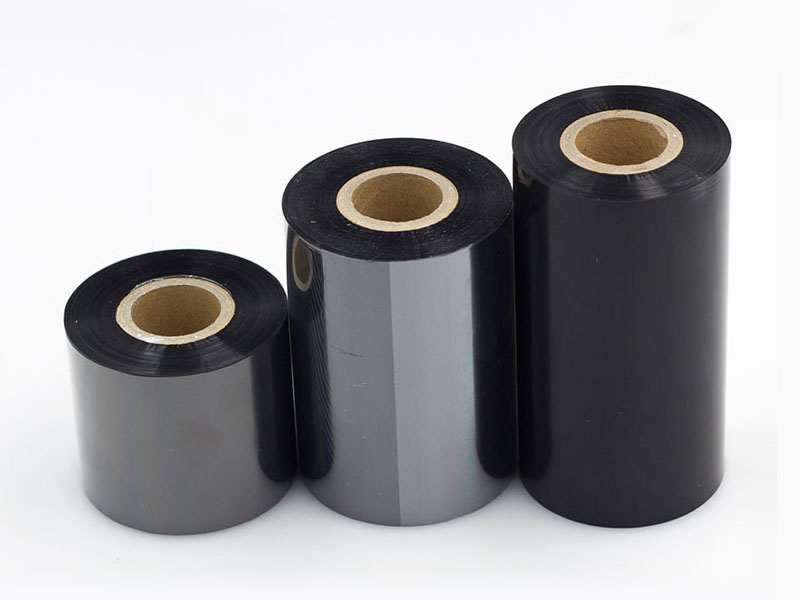
The coating formula, base film characteristics, and physical specifications of the ribbon directly affect the suitability and yield of the slitting machine.
09. October, 2026The core function of a ribbon slitting machine revolves around three dimensions: "precise cutting, stable rolling, and fast running."
09. October, 2026This article starts from actual usage scenarios to outline a clear selection approach.
09. October, 2026The essence of uneven end faces in ribbon slitting machines is an external manifestation of subtle imbalances between tension, parallelism, correction, and tool condition.
05. October, 2026


 English
 Deutsch
 Français
 Español
 Português
 日本語
日本語 русский
 한국어
한국어 عربي
عربي ภาษาไทย
 Tiếng Việt
 Italiano