
In the packaging and printing industry, the hot stamping foil slitting machine is a key equipment for producing materials such as hot stamping foil and laser film. A high-quality and efficient slitting machine can not only improve product quality, but also greatly improve production efficiency and reduce operating costs. In the face of a dazzling array of brands and models on the market, how to choose an hot stamping foil slitting machine that suits your own production needs? Here are five key considerations to help you make an informed decision.
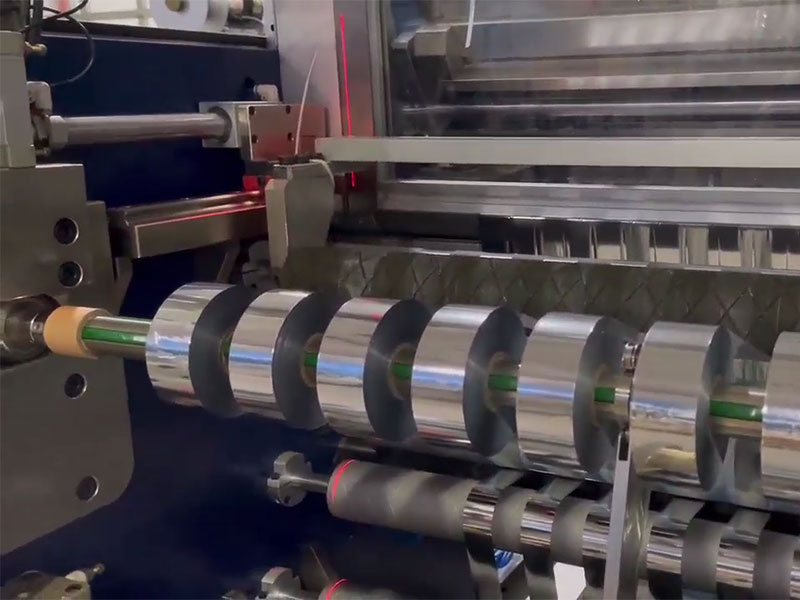
1. Clarify the matching of production requirements and equipment parameters
Before purchasing, you must first clarify your own production needs:
• Material Properties: Different specifications of hot stamping foil (such as width, thickness, material) require different slitting techniques
• Capacity requirements: Determine the equipment operating speed and work efficiency based on daily/monthly output
• Slitting accuracy: Usually, high-end products require an accuracy of less than ±0.05mm, and ordinary products can be relaxed to ±0.1mm
• Functional requirements: Whether additional functions such as automatic deviation correction, tension control, and online monitoring are required
It is recommended to make a detailed requirements list and fully communicate with suppliers to ensure that the equipment parameters are highly matched with actual needs.
2. Core technology and performance evaluation
Slitting system
• Blade Material and Design: Carbide blades have a longer lifespan and special coatings to reduce material adhesion
• Cutting method: Circular knife shearing is suitable for most materials, and ultrasonic cutting is suitable for special films
• Rewinding and unwinding system: Automatic wind change significantly reduces downtime
Control system
• Advanced PLC control system ensures stable slitting process
• The touch screen operation interface should be intuitive and easy to use
• Fault self-diagnosis function to quickly locate problems
Tension control
• Multi-stage closed-loop tension control system adapts to different material properties
• Tension sudden change control at start/stop is an important indicator of the quality of the equipment
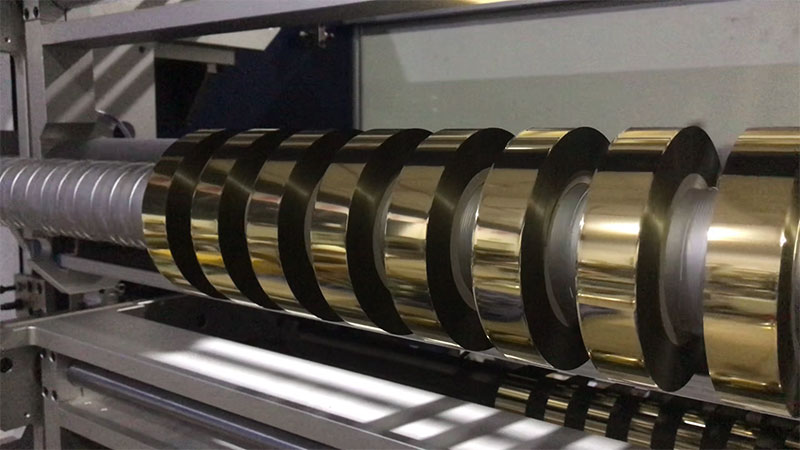
3. Equipment quality and durability inspection
Structural design
• The fuselage should be made of high-strength steel structure to reduce operating vibration
• The brand and quality of key components such as spindles and guides are crucial
Manufacturer strength
• Inspect the manufacturer's industry experience and technology research and development capabilities
• View past customer stories, especially those that produce similar products to you
• Understand reliability data such as equipment mean time between failures (MTBF).
Field testing
• Arrange on-site trials with your own materials as much as possible
• Test the quality of slitting at different speeds
• Observe equipment operating noise and temperature rise
4. Safety and convenience of operation and maintenance
Secure configuration
• Must comply with national machinery safety standards
• There should be complete safety protection devices (protective covers, emergency stop buttons, safety light curtains, etc.)
• The electrical system needs to be protected from overload and leakage
Operation interface
• User-friendly design reduces training time and operating errors
• Multilingual support is especially important for multinational companies
Easy maintenance
• Modular design allows for quick replacement of wearing parts
• Lubrication points should be easily accessible
• Consider the matching of the equipment footprint with the existing workshop
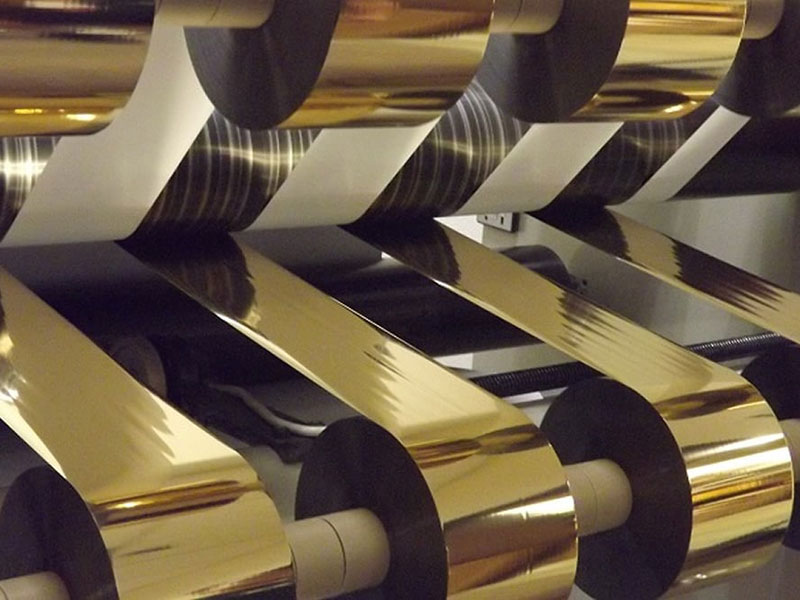
5. After-sales service and comprehensive cost analysis
After-sales support system
• Suppliers should provide detailed operation and maintenance training
• Clarify response times and scope of services
• Understand spare parts inventory and supply cycles
Cost considerations
• In addition to the purchase price, long-term operating costs such as energy consumption, consumables, and maintenance need to be calculated
• Evaluate the energy-saving characteristics of equipment, such as the energy efficiency ratio of servo motors
• Consider possible future upgrade and expansion needs
Supplier stability
• Examine the financial health and ability of suppliers to continue as a going concern
• Understand the frequency of technical updates and upgrade services
Epilogue
Purchasing an hot stamping foil slitting machine is a decision that requires comprehensive consideration of technology, economy and production reality. It is recommended to adopt a procurement strategy of "maximizing long-term value" rather than "minimizing initial costs". Before making a final decision, you can consult the actual user experience of existing users, and if possible, invite professional and technical personnel to participate in the evaluation. A suitable hot stamping foil slitting machine will become your right-hand man to improve product quality and enhance market competitiveness, laying a solid foundation for the sustainable development of your business.
A mature automated system needs to form a closed loop simultaneously across four dimensions: correction, tension, cutting, and data management.
21. October, 2026
The value of customized slitting solutions lies in turning "cutting accurately, changing quickly, and no waste" from a slogan into a quantifiable production indicator.
21. October, 2026This article focuses on the two subsystems of unwinding and rewinding, explaining their functional composition, control logic, and key points of common adjustments.
21. October, 2026It is specifically designed to cut the wide master roll hot stamping foil into different narrow finished rolls according to process requirements, and is used in conjunction with hot stamping machines.
16. October, 2026A device with stable slitting accuracy and precise tension control is the fundamental link for ensuring hot stamping yield and material utilization.
16. October, 2026


 English
 Deutsch
 Français
 Español
 Português
 日本語
日本語 русский
 한국어
한국어 عربي
عربي ภาษาไทย
 Tiếng Việt
 Italiano