
In the printing and packaging industry, the hot stamping foil slitting machine is one of the indispensable equipment, and its choice directly affects production efficiency, product quality and cost control. With a wide variety of slitting machines on the market, many business owners are faced with a critical choice: automatic foil slitting machine or semi-automatic foil foil slitting machine. Today, we'll delve into the features of both devices to help you make a more informed choice.
The core difference between the two devices
Automatic hot stamping foil slitting machine
Fully automatic equipment integrates functions such as automatic feeding, slitting, winding, detection, and unloading, and is usually equipped with advanced sensors and control systems to achieve a continuous and unmanned production process.
Semi-automatic hot stamping foil slitting machine
Semi-automatic equipment requires manual intervention to complete certain key links, such as loading, aligning or unloading, with a relatively low degree of automation, but more flexible requirements for operators' skills.
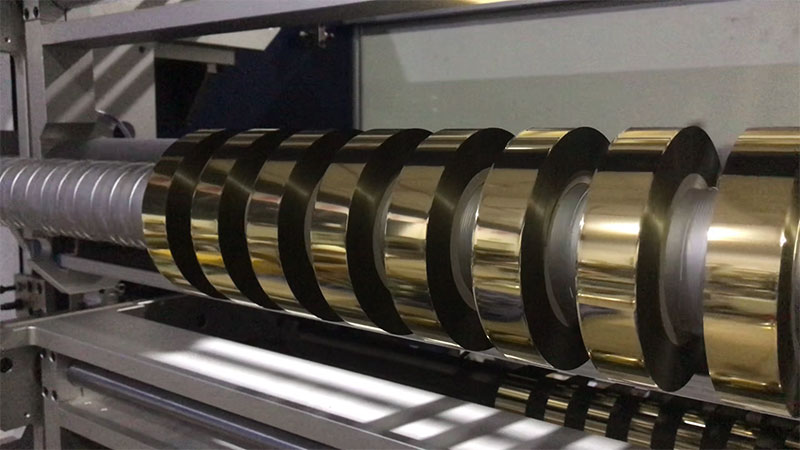
Key considerations
1. Production scale and efficiency requirements
• Fully automatic equipment: suitable for enterprises with large quantities and continuous production. A fully automatic slitting machine can work 24 hours a day, and the output per unit time is usually 2-3 times that of semi-automatic equipment, which is especially suitable for production environments with large order volume and tight delivery time.
• Semi-automatic equipment: more suitable for small and medium-sized batches and multi-variety production modes. When your orders are diverse and you need to change slitting specifications frequently, the flexibility of semi-automatic equipment is obvious, with shorter changeover times and simpler preparation processes.
2. Investment budget and return cycle
• Fully automatic equipment: The initial investment is higher, usually 2-4 times that of semi-automatic equipment. However, considering the labor cost savings, reduced material waste, and higher output, the payback cycle may be 1-2 years if your monthly output exceeds a certain threshold (usually more than 500,000 meters is recommended).
• Semi-Automatic Equipment: Lower initial cost, suitable for businesses with limited budgets or just starting out. Although the efficiency of a single unit is low, it can be compensated for by increasing the number of equipment or extending the working time, and the financial pressure is less.
3. Human resources and skills requirements
• Fully automatic equipment: requires 1-2 trained technicians for monitoring and maintenance, which requires certain electrical and programming knowledge of the operator, but greatly reduces the need for ordinary operators.
• Semi-automatic equipment: requires more skilled operators, usually 1-2 operators per equipment, high dependence on manual skills, but shorter training cycles, easier to recruit.
4. Product accuracy and consistency
• Fully automatic equipment: through precision sensors and closed-loop control systems, the slitting accuracy can reach ±0.1mm, and the product consistency is extremely high, especially suitable for boutique packaging, luxury packaging and other fields with strict requirements for hot stamping positions.
• Semi-automatic equipment: The accuracy depends on the operator's experience, usually the accuracy is about ±0.3mm, there is a certain fluctuation, but it is enough for general commercial packaging, book covers and other applications.
5. Material utilization and waste control
• Fully automatic equipment: Equipped with automatic correction and tension control system, material waste can be controlled within 1-2%, which is especially obvious for expensive special hot stamping foil materials.
• Semi-automatic equipment: Material waste rates are typically 3-5%, but this gap may not be significant for conventional materials.
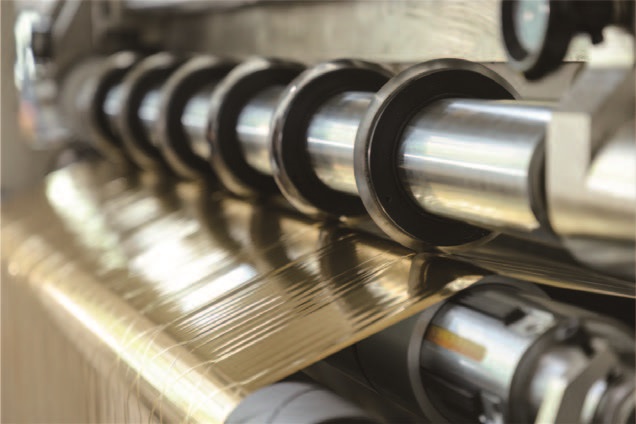
Applicable scenario analysis
Situations where you choose a fully automatic hot stamping foil slitting machine:
• Annual output of more than 6 million meters of hot stamping foil
• The product range is relatively stable, and the specifications change infrequently
• 24 hours of continuous production is required
• Use high-value special foil stamping materials
• Facing pressure from rising labor costs
• Products are exported or supplied to high-end customers, and consistency is extremely high
Cases of choosing a semi-automatic hot stamping foil slitting machine:
• Start-ups or small and medium-sized producers
• Diverse product types, mostly small batch orders
• Areas with relatively low labor costs
• Limited investment budget
• Need to quickly adapt to market changes and frequently adjust product specifications
• Complement fully automated production lines to handle special orders
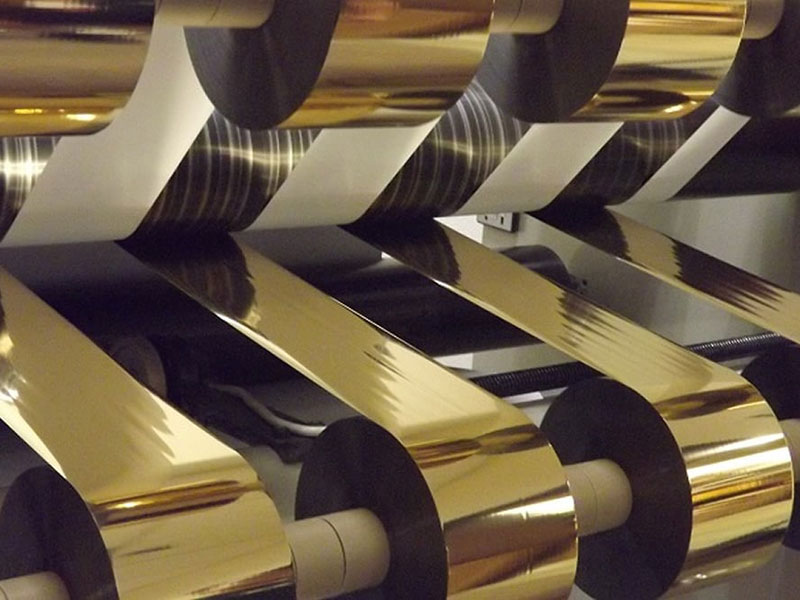
Hybrid solutions: phased investment strategies
Many successful businesses adopt a progressive investment strategy:
1. Purchase 1-2 semi-automatic equipment in the initial stage to meet basic production needs
2. Gradually increase the number of semi-automatic equipment as the business grows
3. When the output reaches a certain scale, introduce 1 fully automatic equipment to process mainstream products
4. Reserve some semi-automatic equipment to handle special specifications and small batch orders
This strategy balances flexibility with efficiency, reducing investment risk.
Technology development trends and future considerations
With the development of Industry 4.0, both fully automatic and semi-automatic devices are evolving in the direction of intelligence:
• IoT connectivity for remote monitoring and predictive maintenance
• Artificial intelligence vision inspection system
• Energy consumption optimization function
• Faster changeover system
When selecting equipment, it is recommended to consider the upgradeability of the equipment to ensure that it can be connected to the intelligent production management system in the future.
Conclusion
There is no absolute difference between automatic and semi-automatic hot stamping foil slitting machines, only the difference between suitable and not. Your choice should be based on:
1. Objective assessment: Accurately calculate production needs for the current and next 3 years
2. Financial Analysis: Detailed accounting of equipment investments, operating costs, and expected returns
3. Human Resources: Assess existing team skills and the local labor market
4. Market Positioning: Clarify your customers' requirements for product precision and consistency
5. Development vision: Consider the company's development plan for the next 3-5 years
It is recommended to obtain equipment samples for trial cutting as much as possible before making a decision, visit factories using different equipment, and communicate with existing users about actual use experience. Ultimately, the best equipment for your production needs is the one that strikes the best balance between investment cost, operational efficiency, product quality, and business growth.
Whichever path you choose, remember: equipment is a tool, and product excellence and sustainable profitability are the ultimate goal. Making a wise choice starts with a deep understanding of your needs and culminates in the perfect integration of equipment and production processes.
A mature automated system needs to form a closed loop simultaneously across four dimensions: correction, tension, cutting, and data management.
21. October, 2026The value of customized slitting solutions lies in turning "cutting accurately, changing quickly, and no waste" from a slogan into a quantifiable production indicator.
21. October, 2026This article focuses on the two subsystems of unwinding and rewinding, explaining their functional composition, control logic, and key points of common adjustments.
21. October, 2026It is specifically designed to cut the wide master roll hot stamping foil into different narrow finished rolls according to process requirements, and is used in conjunction with hot stamping machines.
16. October, 2026A device with stable slitting accuracy and precise tension control is the fundamental link for ensuring hot stamping yield and material utilization.
16. October, 2026


 English
 Deutsch
 Français
 Español
 Português
 日本語
日本語 русский
 한국어
한국어 عربي
عربي ภาษาไทย
 Tiếng Việt
 Italiano