
In modern industrial production, various precision equipment is like a shuttle on a precision loom, silently transforming raw materials into products for our daily use. The ribbon slitting machine is one such equipment that is often overlooked but crucial, playing an irreplaceable role in the ribbon manufacturing process, connecting every link between raw materials and finished products.
Basic composition and application fields of ribbons
Ribbon is a core consumable in thermal transfer printing technology and is widely used in barcode printing, product labeling, packaging marking, and other fields. It typically consists of three parts: a mylar film (PET) substrate, a thermal coating, and a backside coating. From the large coil of raw material to the finished small coil in the hands of the end user, ribbon needs to go through a precise slitting process, which is the mission of ribbon slitting machines.
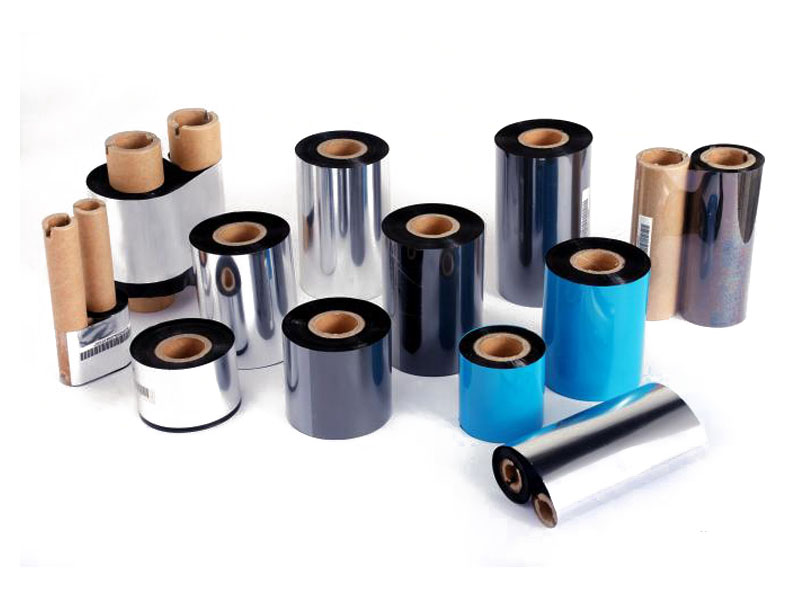
Slitting machines: a key hub for precision manufacturing
The ribbon slitting machine is the technical hub of the entire production process, and it is responsible for slicing wide raw material rolls into finished rolls of different width specifications. This process may seem simple, but it actually contains a high degree of technical precision.
Raw material processing stage: The raw ribbon material of the large coil is precisely loaded onto the slitting machine. This step requires extreme precision, and any minor misalignment can lead to waste or quality issues in subsequent slitting processes.
Slitting Process: The slitting machine cuts the wide ribbon according to the preset width through precision blades. Modern slitting machines employ computer-controlled systems that enable micron-level cutting accuracy, ensuring consistent width across each slitting strip.
Tension Control: Maintaining constant tension throughout the slitting process is key to ensuring product quality. The slitting machine is equipped with an advanced tension control system that prevents the ribbon from stretching, wrinkling, or breaking during the slitting process.
Finished product winding: The slitted ribbon is rewound to the customer's required specifications. This process requires precise control of winding density and pressure to avoid over-loosening or tightening affecting subsequent use.
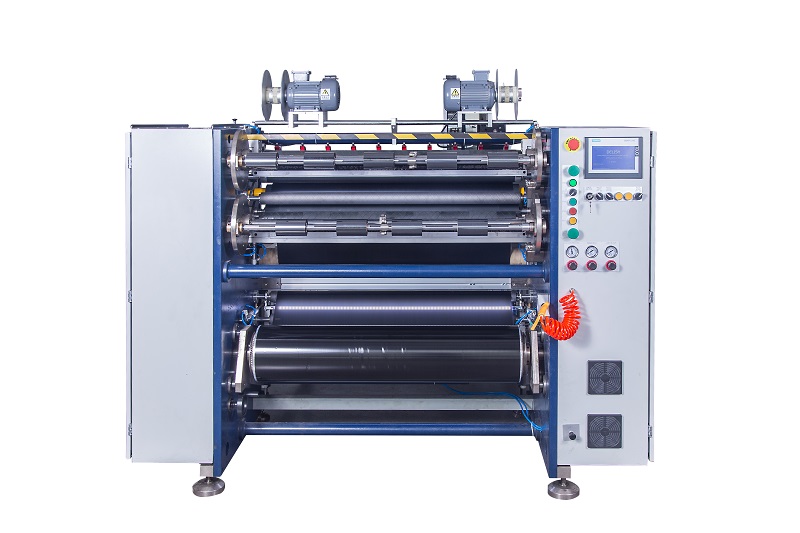
Technological innovation drives the development of the industry
With the advancement of Industry 4.0, the carbon ribbon slitting machine is also evolving:
Intelligent Control: Modern slitting machines are equipped with touch screen interfaces and programmable logic controllers (PLCs), operators can easily set slitting parameters, and the machine automatically adjusts blade position, tension, and speed.
Visual inspection system: High-end slitting machine integrates visual inspection devices to monitor slitting quality in real time and automatically mark defect locations, significantly improving product qualification rates.
Adaptive technology: Based on sensor data and algorithm analysis, the new generation of slitting machines can automatically compensate for changes in material properties and maintain stable slitting quality.
Energy-Efficient Design: Modern slitting machines focus on energy efficiency, employing servo motors and intelligent power management systems to reduce energy consumption in production.
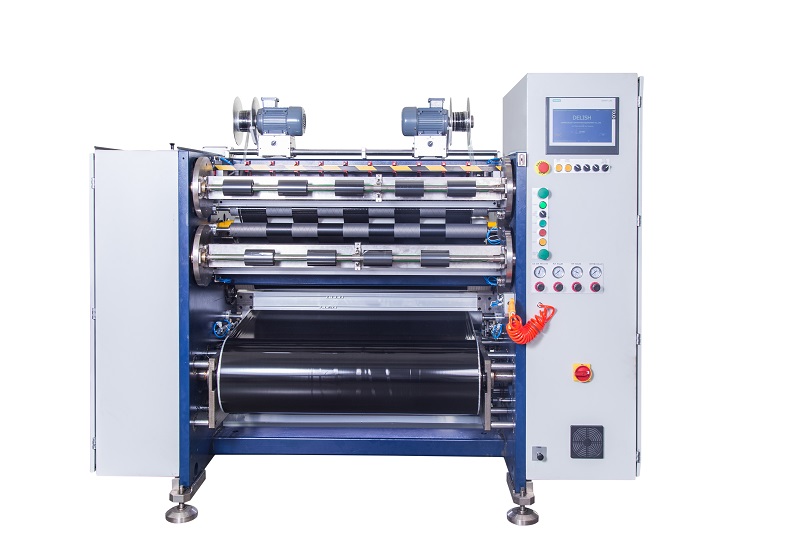
Multiple effects of slitting accuracy
The precision of ribbon slitting machines is directly related to the performance of the final product:
1. Print quality: Precisely slitted ribbons ensure that heat is evenly transferred during the thermal transfer process, avoiding problems such as broken lines and blurring when printing barcodes.
2. Device Compatibility: Different printers require ribbons of specific widths, and the slitting accuracy directly affects the smooth operation of ribbons in various devices.
3. Cost Control: High-precision slitting minimizes material waste and improves raw material utilization.
4. User experience: Ribbon coils with uniform winding and flat edges are easy to install and use, reducing problems such as cassettes and breakage.

Future outlook
With the in-depth development of the Internet of Things and intelligent manufacturing, ribbon slitting machines are evolving in the direction of more intelligence and integration. In the future, we may see:
• Fully autonomous intelligent slitting system that automatically optimizes slitting parameters according to raw material characteristics
• Direct integration with supply chain systems for on-demand production and instant delivery
• Augmented reality (AR) assisted maintenance to lower the threshold for equipment operation and maintenance
• More environmentally friendly design, reducing energy consumption and waste in the production process
From wide formats to finely finished products, ribbon slitting machines act as silent craftsmen, transforming raw materials into final products that meet the needs of various applications with precision technology. In today's continuous pursuit of efficiency and quality in the manufacturing industry, these seemingly ordinary devices are indispensable in supporting the operation of modern marking and traceability systems, silently leaving a clear mark in the digital world.
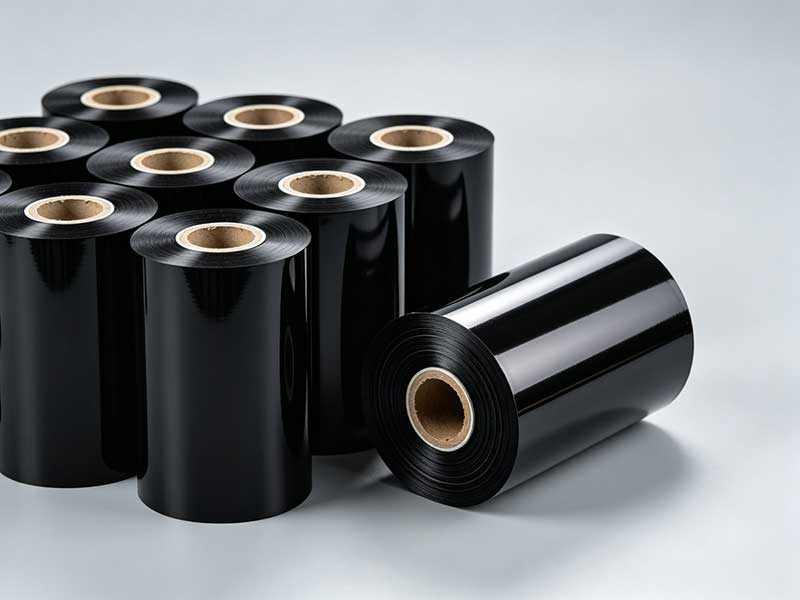
the key to choosing a model is not to pursue the "highest configuration," but to find a balance that matches your own business.
12. October, 2026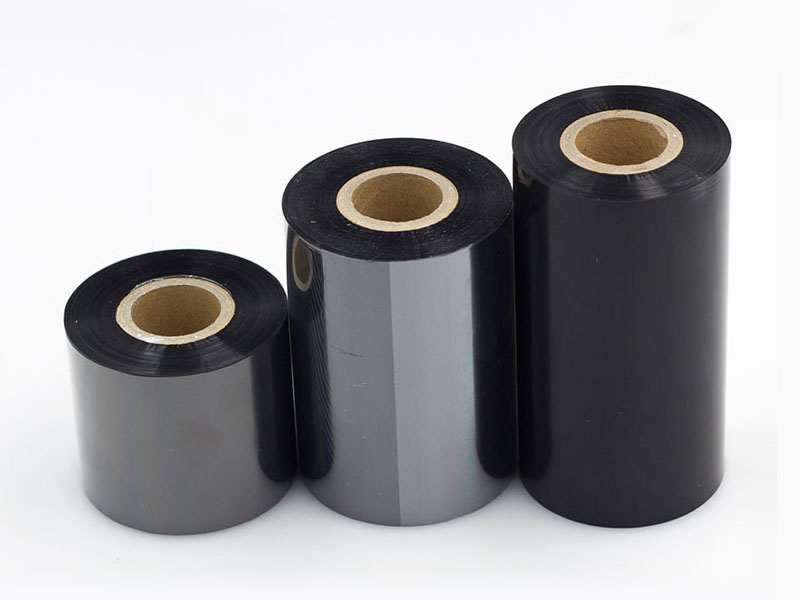
The coating formula, base film characteristics, and physical specifications of the ribbon directly affect the suitability and yield of the slitting machine.
09. October, 2026The core function of a ribbon slitting machine revolves around three dimensions: "precise cutting, stable rolling, and fast running."
09. October, 2026This article starts from actual usage scenarios to outline a clear selection approach.
09. October, 2026The essence of uneven end faces in ribbon slitting machines is an external manifestation of subtle imbalances between tension, parallelism, correction, and tool condition.
05. October, 2026


 English
 Deutsch
 Français
 Español
 Português
 日本語
日本語 русский
 한국어
한국어 عربي
عربي ภาษาไทย
 Tiếng Việt
 Italiano