
In the label printing, product marking, and packaging industries, ribbon slitting machines are one of the key equipment to ensure printing quality and production efficiency. Different models vary significantly in terms of accuracy, speed, automation, and scope of application, and improper selection can lead to material waste, inefficiencies, or inconsistent product quality. This article will provide an in-depth comparison of the core functions of various ribbon slitting machines and provide a systematic selection guide to help you find the most suitable model for your production needs.
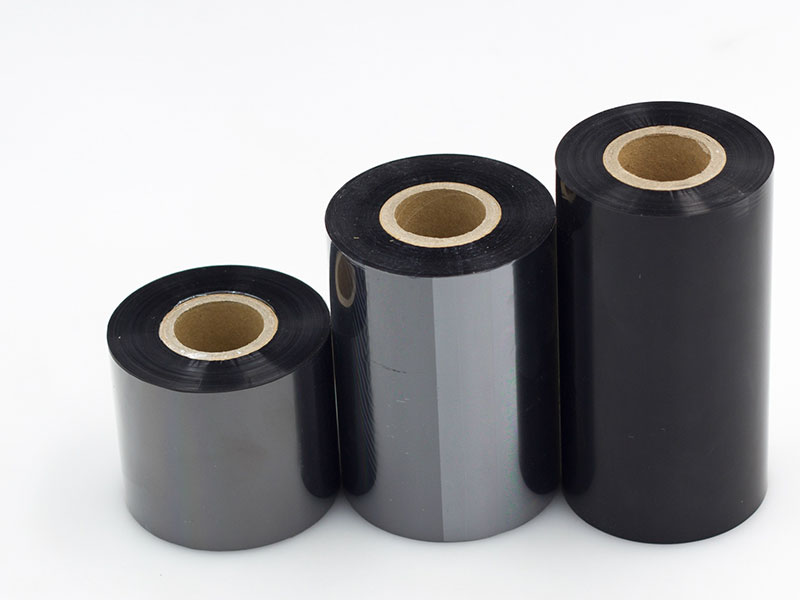
1. Comparison of the core functions and dimensions of ribbon slitting machine
1. Slitting accuracy and control technology
• Low-end mechanical slitting machine: Relies on mechanical limits, the accuracy is usually more than ±0.5mm, suitable for ordinary labels with low precision requirements
• Mid-end CNC slitting machine: with stepper motor and simple PLC control, the accuracy can reach ±0.1-0.2mm, suitable for most commercial printing needs
• High-end servo slitting machine: adopts closed-loop servo system and high-resolution encoder, with an accuracy of less than ±0.02mm, meeting high-end applications such as medical and electronics
2. Slitting speed and production efficiency
• Manual/semi-automatic models: The speed is usually less than 30 m/min, suitable for small batches and multi-variety production
• Standard automatic model: speed range 50-150 m/min, equipped with automatic deviation correction and tension control
• High-speed line model: The speed can reach more than 300 m/min, and it can be directly connected with the printing machine to achieve seamless production
3. Degree of automation and intelligence
• Basic model: manual feeding, manual parameter setting, visual inspection
• Advanced models: automatic feeding, parameter memory, photoelectric detection and alarm
• Smart model: with IoT function, remote monitoring, quality traceability system, adaptive tension control
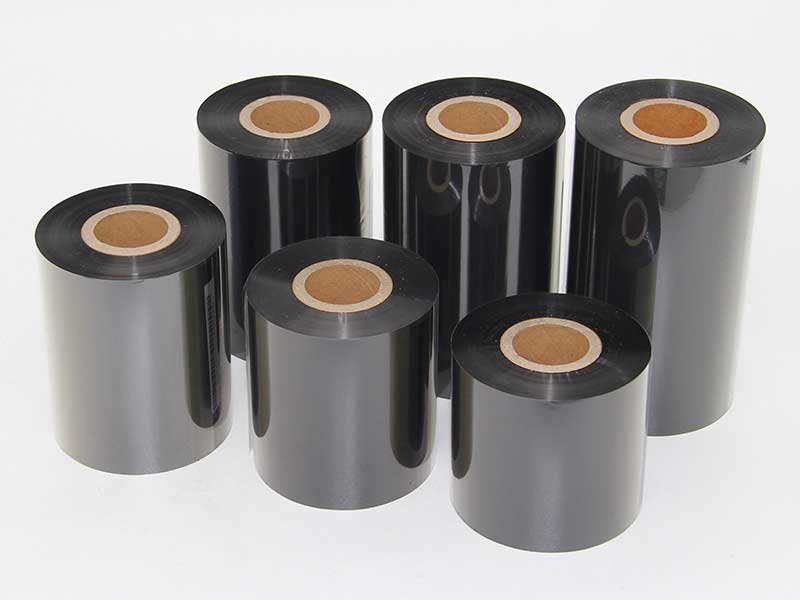
2. Select the key evaluation elements suitable for the production model
1. Production demand analysis
• Output Assessment: Determine machine speed requirements based on average daily/monthly production volume
• Material Properties: Consider ribbon type (wax-based, hybrid-based, resin-based), width range, coil specifications
• Precision Requirements: Differentiated requirements for slitting accuracy in different application fields
2. Technical parameter matching
• Slitting width range: ensures that the machine can cover existing and possible future product specifications
• Rewinding Diameter: Compatible with existing material specifications and storage systems
• Tension Control Capabilities: Fine tension control is key to avoiding curling and wrinkling
3. Scalability and compatibility
• Whether subsequent process integration is supported
• Whether it can adapt to the flexibility requirements of new materials or new specifications
• Control whether the system supports upgrades and updates
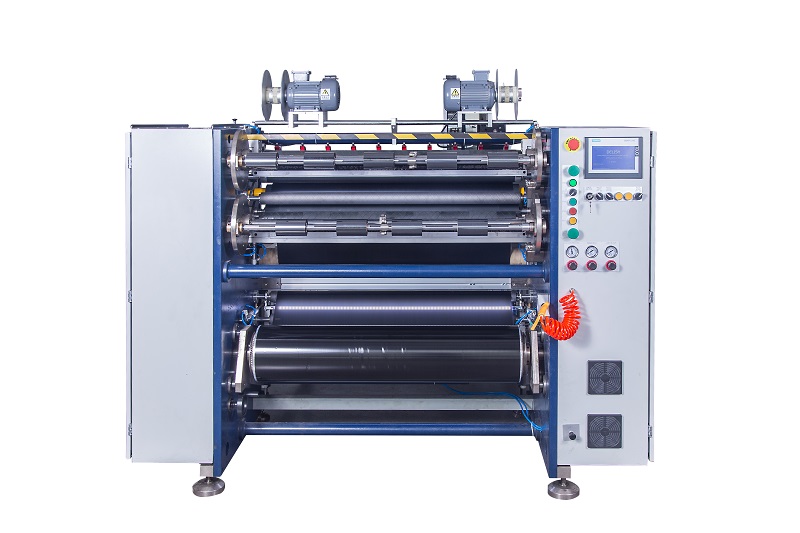
3. Suggestions for matching actual application scenarios and models
1. Start-ups/low-volume production
• Recommended: Semi-automatic economical slitting machine
• Reason: The investment cost is low (usually 5-150,000 yuan), the operation is simple, and it can meet the needs of multiple varieties and small batches
• Focus: Operator training, basic maintenance capabilities
2. Medium-sized printing enterprises/stable mass production
• Recommended: Automatic CNC slitting machine
• Reason: Strike a balance between efficiency and investment (20-500,000 yuan), precision and speed to meet most commercial orders
• Key functions: automatic deviation correction, tension control, production data statistics
3. Large enterprises/high-end precision production
• Recommended: intelligent servo slitting machine or inline slitting system
• Reason: Although the investment is high (more than 500,000 yuan), the long-term return is significant, reducing waste and improving quality consistency through high precision, high speed and intelligence
• Core values: minimized downtime, maximized material utilization, total quality control
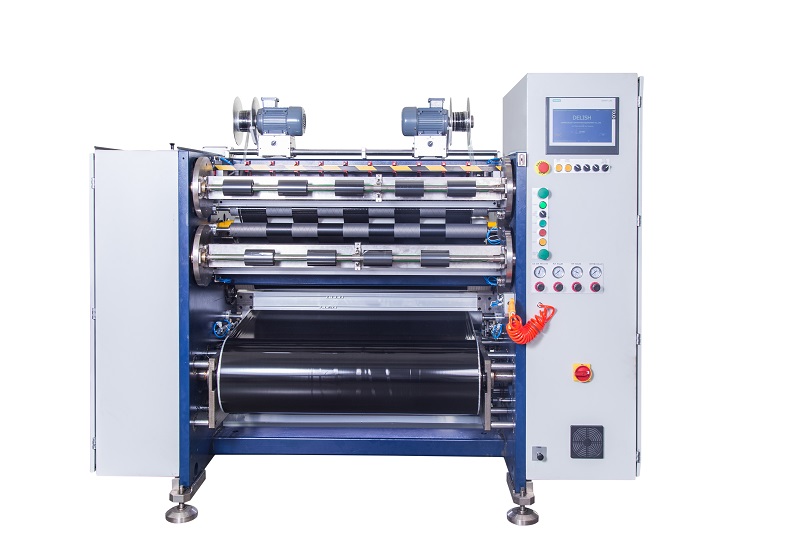
4. Cost-benefit analysis and long-term considerations
1. Direct cost comparison
• Equipment purchase cost: The price difference between different levels of models can be more than 10 times
• Installation and commissioning costs: High-end models may require professional installation
• Energy Consumption Differences: High-speed models may consume less energy per unit
2. Operating cost assessment
• Material waste rate: High-precision equipment typically reduces scrap rates by 3-8%
• Labor costs: Each level of automation reduces direct operators by 30-50%
• Maintenance costs: The maintenance costs of imported high-end models may be significantly higher than those of domestic equipment
3. Return on investment calculation
• Simple ROI calculation :(equipment cost) / (monthly savings + monthly production increase value)
• Lifecycle Cost Analysis: Consider the total inputs and outputs over the life of the equipment

5. Key points of on-site inspection and supplier evaluation
1. On-site trial cutting test: Provide your own typical materials for actual slitting and observe the effect
2. Supplier technical strength: check R&D capabilities and technical support response speed
3. User case research: Visit users in the same industry to understand the actual usage of the device
4. After-sales service comparison: warranty policy, spare parts supply, maintenance engineer configuration
Conclusion: Choose the right one, not the most expensive
Choosing a ribbon slitting machine is essentially about finding the sweet spot between precision, speed, automation, and cost. There is no "best" device, only the "best fit" solution. It is recommended that enterprises select:
1. Clarify your real needs rather than blindly pursuing high technical parameters
2. Consider your business development plan for the next 3-5 years
3. Incorporate operator training into the implementation plan
4. Set aside enough budget for auxiliary equipment and tools
Through systematic demand analysis, technology comparison and cost accounting, enterprises can choose ribbon slitting equipment that not only meets the current production needs but also has good scalability, laying a solid foundation for improving product quality, reducing production costs and enhancing market competitiveness.
Making a smart choice starts with a thorough understanding of your needs and ends with an accurate match to your equipment's capabilities. In this era of rapid technological iteration, choosing a "just right" ribbon slitting machine is to install a precise regulator for the company's production efficiency and quality control.
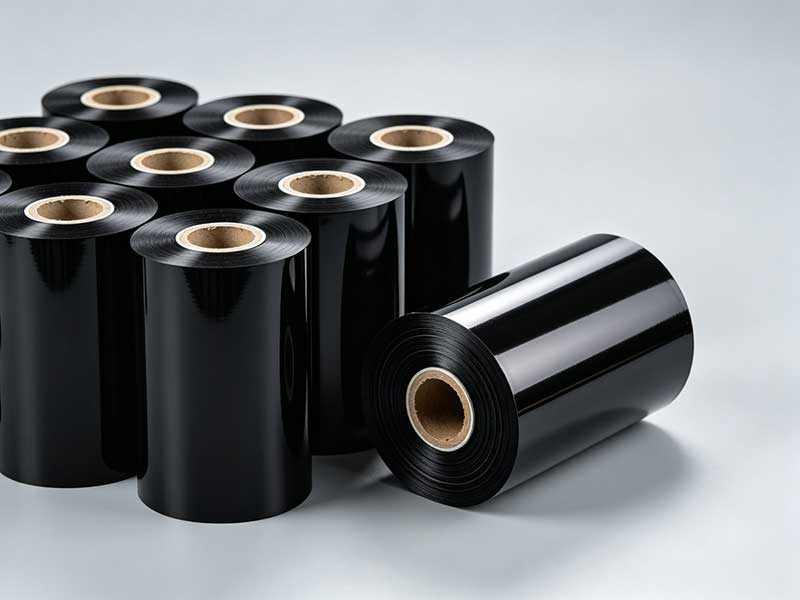
The widespread adoption of fully automatic ribbon slitting machines is changing this situation. Its core value can be summed up in six words: efficient, stable, and labor-saving.
22. October, 2026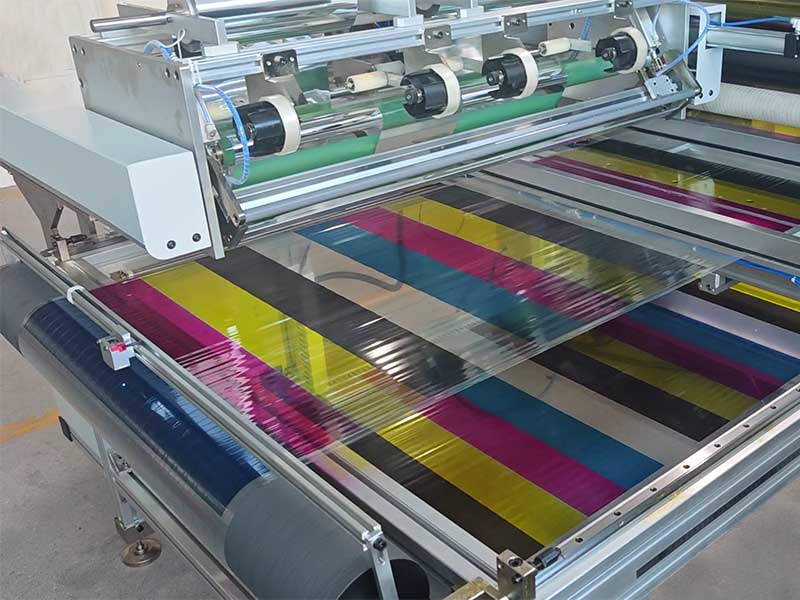
The color ribbon slitting machine is mainly used for wide roll slitting and rewinding of materials such as card printer color ribbons and thermal transfer ribbons.
21. October, 2026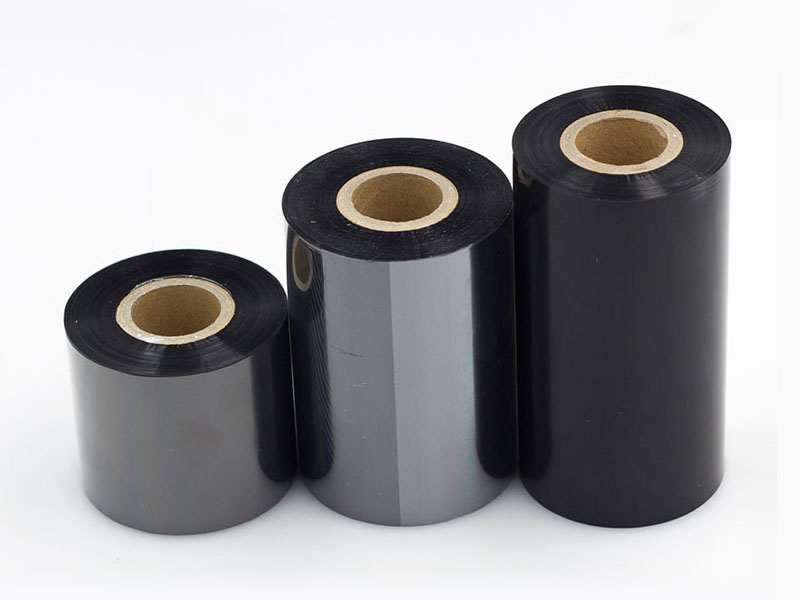
This article will break down the technical core of this function from four dimensions: signal detection, control logic, shutdown strategy, and precision calibration.
19. October, 2026The value of the automatic correction function lies in incorporating this runaway variable into a precise closed loop, shifting slitting operations from "post-event selection" to "real-time self-heali
19. October, 2026This paper proposes a practical efficiency improvement plan from three dimensions: downtime management, switching optimization, and tension upgrade.
19. October, 2026


 English
 Deutsch
 Français
 Español
 Português
 日本語
日本語 русский
 한국어
한국어 عربي
عربي ภาษาไทย
 Tiếng Việt
 Italiano