
In the printing and packaging industry, the hot stamping process has always been a key process to enhance the added value of products. From high-end tobacco and alcohol packaging to exquisite greeting cards, that thin layer of golden luster often determines the visual grade of the product. However, behind this gorgeous surface, there is a bottleneck link that has been neglected for a long time - the cutting of hot stamping foil.
In the past, the slitting workshop was often the most "lively" and "headache" place in the factory: the master guarded the roaring machine, carefully adjusted the knife spacing, and the slightest carelessness was the scrapping of a few meters or even tens of meters of foil. Nowadays, with the popularity of automated foil stamping slitting machines, an efficiency revolution in precision, speed and cost is quietly taking place.
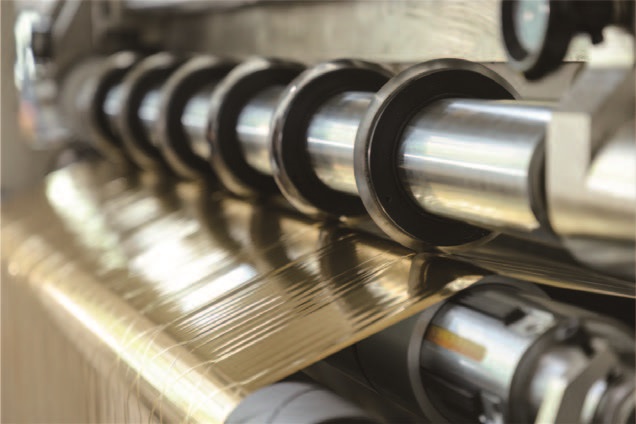
1. The "roadblock" of the old era: the limitations of manual slitting
Before the popularization of automated equipment, traditional slitting methods mainly relied on semi-mechanization and manual experience, and their pain points were obvious:
1. Precision depends on "feel": The thickness of hot stamping foil is often calculated in microns, and the material is soft and easy to wrinkle. The tension control of traditional machines is unstable during the feeding process, resulting in rough slitting edges and different sizes, which in turn causes "flying gold" or missing hot stamping in the subsequent hot stamping process.
2. Changing orders like "fighting": In the face of the trend of small batches and multiple batches of orders, it takes at least half an hour for traditional equipment to replace the knife roller, plus debugging losses, and often a day is wasted in preparation.
3. Shocking Losses: Waste caused by material deviation is the norm in traditional workshops due to poor tension control or lagging deviation correction systems. For expensive imported specialty foils, this loss directly erodes corporate profits.
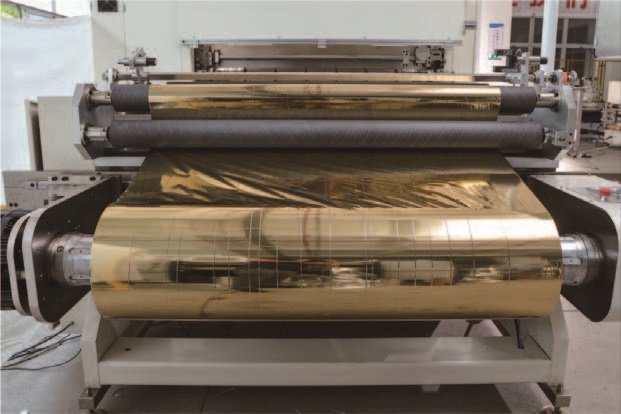
2. Technological breakthrough of automatic slitting machine
The new generation of automated hot stamping foil slitting machine not only adds a touch screen to the old machine, but also reconstructs the production process from the underlying logic. Its core technological breakthroughs are mainly reflected in the following aspects:
1. Closed-loop tension control: Loading the foil with a "brain"
The automation equipment is equipped with high-precision sensors and servo motors. During the slitting process, the system monitors changes in the roll diameter in real time and automatically adjusts the tension of unwinding and rewinding. This means that the foil is always in a constant stretch from the large reel center to the outer edge, neither pulling off by overtightness nor wrinkling by over-looseness.
2. Fully automatic positioning and CNC tool holder
If traditional slitting is "tailor-made", then automated slitting is "3D printing". The operator only needs to enter the slitting width, quantity, and roll diameter on the touch screen, and the CNC tool holder will automatically move to the specified position. The order change time has been reduced from half an hour to a few minutes of "next order entry".
3. High-precision correction system
The foil edge is monitored in real time by photoelectric sensors, and the correction device dynamically adjusts the material position with millisecond response speed. Even if the raw material roll itself is not wound evenly, the automated equipment can ensure that the edges of each roll of foil cut out are as neat as a knife, providing the perfect "ammunition" for the high-speed hot stamping machine.
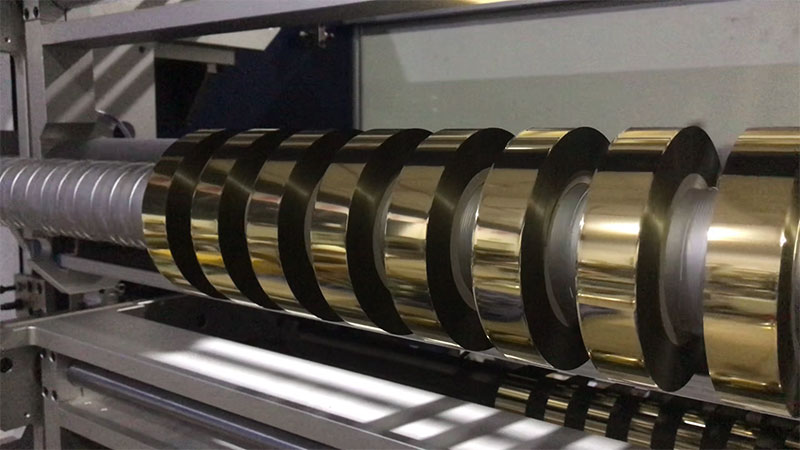
3. Multi-dimensional changes brought about by the efficiency revolution
This efficiency revolution led by automated slitting machines has brought changes to the production floor in three dimensions:
1. Changes in the production dimension: from "people waiting for machines" to "waiting for machines"
In the past, the master was the core resource, and once the master rested, high-precision work had to be stopped. Now, automation equipment digitizes complex process parameters, and ordinary operators can take up their posts with simple training. It is possible to operate the equipment 24 hours a day, and the production efficiency has been improved geometrically.
2. Change in cost dimension: infinitely approaching "zero loss"
Precise tension control and positioning systems significantly reduce material waste. Taking a medium-sized factory that consumes 1 million square meters of foil per year as an example, if the loss rate is reduced from 5% to 1%, the annual material cost savings can be as high as hundreds of thousands of yuan. At the same time, due to unmanned operation, enterprises have also reduced their dependence on skilled workers, alleviating the problems of difficult recruitment and expensive employment.
3. Change in the quality dimension: stability is paramount
Automated production means that the parameters of each roll of slitted foil are standardized. For downstream tobacco pack printing or daily chemical label printing enterprises, the consistent quality of incoming materials means that they can maximize the efficiency of high-speed circular stamping machines and reduce downtime and commissioning time.
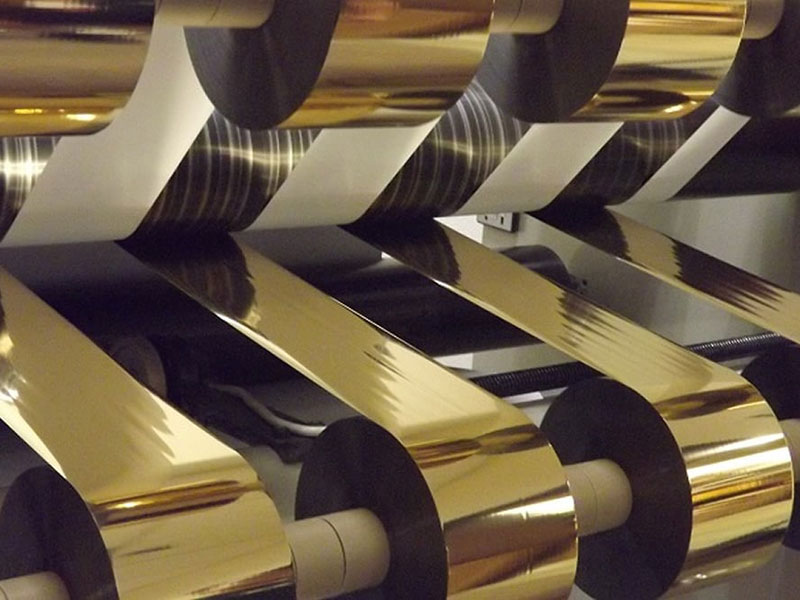
4. Future prospects: the entrance to smart factories
The automated hot stamping foil slitting machine is not just an isolated device, it is the entrance to the smart factory of the future. At present, some leading devices already have IoT interfaces that can upload production data (such as output, efficiency, fault alarms) to the cloud in real time.
With the development of AI visual inspection technology, future slitting machines will also have online defect detection capabilities. Once pinholes or scratches are found on the raw materials, the system will automatically mark or reject them, truly realizing the integration from "slitting" to "quality inspection".
Epilogue
In today's pursuit of ultimate efficiency and lean production, every tiny process contains great potential for change. The popularity of automated hot stamping foil slitting machines has solved a key problem that restricts the hot stamping process. It not only makes foil cutting faster, more accurate and more economical, but also allows enterprises to have a powerful tool to travel light in this fierce market competition.
This is not just an upgrade of a machine, but also an innovation of the entire manufacturing concept.
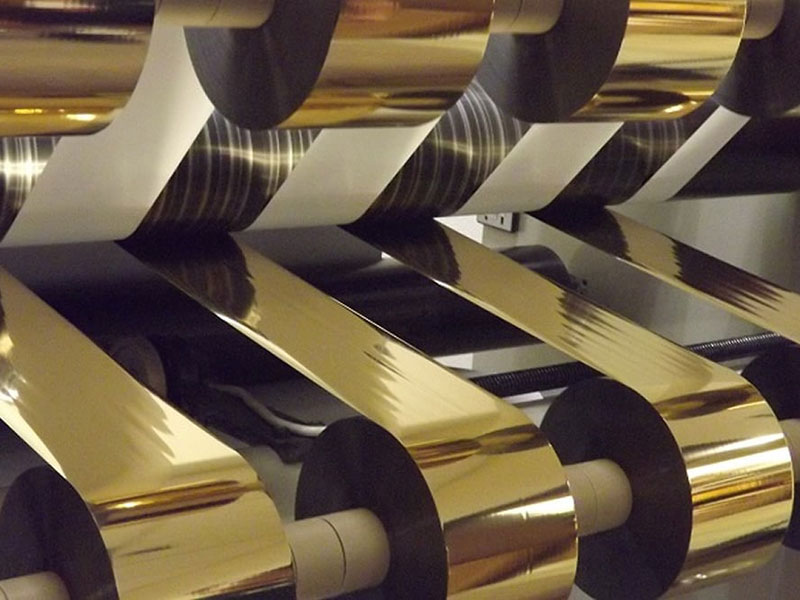
A mature automated system needs to form a closed loop simultaneously across four dimensions: correction, tension, cutting, and data management.
21. October, 2026The value of customized slitting solutions lies in turning "cutting accurately, changing quickly, and no waste" from a slogan into a quantifiable production indicator.
21. October, 2026This article focuses on the two subsystems of unwinding and rewinding, explaining their functional composition, control logic, and key points of common adjustments.
21. October, 2026It is specifically designed to cut the wide master roll hot stamping foil into different narrow finished rolls according to process requirements, and is used in conjunction with hot stamping machines.
16. October, 2026A device with stable slitting accuracy and precise tension control is the fundamental link for ensuring hot stamping yield and material utilization.
16. October, 2026


 English
 Deutsch
 Français
 Español
 Português
 日本語
日本語 русский
 한국어
한국어 عربي
عربي ภาษาไทย
 Tiếng Việt
 Italiano