
In the production of ribbons (heat transfer ribbons), slitting is a key part of the quality of the finished product. Ribbon is usually made of extremely thin PET base film coated with ink, and its material is easy to stretch and wrinkle, making tension control the core of the slitting process.
Once the tension control system fails, it will cause longitudinal stretching, lateral folding, rewinding and even broken ribbons in the slitted ribbon. This manual aims to systematically sort out the common faults, troubleshooting steps and solutions of the tension control system of ribbon slitting machine.
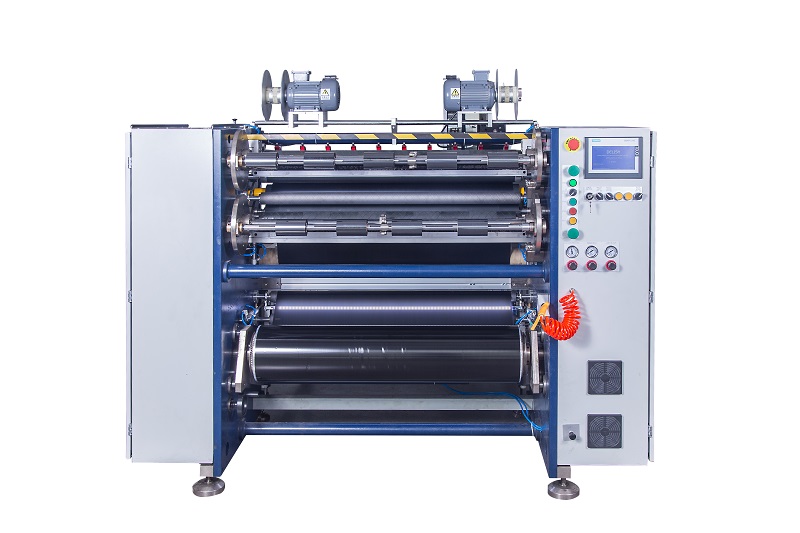
Chapter 1 Overview of Tension Control System
The typical ribbon slitting machine tension control path is as follows:
Unwinding unit - > Front traction - > Slitting knife - > Rear traction - > Rewinding unit
Core Control Components:
1. Controller: PID tension controller or PLC analog module.
2. Actuator: magnetic powder brake (unwinding), magnetic powder clutch (winding), servo/frequency conversion motor (traction).
3. Feedback element: floating swing roller (including angle sensor) or tension detector (load cell).
Chapter 2 Quick Fault Diagnosis Form
If there is a quality issue, first use the following table for a quick location:
| Fault phenomenon | Common causes | Check priorities |
| The finished ribbon is stretched/elongated longitudinally | Excessive tension | 1. Unwinding tension setting; 2. The traction speed does not match. |
| The finished ribbon is loose/unevenly retracted | The tension is too small | 1. Rewinding tension setting; 2. Magnetic powder clutch current. |
| The end face of the membrane roll is star-shaped/chrysanthemum-shaped | The rewinding tension is too large or the taper is improper | 1. Winding taper curve; 2. Contact pressure. |
| Longitudinal hard folds appear on the membrane surface | Uneven force or poor flattening | 1. Roller parallelism; 2. Flattening roller angle. |
| The diaphragm shakes seriously during operation | Tension fluctuations | 1. PID parameters; 2. Mechanical resonance; 3. Pendulum roller damping. |
| Slitted edge burrs/wavy edges | Abnormal local tension | 1. Blade sharpness; 2. Tool groove wear; 3. Pressure roller pressure. |
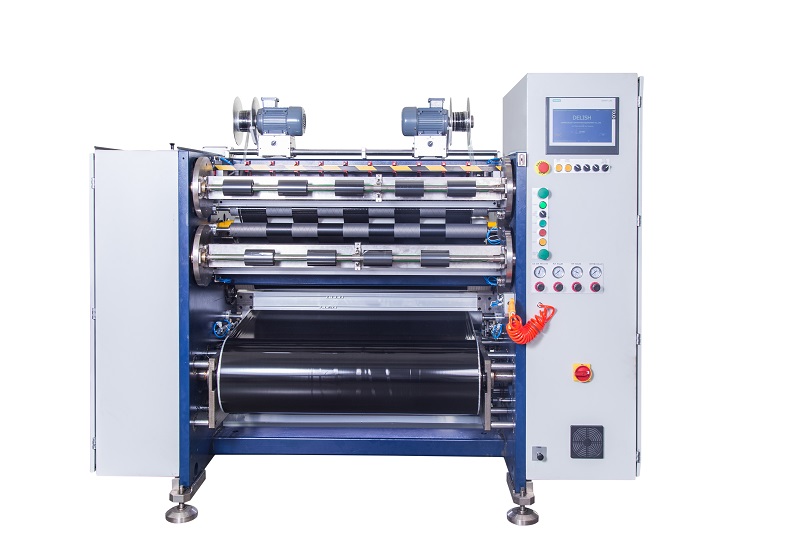
Chapter 3 Detailed Investigation Steps
3.1 Unwinding tension fault troubleshooting
At its core, unwinding tension control provides "reverse resistance" to prevent material loosening.
• Fault phenomena: unwinding shaft shaking, material deviation, uneven unwinding end face.
• Checklist:
1. Magnetic Powder Brake Status:
▪ Check whether the surface temperature of the magnetic powder brake is too high (hot hands). Overheating can cause the magnetic powder to sinter or demagnetize, and the braking torque to be unstable.
▪ Listen to the sound: Is there an abnormal noise during operation? If there is a "rustling" sound, the internal magnetic powder may dry up or leak.
▪ Check the cooling method: Is the water cooling poor or the air duct blocked?
2. Electrical Signals:
▪ Measure whether the input current is stable (use a multimeter DC mA setting). If the current is unstable, check the controller output or line contact.
▪ Check the slip ring and carbon brush: Is the power cord connected by the slip ring when the unwinding reel rotates? Worn carbon brushes can cause intermittent power supply.
3.2 Traction and speed synchronization troubleshooting
The traction roller is responsible for establishing the baseline speed, and if the front and rear speeds do not match, the tension will inevitably get out of control.
• Fault phenomena: material slips, builds up, or breaks on the traction rollers.
• Checklist:
1. Roller pressure: Check if the traction roller is lowered? Is the air pressure sufficient? Does the rubber press roller age and harden?
2. Speed ratio: Check the "stretch rate" set in the PLC program (usually the unwinding traction is 0.1%-0.5% slower than the main traction). If the value is set incorrectly, it will cause the tension to run out of control.
3. Encoder: Check if the motor encoder feedback line is well shielded? A loose encoder can cause distortion in speed feedback.
3.3 Troubleshooting of winding tension
Winding is the most complex, not only to ensure tension, but also to ensure that the end face is neat.
• Fault phenomenon: the winding end face is staggered, tight inside and loose outside or loose inside and tight outside.
• Checklist:
1. Taper Tension Setting: Check if the tension curve has "Taper" turned on. As the coil diameter increases, the tension should gradually decrease (usually the taper is set at 20%-40%). If there is no taper, the inner layer will be crumpled when rolling large.
2. Contact roller (pressure roller): For the center coiling + contact roller model, check whether the pressure of the contact roller decreases with the increase of the roll diameter? Excessive pressure leads to end face retention.
3. Magnetic powder clutch: In the same way as the brake, check whether the magnetic powder clutch is leaking or stuck.
3.4 Fault troubleshooting of feedback components
• A. Floating swing roller failure
◦ Principle: The position of the swing roller determines the PID adjustment direction.
◦ Troubleshooting: Observe whether the pendulum roller is "breathing" around the set position during operation? If the pendulum roller is at the highest position (loose) for a long time, it means that the winding is too slow or the winding is too fast; If it is at the lowest position (tight), it means that the winding is too fast or the winding is too slow. If the pendulum roller shakes at high frequency, it may be that the PID gain is too large or the cylinder pressure fluctuates.
• B. Tension sensor failure
◦ Principle: Directly detect the pressure on the film surface.
◦ Troubleshoot: In the stationary state, observe whether the tension value on the display is zeroed? If it does not return to zero, "zero point calibration" needs to be performed. Is there a force acting on the sensor sideways during installation? This can cause measurement errors.

Chapter 4 Tension problems caused by mechanical installation details
Many times the tension is unstable, and the root cause is "mechanical".
1. Roller parallelism: All guide rollers must be parallel. Check with a level or by pulling the line. If they are not parallel, the material will deviate towards the tight edge, resulting in excessive edge tension and slack in the middle, forming a "wavy edge" after slitting.
2. Roller Rotation Flexibility: Check the guide roller bearings. Manually toggle the roller to see if it rotates flexibly and has dead spots. A stuck bearing can cause the material to slide and rub here, damaging the coating and creating static electricity.
3. Flattening roller (curved roller/banana roller): Check if the curvature of the flattening roller is suitable? Is the angle adjustable? If the angle is too large, the ribbon will be stretched out of the dead fold; If the angle is too small, the flattening effect will be poor.
Chapter 5 Parameter Adjustment of Electrical Control System
If there is no abnormality in the mechanical part, the controller parameters need to be adjusted.
• PID parameter tuning:
◦ Phenomenon: The tension fluctuates greatly and is difficult to converge.
◦ Adjustment: First increase the ratio (P) to make the response faster; If there is oscillation, increase the integral (I) to eliminate the static difference; If the overshoot is severe, the differential (D) is appropriately increased to suppress it. Note: In the magnetic powder clutch system, the response speed is much slower than that of the servo system, and the P value should not be too large.
• Roll Diameter Calculation:
Check whether the roll diameter calculation is accurate. The winding tension is directly proportional to the diameter of the roll. If the reel diameter is calculated incorrectly, usually by an ultrasonic sensor or encoder, it can cause the tension to run out of control with the reel diameter.
Chapter 6 Standard Fault Handling Procedures
When a slitting machine experiences a tension failure, it is recommended to follow the following process:
1. Stop observation: stop the machine first and check whether the mechanical transmission parts are stuck or loose.
2. Empty running test: do not install the film, run the machine empty, observe whether the rollers rotate smoothly, and listen to whether there is any abnormality in the sound.
3. Film penetration test: Penetrate the waste film, run at low speed, and observe whether the swing roller action or tension display value is stable.
4. Segmented troubleshooting: disconnect the linkage between winding and unwinding, test the braking performance of unwinding and the traction performance of winding respectively, and lock the fault section.
5. Parameter restoration: If you are not sure what parameters have been changed, you can restore the tension control parameters to factory settings or backup settings and re-debug.
Epilogue
The tension control of the ribbon slitting machine is a system engineering that combines mechanical and electrical engineering. Maintenance personnel must not only understand the electrical parameters, but also understand the characteristics of mechanical installation and ribbon materials. Establishing a regular equipment maintenance schedule (e.g., monthly powder clutch clearance checks, quarterly calibration of tension sensors) is the best way to reduce sudden failures and ensure slitting quality.
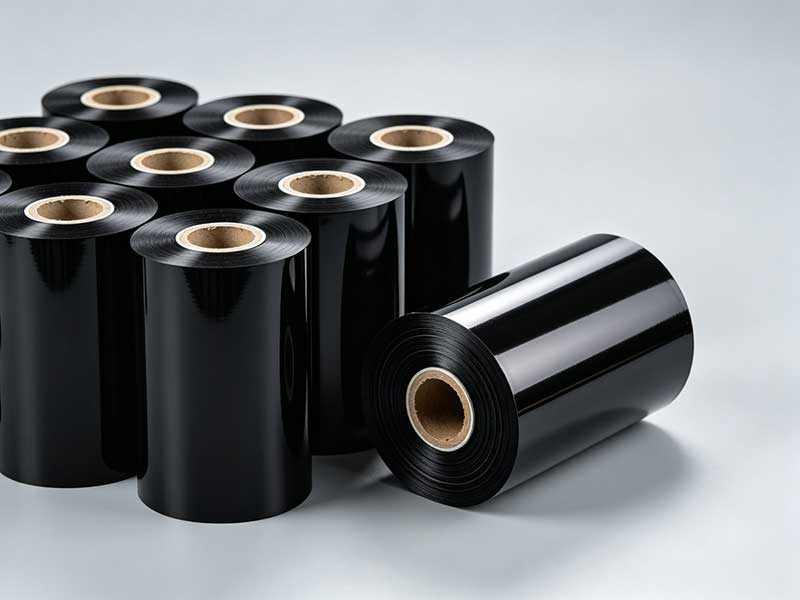
The essence of uneven end faces in ribbon slitting machines is an external manifestation of subtle imbalances between tension, parallelism, correction, and tool condition.
05. October, 2026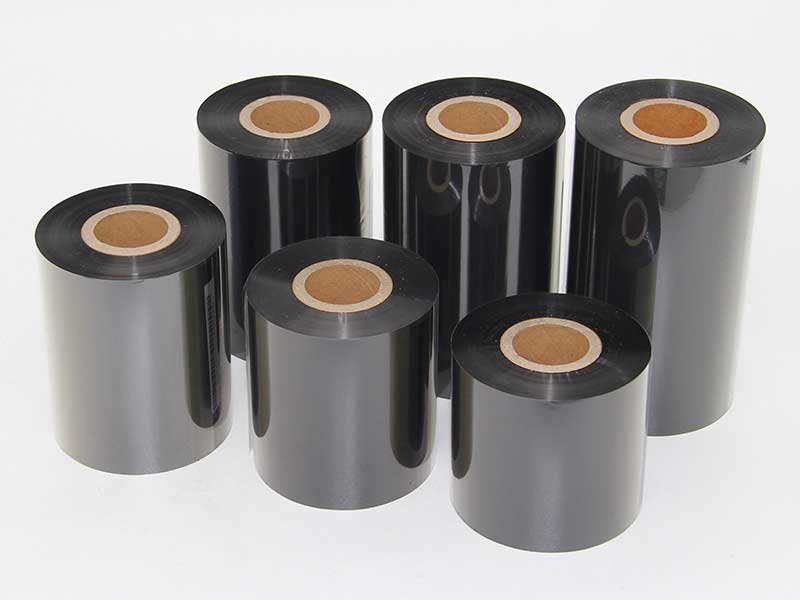
To solve this problem, a systematic inspection is needed from four dimensions: tension control, mechanical precision, auxiliary systems, and operating standards.
05. October, 2026The first watershed in choosing a model isn't speed or brand, but rather — which type of ribbon do you mainly cut?
23. September, 2026When asking suppliers the following seven questions, the quality of the answers is far more valuable than the numbers on the parameter table.
21. September, 2026
This guide explains what buyers need to know about each parameter—not just the numbers, but the practical implications for production quality, material compatibility, and total cost of ownership.
18. September, 2026


 English
 Deutsch
 Français
 Español
 Português
 日本語
日本語 русский
 한국어
한국어 عربي
عربي ภาษาไทย
 Tiếng Việt
 Italiano