
In the printing and packaging industry, the hot stamping process has always been a key means to enhance the added value of products and achieve high-end visual performance. Whether it's a brand logo on a luxury packaging box, a delicate texture on tobacco and alcohol packaging, or a foil stamping title on a book cover, foil stamping is the soul material that achieves these effects.
However, with the intensification of market competition and consumers' ultimate pursuit of "personalization", packaging design is no longer limited to traditional standard sizes. The demand for narrow, extra-wide, special-shaped, and even special materials for hot stamping emerges one after another. When standardized slitting equipment cannot meet these "non-standard" needs, customized hot stamping foil slitting machines have become the key to determining the production efficiency and market competitiveness of printing and packaging enterprises.
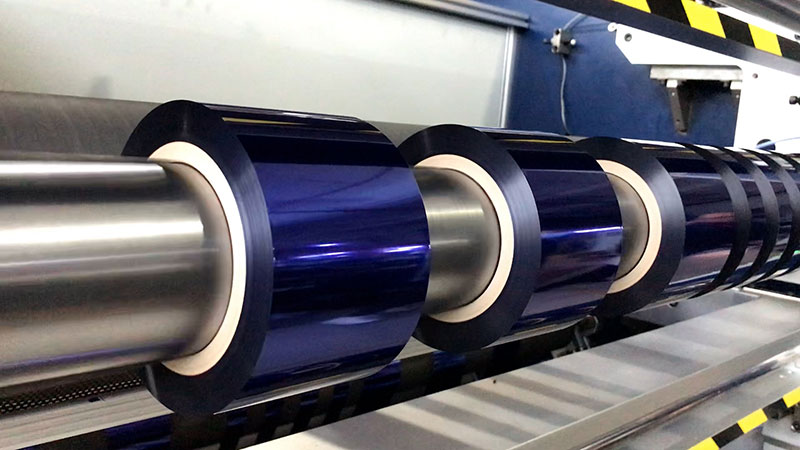
1. Industry pain points: When standard equipment encounters the "non-standard" era
Traditional hot stamping foil slitting machines can usually only handle mother rolls with fixed widths (such as common 530mm, 640mm) and cut them into finished rolls of uniform specifications. However, in actual production, printing enterprises often face the following difficulties:
1. Serious waste of special-shaped specifications: Due to the special size limitations of hot stamping plates or automatic hot stamping machines, companies often require foil rolls with widths of 12mm, 17mm, or even non-integer sizes. Due to the fixed position of the tool holder or insufficient tension control, the standard slitting machine is very prone to "deviation" or "uneven end face" when slitting such narrow strips, resulting in a material loss rate of up to 10%-15%.
2. Poor adaptability of special substrates: With the improvement of environmental protection requirements, more and more customers are starting to use degradable hot stamping foil, cold hot stamping foil, or extremely thin films (such as PET 12μm substrates). When slitting such materials, ordinary slitting machines can easily cause wrinkles and fractures on the foil surface due to excessive tension fluctuations, which seriously affects the yield rate.
3. Low degree of automation and time-consuming order change: In the face of small batches and multiple batches of orders, the time for traditional equipment to change tools and adjust regulations is often longer than the actual production time, which seriously restricts the flexible manufacturing ability of enterprises.
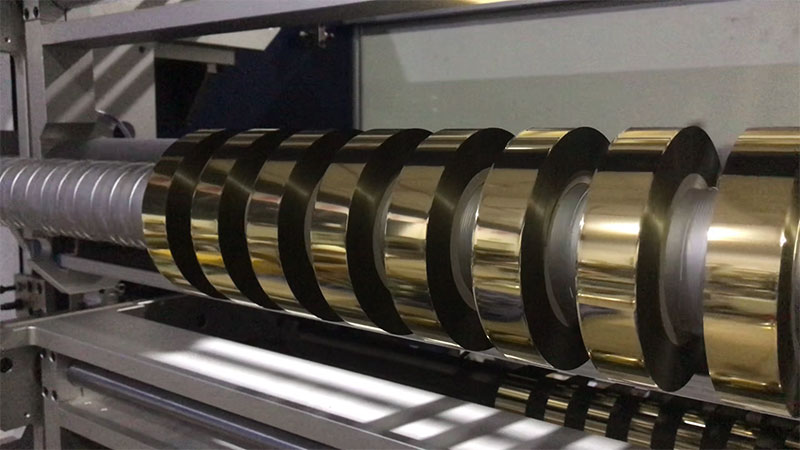
2. Customized design: from "general" to "scenario-based"
In order to solve the above pain points, the design concept of customized hot stamping foil slitting machine is no longer limited to simple cutting, but goes deep into the customer's production scenario to carry out "tailor-made" non-standard design. This customization is mainly reflected in the following four dimensions:
1. Modular customization of mechanical structures
For special width needs, customized equipment breaks the traditional fixed wall plate structure. For example, for customers who need to slit more than 800mm for large-format luxury packaging foils, equipment manufacturers will specially widen the span of the unwinding and rewinding shafts, and use heavy-duty cast iron wall plates to ensure stability under high-speed operation. For customers who need to slitter extremely narrow strips (width less than 5mm) for fine label printing, special "micro-pitch" tool holders and independent slip shaft winding structures are customized to ensure that each narrow strip can obtain independent tension control to avoid slippage or sticking.
2. Customization of precision tension control system
The thickness of hot stamping foil is usually between 12 microns and 32 microns, and it is highly susceptible to tension. Customized slitting machines are usually equipped with a fully automatic closed-loop tension control system. Depending on the material properties provided by the customer, such as elongation, temperature resistance, engineers will customize PID (proportional-integral-differential) control algorithms or even segmental tension control. For example, when slitting "holographic hot stamping foil" with poor temperature resistance, the equipment needs to customize large-diameter, low-friction guide rollers, and drive them directly through servo motors to eliminate static electricity and heat generated by mechanical friction and prevent damage to the optical effect.
3. Customization of tool holder and waste edge treatment system
Standard equipment often adopts a fixed circular knife slitting mechanism. In the customized solution, the "automatic tool holder positioning system" can be configured for the need for frequent specification changes. The operator only needs to enter the width of the finished product on the touch screen, and the servo motor-driven tool holder will automatically move to the specified position, reducing the order change time from the original 40 minutes to less than 5 minutes.
In addition, for the recycling needs of high-value hot stamping foil, the customized machine can be equipped with a high-precision waste edge automatic waste suction device. The device adjusts the suction power through frequency conversion, which can accurately suck away the 2mm extremely narrow edge material generated by slitting and wind it separately, so as to realize the secondary utilization of waste materials and save considerable raw material costs for enterprises.
4. Full automation and digital customization
In the context of Industry 4.0, customization has extended to the digital level. For the needs of large printing groups, the slitting machine can be customized to develop MES (Manufacturing Execution System) docking interfaces. It realizes the functions of scanning code feeding, automatic calling of slitting recipes, real-time upload of production data, and remote fault diagnosis. This makes the equipment no longer an isolated processing unit, but an efficient node in the smart factory.
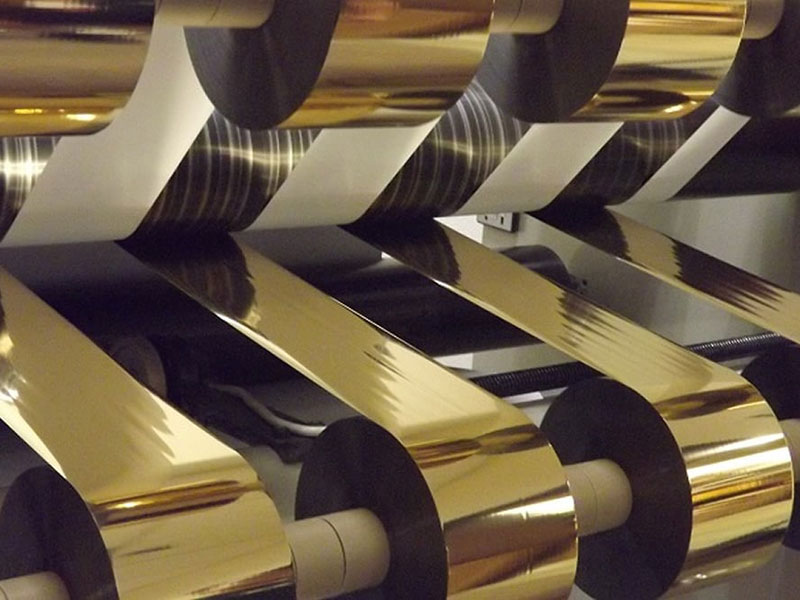
3. The business value brought by customization
Choosing a customized hot stamping foil slitting machine, for printing and packaging enterprises, is not just to buy a piece of equipment, but to optimize and upgrade productivity:
• Reduced material loss: With precise tension control and perfect face neatness, the material loss rate can be reduced by more than 50%. For imported hot stamping foil with a unit price of hundreds of yuan per square meter, this item can recover the cost of equipment customization within one year.
• Improve the ability to receive orders: With the ability to handle "narrow, short, and different" specifications, enterprises can undertake high-profit non-standard orders that large factories are unwilling to accept and small factories cannot do, so as to avoid homogeneous price wars and open up new profit growth points.
• Ensure brand reputation: In hot stamping processing, if there are burrs or minor scratches on the slitting end, it will cause "sand holes" or "defects" during hot stamping. The customized equipment ensures the edge finish of the finished foil through high-precision guide rollers and tools, thereby ensuring the yield of the final print and maintaining the brand image.
4. Conclusion
With the deep transformation of the printing and packaging industry to "personalization, small batch and high-end", the "barrel effect" of hot stamping foil slitting is becoming increasingly prominent. An excellent customized hot stamping foil slitting machine is not only a simple machining equipment, but also a comprehensive solution that integrates precision mechanical design, tension control algorithms, and automation software.
For forward-thinking printing and packaging companies, investing in customized slitting equipment is essentially investing in the ultimate utilization of raw materials and flexible production capacity to cope with market changes. When standard equipment becomes a bottleneck in development, customization may be the best key to open the road to differentiated competition.
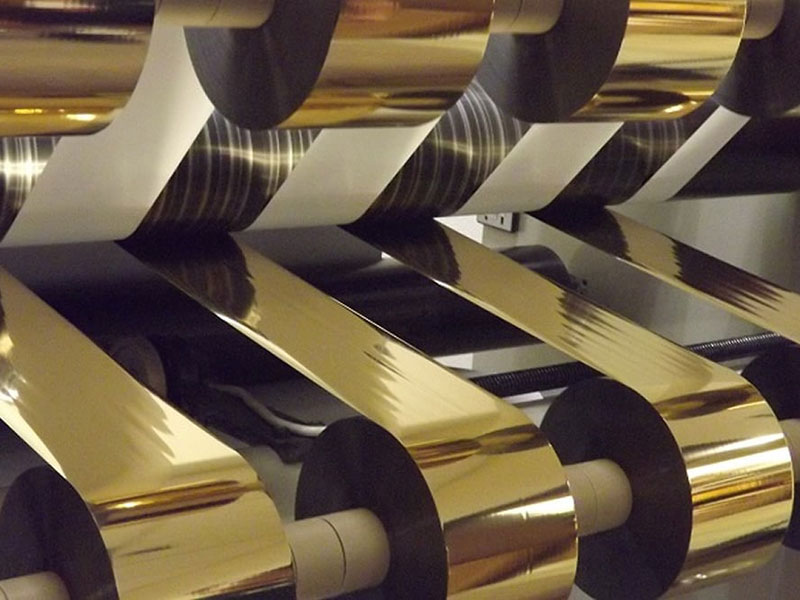
A mature automated system needs to form a closed loop simultaneously across four dimensions: correction, tension, cutting, and data management.
21. October, 2026
The value of customized slitting solutions lies in turning "cutting accurately, changing quickly, and no waste" from a slogan into a quantifiable production indicator.
21. October, 2026This article focuses on the two subsystems of unwinding and rewinding, explaining their functional composition, control logic, and key points of common adjustments.
21. October, 2026It is specifically designed to cut the wide master roll hot stamping foil into different narrow finished rolls according to process requirements, and is used in conjunction with hot stamping machines.
16. October, 2026A device with stable slitting accuracy and precise tension control is the fundamental link for ensuring hot stamping yield and material utilization.
16. October, 2026


 English
 Deutsch
 Français
 Español
 Português
 日本語
日本語 русский
 한국어
한국어 عربي
عربي ภาษาไทย
 Tiếng Việt
 Italiano