
Introduction
The slitting of solar film (thermal insulation film, automotive film, construction film) is a key link in the production process, and its precision directly determines the quality of the finished product. However, slitting machines are high-speed rotating equipment, integrating sharp circular knives, pneumatic systems, hydraulic systems, and electrical control systems, and there are potential risks such as mechanical injury, electric shock, and fire during operation. In order to ensure the personal safety of operators, improve equipment utilization rate and product quality, this safety operation procedure and protection points are specially formulated.
Chapter 1 Preparation before employment
1. Personnel qualifications and dress
• Certified work: Operators must undergo professional training, be familiar with the structure, performance and operation methods of the equipment, and can operate independently after passing the assessment. Unauthorized personnel are strictly prohibited from operating the equipment.
• Labor protective equipment: Work clothes must be worn according to regulations, and the cuffs must be tied tightly. It is strictly forbidden to wear gloves (to prevent gloves from getting caught in the roller), long hair must be coiled into the work cap, and hanging accessories such as necklaces and watches are not allowed.
2. Equipment spot inspection
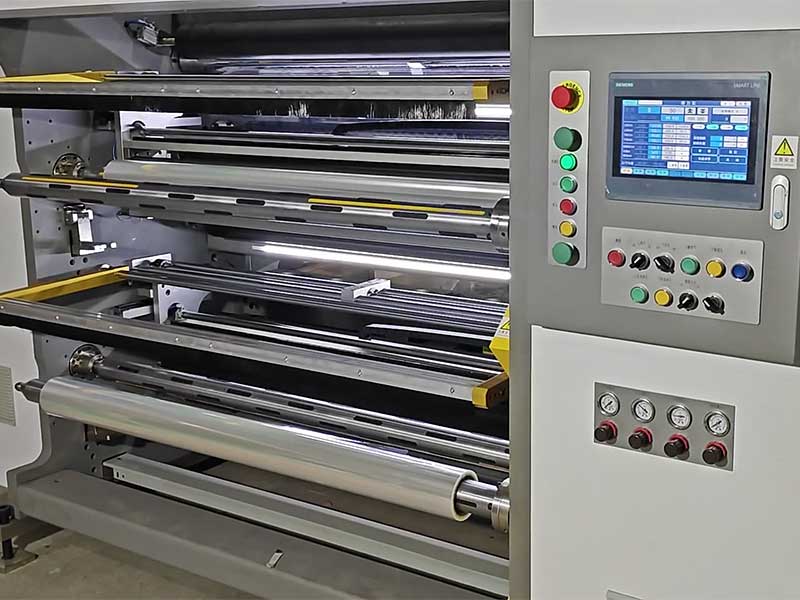
• Before starting the machine, check whether there are any obstacles around the device and confirm that the emergency stop button (emergency stop switch) is reset effectively.
• Check that all protective shields and safety doors are intact and closed. It is strictly forbidden to operate the equipment without a protective cover.
• Check whether there is air leakage in the air circuit system and whether the air pressure is stable (usually required at 0.6-0.8MPa), check whether there is a leak in the hydraulic system, and check whether the blade is chipped or loose.
Chapter 2 Operation and Operation Procedures
1. Feeding and film threading
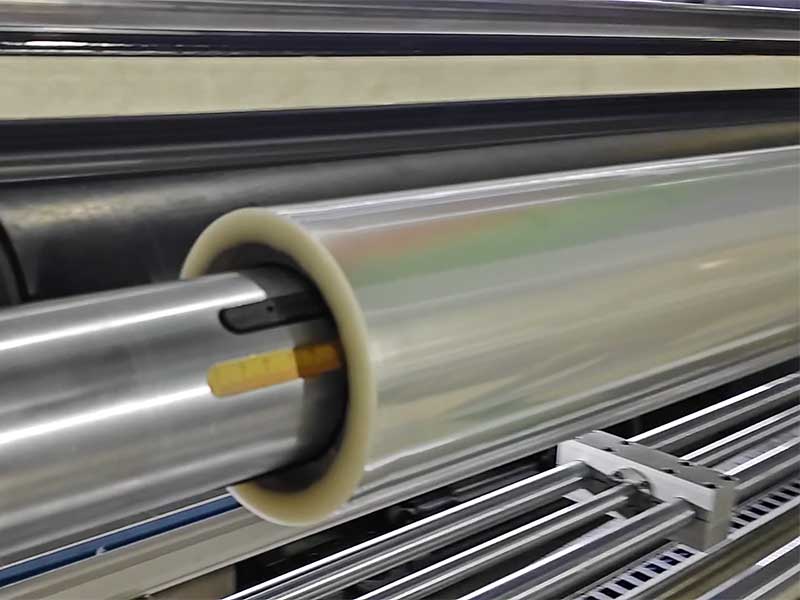
• Loading and unloading film rolls: When using a truck or forklift to transport film rolls, they must be lifted lightly, and overloading is strictly prohibited. After confirming that the chuck or expansion shaft is firmly clamped, the spreader can be released.
• Membrane Penetration Operation: The device must be in a "stopped" and "locked" state when threading the membrane. It is strictly forbidden to approach the pinch point of the running traction roller or winding roller.
• Drop Tool Operation: When adjusting the slitting knife (round knife or razor), it is essential to ensure that the equipment is jogging or stopping at low speed. The blade must be installed firmly, and after setting the slitting width, confirm that there is no abnormal resistance on the knife shaft.
2. Operational monitoring
• Idle test machine: Before the formal slitting, it should be idled for 1-2 minutes to confirm that the equipment has no abnormal vibration or abnormal noise, and confirm that the functions such as emergency stop, jogging, and speed regulation are sensitive and reliable.
• Speed control: The slitting speed should follow the principle of "slow to fast". It is strictly forbidden to forcibly adjust the position of the tool or clean the film chips in the high-speed operation state.
• Tension control: pay close attention to the unwinding and rewinding tension systems. Excessive tension can easily lead to stretching and deformation or even breakage of the film, and too little tension will lead to uneven reeling. When the film is broken, the "stop" or "emergency stop" button should be pressed immediately, and the equipment should be completely stationary before processing.
3. Exception handling
• When the equipment has abnormal noise, odor, smoke or serious deviation of the film roll, the emergency stop button must be pressed immediately, the power supply must be cut off, and the warning sign "under maintenance, no closing" must be hung to notify the maintenance personnel to deal with it.
• It is strictly forbidden to use hands or tools to clean the residual glue, broken film or wrapping objects on the roller during the operation of the equipment.
Chapter 3 Key Protection Points
The reason why the solar film slitting machine is special is that its material has the characteristics of "thin, soft, and rubberized", and the protection focus should be on the following points:
1. Mechanical entanglement protection
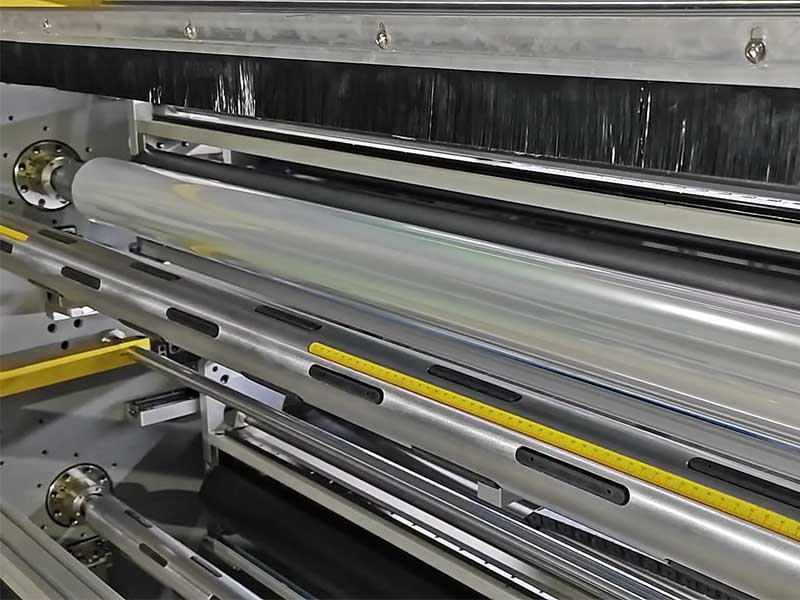
• Pinch Point Protection: The gap between the traction roller, press roller and take-up shaft is the most dangerous area. The equipment must be equipped with an infrared sensing or rope safety emergency stop. The operator must use the "safety lock" function when joining or cleaning to ensure that the equipment does not start accidentally.
• Knife protection: The slitting blade is extremely sharp. When replacing the blade, it is recommended to use a special tool, and the replaced waste blade must be placed in a special waste box, and it is strictly forbidden to discard it at will. When the round knife is running, it is strictly forbidden to touch the blade part.
2. Electrostatic protection and fire prevention
• Static electricity is easy to generate during high-speed slitting of solar films, which not only causes dust to be adsorbed on the film surface, but may also ignite volatile solvents (if there are residues) or cause electric shock.
• Measures: The equipment must be reliably grounded, and it is recommended to install an electrostatic elimination rod (ion air rod).
• Environment: Smoking is strictly prohibited in the working area, and good ventilation is maintained. Clean up waste film scraps in time to avoid accumulation and prevent friction and fire.
3. Electrical safety
• Keep the electric control cabinet closed and locked, and it is strictly forbidden to connect wires indiscriminately.
• In wet weather or when there is water on the ground, the operator should ensure that the hands are dry to prevent electric shock.
• When repairing electrical faults, the main power supply must be cut off, and the "power outage" system must be strictly enforced.
Chapter 4 Shutdown and Maintenance
1. Shutdown and close-up
• After the slitting is completed, the unwinding should be stopped first, and the rewinding reel can be unwinded after the rewinding shaft is completely stopped.
• Pay attention to the gentle release when unwinding to prevent the film roll from rolling down and injuring your feet.
• Turn off the main power supply and air supply of the equipment.
2. Cleaning and maintenance
• Wipe and clean the equipment must be completely stopped and powered off.
• When cleaning the residual glue and dust on the knife groove and rollers, use a rag or soft brush, and it is strictly forbidden to use compressed air to directly purge the electrical components and control panel to prevent dust from entering and causing a short circuit.
• Regularly add grease (lubricating oil) to the transmission chain and bearings, but it must be done in a shutdown state.
Chapter 5 Emergency Response
1. Mechanical injury: In the event of a involvement or crushing accident, the first person on site must immediately press the emergency stop button, reverse the equipment (if allowed) or dismantle the mechanical structure for rescue, and do not blindly pull and pull to prevent secondary injury. At the same time, call the emergency number.
2. Fire: In the event of a fire, immediately cut off the power supply and use the on-site dry powder fire extinguisher or carbon dioxide fire extinguisher to extinguish the fire (it is strictly forbidden to use water to extinguish electrical fires).
3. Chemical exposure: Some sun films may contain adhesives or coatings, so if they get into your eyes, rinse immediately with plenty of water for at least 15 minutes and seek medical attention.
Epilogue
Safety is the prerequisite for production efficiency. The operation of the solar film slitting machine not only tests the technology, but also the sense of responsibility. Every operator should keep in mind that "the machine does not stop, and the vigilance is not relaxed", strictly abide by the operating procedures, wear protective equipment correctly, and be proficient in emergency response measures. Only by integrating safety awareness into every operational detail can we ensure personal safety and achieve high-quality and efficient production.
High-precision slitting machines protect film performance within seconds through precise control of blade, tension, and positioning in an integrated manner.
25. August, 2026This process may seem simple, but in reality, it is a high-tech step integrating precision machinery, automatic control, and materials science.
17. August, 2026This article will provide an in-depth analysis of the two core pillars of high-precision solar film slitting machines: tension control and closed-loop correction.
06. July, 2026In other words, for every 100 rolls of finished film, 5 to 8 rolls of value silently disappear during the slitting process.
01. July, 2026The root cause of the problem is often the same: after static charge accumulates, there is no smooth discharge channel.
23. June, 2026


 English
 Deutsch
 Français
 Español
 Português
 日本語
日本語 русский
 한국어
한국어 عربي
عربي ภาษาไทย
 Tiếng Việt
 Italiano