
In the ribbon slitting process, the choice of tool type directly affects product quality and production efficiency. Each round knife and square knife has its own "signature skill"—choosing the right one leads to twice the result with half the effort; If you choose the wrong choice, issues like burrs, toner peeling, or even broken strips may follow. Below, we'll help you figure out the math from the principles, applicable scenarios, to specific selection tips.
Two blade types, two completely different "cutting methods"
Cutting with a square knife can be understood as a "razor-style" cut. The blade is fixed to the rack like a razor; when the material moves, the blade drops and cuts the material longitudinally. There are mainly two methods for slitting square knives: one is grooving and slitting, where the material runs on the groove roller, the blade falls into the groove and cuts, resulting in a certain envelope of the material, which is less likely to drift and results in high slitting efficiency; The other is suspended slitting, where the material is cut open while suspended between two rollers, making tool setting easier but slightly less precise.
Circular blade slitting is more like a "scissor" cut, separating materials through the shear action of the upper and lower disc blades. Common forms include upper and lower disc blade shearing and circular blade extrusion slitting. In non-tangential circular cutter slitting, the material has a certain angle with the lower disc cutter, resulting in higher slitting precision but relatively more troublesome tool adjustment.
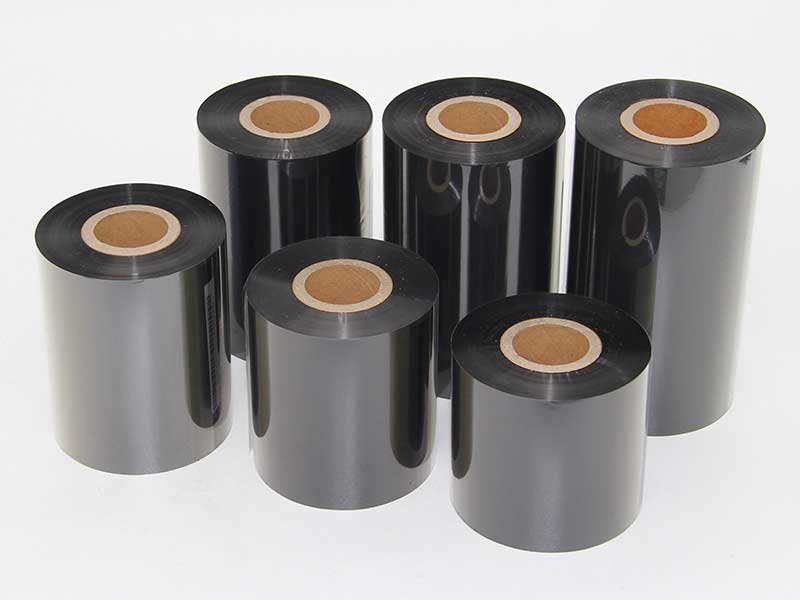
Mark by thickness: 100μm is a key dividing line
In ribbon slitting, the choice of tool type is closely related to material thickness, with the industry typically using 100μm (microns) as the reference line:
Square knives are the "specialists" of thin ribbons. Square knife slitting is mainly suitable for slitting thinner plastic films and composite films. For thin ribbons with thicknesses below 70μm, it is recommended to use double-sided blades, which are relatively flexible and ensure smooth film edges; For materials with a thickness between 70-130μm and strong rigidity, it is recommended to use single-sided square knives, which are less likely to shift during high-speed operation and ensure slitting quality.
Round knives are the "main force" for thick materials and paper. When the ribbon film thickness exceeds 100μm, it is recommended to prioritize using a circular blade for slitting. Round knives are also the main methods for slitting thick film, composite thick film, paper, and other materials.
Capacity and precision: fast round knives, precise square knives
The advantage of the Yuan Dao's strength lies in its "efficiency." The circular blade cuts quickly, making it suitable for mass production. Especially when slicing thicker materials, the durability and speed advantages of circular knives are evident. Some circular knives use cemented carbide or diamond coatings, with a blade angle precision of 0.1°, extending service life by three times.
The advantage of square knives lies in their "precision." For thin ribbons, square cutter slitting achieves higher slitting accuracy and better edge uniformity. The slitting width error of ribbon slitting machines usually needs to be controlled within ±0.1mm, with high-precision models reaching up to ±0.05mm. Square knives can control cut quality more precisely when handling thin materials, reducing burrs.

Quick Overview of Application Scenarios: How to Choose in One Table
| Contrast dimensions | Cut it with a square knife | Cut with a round knife |
| Optimal thickness | Thin films, especially those below 70μm | Thick film type, above 100μm |
| Core advantages | High precision, with smooth edges of thin materials | Fast speed, durable, suitable for large volumes |
| Typical scene | Thin wax-based and mixed-base ribbons with precision slitting | Thick resin-based ribbons, composite films, and paper-backed ribbons |
| Ease of operation | Suspended tool setting is convenient, while grooving tool setting is more troublesome | Tool adjustment is relatively complex, especially for non-tangential types |

Purchase advice
1. Mainly based on material thickness: This is the most important criterion for selection. For long-term thin ribbons, square knives are preferred; Often made with thick film or ribbons with base paper, round knives are more suitable.
2. Consider production requirements: For large standard orders, the efficiency advantage of circular blades is obvious; Small batches, high precision, and multi-variety orders—the precision and ease of tool adjustment for square knives stand out even more.
3. Pay attention to blade material: Whether square or round, blade material directly affects durability. Blades made of cemented carbide or with nano coatings can reduce friction, prevent material adhesion, and extend service life.
4. Request sample testing: The safest method is to have the supplier test cut the ribbon material you actually produce on the machine, observing whether the slitting edges are neat, if there is carbon powder shedding, and whether dimensional accuracy meets standards.
There is no absolute superiority or inferiority between round knives and square knives; the key is to match the material properties and production requirements. Once you understand these two points, making the choice becomes much easier.
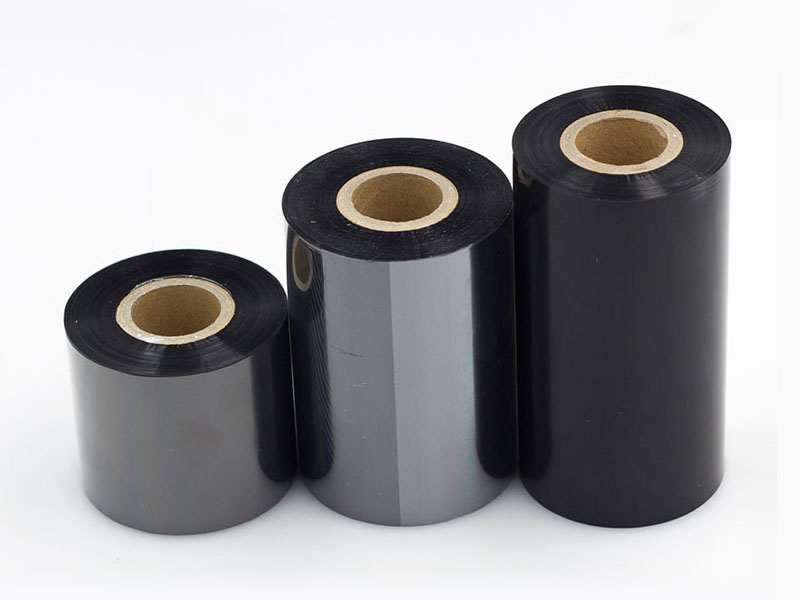
The coating formula, base film characteristics, and physical specifications of the ribbon directly affect the suitability and yield of the slitting machine.
09. October, 2026
The core function of a ribbon slitting machine revolves around three dimensions: "precise cutting, stable rolling, and fast running."
09. October, 2026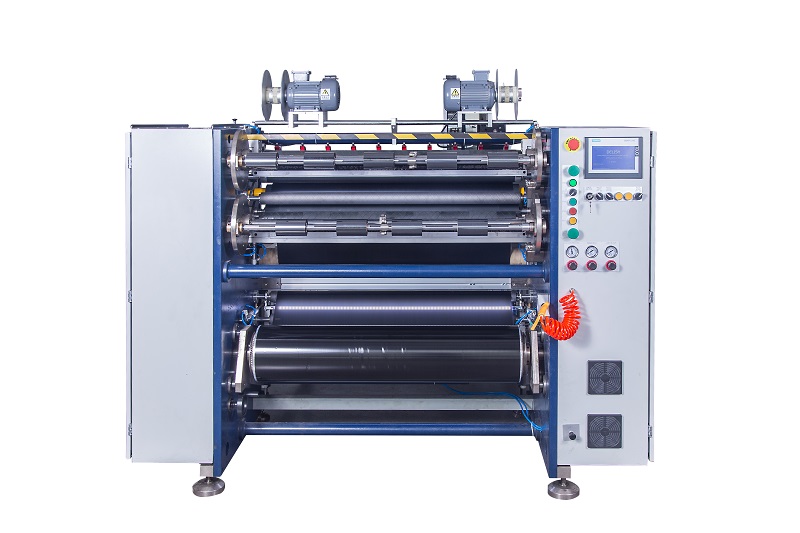
This article starts from actual usage scenarios to outline a clear selection approach.
09. October, 2026The essence of uneven end faces in ribbon slitting machines is an external manifestation of subtle imbalances between tension, parallelism, correction, and tool condition.
05. October, 2026To solve this problem, a systematic inspection is needed from four dimensions: tension control, mechanical precision, auxiliary systems, and operating standards.
05. October, 2026


 English
 Deutsch
 Français
 Español
 Português
 日本語
日本語 русский
 한국어
한국어 عربي
عربي ภาษาไทย
 Tiếng Việt
 Italiano