
Under the dual pressures of the "dual carbon" goals and increasingly thin manufacturing profits, the energy consumption issue of film slitting machines—the core equipment for downstream processes of BOPP and lithium battery separators—can no longer be ignored. Traditional slitting machines often suffer from chronic issues such as "a big horse pulling a small cart" and energy consumption during idling runs, and extensive energy management urgently needs reform. Based on current trends in green manufacturing technology, here are four practical energy-saving retrofit solutions proven in practice.
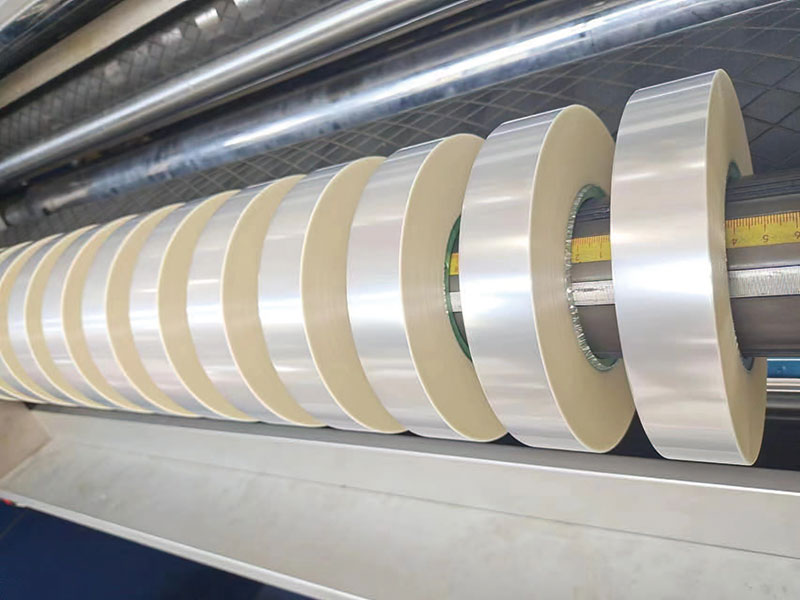
Option 1: Drive system upgrade—replacing traditional drives with servo and frequency conversion technology
Traditional slitting machines often use ordinary asynchronous motors combined with magnetic powder clutches or braking resistors to control tension. This method is extremely inefficient at low speeds and under light load conditions, and the energy generated by braking is mostly lost as heat.
The key point of the upgrade was the introduction of permanent magnet synchronous motors (PMSM) with IE4/IE5 energy efficiency ratings and intelligent servo drive systems. Permanent magnet synchronous motors feature high efficiency and large torque at low speeds. Under conditions of frequent start-stop and speed changes of slitting machines, direct energy savings can reach 10%-20%. A further upgrade is the adoption of a servo system with an energy feedback unit—feeding the regenerated electrical energy generated by the motor during unwinding braking and rewinding tension control back to the grid for use by other workshop equipment, which is extremely energy-efficient in high-speed, high-tension environments.
In addition, the conversion of variable frequency drives is the foundation for eliminating "no-load energy consumption." By installing a vector frequency converter at the front end of the main motor, "on-demand power supply" is achieved: when the shear speed drops from 600m/min to 300m/min, according to the cubic power reduction law for fan and pump loads, the theoretical shaft power is only 1/8 of the original, with energy savings reaching 40%-70%.
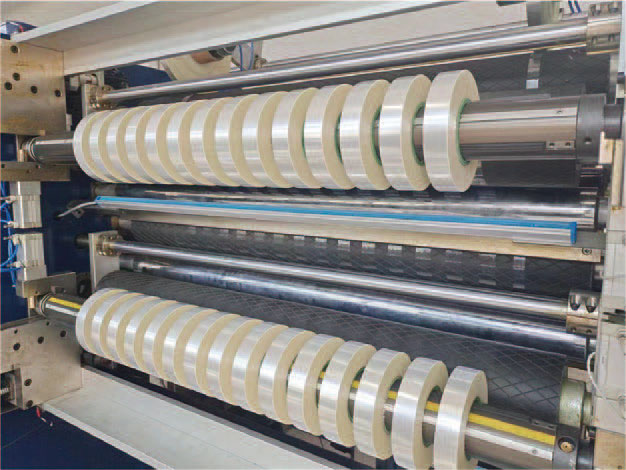
Option 2: Process Control Optimization — Reduce scrap loss through precise tension and automatic rerolling
If drive system upgrades are about "saving costs," then process optimization achieves "indirect energy savings" by reducing hidden waste. During the slitting stage, film stretching, breakage, wrinkles, and frequent shutdowns caused by tension fluctuations are the largest sources of energy waste.
Using a fully automatic closed-loop tension control system (float roller type + tension sensor) combined with a high-response servo motor, it ensures extremely stable tension throughout the entire process from start to deceleration, minimizing the defect rate. Additionally, dual-station automatic coil changing and pre-drive feeding technology are installed to achieve continuous production without shutdown, avoiding the large current shocks and energy losses caused by frequent start-stop main motors.
Intelligent slitting parameter adaptation is also a key component. The equipment can automatically optimize slitting speed and tool compression based on film material (such as differences between BOPP and aluminum foil) to avoid excessive ineffective consumption. High-precision control can keep slitting errors within ±0.1mm, significantly improving material utilization and reducing waste edges.
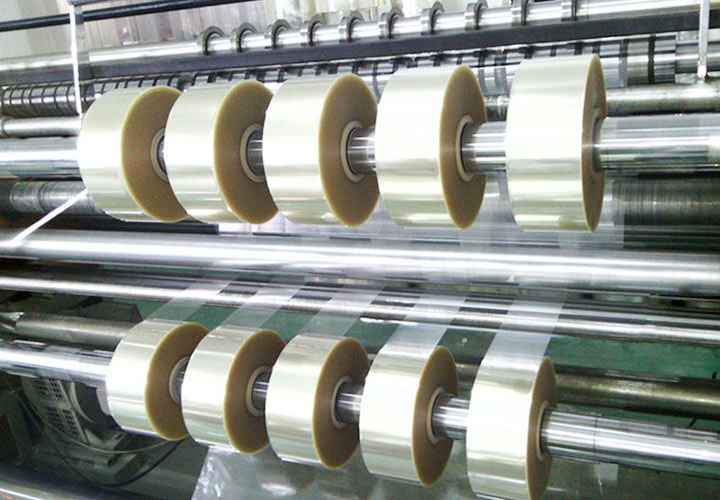
Solution 3: No-load shutdown and standby logic—eliminate "invisible" waste
In actual production, after workers finish slitting a roll of material, they need to unload, change paper cores, and thread films. During this "auxiliary time," motors and fans often continue to run at full idle. According to statistics, the no-load time for small and medium-sized slitting machines can reach 30%-50%.
This solution requires minimal investment for renovation and offers a very high return on investment. By installing sensors on the control panel or at the reel, the PLC system automatically detects the "no-load status" and executes a stepwise shutdown logic: during short pauses, the inverter lowers to 5-10Hz and crawls slowly to enable a quick restart; When the no-load exceeds the set threshold (e.g., 2 minutes), the system automatically cuts off the main motor frequency converter activation signal and the power to the hydraulic pump and fan, retaining only the controller power.
This collaborative control eliminates habitual waste caused by operating gaps. Taking an 11kW main motor slitting machine as an example, if the machine is empty for 1 hour per day, the motor alone can save over 3,300 kWh annually. With auxiliary shutdowns, annual electricity savings can exceed 5,000 kWh.
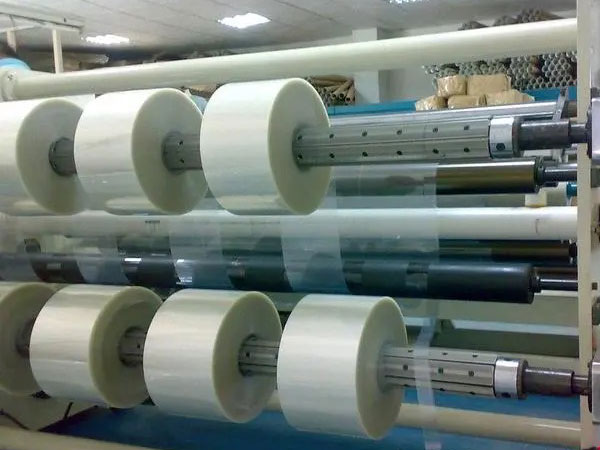
Solution 4: Lightweight structure and thermal management—comprehensive consumption reduction in details
In addition to electrical and logic upgrades, optimizing physical structures can also bring significant improvements in energy efficiency.
On one hand, lightweight structural design reduces the inertia of moving parts. While ensuring rigidity, topology optimization of the frame and rollers or the use of high-strength aluminum alloy and carbon fiber components can reduce rotational mass. This means less acceleration energy is required to drive them, and the load on the servo motor is also reduced. Combined with low-friction resistance components (such as high-performance sealed bearings and ceramic cladding rollers), transmission losses during high-speed operation can be further reduced.
On the other hand, thermal energy management and waste recycling are also included in energy-saving considerations. For tool friction heat generated by high-speed slitting, high-efficiency heat exchangers are used for management; For offcuts, some new equipment integrates online recycling devices to instantly crush and melt slitted offcuts into pellets, achieving closed-loop recycling at the production line level. This not only saves raw material costs but also reduces energy consumption in waste processing.
In the low-carbon era, the energy-saving transformation of film slitting machines has evolved from a single component upgrade to a "mechatronic-soft-integrated" system engineering. Among these four solutions, the investment payback period for inverter and no-load downtime upgrades is usually only 6-8 months, making it the fastest entry point for enterprises to achieve cost reduction, efficiency improvement, and green transformation.
This article outlines a clear selection approach from four dimensions: material adaptation, core technical parameters, efficiency and cost, and supplier selection.
09. September, 2026Balancing speed and precision in film slitting machines is essentially a test of "control capability."
02. September, 2026This article will delve into the current application status, core technologies, and development trends of this equipment in the new energy sector.
28. August, 2026the film slitting machine is the core equipment for slicing wide, large rolls into narrow rolls of specific specifications.
26. August, 2026Tension control technology for thin film slitting machines involves interdisciplinary integration of control theory, mechanical design, and material mechanics.
26. August, 2026


 English
 Deutsch
 Français
 Español
 Português
 日本語
日本語 русский
 한국어
한국어 عربي
عربي ภาษาไทย
 Tiếng Việt
 Italiano