
In the film processing industry, slitting machines are the core equipment connecting production and delivery. Choose the right one: high efficiency, low loss, smooth delivery; If you choose the wrong choice, film breakage, wrinkles, and dimensional misalignment follow one after another, causing complaints from the production department. Faced with the dazzling array of models on the market, how can you clear away the spec fog and make wise decisions? In fact, as long as you grasp the following five key points, your selection approach will become much clearer.
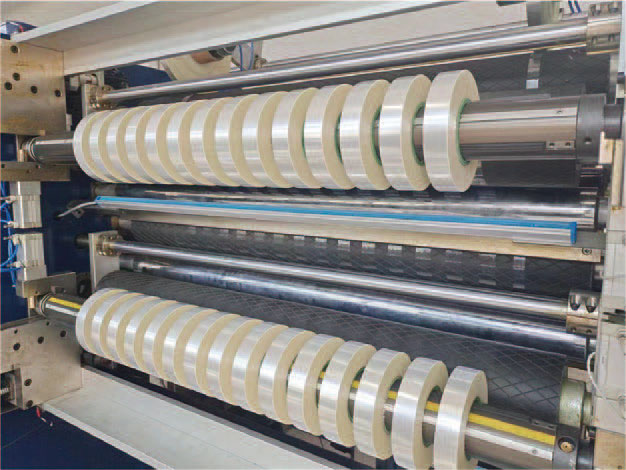
1. Check "material compatibility": Avoid "acclimatization issues" at the source
Different film materials have vastly different requirements for slitting machines. The first step in choosing a model is not to look at the equipment specifications, but to first understand your own material "temperament."
• Material characteristics:P rigid films such as ET and BOPP require high-rigidity tools and strong winding; Soft films such as PE and CPP require extremely high sensitivity for tension control, and even slight mishandling can cause stretching and deformation. Special attention must be paid to anti-static design for metallized films to prevent burrs.
• Thickness range: Ultra-thin films (such as 2μm capacitor films) require ultra-high-precision slitting, while thick films (such as 20μm or above) require a more robust winding system. For example, ordinary PET film slitting speeds of 200-400m/min can meet most production needs, eliminating the need to blindly pursue high speed.
• Industry scenarios: Mass production in the consumer electronics sector, with greater emphasis on cost-effectiveness and stability; In contrast, high value-added fields such as new energy and medical electronics have stringent requirements for precision and cleanliness, even requiring cleanroom designs and ultrasonic slitting.
Key Advice: Before selecting, be sure to clearly provide your material type, thickness range, width, and special requirements to the supplier. This is the foundation for equipment matching.
2. Look at "slitting precision": the lifeline of quality cannot tolerate any carelessness
Slitting precision directly determines the quality of the finished product. It is not a general concept, but is backed by multiple hard metrics.
• Width tolerance: This is the most intuitive indicator. The slice tolerance for ordinary capacitive films is ± 0.1mm, while high-frequency, high-voltage capacitors or optical film applications need to reach within ±0.02mm. High precision requirements usually require the use of laser width gauges or CCD online inspection systems.
• Hidden foundation—tool holder and correction:
◦ Tool holder rigidity: Insufficient tool holder rigidity can cause edge roughness, powder shedding, and a sharp reduction in blade life. High-quality tool holders are made of alloy steel through overall quenching + fine grinding, providing excellent rigidity; Inferior tool holders use ordinary cast iron, which is prone to deformation and loosening.
◦ Correction accuracy: The correction system ensures the straightness of the end face. Standard models have a correction accuracy of ±0.2~0.5mm, while high-end models can reach ±0.05mm or even higher. When selecting a model, be sure to ask: "Is the correction system digital?" What is the repeatability in millimeters? ”。
Core Recommendation: Sample cutting with material is the only standard for verifying accuracy. Don't just look at the numbers in the brochure; bring your most difficult materials to the site to verify the actual effect.
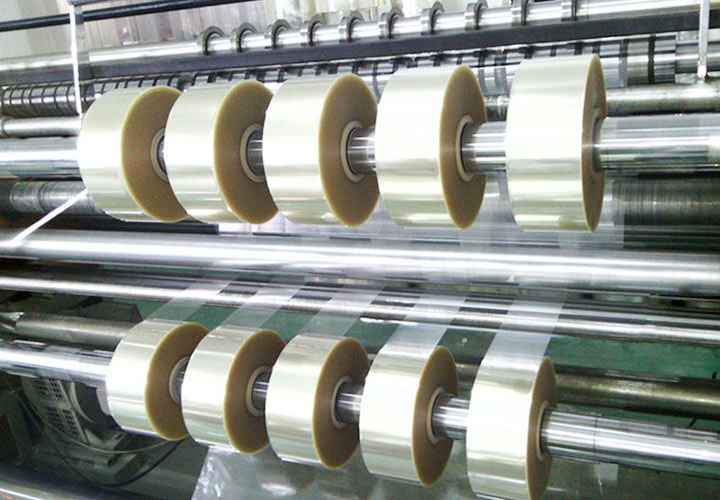
3. Examining "Tension Control": The "Brain" and "Soul" of the Slitting Machine
Tension control is the soul of slitting quality, directly affecting whether the winding is neat and whether the material is deformed. But the key is to figure out what tension control is for, rather than just listening to 'presence or absence' tension control.
• Control methods determine success or failure:
◦ Open-loop torque control: lowest cost, outputs according to set torque, cannot detect actual tension fluctuations caused by changes in coil diameter, not recommended for high-demand scenarios.
◦ Magnetic particle brake control: Acceptable in low-speed scenarios, but low accuracy, slow response, and severe heat generation.
◦ Closed-loop servo tension control: Real-time feedback from the tension sensor and dynamic adjustment by PLC, ensuring true constant tension. Mid- to high-end devices must come standard with this feature. High-end models even use full servo tension control, with independent roller retraction, release, and traction rollers driving for maximum precision.
• Winding method: Center winding is suitable for general scenarios, while surface winding better prevents deformation of soft films.
Core advice: Don't accept vague terms like "tension control." They asked whether it was an open-loop or closed-loop, whether it was equipped with a physical tension sensor, and required a live demonstration of tension response at different speeds.
4. Focus on "Production Efficiency": Balancing Current Needs and Long-term Development
Efficiency is reflected not only in slitting speed but also in the overall utilization rate and scalability of the equipment.
• Speed and capacity: Slitting speeds are typically between 50-800 meters per minute. It is necessary to distinguish between "maximum mechanical speed" and "stable production speed," with the latter being the actual output efficiency. Blindly pursuing top speed may lead to more quality issues.
• Winding and unwinding diameter: A larger winding diameter means large coils of raw material can be used, reducing changeover downtime; A larger winding diameter allows for larger rolls to be delivered to downstream customers, enhancing product competitiveness. When choosing, consider the factory's logistics capacity and equipment rigidity.
• Level of automation: Features such as automatic tool change, automatic deviation correction, and automatic receiving systems can greatly reduce auxiliary time, lowering reliance on skilled workers. If the order batch is small and order changes are frequent, quick settings like "one-click order change" will greatly improve efficiency.
Core recommendation: Choose models with speeds about 20% higher than current demand to reserve room for future expansion. At the same time, pay attention to whether the equipment has reserved interfaces for MES system integration to adapt to the trend of smart factories.
5. Look at "Comprehensive Cost": Calculate the long-term balance and avoid low-price traps
Only looking at the purchase price is the biggest misconception when choosing a model. A slitting machine with stable precision and low failure rate can often recoup the extra money within half a year by saving materials, labor, and rework.
• Entire Cycle Cost Analysis: When evaluating equipment, the following long-term costs should be considered:
◦ Energy consumption: Servo systems save 20%-30% more energy than traditional systems.
◦ Consumable parts cost: replacement frequency and price of blades, belts, etc.
◦ Ease of Maintenance: Modular design significantly reduces maintenance downtime.
◦ Yield Rate: High-precision equipment reduces defect rates by 2%-5%, which is easy to calculate in today's high material prices.
• Supplier Strength: Priority is given to suppliers with similar material slitting cases, those who can provide process commissioning services, and provide timely after-sales service. When signing the contract, be sure to clearly define the accuracy acceptance standards and after-sales service response time (e.g., arrival within 48 hours).
Core advice: calculate total cost of ownership over 3-5 years, not just compare purchase prices. Insist on trial cutting with materials, and the trial cutting report should be retained as the basis for acceptance.
Summary
The selection of film slitting machines essentially involves finding the optimal balance among material properties, precision requirements, production efficiency, control level, and long-term cost. By grasping these five key points, abandoning blind superstition about explicit parameters like "maximum width" and "maximum speed," and instead focusing on implicit indicators like tension control, correction accuracy, and tool post rigidity, and persisting in trial cutting with materials, you can avoid most selection pitfalls and find the equipment that truly meets your production needs.
This article outlines a clear selection approach from four dimensions: material adaptation, core technical parameters, efficiency and cost, and supplier selection.
09. September, 2026Balancing speed and precision in film slitting machines is essentially a test of "control capability."
02. September, 2026This article will delve into the current application status, core technologies, and development trends of this equipment in the new energy sector.
28. August, 2026the film slitting machine is the core equipment for slicing wide, large rolls into narrow rolls of specific specifications.
26. August, 2026Tension control technology for thin film slitting machines involves interdisciplinary integration of control theory, mechanical design, and material mechanics.
26. August, 2026


 English
 Deutsch
 Français
 Español
 Português
 日本語
日本語 русский
 한국어
한국어 عربي
عربي ภาษาไทย
 Tiếng Việt
 Italiano