
In the field of thin film processing, slitting is a key step that determines the quality of finished products. No matter how perfect the upstream film production is, once the winding end is uneven—commonly referred to in the industry as "misalignment," "telescope," or "tower wheel"—the entire roll product may be reduced from premium to defective, or even be scrapped outright. Uneven end surfaces not only affect aesthetics but also mean uneven tension distribution inside the film rolls, which may cause a series of chain problems such as inaccurate printing registration, wrinkling during lamination, and misplaced rolling.
Winding neatness is a systematic project, not something that can be solved by a single technology alone. Essentially, it results from the dynamic balance of tension, path control, mechanical precision, and material properties.
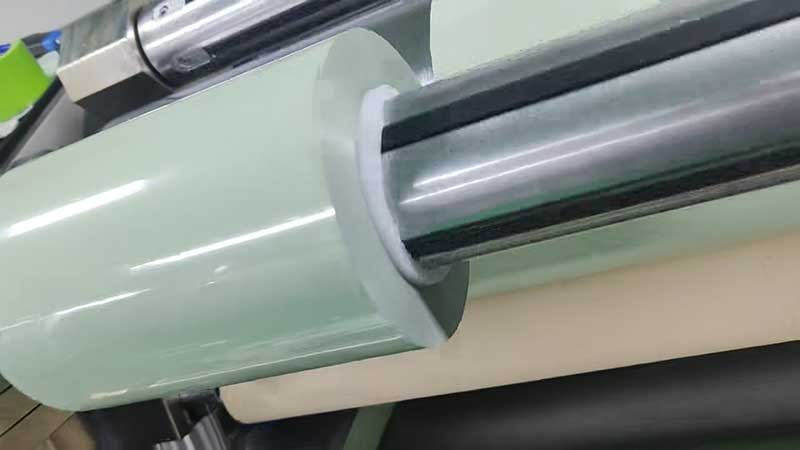
1. Tension Control: From "Constant Tension" to "Taper Decreasing Force"
Winding tension is the key switch affecting the neatness of the end face. If the tension is too low, the film roll becomes loose, interlayer air cannot be expelled, and the film may slide laterally; Excessive tension causes the film roll to be tightly tightened, resulting in uneven lateral stress, which can also cause misalignment of the end-face layers. More importantly, tension cannot remain unchanged.
As the winding diameter continues to increase and the film roll weight increases, maintaining constant tension causes the outer film to exert excessive pressure on the inner layer, causing the inner layer to wrinkle or slip laterally. The industry-recognized solution is taper tension control: as the coil diameter increases, the winding tension is gradually reduced, keeping the film roll in an ideal state of "tight inside and loose outside."
Modern high-speed slitting machines are commonly equipped with closed-loop tension control systems—using tension sensors to detect film tension in real time, and automatically adjusting the winding torque after PID calculation. More advanced equipment has achieved closed-loop tension zoned control, dividing the entire machine into unwinding, slitting, and rewinding zones, with each zone independently setting tension. Practical cases show that after segmental control (unwinding 90N, slitting zone 75N, rewinding area 65N) for 45μm CPP film, the alignment of the winding end increases from ±0.31mm to ±0.14mm.
Different film materials require very different tension curves: thicker and more stiff films (such as BOPP, PET) require higher winding tension and a flatter taper; Thinner and more stretchable films (such as PE, CPP) require lower tension, steeper taper, and slow acceleration and deceleration.
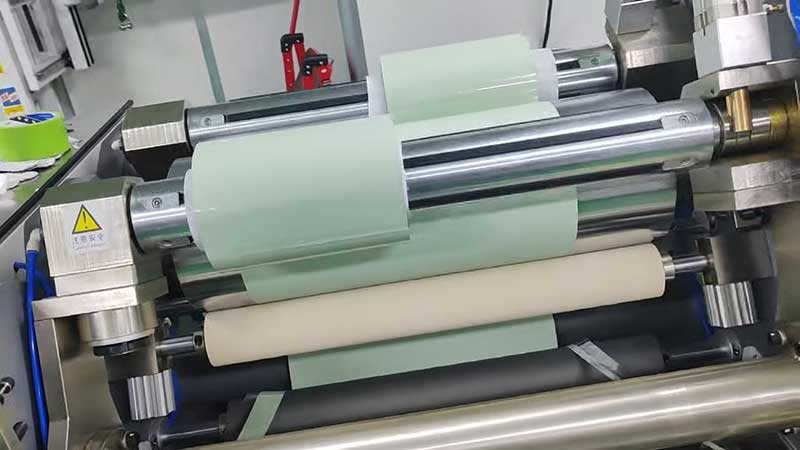
2. Correction System and Path Control: Making the Film "Walk a Straight Line"
The slitting machine relies on a photoelectric eye (or CCD camera) to identify tracking lines on the film to achieve correction. If the photoelectric eye is not properly adjusted or if the tracking line and background color difference is not obvious, the correction system will "go blind" or "hesitate," causing the film roll to naturally deviate. High-end models use LPC & EPC (Edge Follow) CCD static automatic correction systems, with correction accuracy reaching within ±1mm.
The cutter itself can also cause interference. When traditional cutters cut thick films or optical films, the contact between the blade edge and the film generates lateral component forces perpendicular to the direction of motion, causing the film's position to shift before entering the winding roll. To address this, modern slitting machines emphasize precise adjustment of the cutter system, with the upper and lower blade gaps as precise as 0.01mm, and each blade can be adjusted independently to minimize the impact of lateral forces.
Additionally, uneven film thickness (known in the industry as "reinforcement") is a tricky issue—when thicker sections stack during winding, local diameter increases and the film automatically "crawls" toward the larger diameter. This requires precise correction and tension control to alleviate this.
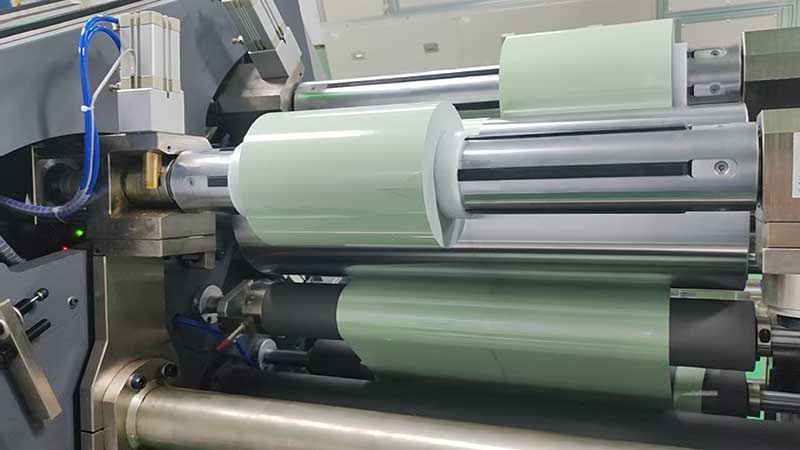
3. Rewinding Spindles and Rollers: The "Last Mile" of Mechanical Precision
The accuracy of the winding shaft directly affects the neatness of the end face. Insufficient concentricity or running out of the winding shaft can cause uneven force on both sides of the film roll, resulting in uneven wavy end faces. The air-expanding slip shaft is a standard feature of high-end slitting machines—each slip ring can slide independently, automatically compensating for linear speed differences caused by thickness tolerances between rolls, ensuring consistent tightness for each roll.
The function of the winding pressure roller is to extrude air between layers and cushion vibrations, preventing air from getting in and causing film slippage. High-end equipment uses a combination of back pressure roller + rubber pressing roller. The pressure of the pressure roller can be automatically adjusted according to changes in the winding diameter, and threaded or curved grooves are designed on the roller surface to effectively guide air between layers. Note that excessive pressure on the roller may damage the film, while too low prevents air from being expelled, so adjustments must be made according to material characteristics.
4. Static Elimination and Data Intelligence: The Invisible "Invisible Assistant"
During high-speed slitting, friction between the films generates static electricity, causing the layers to repel or stick together. During winding, the film becomes "unstable," making it difficult for the end faces to be neat. AC or pulse-type static elimination rods are installed in the slitting area, combined with ion air nozzles, which can neutralize static electricity on the film surface in real time, eliminating this hidden interference.
By 2026, the technological frontier will enable digital twin models embedded in slitting machines, calculating the internal stress distribution of films in real time, predicting flash and warping risks 15-30 seconds in advance, and automatically performing "self-healing intervention" via differential rewinding reels. The improvement in slitting yield is precisely the result of the coordinated work of four major systems: tension, tools, correction, and data.
Conclusion
There is no one-size-fits-all "master key" to ensure the uniformity of high-speed film slitting machines when winding. It requires operators to understand material properties, set reasonable taper tension curves, ensure the correction system is sensitive and reliable, maintain the mechanical precision of the winding reel and rollers, and make good use of static elimination and intelligent control technologies. When these four dimensions work together, high-quality film rolls with neat ends and consistent tightness can transform from "accidental" to "inevitable."
This article outlines a clear selection approach from four dimensions: material adaptation, core technical parameters, efficiency and cost, and supplier selection.
09. September, 2026Balancing speed and precision in film slitting machines is essentially a test of "control capability."
02. September, 2026This article will delve into the current application status, core technologies, and development trends of this equipment in the new energy sector.
28. August, 2026the film slitting machine is the core equipment for slicing wide, large rolls into narrow rolls of specific specifications.
26. August, 2026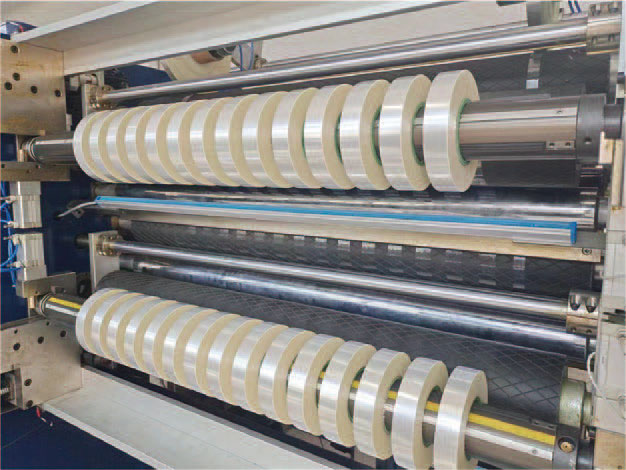
Tension control technology for thin film slitting machines involves interdisciplinary integration of control theory, mechanical design, and material mechanics.
26. August, 2026


 English
 Deutsch
 Français
 Español
 Português
 日本語
日本語 русский
 한국어
한국어 عربي
عربي ภาษาไทย
 Tiếng Việt
 Italiano