
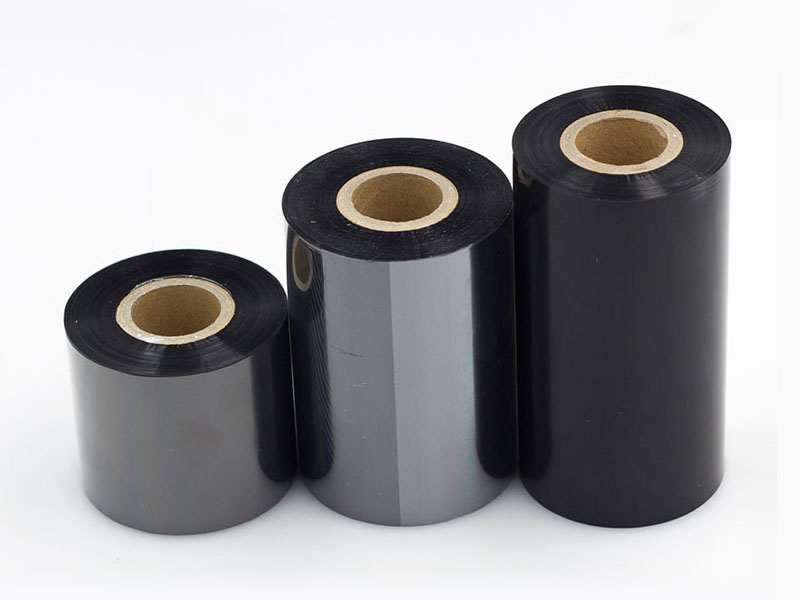
In the production of thermal transfer ribbons, the slitting process is the core link determining the quality and cost of the finished product. As a multilayer composite film (PET substrate + thermal coating) with a thickness of only 4-20 microns, the thin and soft characteristics of carbon ribbons make the slitting process prone to issues such as stretch deformation, edge burrs, and uneven rolling. Industry practice shows that companies using traditional slitting methods generally have a scrap rate between 5% and 8%. These seemingly minor defects are silently eroding profits. Through systematic technological innovation, high-precision ribbon slitting machines are significantly reducing the defect rate from 5%-8% to below 0.5%, achieving a leap from "experience-driven" to "digital precision control."
1. Where does the waste come from: Accurately locating the source of loss
Before exploring solutions, it is first necessary to clarify the main sources of the waste. Ribbon slitting scrap mainly focuses on three types of issues:
End face defects caused by misalignment are the most prominent issue in narrow-band slitting. When the slitting width is less than 10mm, the ribbon's lateral rigidity is extremely weak, making it highly sensitive to tension fluctuations and mechanical deviations. At best, it causes uneven edges and a 'tower-shaped' roll, while at worst, the entire roll is scrapped.
Burrs and edge damage directly affect the lifespan of downstream printheads. Factors such as blade wear, mismatch between slitting speed and material, and electrostatic adsorption of debris can all cause fibrous burrs at the ribbon edges, leading to tape jams, broken tapes, and even damage to expensive print heads during printing.
Waste of tailings has long been regarded as a necessary loss. When the slitting coil approaches the hollow paper tube, the diameter decreases, causing tension instability. In the last ten or even dozens of meters of carbon ribbon, quality cannot be guaranteed, so it must be discarded. Each of these losses is silently eroding profits—material costs often account for 60 to 70% of the total ribbon production cost.
2. Tension Control: The "Soul of Stability" for Precision
Tension is the most critical variable in ribbon slitting and the root cause of most precision issues. Carbon ribbons are extremely sensitive to tension: excessive tension causes the PET base film to stretch, causing the width to shrink after slitting, resulting in inaccurate dimensions, which in severe cases can lead to coating peeling; If the tension is too low, the material becomes loose and wrinkled, uneven rolling, and the cut edges become serpentine.
Traditional slitting machines mostly use magnetic powder clutches or mechanical friction discs to control tension, resulting in slow response and large fluctuations (up to ±10%), making it difficult to meet high-precision requirements. The key to achieving a precision breakthrough lies in three-stage independent closed-loop tension control:
• Unwinding zone: Tension decreases as the roll diameter decreases, preventing material stretching and deformation
• Slitting area: Maintain constant tension to ensure the cut is neat
• Rewinding Zone: Uses a "taper decreasing" strategy to automatically reduce tension as the diameter increases, preventing the outer layer from being overly tight and crushing the inner layer
Modern high-precision slitting machines use real-time feedback from tension sensors and dynamic adjustment by PLC using PID algorithms, controlling tension fluctuations within ±0.5N, compressing the fluctuation rate from ±10% to ±1%. In the tail material stage, when the coil diameter is less than the set value (e.g., 50mm), the "small roll diameter mode" is actively switched, reducing the tension from 100N at full coil to about 30N, effectively extending the effective slitting length and reducing the tailstock from an average of 15 meters to under 5 meters. Additionally, different ribbon materials require matching differentiated tension parameters: wax-based ribbons are suitable for low tension (3-5N), mixed ribbons require medium tension (5-8N), and resin-based ribbons require higher tension (8-12N).
3. Correction and Material Sorting: Eliminate "serpentine" deviations
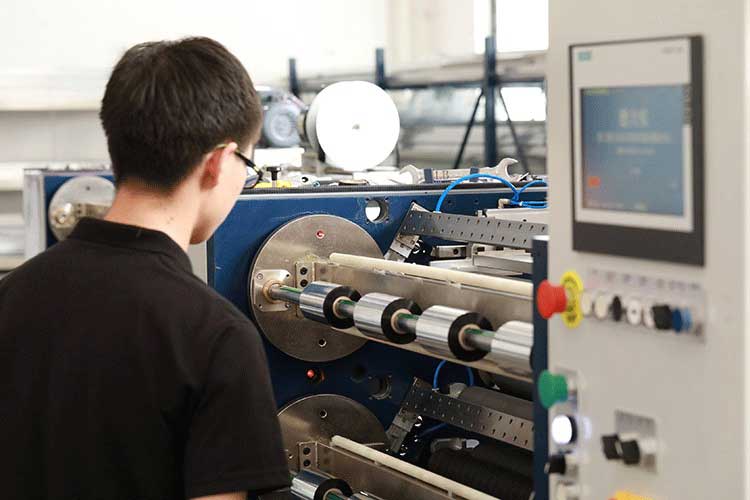
Even if tension and tool are stable, if the ribbon deviates during feeding, the slitted strip will still twist in a "serpentine" shape, uneven in width. The value of the correction system lies in real-time monitoring and instant correction.
High-end models are equipped with CCD line array cameras or high-precision photoelectric sensors, with detection accuracy up to 1μm, and when combined with servo motor-driven correction mechanisms, response times are less than 5ms. For high-end applications such as ultra-narrow strips (width ≤3mm) or RFID tags, improvements in correction accuracy directly determine whether the finished product meets standards.
Systematic solutions to deviation require focusing on equipment, processes, and operations. On the equipment side, ensure the radial runout of the winding shaft ≤ 0.05mm, and the parallelism deviation of each guide roller <0.05mm/m; The gap between the blade and the groove should be controlled between 0.02-0.05mm. On the operational side, the tape threading path must ensure that from unwinding to winding, it is absolutely perpendicular to the centerlines of each guide roller and tool groove—even a 1° deviation will be amplified at high speeds.
4. Tool System: The "Last Mile" of Edge Cutting Quality
Even if tension control is perfect, if the cutting system is not up to standard, issues such as burrs, flanging, and coating peeling will still occur at the slitting edges. Ribbon slitting should pursue "shear cutting" rather than "extrusion cutting"—the latter is a typical feature of passivated tools and leads to edge stretching and deformation.
Tool optimization requires attention to three aspects:
(1) Material and lifespan management. Cemented carbide round cutters are suitable for most scenarios and have a lifespan of about 800-1200km; Diamond-coated knives are suitable for special ribbons with silicon/metal coatings, with a lifespan of over 2000km. Establishing tool replacement records and regularly testing the degree of edge wear can prevent progressive accuracy degradation.
(2) Assembly accuracy. The overlap between upper and lower blades should be controlled between 0.01-0.03mm, requiring microscopic calibration; too little overlap can cause tearing, excessive friction and heat can cause burrs. Using laser tool setters or automatic tool setting systems ensures micron-level assembly accuracy.
(3) Auxiliary technology. Ultrasonic vibrating blades (20-40kHz) can reduce cutting resistance and are suitable for high-viscosity resin-based carbon ribbons; The cold air jet system blows cold air at -10°C at the blade edge, preventing the resin material from being hot-melted and drawn.

5. Practical Benefits: The Transformation Behind the Numbers
When these technological innovations come together, the benefits become clear. Research shows that improving slitting accuracy from ±0.1mm to ±0.05mm can reduce the defect rate from 3%-5% to below 0.5%. Actual production data comparison is more intuitive:
| Indicators | Traditional slitting machines | High-precision slitting machine | Improvement level |
| Slitting accuracy | ±10μm | ±2μm | 80%↑ |
| Material loss rate | 3% | 0.5% | 83%↓ |
| Changing time | 30 minutes | 5 minutes | 83%↓ |
| Finished product rate | 93.2% | 98.7% | +5.5% |
More noteworthy is what a 30% reduction in scrap rate means: saving several tons of substrate waste each month directly translates into net profit; Reduced downtime for scrap handling and rewinding, improving overall equipment effectiveness (OEE) by about 20%; More stable supply quality significantly reduces downstream complaint rates and increases order stickiness. Investing in high-precision ribbon slitting machines usually has a payback period of 6-12 months.
Technological advancements in ribbon slitting machines are redefining quality standards and production boundaries in the label printing industry. From improving product quality to lowering production costs, from adapting to diverse needs to promoting green manufacturing, high-precision slitting technology has become the core tool for ribbon manufacturers to reduce costs, increase efficiency, and enhance competitiveness.
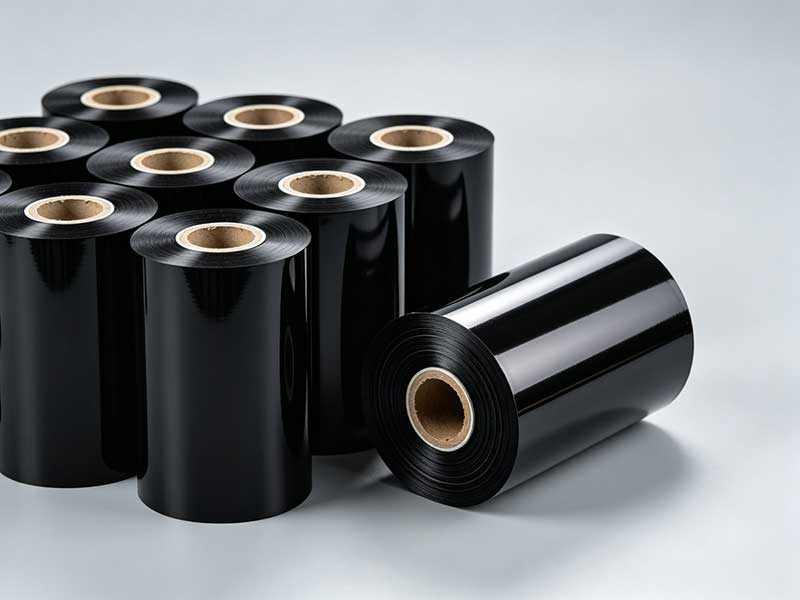
The widespread adoption of fully automatic ribbon slitting machines is changing this situation. Its core value can be summed up in six words: efficient, stable, and labor-saving.
22. October, 2026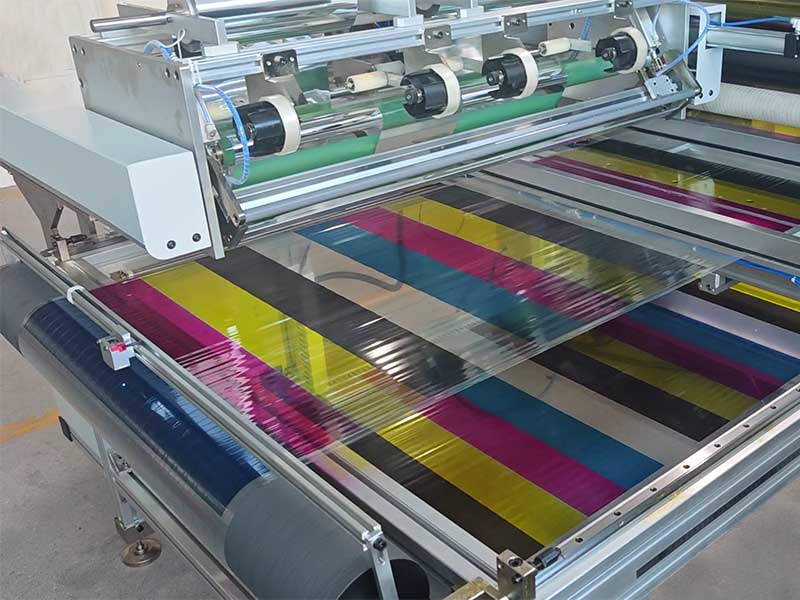
The color ribbon slitting machine is mainly used for wide roll slitting and rewinding of materials such as card printer color ribbons and thermal transfer ribbons.
21. October, 2026This article will break down the technical core of this function from four dimensions: signal detection, control logic, shutdown strategy, and precision calibration.
19. October, 2026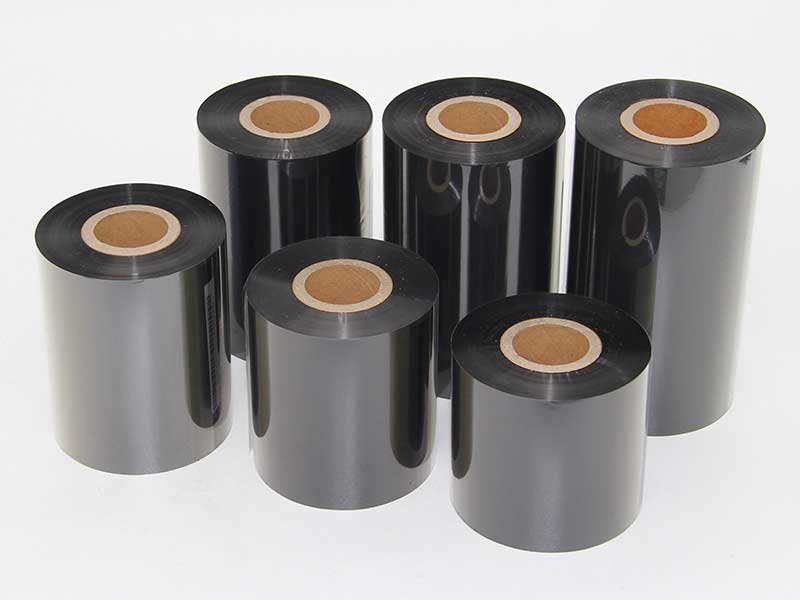
The value of the automatic correction function lies in incorporating this runaway variable into a precise closed loop, shifting slitting operations from "post-event selection" to "real-time self-heali
19. October, 2026This paper proposes a practical efficiency improvement plan from three dimensions: downtime management, switching optimization, and tension upgrade.
19. October, 2026


 English
 Deutsch
 Français
 Español
 Português
 日本語
日本語 русский
 한국어
한국어 عربي
عربي ภาษาไทย
 Tiếng Việt
 Italiano