
Problems such as burrs, stringing, and dust caused by slitting foil foil often stem from not the stamping process itself, but at the slitting stage—if the wrong tool is chosen, the foil surface gets 'damaged.' Hot foil typically consists of a PET base film, release layer, metal coating, and hot melt adhesive layer, with a total thickness of only 12–30μm, making it extremely fragile. The core principle for selecting a knife is: let the blade "cut" the foil, rather than "tear" or "squeeze through."
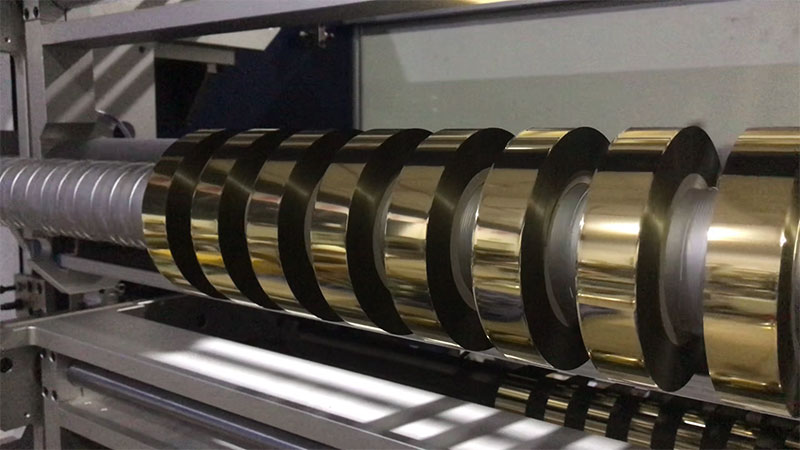
1. Choose the blade type first: Round knife or flat blade?
This is the first step in selecting a knife and the decisive decision.
Priority is given to round knives (shear-type slitting), especially for ultra-thin foil foil with a thickness of ≤12μm. The principle of the circular blade is similar to that of scissors—the upper and lower circular blades rotate and cut in a staggered manner, with smooth cuts without squeezing deformation, minimal burrs, and almost no aluminum powder or debris generated. For materials with extremely high surface quality requirements, such as laser hot stamping foil and optical lens decorative foil, round knives are almost the only choice.
Flat blades (compression cutting type) are suitable for limited scenarios: only suitable for thick hot stamping gold foil or composite card foil with a thickness of ≥30μm, as well as sample trial production and very small batch orders. Vertical downward cutting with a flat blade easily causes crushing marks on the foil edge, and when cutting with an aluminum powder layer, the blade edge tends to chip, generating dust and contaminating the foil surface. Although flat die dies may seem cheap, the overall cost of stopping machines to change tools, cleaning aluminum powder, and rising scrap rates is often higher.
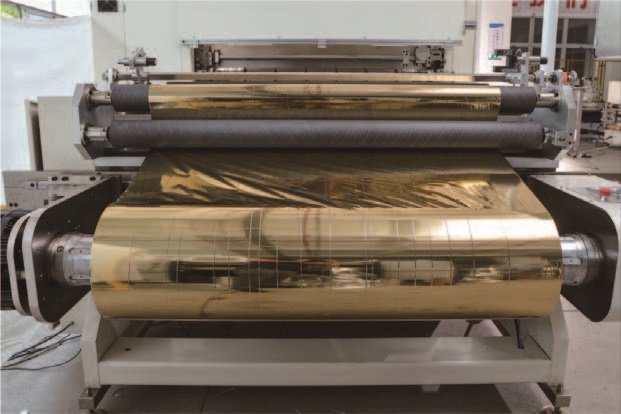
2. Next, look at the material and angle: sharpness is the foundation of "cutting."
Material determines lifespan: Tools made of cemented carbide (tungsten steel), imported high-speed steel, or diamond-coated tools should be selected. Ordinary carbon steel knives will develop tiny cracks after several kilometers of cutting, directly scratching the foil surface. High-end cutting edges can achieve mirror polishing (roughness Ra≤0.1μm), allowing clean and efficient separation without damaging the multilayer structure of the foil.
Angle determination method: It is recommended to use a small cutting angle of 15°–30° for the foil foil insertion, with the lower blade matched with a flat surface or micro-curved surface to form a "shear" slitting rather than an "extrusion slit." If the angle is too large, it will cause burr compress; if too small, the blade edge is easily damaged.
Clearance determines accuracy: The upper and lower blade engagement should be controlled at 0.02–0.05mm, in a "touch but not touch" state, about 5%–10% of the foil thickness. If the gap is too small, it can press on the foil surface or even break it; if the gap is too large, it cannot be cut and burrs will develop.
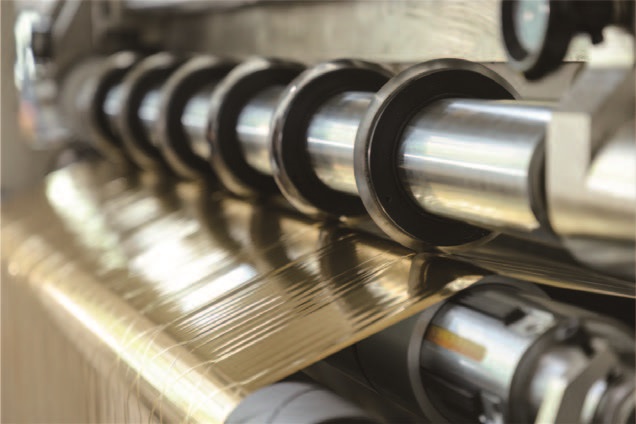
3. Equipment precision and tension: No matter how good the knife is, if it can't be installed stably, it's all for nothing
If the tool is chosen correctly but the equipment accuracy is insufficient, the foil will still be damaged.
• Cutter shaft runout ≤0.01mm: Even micron-level runout of the cutter shaft can cause cutting pressure to fluctuate, resulting in localized "incomplete cutting" or "over-cutting" threading. When axial movement of the blade shaft > 0.02mm, periodic burrs still occur.
• Closed-loop tension control: Many burr issues are not due to a lack of blade sharpness, but rather due to uncontrolled tension, which causes the foil strip to shift sideways or deform during slitting. An automatic constant tension system must be equipped to control fluctuations within ±0.5N, and an EPC/LPC deviation correction system (accuracy ± 0.5mm) to prevent foil strip deviation and unilateral burrs.
• Static elimination: During slitting, high-speed friction between the foil and guide rollers or blades generates static voltage above 10,000 volts. The live foil surface acts like a "vacuum cleaner" to absorb dust, causing subsequent hot stamping to form pitting; High-voltage static electricity can also cause the foil film to adhere to the blade sidewall, causing scratches. A carbon fiber static elimination brush should be paired with an ion bar to reduce static voltage from ±15kV to ±300V.
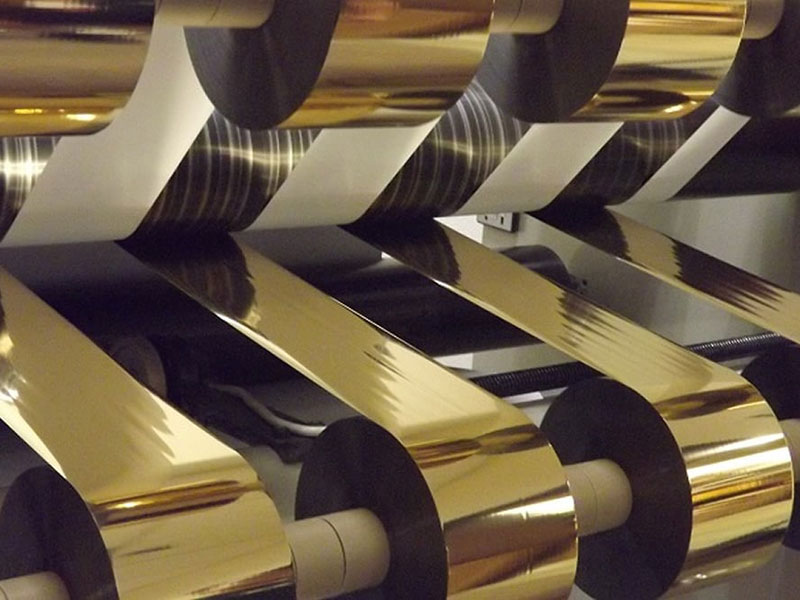
4. Practical Investigation: What to Do When Grizzling Appears?
If burrs have appeared, check them in order:
1. Change the blade first: This is the preferred method to solve 90% of sudden edge burrs. It is recommended to establish a blade usage ledger, mandating replacement or grinding every 5000–10000 meters of cutting, rather than "replacing it after it breaks."
2. Check the bite amount and parallelism: Use a feeler gauge to check the gap between the upper and lower blades, confirm that the blade shaft is absolutely parallel, and use an angle gauge to verify the blade cut angle (8°–12°).
3. Observe the fracture shape: Neat straight cuts are usually caused by blade issues; Edges with burrs and tears mostly indicate blade dullness; If the cross-section is irregularly stretched, it is a tension issue.
In short: When selecting foil slitting blades, round blades should be prioritized, carbide materials, 15°–30° small edge angle, 0.02–0.05mm engagement clearance, combined with high-precision equipment and closed-loop tension control, to minimize foil damage. When selecting, it is recommended to bring your commonly used hot stamping foil to the manufacturer for on-site trial cutting to observe the cut effect, which is more convincing than any other spec table.
It is specifically designed to cut the wide master roll hot stamping foil into different narrow finished rolls according to process requirements, and is used in conjunction with hot stamping machines.
16. October, 2026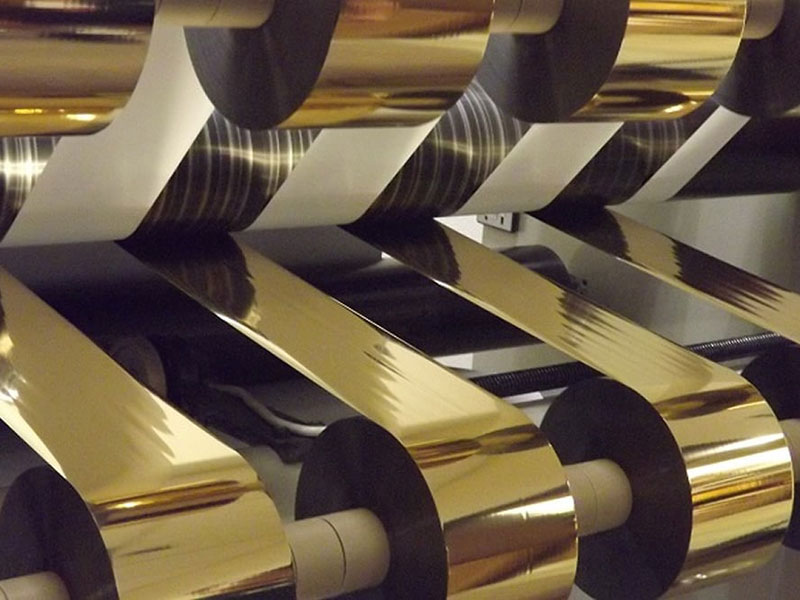
A device with stable slitting accuracy and precise tension control is the fundamental link for ensuring hot stamping yield and material utilization.
16. October, 2026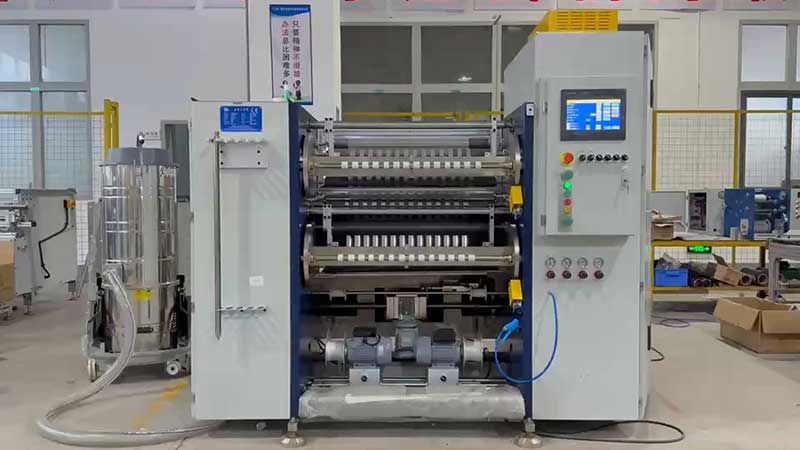
Whether you operate a slitting line or source slit rolls from a supplier, understanding these failure modes helps you protect quality and reduce downtime.
08. October, 2026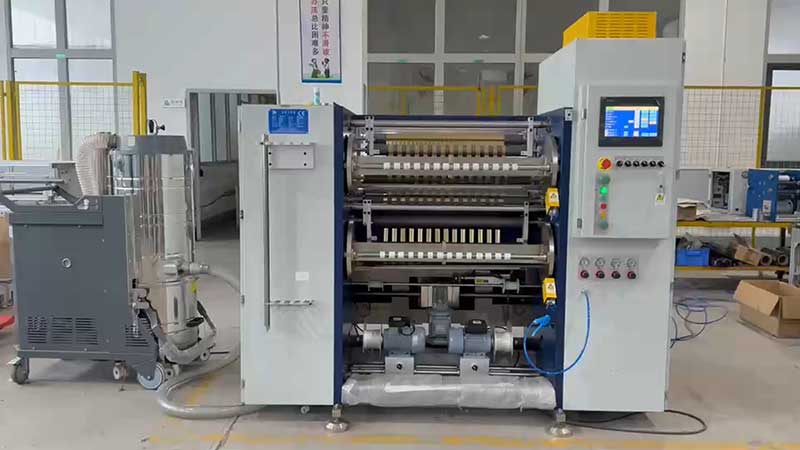
This guide breaks down the specifications that actually matter, organized by the parameters that directly affect your yield, efficiency, and bottom line.
08. October, 2026The tension control in the slitting stage directly determines the yield rate of subsequent hot stamping processes.
28. September, 2026


 English
 Deutsch
 Français
 Español
 Português
 日本語
日本語 русский
 한국어
한국어 عربي
عربي ภาษาไทย
 Tiếng Việt
 Italiano