
In the thermal transfer printing industry chain, the slitting process is considered the "final step"—precisely slicing the wide ribbon master roll into small rolls suitable for various printers. The quality of the slitting directly determines whether the ribbon runs smoothly in the printer, how clear the printing is, and even affects the print head's lifespan. Faced with a market full of complex specifications and diverse models, rather than being confused by marketing rhetoric, it's better to focus on three core specs and quickly judge whether a device can truly compete.
Parameter 1: Slitting accuracy—the lifeline of quality
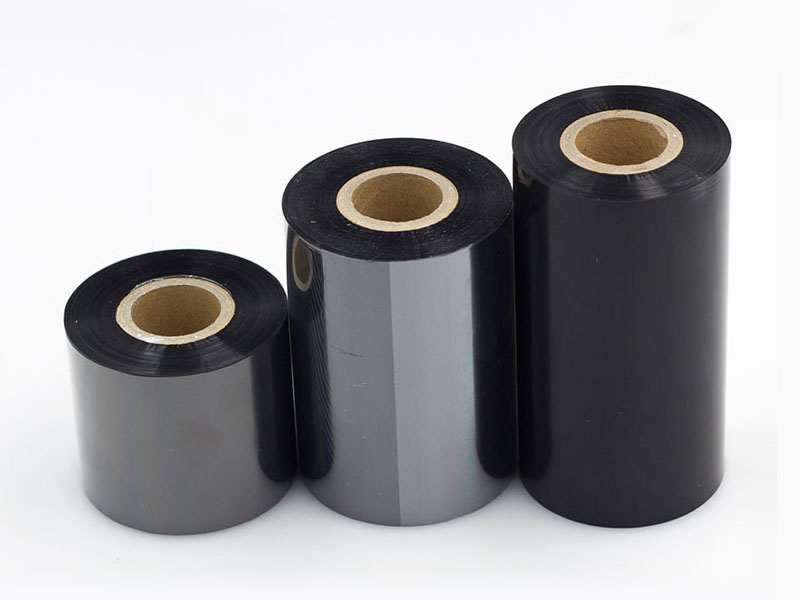
Slitting accuracy is the primary indicator for measuring equipment performance, directly determining the width consistency and edge quality of the finished ribbon. If accuracy is insufficient, ribbon edges will become rough, causing minor issues such as tape misalignment and missing printed content, and severe damage to the print head.
Industry reference standards are clear: standard accuracy is around ±0.5mm, while high-precision models can be controlled within ±0.1mm or even ±0.05mm. If your product targets high-resolution barcodes, precision electronic tags, and similar scenarios, be sure to target high-precision models.
Selection pitfall advice: Do not trust the theoretical values on the parameter table. Be sure to ask the manufacturer to conduct on-site trial cutting with your own ribbon master roll, and use a vernier caliper to measure the deviation between the slitting width and the set value.
Parameter 2: Slitting speed—the measure of efficiency
Speed determines output per unit of time, but this spec is the easiest to fall into the trap of "speed alone theory." Common speed ranges are as follows:
| Speed level | Speed range | Applicable scenarios |
| Low-speed economy model | 50–100m/min | Small batch, multi-variety production |
| Medium-speed universal model | 150–250m/min | Most commercial orders |
| High-speed production model | 300–500m/min | Mass continuous production |
Key reminder: The nominal top speed is usually just "lab data." The actual usable speed is greatly affected by the ribbon material—resin-based ribbons, due to their harder coatings and lower toughness, usually need to operate at speeds 20%–30% lower than wax-based ribbons. When selecting, be sure to use your main product for on-site trial cutting to observe start-stop control, winding neatness, and joint treatment at high speeds.
Parameter 3: Roll neatness—the often overlooked "hidden costs"
This parameter is the easiest to overlook, but it is precisely the key factor affecting the smoothness of back-end packaging and printer tape flow. If the end face shows a "bell-mouthed" shape, the edges are "serrated," or internal wrinkles appear, it indicates serious problems with winding control, which can easily cause ribbon breakage or printer jams during subsequent unwinding and printing.
Control standards: End face deviation should usually be controlled within ±1mm, and for high-end equipment, up to ±0.5mm. To meet this standard, two key points remain:
• Closed-loop tension control: The ribbon substrate is PET film only 4.5–10μm thick, which is extremely sensitive to tension. Excessive tension causes the base film to stretch and deform; too little causes it to loosen and wrinkle.
• Active deviation correction system: Real-time monitoring of edge position via photoelectric or ultrasonic sensors, automatically adjusting rollers to prevent deviation.
Selection recommendation: Prioritize models equipped with "closed-loop tension control + active deviation correction," and inspect on-site whether the winding arm is uniform and whether the mandrel runout is sufficiently small.

Comprehensive selection strategy: Take it personally
By combining your business characteristics and focusing on the core of these three parameters, you can quickly pinpoint your direction:
| Types of business | Key recommended configurations | Reference speed | Precision requirements |
| Small batches, multiple specifications (sample production, short orders) | Easy order changeover and programmable tool positions | 100–150m/min | ± within 0.3mm |
| Large volume standard wide-width carbon ribbons | High-speed continuous operation with automatic cutters | Above 250 m/min | ± within 0.2mm |
| High-end resin-based/specialty ribbons | Low tension control and anti-static treatment | 150–200m/min | ± within 0.1mm |
Final advice: Cutting is more important than parameters
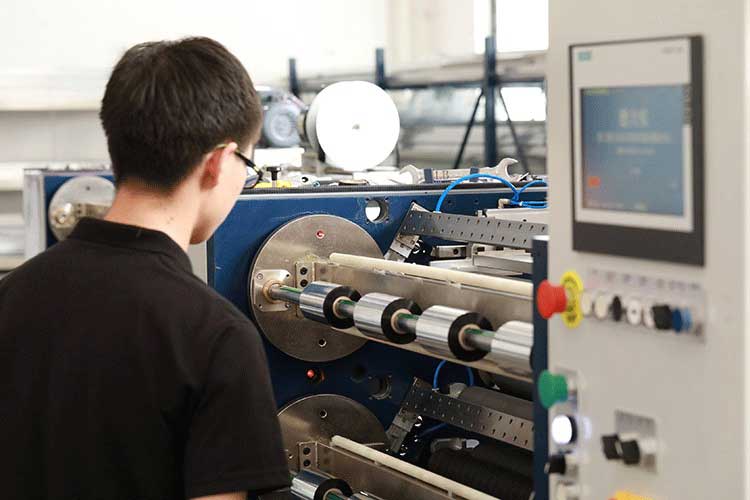
No matter how beautiful the spec sheet is, using your own ribbon roll for on-site trial cutting before buying is the most effective way to avoid pitfalls. Focus on three details: edge quality at different widths (narrowest and widest specifications), winding stability during high-speed starts and emergency stops, and equipment condition after hours of continuous operation. Only a slitting machine that can withstand real-world testing can truly save you peace and improve efficiency.
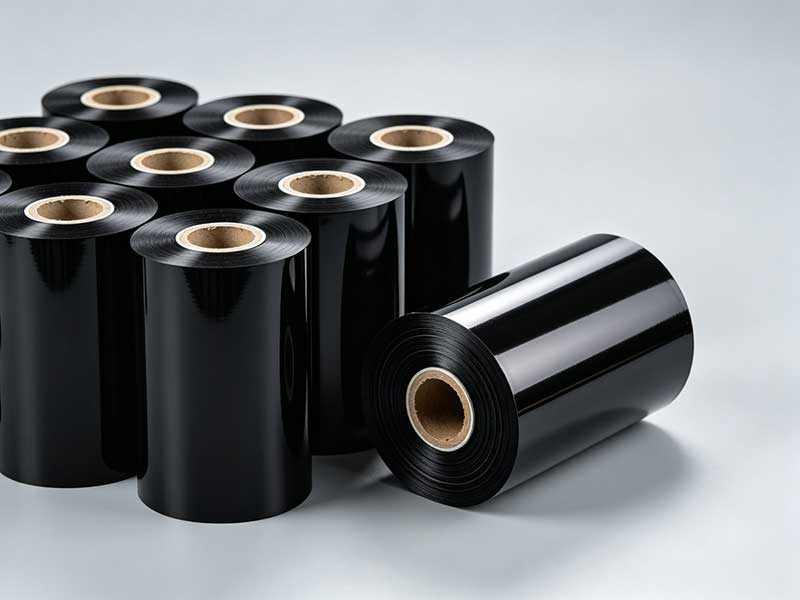
When a roll of perfectly slitted ribbon is loaded into the printer, smoothly moving along the tape and transferring clearly the print, the value of the slitting process quietly becomes realized.
17. October, 2026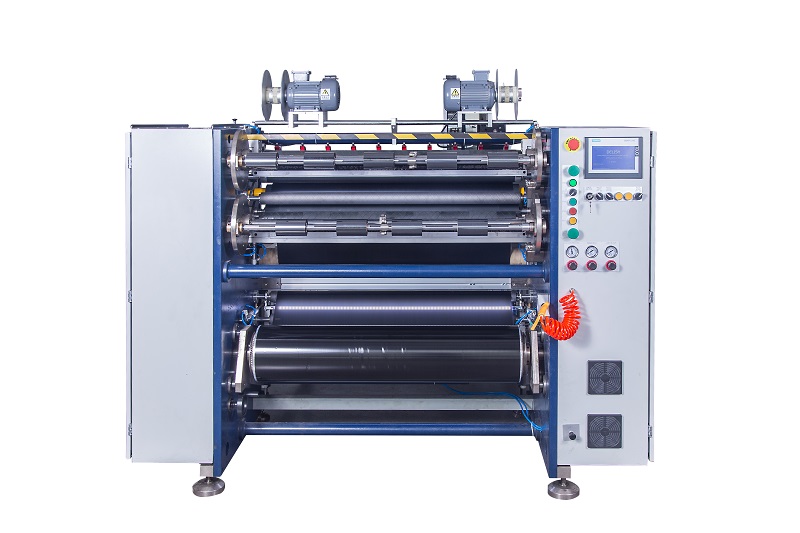
The barcode ribbon slitting machine can not only cut and heat transfer ribbons; it is a precision device designed and optimized for this task.
14. October, 2026Currently, mainstream barcode ribbon slitting machines on the market generally support slitting processing of the following three main types of ribbon materials.
14. October, 2026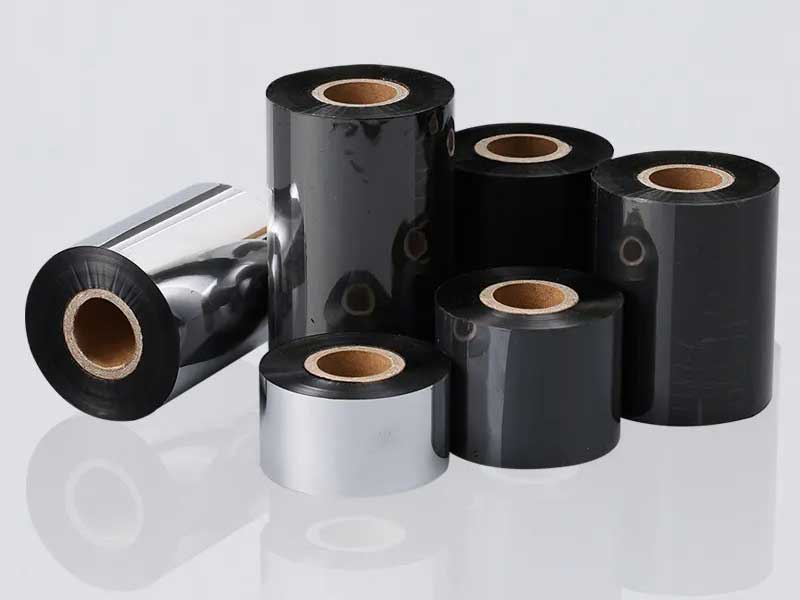
Below is a customized requirements clarification framework for purchasers, helping you turn requirements into actionable solutions in language engineers can understand.
14. October, 2026the key to choosing a model is not to pursue the "highest configuration," but to find a balance that matches your own business.
12. October, 2026


 English
 Deutsch
 Français
 Español
 Português
 日本語
日本語 русский
 한국어
한국어 عربي
عربي ภาษาไทย
 Tiếng Việt
 Italiano