
The main structure of the slitting machine:
1. The paper slitting machine should carry out fixed-length slitting processing of the whole roll or the whole raw material, such as plastic packaging materials, packaging cartons, steel plates, film, leather, wood chips, etc. for slitting processing, and the fixed-length slitting control should be used.
2. The slitting length can be set continuously, if the actual slitting length has errors, it is easy to calibrate by setting parameters.
3. The slitting control of the paper slitting machine is divided into two types: static and dynamic slittering: it accurately stops when the set length arrives, and then static slitting processing, and restarts operation after slitting; When the set length arrives, the slitting signal is sent out without stopping, and the slitter dynamically slitters during the movement of the material.
The main structure of the slitting machine:
1. Rack part:
It is welded with thick steel plates.
2. Winding part:
The winding adopts 3-inch inflatable reel and magnetic powder tension controller to wind, this machine slitting the edging strip is easy to operate, and the maximum winding diameter can reach 600mm.
3. Unwinding part:
Unwinding uses a 3-inch inflatulatory unwinding reel.
4. Cutter part:
The cutter can be made with an industrial scalpel blade or a flat knife (art blade), and the knife distance can be adjusted between 18mm and 1600mm.
5. Host part:
It mainly adopts a 5 KW motor, adopts an electronic speed control system, and manually adjusts the speed of the machine when in use.
6. Guide roller part:
The whole machine adopts chrome-plated steel pipe, and each one is dynamically balanced.
Slitting machines are widely used in luggage, daily necessities, protective supplies, environmental protection bags, stationery, plastics, paper mills and other industries.
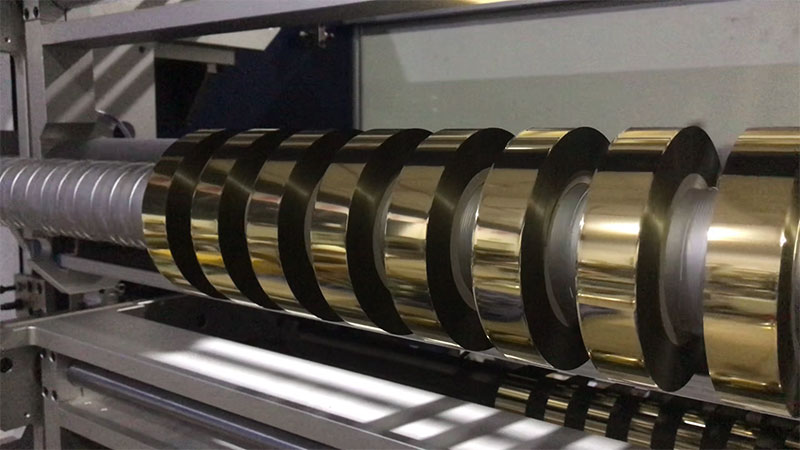
Width determines the rigidity and correction accuracy of the equipment's structure, while speed tests the real-time responsiveness of tension control.
24. September, 2026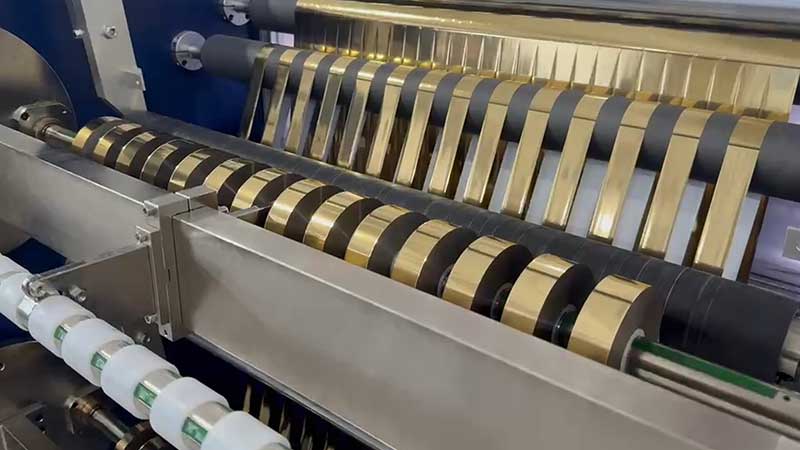
This article provides a current selection framework from four dimensions: material adaptation, core parameters, intelligent configuration, and cost evaluation.
24. September, 2026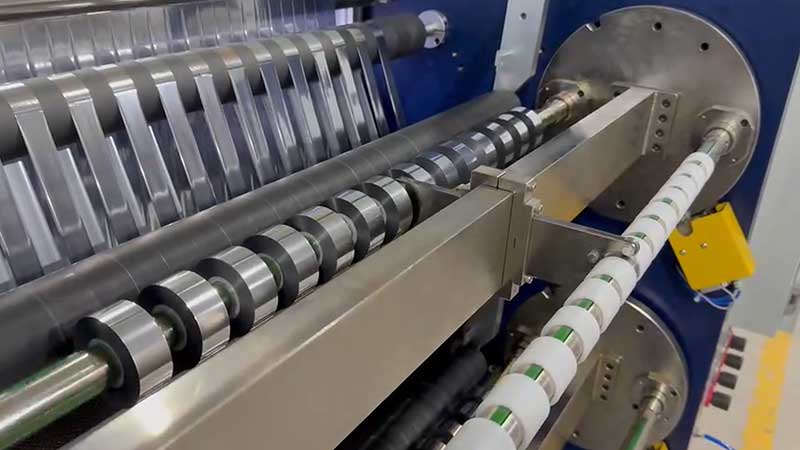
Faced with the wide variety of promotions in the market, buyers only need to focus on five core dimensions to avoid most pitfalls.
24. September, 2026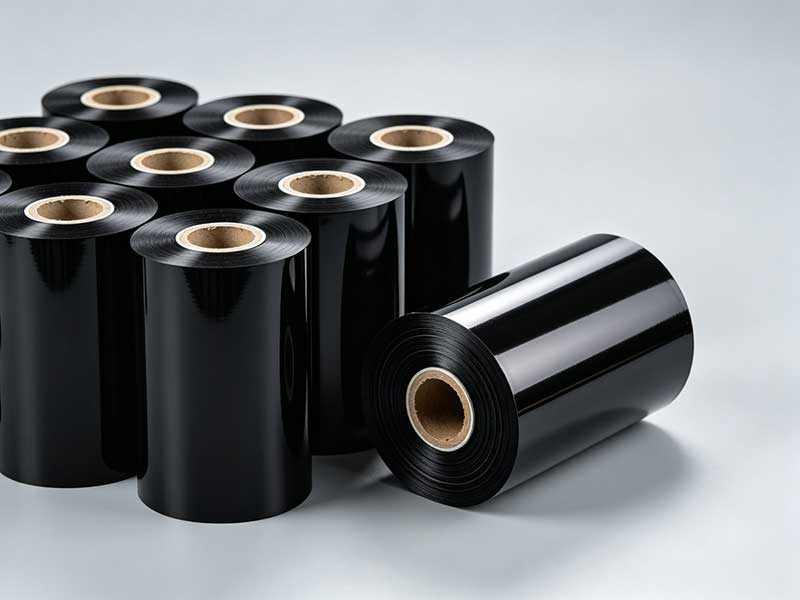
The first watershed in choosing a model isn't speed or brand, but rather — which type of ribbon do you mainly cut?
23. September, 2026
When asking suppliers the following seven questions, the quality of the answers is far more valuable than the numbers on the parameter table.
21. September, 2026


 English
 Deutsch
 Français
 Español
 Português
 日本語
日本語 русский
 한국어
한국어 عربي
عربي ภาษาไทย
 Tiếng Việt
 Italiano