
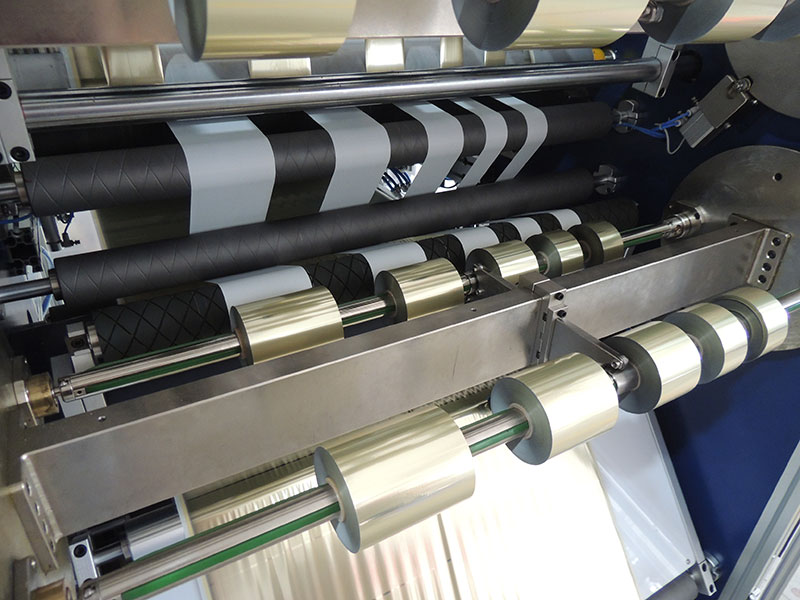
A slitting machine is a machine used to divide the roll material into multiple strips, and tension is an important parameter during the operation of the slitting machine. The correct tension setting of the slitting machine can help to achieve efficient, stable and high-quality production. The tension setting of the slitting machine is usually controlled by two ways: tension control and tension controller. The tension controller is realized by controlling the position of the roller and the rotation of the tension adjustment handle, when the material passes through the roller, the position of the roller and the rotation of the tension adjustment handle can control the tension of the material.
The tension controller is realized by controlling the tensioning device on the tension controller, and the tension control of the material can be realized by adjusting the force of the tensioning device.
To set the tension of the slitting machine correctly, the following factors need to be considered:
1. Type of material
Different types of materials need to be set with different tensions, which need to be adjusted according to factors such as the thickness, strength, surface roughness, and bending of the material.
2. Material speed
The speed of the material has a significant impact on tension control and needs to be tested and adjusted at different operating speeds.
3. Slitting machine structure
The structure of the slitting machine also affects the tension setting, such as the diameter of the roller, the way the material is conveyed, the position of the tension controller and the sensitivity of the tension adjustment handle.
When setting the tension, it should be noted that too high or too low tension will affect the production efficiency and product quality, and it needs to be adjusted according to the actual situation to achieve the best production efficiency.
no need to buy a dedicated machine or gamble on a mismatched machine just because of a rushed resin-based washing order.
16. November, 2026
This article will start from symptom classification and provide a solution approach that progresses from simple to complex and can be quickly implemented.
16. November, 2026
As a result, a well-calibrated high-precision ribbon slitting machine can stabilize width tolerances within ±0.05mm, and reduce the defect rate from 2% to 3% of ordinary equipment to below 0.3%.
16. November, 2026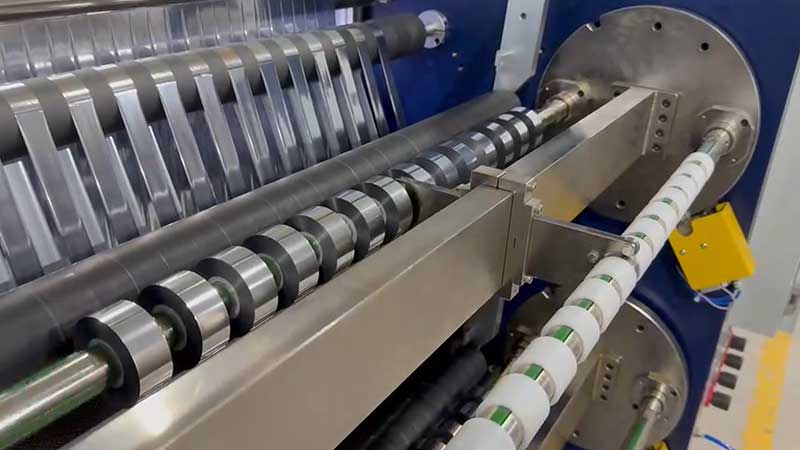
accuracy indicators will move from macro to micro, control logic will shift from experience to algorithms, and equipment roles will move from isolated islands to nodes.
10. November, 2026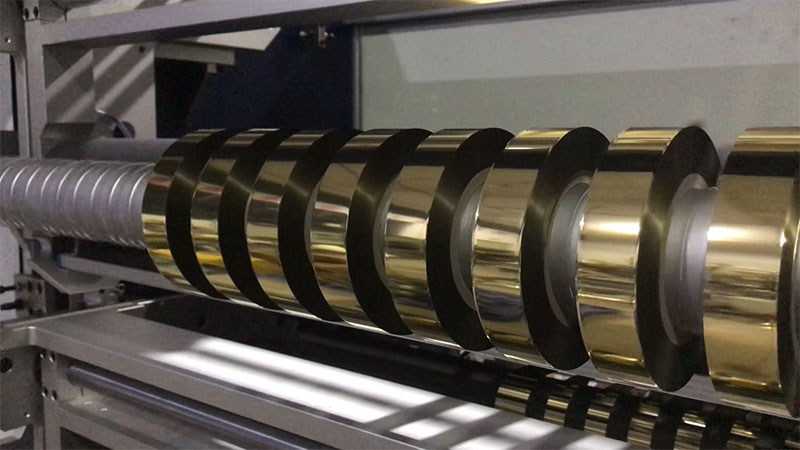
The following three application cases reveal the efficiency revolution currently underway in this area.
09. November, 2026


 English
 Deutsch
 Français
 Español
 Português
 日本語
 русский
 한국어
 عربي
 ภาษาไทย
 Tiếng Việt
 Italiano